
Gas heat that fits Harrison County's short, mild winters.
From Gulfport and Biloxi to Long Beach, Pass Christian, and D'Iberville, gas fireplaces here are mostly about ambiance and quick warmth on cold fronts—not survival heat. Find the right unit and get matched with a trusted local dealer.
Every Project Starts From One of These Five Situations
Ambiance-first heat for a Gulf Coast climate.
Harrison County sits in climate zone 2A, running from the barrier beaches of Gulfport and Biloxi north through Saucier and into the De Soto National Forest. The average winter low is around 42°F, and the county's overall winter heating load is a fraction of what a single month brings to places like Duluth, MN or International Falls, MN. Most winters here are a string of mild fronts punctuated by a handful of nights near freezing, not a sustained heating season.
That climate is why wood stoves are essentially absent here and pellet stoves are a non-factor—locally common species like oak, pine, and pecan get used for smoking and grilling far more than home heating. Gas fireplaces fill the gap instead: instant on-off operation, no wood or ash to manage, and enough radiant heat for the occasional cold snap. CenterPoint Energy provides natural gas service through most of Gulfport, Biloxi, and Long Beach; homeowners in the more rural parts of the county—Saucier, Lyman, Fenton—typically run on propane instead.
Three steps. No salesperson until you're ready.
Tell us about your project
Your zip code, your situation, and the fuel you're leaning toward—or let the answers point you to one.
See what's actually available
The brands dealers within 100 miles genuinely carry—real options, never a catalog mirage.
Get your dealer & Project Guide
A trusted local dealer, plus the free Project Guide & Parts List that names every component of the job.
Frequently Asked Questions
How much does a gas fireplace installation cost in Harrison County?
Gas fireplace and insert installations in Harrison County typically run $3,500 to $9,000, depending on the unit, whether a gas line already exists, and the venting path through the wall or roof. A direct-vent insert going into an existing masonry fireplace with gas already run to the house sits at the lower end. New construction or a fireplace added to a room without existing gas service—including trenching a new line or connecting to a propane tank—pushes toward the higher end. Coastal wind-load requirements on exterior vent terminations can add a modest amount to the labor cost in Gulfport, Biloxi, and other flood-zone areas, so ask your installer whether that applies to your address.
Can I convert my existing wood fireplace to gas?
Yes, and it's a common project in Harrison County's older neighborhoods, including historic homes around downtown Biloxi and Gulfport that still have the original masonry fireplace but rarely burn wood in it. A gas insert with a stainless liner run through the existing chimney is the standard approach, and it usually lands in the $4,000 to $8,000 range depending on the insert and whether the home is on natural gas or propane. The conversion keeps the look of the original hearth while giving you real, on-demand heat instead of an opening that mostly just draws air.
Do I need natural gas, or should I plan on propane?
Either works, and which one you use mostly comes down to location. Natural gas is available through CenterPoint Energy across most of Gulfport, Biloxi, and Long Beach—if your water heater or range already runs on natural gas, adding a fireplace on the same line is straightforward. Outside those service areas, including inland communities like Saucier and Lyman and some of the barrier-side neighborhoods in Pass Christian, propane is the standard option, either from an existing tank or a new one set up by a local propane supplier. Most fireplace models can be configured for either fuel; your installer sets the orifice and regulator to match.
Will my gas fireplace work if the power goes out during a storm?
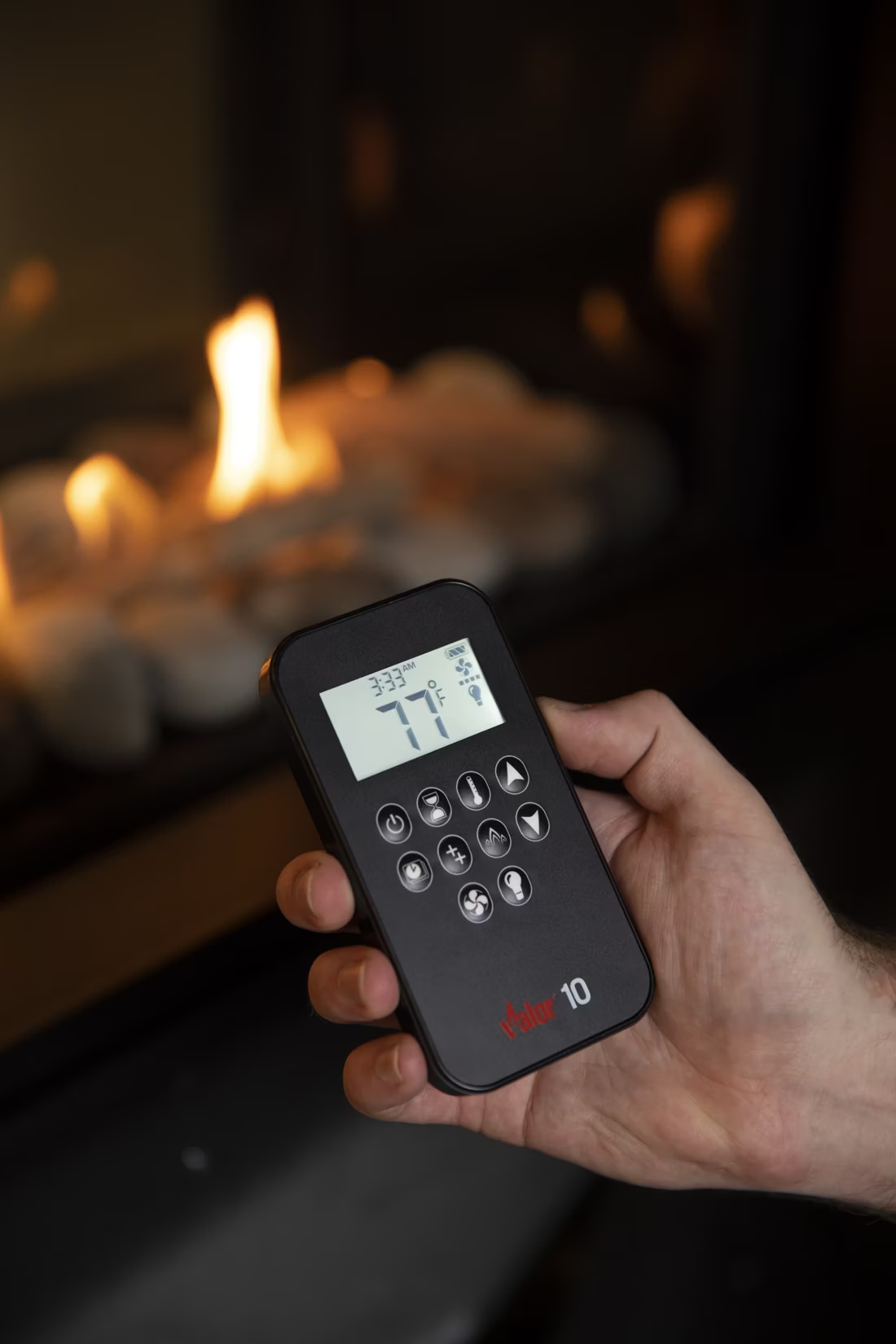
Most modern gas fireplaces will, which matters in a county that sees regular tropical systems and grid outages. Units with intermittent pilot ignition (IPI) run on a battery backup—usually AA batteries inside the unit—that keeps the fireplace lighting on demand once utility power drops. Valor fireplaces take it a step further: their pilot assembly generates its own electricity through the thermocouple, so there's no battery to remember or replace, ever. For Harrison County homes riding out a post-storm outage that can stretch for days, that self-powered ignition is worth asking about specifically when you talk to a local dealer.
What's the difference between a gas fireplace, gas insert, and gas stove?
A gas fireplace is a fully built-in unit framed into a wall—the right call for new construction or a remodel that doesn't already have a hearth. A gas insert fits into an existing masonry fireplace, which is common in Biloxi's and Gulfport's older homes, and uses the existing chimney as its vent path. A gas stove is a freestanding cabinet unit that sits on the floor, useful when you want heat in a room with no fireplace opening at all, like a converted sunroom or garage-turned-den. For most Harrison County homeowners with a fireplace they're not using, an insert is the simplest upgrade.
Do I need a permit to install a gas fireplace in Harrison County?
Generally yes—a building permit and a separate gas line permit are required, whether the work is inside Gulfport, Biloxi, Long Beach, Pass Christian, or unincorporated county land. In incorporated areas the city building department handles it; outside city limits it runs through Harrison County. The gas line work itself has to be done by a licensed gas-fitter, and any vent termination on an exterior wall needs to meet coastal wind-load standards. Most established hearth dealers coordinate all of this—building permit, gas line, and inspection—so you're not left managing separate trades yourself.
Should I get a vented or vent-free gas fireplace?
Vented, direct-vent units draw combustion air from outside and exhaust everything back outside through sealed venting—clean, safe, and code-compliant everywhere. Vent-free units burn directly into the room and release some water vapor and combustion byproducts into your living space. That's a bigger consideration in Harrison County than in a dry climate, since Gulf Coast humidity is already high most of the year—adding more moisture indoors from a vent-free unit isn't ideal. Direct-vent is the more common and more recommended choice here for that reason, and it's what most local dealers will steer you toward.
How often should my gas fireplace be serviced?
Plan on an annual inspection, same as anywhere else—a technician checks the burner, pilot, gas connections, and venting, and cleans the glass. In Harrison County there's one extra thing worth watching: salt air near the coast in Gulfport, Biloxi, and Pass Christian can accelerate corrosion on exterior vent caps and hardware faster than it would inland. If your unit vents to an outside wall facing the water, mention that to your service tech so they can check the termination hardware a little more closely each year.
Why is gas so much more common here than wood?
It comes down to the climate. With such a light winter heating load and winter lows averaging around 42°F, Harrison County simply doesn't have the sustained cold that makes a wood stove worth the upkeep—no creosote to manage, no cords to stack, no chimney sweep to schedule every fall. Wood heat isn't gone entirely; a small number of homeowners with existing masonry fireplaces still burn oak, pine, or pecan on the occasional cold night for the ambiance of a real fire. But for anyone deciding between the two for actual heat, gas wins here almost every time—instant on, no fuel storage, and enough output for the handful of nights a year you actually need it.
Why is a fireplace insert so efficient?
An insert does two things: it seals the chimney completely, so you stop losing air you already paid to heat, and it radiates warmth into the room through the firebox and glass. Most add a heat-exchange fan that pulls cool room air underneath, wraps it around the hot firebox, and pushes it back out warm. Your home is more efficient before you've even lit the first fire.
Can I put a TV above my fireplace?
Yes—with an asterisk. Fireplaces are hot and TVs don't like heat. Either put a mantel between them to deflect rising warmth, or choose a fireplace with heat-management technology that creates a cool zone on the wall above—the wall stays around 125 degrees, barely warm, while the room still gets full heat. If you like clean lines and don't want a mantel, heat management is the answer.
What is an in-home preview and do I need one?
It's a visit where a hearth professional measures your space, confirms the model you picked actually works in your home, and walks the specs—framing, gas line, venting, finish work—before anything is ordered. Some details you just can't know until you see the house. Never make a down payment without one; it's the single most-skipped step that burns buyers.
How much should I budget for a fireplace?
For an average home—covering the fireplace, the vent pipe, and basic installation—a budget between $3,900 and $5,500 gives you a lot of options across wood, gas, and pellet. By the time you add finish work, gas line, and electrical, the average complete installation lands between $5,000 and $12,000 all-in. In a remodel or new build, a good rule is to put about 2.5% of the total project cost toward the fireplace.
Stove and Fireplace Dealers in Harrison County
Listings include WhyFire partner dealers, dealers we have verified as authorized for the brands we recommend, and established local businesses that carry hearth products. Every listing shows which one it is. The ones marked Preferred run on WhyFire's software, so they can show you real pricing and book your appointment right here. No manufacturer pays for placement. How we verify dealers →
Top Hat Fireplace
Compton And Son Appliance
Magnolia Gas, Inc.
Find your gas fireplace in Harrison County.
Tell us a bit about your home and we'll put together a free Project Guide & Parts List—the right gas fireplace or insert, the vent kit it needs, and a trusted local dealer in Harrison County to install it.
Find Your Fireplace →