
Pellet Stoves in Baltimore County: An Uncommon Choice, Installed Right.
With winters that average a low of 30°F and a fairly mild, moderate heating season overall, most Baltimore County homes lean on natural gas or electric heat rather than pellets. For the households that still want a pellet stove—for ambiance, backup heat, or lower emissions than cordwood—we'll match you with one of the few local dealers who install and service them correctly.
Every Project Starts From One of These Five Situations
Mild winters and wide gas access make pellet a niche pick.
Baltimore County sits in climate zone 4A with a moderate winter heating season and an average winter low near 30°F—a fraction of the cold load carried by places like Duluth, Minnesota or Burlington, Vermont. Even in the wooded northern reaches around Hereford and Monkton, where oak, hickory, and maple stands are common, the case for a dedicated pellet appliance is thinner than it is in colder or more fuel-scarce regions. There's no regional non-attainment designation or winter inversion problem pushing homeowners away from open wood burning toward cleaner pellet units, and there's no wildfire-driven push to reduce backyard cordwood storage.
What pellet heat does have going for it locally is convenience relative to cordwood and a cleaner burn than an open wood fireplace—which is why a small but real slice of Baltimore County homeowners still install one, usually as supplemental heat in a den, basement, or sunroom rather than as the primary furnace. Regional pellet brands like Energex, Hamer Pellet Fuel, and Greene Team Pellet Fuel are sold through farm and hardware suppliers scattered across the county and into central Maryland and southern Pennsylvania. Because the market is thin, dealer selection matters more here than in a wood-heavy region—you want an installer who actually knows pellet appliances, not one who treats it as an afterthought behind gas and wood.
Three steps. No salesperson until you're ready.
Tell us about your project
Your zip code, your situation, and the fuel you're leaning toward—or let the answers point you to one.
See what's actually available
The brands dealers within 100 miles genuinely carry—real options, never a catalog mirage.
Get your dealer & Project Guide
A trusted local dealer, plus the free Project Guide & Parts List that names every component of the job.
Frequently Asked Questions
How much does a pellet stove installation cost in Baltimore County?
Nationally, a pellet stove installation typically runs $3,000 to $6,000 including the unit, venting, and a basic electrical hookup for the auger and blower. Baltimore County doesn't have the dealer density of a wood-heavy region, so expect quotes toward the middle-to-upper end of that range once you factor in a smaller pool of installers and, in some cases, travel from central Maryland or the Pennsylvania border. A pellet insert going into an existing masonry fireplace usually costs less than a freestanding stove requiring new venting and a dedicated hearth pad.
Why is pellet heat so uncommon in Baltimore County?
The math simply favors other fuels here. With an average winter low around 30°F and a moderate heating season overall, Baltimore County's heating load is far lighter than the wood- and pellet-heavy counties of the Mountain West or Upper Midwest. BGE's natural gas network covers most of the county, and modern electric heat pumps handle the moderate winters efficiently without any fuel deliveries at all. Pellet stoves end up as a specialty purchase—chosen for the look of a real flame, backup heat, or lower particulate output than an open wood fire—rather than a mainstream heating solution.
Where can I find pellet stove dealers near me in Baltimore County?
There are far fewer pellet specialists in Baltimore County than gas or electric fireplace retailers, so your best options may be a hearth shop that carries pellet stoves as one line among several, or a dealer based just outside the county in Carroll or Frederick County, or over the Pennsylvania line. We match homeowners with a trusted local dealer who genuinely stocks and services pellet appliances—not one who will sell you a unit and then struggle to source parts or pellets when something needs servicing.
Do I need a permit to install a pellet stove in Baltimore County?
Yes. New pellet stove installations in Baltimore County require a building permit through the Baltimore County Department of Permits, Approvals and Inspections (PAI), along with an electrical permit if new circuit wiring is needed for the auger and blower motor. Most established installers handle the permit paperwork as part of the job. Because pellet installs are less common here, it's worth confirming your installer has actually pulled a pellet-specific permit before—the inspection requirements differ slightly from a wood stove or gas insert.
What's the difference between a pellet stove and a wood stove for a Baltimore County home?
Both are genuinely uncommon choices in Baltimore County compared to gas or electric, but for different reasons. A wood stove burns cordwood—oak, hickory, and maple are the common local species—and needs no electricity, but it also needs chimney access, wood storage, and regular ash cleanup, none of which pencil out for most suburban Baltimore County lots. A pellet stove burns bagged pellets from brands like Energex or Hamer Pellet Fuel, needs a smaller footprint and simpler venting, but depends on electricity to run the auger and blower. If you want a backup heat source that works when the power is out, wood wins. If you want a cleaner, lower-maintenance flame for a den or basement, pellet is the more practical of the two niche options.
Will my pellet stove work during a power outage?
Not without help. Pellet stoves rely on an electric auger to feed fuel and a blower to distribute heat and exhaust, so a standard unit stops running the moment the power drops. Some homeowners pair a pellet stove with a small battery backup or portable generator sized for the stove's low wattage draw, which keeps it running through most residential outages. If reliable heat during a storm is your main goal in Baltimore County—where outages are typically measured in hours, not days—that's worth discussing with your installer before you commit to pellet over an electric fireplace with its own battery-backed ignition.
Where can I buy pellets in Baltimore County?
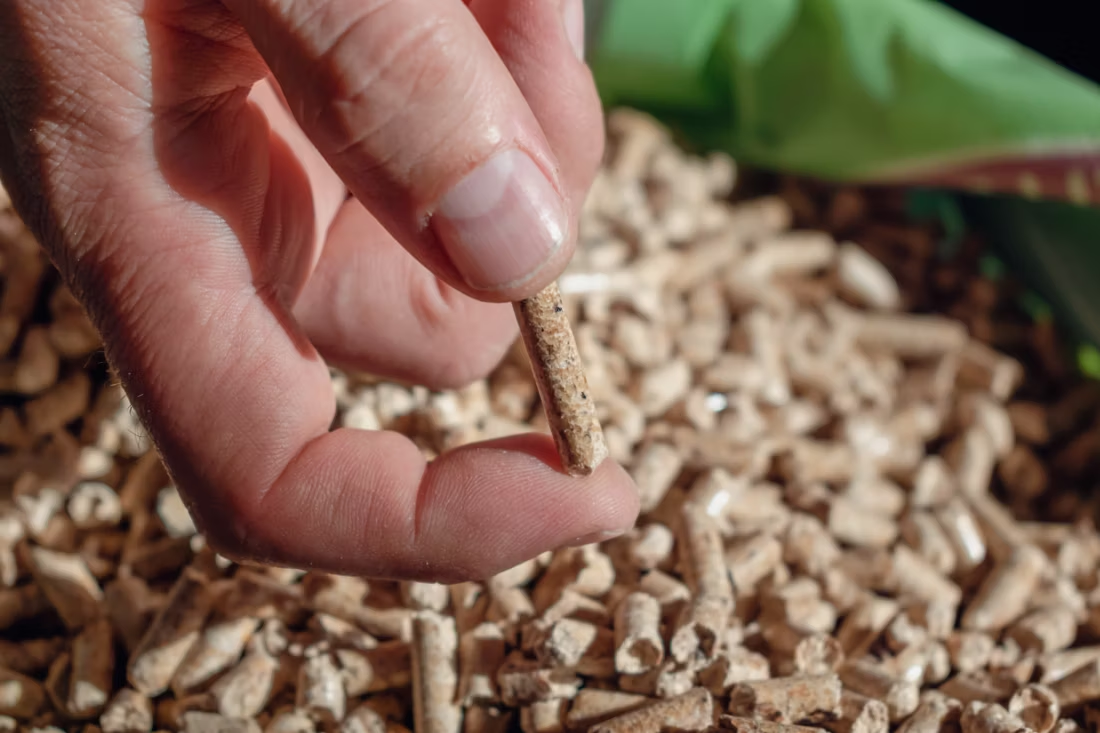
Regional brands including Energex, Hamer Pellet Fuel, and Greene Team Pellet Fuel are sold through farm supply and hardware retailers around the county, with prices generally running $250 to $320 per ton, sold in 40-pound bags. Per-ton pricing typically drops if you buy a full season's supply—roughly 100 to 150 bags for an average pellet stove—up front rather than a bag at a time as winter goes on.
What size pellet stove do I need for my Baltimore County home?
Because Baltimore County's heating load is moderate overall, most homes only need a small to medium pellet stove (rated for 1,000 to 1,800 square feet) to handle supplemental heat in a den, basement, or sunroom. Very few Baltimore County homes need a large pellet stove sized for whole-home heating, since gas or electric systems typically already carry that load. A local dealer can size the unit to the specific room and insulation level rather than the whole house.
Pellet vs. gas—which is right for my Baltimore County home?
For most homeowners in Baltimore County, gas wins on convenience and infrastructure: BGE's natural gas network reaches most of the county, gas fireplaces run at the flip of a switch, and there's no fuel to store or haul. Pellet stoves offer a more visible, crackling flame and burn a renewable, domestically produced fuel, but they need bagged pellet storage, periodic hopper loading, and electricity to operate—real trade-offs in a county where gas is this accessible. Pellet tends to make the most sense as a secondary, ambiance-driven heat source rather than a primary system here.
How often does a pellet stove need cleaning?
A clean pellet stove is a happy pellet stove. Plan on cleaning the burn pot about once a week when you're burning regularly—ash and clinkers gum up the air holes just like a pellet barbecue. Most pellet stove problems trace back to skipped cleaning that nobody explained up front. Some designs make it easy with a trapdoor burn pot: pull a lever and the gunk drops into the ash pan.
What's the difference between an insert and a zero-clearance fireplace?
An insert is a fireplace that slides into a pre-existing wood-burning fireplace—if you don't have one, there's nothing to insert it into. A zero-clearance fireplace is built into a framed wall, which makes it the answer for remodels and new construction. Simple test: existing masonry fireplace means insert; blank or framed wall means zero-clearance.
Does a fireplace add value to my home?
On average, a fireplace adds back to the home about the same amount you spent installing it. Add the monthly savings from heating the rooms you actually use instead of the whole house—often hundreds of dollars a year—and the value case is strong before you even count what a fire does for how your family uses the room.
How much should I budget for a fireplace?
For an average home—covering the fireplace, the vent pipe, and basic installation—a budget between $3,900 and $5,500 gives you a lot of options across wood, gas, and pellet. By the time you add finish work, gas line, and electrical, the average complete installation lands between $5,000 and $12,000 all-in. In a remodel or new build, a good rule is to put about 2.5% of the total project cost toward the fireplace.
Stove and Fireplace Dealers in Baltimore County
Pellet Brands Stocked Around Baltimore County
Manufacturers will point you to the nearest stocking dealer.
Find your pellet stove in Baltimore County.
Tell us about your home and heating goals, and we'll match you with one of the few Baltimore County dealers who genuinely stock and service pellet stoves—plus a free Project Guide & Parts List with the exact parts, including the vent kit, for your project.
Find Your Fireplace →