
Consistent, thermostat-controlled heat for Woodlawn winters.
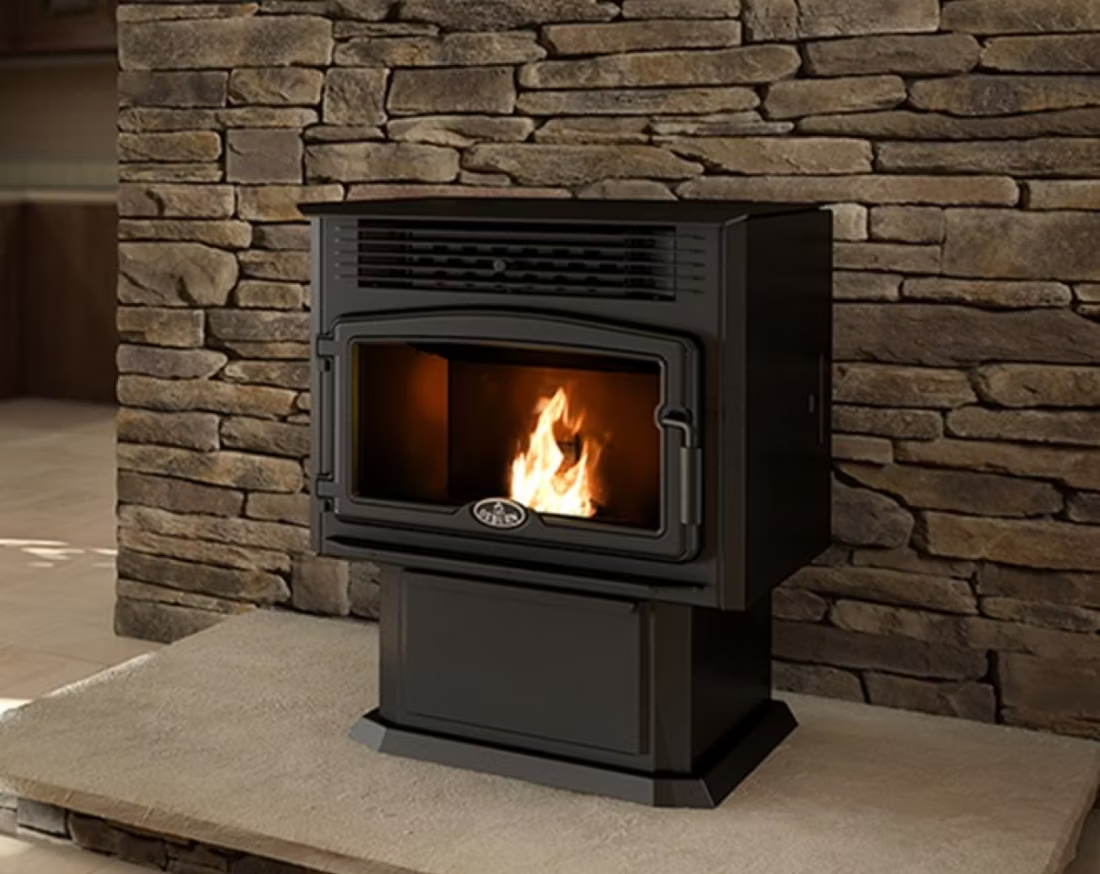
No woodpile, no chimney sweep marathon—just a hopper of pellets and steady warmth for the cold snaps that roll through Baltimore County. Find the right unit and connect with a trusted local dealer.
Every Project Starts From One of These Five Situations
Efficient heat that doesn't need a woodpile.
Woodlawn sits just inside the Baltimore Beltway at around 411 feet elevation, in a climate zone (4A) that gets real winter—a solid, sustained heating season and average lows around 27°F—without the extreme cold of places like Duluth or Fargo. That makes it a good fit for pellet heat: cold enough to matter for the heating bill, mild enough that a hopper of pellets loaded every day or two comfortably covers the coldest stretches. With so many Woodlawn residents commuting to the Social Security Administration campus or CMS headquarters nearby, the appeal of a stove you can set and walk away from—no splitting wood, no stacking a cord in a small townhome yard—comes up constantly with local dealers.
Regional pellet supply here runs through Mid-Atlantic mills—Energex, Hamer Pellet Fuel, and Greene Team Pellet Fuel are all commonly stocked at hearth shops and farm supply stores serving the Baltimore County area, and PFI-certified hardwood pellets are easy to find without a long drive. Baltimore Gas & Electric supplies both electricity and, in most of Woodlawn, natural gas—worth knowing since a pellet stove's auger and blower run on household current (BGE's residential rate runs about 16.1 cents per kWh, a minor add to the bill compared to running a stove all winter). Baltimore County has no wood-smoke non-attainment designation, so pellet installations move through permitting at the Baltimore County Department of Permits, Approvals and Inspections without the burn-curtailment complications some other regions deal with.
Three steps. No salesperson until you're ready.
Tell us about your project
Your zip code, your situation, and the fuel you're leaning toward—or let the answers point you to one.
See what's actually available
The brands dealers within 100 miles genuinely carry—real options, never a catalog mirage.
Get your dealer & Project Guide
A trusted local dealer, plus the free Project Guide & Parts List that names every component of the job.
Frequently Asked Questions
How much does a pellet stove installation cost in Woodlawn?
Most pellet stove and insert installations in the Woodlawn area run $3,800 to $7,200, depending on the unit, whether it's a freestanding stove or an insert going into an existing fireplace, and the venting path. Because pellet stoves vent through a small-diameter PL pipe rather than a full masonry chimney, sidewall venting is common and keeps costs toward the lower end of that range for homes without an existing fireplace. Baltimore County requires a building permit for the install, which local dealers typically pull as part of the job.
What size pellet stove do I need for a Woodlawn home?
Woodlawn's housing stock is a mix of 1950s-60s ranches, split-levels, and townhomes, mostly in the 1,200 to 2,200 square foot range. A stove rated for 1,200-1,800 square feet handles most single-level homes here as a primary or near-primary heat source, while smaller units work well as zone heat for a family room or finished basement. Given the area's moderate winter heating needs, you generally don't need to size up the way a homeowner in a harsher climate would—a local dealer will confirm sizing based on your layout and insulation during an in-home visit.
Pellet stove vs. wood stove—which makes more sense in Woodlawn?
Wood is plentiful locally—oak, hickory, and maple are the common cordwood species around Baltimore County—but storing and seasoning a cord or two isn't practical for a lot of Woodlawn's townhome and smaller-lot properties. Pellet stoves solve that: a season's worth of bagged pellets stores in a garage corner, the burn is more automated (hopper feed, thermostat control), and cleanup is limited to ash removal rather than chimney creosote. Wood still wins on off-grid reliability since it needs no electricity, but for most Woodlawn homeowners prioritizing convenience over the ritual of tending a fire, pellet is the more practical daily-use choice.
Do I need a permit to install a pellet stove in Woodlawn?
Yes—new pellet stove and insert installations require a building permit through the Baltimore County Department of Permits, Approvals and Inspections. Most local dealers handle the permit application and inspection scheduling as part of the installation, so it's rarely something you manage yourself. Because Baltimore County has no wood-smoke non-attainment designation, there are no seasonal burn curtailment rules to worry about here—a pellet stove installed to code can run whenever you want.
What pellet brands are available near Woodlawn?
Energex, Hamer Pellet Fuel, and Greene Team Pellet Fuel are the three brands most consistently stocked by hearth shops and farm supply retailers serving Baltimore County. All three are PFI-certified hardwood or softwood-blend pellets suited to residential stoves. Prices fluctuate seasonally, so buying a season's supply early (typically late summer through early fall) before demand spikes is the standard local strategy—a few dealers offer end-of-summer pre-buy discounts worth asking about.
Will my pellet stove work if the power goes out?
Not without a backup power source. Pellet stoves rely on an electric auger to feed fuel and a blower to circulate heat, so a BGE outage—which happens periodically in Baltimore County during ice storms and summer thunderstorm lines—will shut the stove down along with everything else. Homeowners who want pellet heat as backup heat during outages typically pair the stove with a small battery backup unit or a portable generator sized to run the auger and blower (usually a modest load, well under what's needed to run a whole-house generator). If reliable no-power heat is the priority, that's worth discussing with your dealer before you settle on a unit.
How is a pellet stove vented compared to a wood stove or fireplace?
Pellet stoves vent through a small 3- or 4-inch PL (pellet-listed) pipe rather than a full masonry or Class A chimney, and because the exhaust is pushed by a powered blower rather than relying on natural draft, they can vent horizontally straight out a sidewall in many installations. That makes pellet stoves a realistic option in Woodlawn homes without an existing chimney—a townhome or ranch can often get a stove installed against an exterior wall without any masonry work, which is one reason install costs tend to run lower than wood-burning alternatives.
How much maintenance does a pellet stove need?
Day to day, expect to empty the ash pan every few days to weekly depending on how much you run the stove, and refill the hopper every one to two days during heavy winter use. Beyond that, the glass needs occasional wiping and the burn pot needs periodic scraping to keep the flame clean. Once a year, plan on a professional cleaning that includes the exhaust venting and combustion blower—local dealers typically charge $150 to $250 for this service, similar to an annual gas appliance service call, and it's worth scheduling before burning season starts each fall.
Pellet vs. natural gas—which is the better fit for a Woodlawn home?
Most of Woodlawn has access to natural gas through BGE, so it's a fair comparison. Natural gas fireplaces offer instant on-off convenience and no fuel handling at all, while pellet stoves involve loading a hopper and managing bagged fuel but typically cost less to run per BTU, especially with pre-buy pellet pricing from local suppliers like Energex or Hamer. Pellet also gives you a visible, real flame with more radiant character than many gas units, though it needs electricity to operate—something gas units with battery-backup ignition don't require. Many Woodlawn homeowners use gas as the primary heat source in main living areas and add a pellet stove in a family room or basement for supplemental warmth and lower bills during the coldest months.
Why is my open fireplace making my house colder?
Open fireplaces suck—literally. As the fire burns, it consumes air your furnace already paid to heat and pulls it out through the chimney, so the house is actually colder after the fire goes out than before you lit it. An insert fixes this: it seals the chimney, puts fixed glass across the front, and turns that hole in your house into a real heat source.
What's the difference between an insert and a zero-clearance fireplace?
An insert is a fireplace that slides into a pre-existing wood-burning fireplace—if you don't have one, there's nothing to insert it into. A zero-clearance fireplace is built into a framed wall, which makes it the answer for remodels and new construction. Simple test: existing masonry fireplace means insert; blank or framed wall means zero-clearance.
Can a fireplace actually lower my heating bill?
Yes—by creating a comfort zone. A furnace heats every square foot of the house just to warm the one room you're in; a gas fireplace on low burns roughly a sixth of the gas a typical furnace does. Set the furnace around 55–60 degrees as a baseline, then heat the rooms your family actually uses. Families who heat this way commonly save $20–$60 a month.
How much should I budget for a fireplace?
For an average home—covering the fireplace, the vent pipe, and basic installation—a budget between $3,900 and $5,500 gives you a lot of options across wood, gas, and pellet. By the time you add finish work, gas line, and electrical, the average complete installation lands between $5,000 and $12,000 all-in. In a remodel or new build, a good rule is to put about 2.5% of the total project cost toward the fireplace.
Nearby Dealers
Hearth shops serving Woodlawn and the surrounding area.
Pellet Brands Stocked Around Woodlawn
Manufacturers will point you to the nearest stocking dealer.
Find your pellet stove in Woodlawn.
Tell us a bit about your home and we'll match you with the right pellet stove or insert, plus a free Project Guide & Parts List—the exact parts, including venting, and a trusted local dealer to install it.
Find Your Fireplace →