
Find the right fireplace for your Baltimore County home.
Gas and electric fireplaces are the everyday choice across Baltimore County's rowhomes, townhomes, and suburban subdivisions—from Towson to Dundalk to Cockeysville. Wood and pellet units still show up here and there, but they're the exception, not the rule. Find the right unit for your home and connect with a trusted local hearth dealer.
Every Project Starts From One of These Five Situations
Suburban heat in Maryland's most populous county.
Baltimore County wraps around Baltimore City in a horseshoe of rowhome neighborhoods, mid-century suburbs, and newer subdivisions—Towson, Dundalk, Essex, Catonsville, Perry Hall, Cockeysville, Owings Mills. It sits in climate zone 4A with about 3,858 heating degree days and an average winter low near 30°F—a real but modest heating season, nowhere near the sub-zero stretches you'd see in Madison, WI or Fargo, ND. Most homes here already run on gas or oil furnaces and central air, and the hearth market reflects that: gas fireplaces and inserts are the dominant retrofit and new-construction choice, and electric units have become standard in townhomes and condos that have no chimney to work with.
Wood stoves and pellet stoves exist in Baltimore County, but they're a minority pursuit—mostly in the more rural northern reaches near Monkton, Parkton, and Hereford, where a handful of homeowners still burn oak, hickory, and maple for supplemental heat or backup during outages. There's no regional air-quality non-attainment issue driving burn bans here, so the limiting factor is really lot size, HOA covenants, and the fact that gas is simpler to install in a dense suburb. What you'll find on this hub: hearth retailers, service technicians, and fuel suppliers covering every fuel type across the county, with honest notes on where each one actually fits.
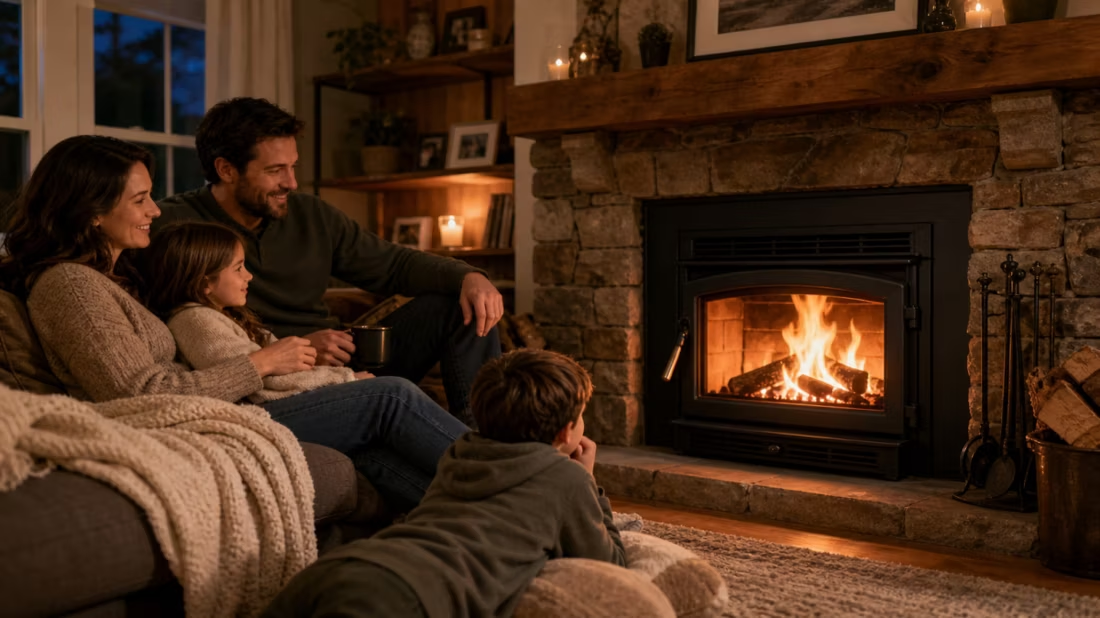
Four fuels. One honest answer for Baltimore County.
Three steps. No salesperson until you're ready.
Tell us about your project
Your zip code, your situation, and the fuel you're leaning toward—or let the answers point you to one.
See what's actually available
The brands dealers within 100 miles genuinely carry—real options, never a catalog mirage.
Get your dealer & Project Guide
A trusted local dealer, plus the free Project Guide & Parts List that names every component of the job.
Frequently Asked Questions
Which fuel works best in Baltimore County?
For most Baltimore County homes, it's gas or electric. Baltimore Gas and Electric (BGE) natural gas service reaches nearly every neighborhood from Towson to Dundalk, and a direct-vent gas fireplace or insert is the standard retrofit for homes that already have a gas furnace. Electric fireplaces have become the default in townhomes, rowhomes, and condos with no chimney—no venting, no gas line, often no permit. Wood stoves show up mainly in the more rural northern county—Monkton, Parkton, Hereford—where a small number of homeowners burn oak, hickory, or maple as supplemental heat. Pellet stoves are rarer still; the county's mild 3,858-HDD climate and dense suburban lot sizes just don't push many households toward either fuel.
Do I need a permit to install a fireplace in Baltimore County?
Usually, yes. Gas fireplace, insert, and stove installations require a building permit through the Baltimore County Department of Permits, Approvals and Inspections (PAI), plus a licensed gas-fitter for the line connection. New wood stove installs also need a permit and must meet current EPA emissions standards, though these are uncommon requests outside the county's rural northern edge. Electric fireplaces typically skip the permit process entirely unless you're hardwiring a built-in unit into a new circuit. Most local dealers pull the permit as part of the installation quote, so you're rarely filing paperwork yourself.
Are wood stoves practical in Baltimore County?
For most of the county, not really—and that's fine. Baltimore County has no air-quality non-attainment designation and no burn-ban history like you'd find in a mountain basin, so it's not a smoke-management issue. It's more about fit: rowhome and townhome lots rarely have room for a woodpile or a masonry chimney, and HOA covenants in many newer subdivisions restrict solid-fuel appliances outright. Where wood does make sense—larger rural lots near Monkton, Parkton, or Hereford—oak, hickory, and maple are the common local species, and a catalytic stove can genuinely offset heating costs. Everywhere else, gas or electric is the more practical call.
Can one local retailer handle every fuel type?
Some can, but it's less common here than in a market where wood and pellet are mainstream. Most Baltimore County hearth retailers build their business around gas and electric—display floors full of direct-vent gas fireplaces, gas inserts, and electric units for townhomes. A smaller number of dealers, often those with roots in the county's rural north, also carry wood stoves and can special-order pellet units. If you're set on wood or pellet, it's worth confirming a dealer actually stocks and services that fuel before you visit—it's not a given the way it is in Baltimore's gas and electric market.
How does service work across a county this size?
Baltimore County stretches from dense rowhome neighborhoods near the city line to farmland up near the Pennsylvania border, so service radius matters. Gas technicians and electricians based in Towson, Cockeysville, or Perry Hall typically cover the whole county for annual inspections and repairs—gas units need a yearly safety check, electric fireplaces need almost nothing beyond an occasional filter or bulb swap. The rare wood-burning household further north should expect to book a chimney sweep from a smaller pool of specialists, since it's not the dominant fuel here the way it is in more rural counties.
What's the typical cost range for a fireplace project in Baltimore County?
Gas fireplace, insert, or stove: roughly $4,000–$9,500 installed, with cost driven mainly by whether a new gas line is needed or an existing one can be tapped. Electric fireplace: $200–$2,500 for the unit itself, plus $300–$1,000 in labor for anything beyond a plug-in wall unit—most townhome and condo installs fall at the low end since no venting is required. Wood stove or insert: $4,000–$8,500 for the rare household that installs one, largely driven by chimney and hearth-pad work. Pellet stove: similar range to wood, but few local dealers stock them, so expect a special order. See the county + fuel pages above for retailer-specific pricing.
Wood, gas, pellet, or electric—how do I choose?
Match the fuel to your life, not the other way around. Wood: lowest fuel cost and total power-outage independence, but you're hauling and stacking. Gas: press a button, set a thermostat, no maintenance to speak of. Pellet: wood economics with automatic feeding, in exchange for weekly cleaning and a need for electricity. Electric: plugs in anywhere with honest supplemental heat. Nobody regrets the fuel that fits how they actually live.
What is an in-home preview and do I need one?
It's a visit where a hearth professional measures your space, confirms the model you picked actually works in your home, and walks the specs—framing, gas line, venting, finish work—before anything is ordered. Some details you just can't know until you see the house. Never make a down payment without one; it's the single most-skipped step that burns buyers.
Can I install a fireplace myself?
If you're putting a fire in your house on purpose, it's best to work with an expert. Unless you're genuinely experienced in framing, gas line, vent pipe, and the national code on clearances to combustibles, have a professional do it—and ideally the same company that sells you the fireplace, so warranty, service, and liability all live under one roof.
Should the dealer who sells my fireplace also install it?
Ideally, yes. A fireplace project involves vent pipe, gas line, electrical, and often tile or stone. Hire three or four separate trades and you own the liability and the game of telephone between them. One company selling and installing means one accountable party, start to finish—ask about factory training, on-time completion records, and what happens if an inspection fails.
Stove and Fireplace Dealers in Baltimore County
Listings include WhyFire partner dealers, dealers we have verified as authorized for the brands we recommend, and established local businesses that carry hearth products. Every listing shows which one it is. The ones marked Preferred run on WhyFire's software, so they can show you real pricing and book your appointment right here. No manufacturer pays for placement. How we verify dealers →
Complete Chimneys Fireplaces & Grills
Watson's Fireplace & Patio
Hunters Home Center
Ace Of Diamonds Chimney
Fireplaces And Stoves Md
Trinity Chimney Service
Fireside Hearth & Home - Elkridge
Courtland Hearth & Hardware
Westlake Ace Hardware
Costello's Hearth & Spa - Glen Burnie
Glyndon Gardens
Costello's Hearth & Spa - Pasadena
Costello's Hearth & Spa - Forest Hill
Clearwater Pool & Spa
Affordable Outdoor Kitchens
Ash Away Chimney Services
The Torch Guys
Bulls Supply Co, Inc
Find your fireplace in Baltimore County.
Tell us about your home and we'll match you with a trusted local dealer and a free Project Guide & Parts List—the exact parts, including the vent kit, for your gas or electric fireplace project in Baltimore County.
Find Your Fireplace →