
Considering a pellet stove in Middle River, Maryland?
Pellet stoves are uncommon in Middle River's mild, gas-dominant Baltimore County market—but for the right home, a pellet insert still makes sense. See if it fits yours, and get matched with a trusted local dealer.
Every Project Starts From One of These Five Situations
A mild bay-side climate favors gas over pellets.
Middle River sits at just 64 feet of elevation on the Chesapeake Bay side of Baltimore County, where winters average around 3,858 heating degree days and lows hover near 30°F. That's a mild Mid-Atlantic winter compared to the sub-zero stretches homeowners deal with in a place like Burlington, Vermont—and it's a big part of why pellet stoves never took hold here the way they did in colder, more rural parts of the country. Natural gas service and Baltimore Gas & Electric's dense residential grid cover most of the 21220 zip code, so the default heat source in a Middle River home is a gas furnace or an electric heat pump, not a hopper-fed appliance that needs regular bag deliveries.
That doesn't rule pellet heat out entirely. A pellet insert can still work well as supplemental heat in a den or waterfront rancher near the Hammerman or Cove areas, or for homeowners who want real flame without the masonry chimney a wood-burning unit requires. Regional pellet producers—Energex, Hamer Pellet Fuel, and Greene Team Pellet Fuel—all serve the Mid-Atlantic and are available through hardware stores and farm-supply retailers in the Baltimore area. With no local air-quality restrictions pushing residents toward cleaner-burning appliances, and BGE natural gas readily available at a residential rate around 16.1 cents per kWh for the electric side of the bill, most Middle River households simply have less reason to switch. If you're one of the exceptions, a local hearth dealer can still spec, permit, and install a pellet unit properly.
Three steps. No salesperson until you're ready.
Tell us about your project
Your zip code, your situation, and the fuel you're leaning toward—or let the answers point you to one.
See what's actually available
The brands dealers within 100 miles genuinely carry—real options, never a catalog mirage.
Get your dealer & Project Guide
A trusted local dealer, plus the free Project Guide & Parts List that names every component of the job.
Frequently Asked Questions
Are pellet stoves common in Middle River, MD?
Not really. Middle River's climate is mild by national standards—about 3,858 heating degree days a year and winter lows averaging around 30°F—so most homes here run on natural gas furnaces or BGE electric heat rather than a supplemental hopper-fed appliance. Pellet stoves are far more common in colder, more rural parts of the country where wood and pellet heat serve as a primary fuel source. In Middle River, a pellet stove is almost always a secondary or ambiance-driven purchase rather than a whole-home heating decision, and the dealer network reflects that—it's thinner here than in cold-climate markets.
How much does a pellet stove installation cost in Middle River?
Because pellet installs are less frequent in this market, pricing is quoted case by case rather than off a standard local price sheet, but homeowners in the greater Baltimore area typically budget somewhere in the $3,500 to $7,000 range depending on the unit, whether it's a freestanding stove or an insert into an existing fireplace, and venting complexity. A local hearth dealer will need to see your fireplace or install location in person to give you a firm number—venting a pellet stove through an exterior wall in a Middle River rowhome or rancher is a different job than converting an existing masonry fireplace.
Where can I buy pellet fuel near Middle River?
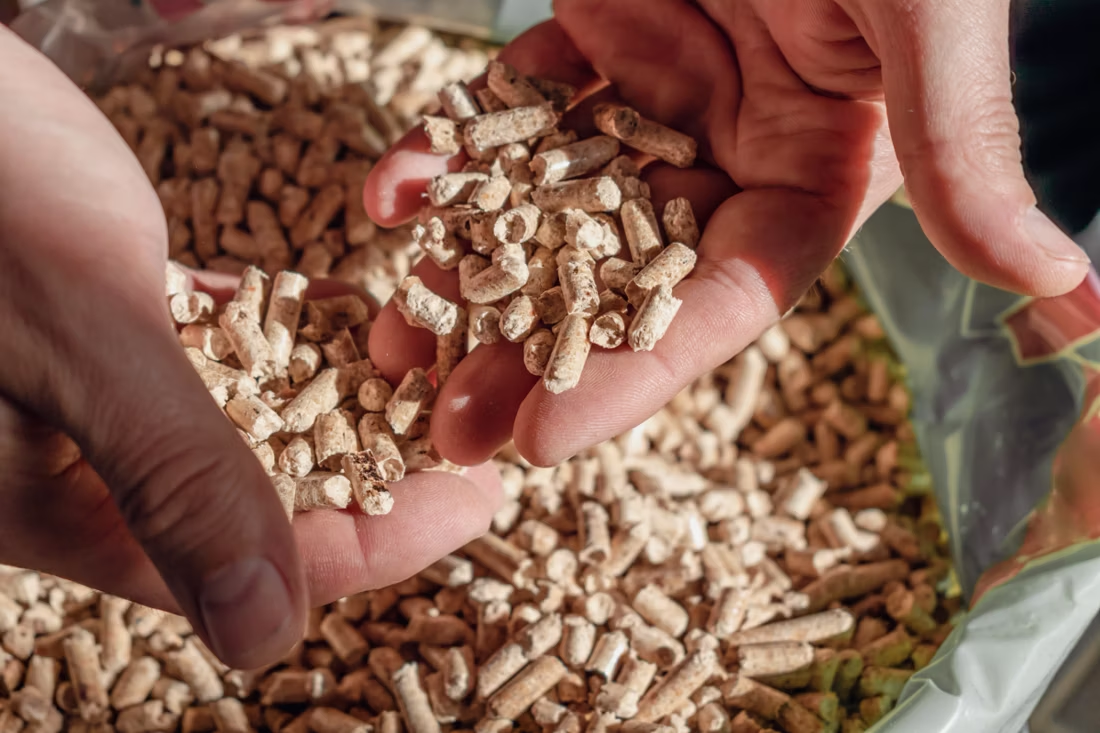
Bagged pellets from Mid-Atlantic producers like Energex, Hamer Pellet Fuel, and Greene Team Pellet Fuel show up seasonally at hardware stores and farm-supply retailers across the Baltimore region. Because pellet heat isn't a dominant fuel source in this part of Baltimore County, don't expect the year-round bulk-pallet stocking you'd see in a colder pellet-heavy market—it's worth calling ahead in peak winter months, or ordering a season's supply in the fall before demand picks up.
Do I need a permit to install a pellet stove in Baltimore County?
Yes. New pellet stove or insert installations in Middle River fall under the Baltimore County Department of Permits, Approvals and Inspections, which requires a permit for the appliance and typically an inspection of the venting once installed. Most licensed hearth installers handle this paperwork as part of the job. Because pellet stoves vent through a small-diameter pipe rather than a full masonry chimney, the permitting and inspection process is usually more straightforward than a wood-burning fireplace install.
Why aren't wood stoves common in Middle River either, if there's local hardwood?
Middle River sits in a region with plenty of oak, hickory, and maple, but that doesn't translate to a strong wood-burning culture here the way it does in more rural, forested parts of the country. This is a dense Baltimore County suburb along the Chesapeake Bay, not a market with public land cutting permits or a firewood-supply infrastructure, and BGE natural gas is already piped to most homes. Both wood and pellet appliances end up in the same boat locally—genuinely available if you want one, but a minority choice compared to gas or electric heat.
Will a pellet stove work during a power outage?
Not without a backup power source. Pellet stoves rely on an electric auger to feed fuel and a blower to distribute heat, so a BGE outage—which does happen during nor'easters and remnants of tropical storms moving up the bay—will shut the unit down unless you have it wired to a battery backup or a small generator. If outage resilience during coastal storms is a priority for your Middle River home, a wood-burning stove or a battery-backed gas unit is a more reliable choice than pellet.
What size pellet stove do I need for a Middle River home?
Given the area's mild heating load—under 4,000 heating degree days a year—most Middle River homes only need a small to mid-size pellet stove, even for a fairly large room. A unit rated for 1,000 to 1,800 square feet is plenty for supplemental heat in a den, sunroom, or converted garage in most local homes; you rarely need to size up to the large units built for whole-home heating in colder climates. A local dealer can confirm sizing based on your room's insulation and layout during an in-home visit.
Pellet vs. gas—which is right for my home in Middle River?
Gas wins for most Middle River homeowners: BGE natural gas is already piped to most of the 21220 area, a gas fireplace or insert lights instantly with the flip of a switch, and there's no bag-hauling or hopper-filling involved. Pellet stoves offer a real-flame look and a lower per-BTU fuel cost than gas in some winters, but they need regular pellet deliveries, routine ash cleanout, and electricity to run—a real limitation given the outages that can follow bay-area storms. For a primary heat source in this climate, gas is the practical choice; pellet tends to make more sense as a secondary unit for atmosphere in a specific room.
Where can I find a local pellet stove dealer near Middle River?
The dealer network for pellet appliances is smaller here than in colder, pellet-heavy states, so you may need to work with a hearth specialty retailer serving the broader Baltimore metro rather than one based in Middle River itself. That's exactly the kind of matching we handle—we'll connect you with a trusted dealer who actually installs and services pellet stoves in the Baltimore County area, rather than leaving you to cold-call retailers to find out who still carries them.
Why is a fireplace insert so efficient?
An insert does two things: it seals the chimney completely, so you stop losing air you already paid to heat, and it radiates warmth into the room through the firebox and glass. Most add a heat-exchange fan that pulls cool room air underneath, wraps it around the hot firebox, and pushes it back out warm. Your home is more efficient before you've even lit the first fire.
What's the difference between an insert and a zero-clearance fireplace?
An insert is a fireplace that slides into a pre-existing wood-burning fireplace—if you don't have one, there's nothing to insert it into. A zero-clearance fireplace is built into a framed wall, which makes it the answer for remodels and new construction. Simple test: existing masonry fireplace means insert; blank or framed wall means zero-clearance.
Does a fireplace add value to my home?
On average, a fireplace adds back to the home about the same amount you spent installing it. Add the monthly savings from heating the rooms you actually use instead of the whole house—often hundreds of dollars a year—and the value case is strong before you even count what a fire does for how your family uses the room.
Can I install a fireplace myself?
If you're putting a fire in your house on purpose, it's best to work with an expert. Unless you're genuinely experienced in framing, gas line, vent pipe, and the national code on clearances to combustibles, have a professional do it—and ideally the same company that sells you the fireplace, so warranty, service, and liability all live under one roof.
Nearby Dealers
Hearth shops serving Middle River and the surrounding area.
Pellet Brands Stocked Around Middle River
Manufacturers will point you to the nearest stocking dealer.
See if a pellet stove fits your Middle River home.
Tell us about your home and we'll put together a free Project Guide & Parts List—an honest look at whether pellet heat makes sense for your space, the parts and venting you'd need, and a match with a trusted local dealer serving the Baltimore area.
Find Your Fireplace →