
Pellet stoves are a rare find in Catonsville—but not an impossible one.
With a modest winter heating season and BGE natural gas reaching most streets in this Baltimore County suburb, pellet appliances just aren't the default heat source here. If you still want one—for a finished basement, a sunroom, or backup heat during a BGE outage—I'll match you with a local dealer who actually stocks and installs them.
Every Project Starts From One of These Five Situations
A mild climate and easy gas access make pellet the exception, not the rule.
Catonsville sits at 471 feet in climate zone 4A, with an average winter low around 30°F and a moderate heating season—a fraction of the heating load a place like Burlington, VT sees over its long, cold winters. That's a comfortable mid-Atlantic winter by national standards, and it shows in how homes here are built: most rely on ducted gas furnaces or heat pumps served by Baltimore Gas & Electric, not a standalone hearth appliance carrying the heating load. Pellet stoves, which need a hopper refilled every day or two and an electric auger to run, solve a problem that a lot of Catonsville homeowners simply don't have.
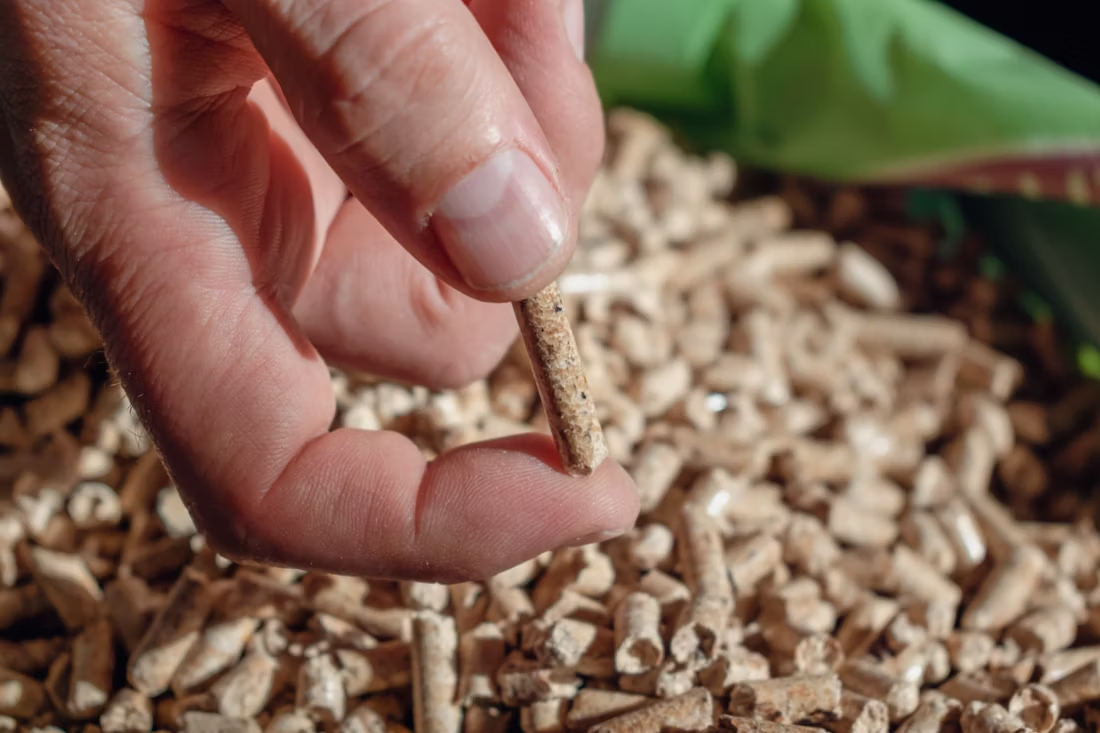
That said, pellet fuel does exist in this region. Mills like Energex, Hamer Pellet Fuel, and Greene Team Pellet Fuel produce hardwood pellets within trucking distance of Baltimore, often milled from the same oak, hickory, and maple that fill Baltimore County's own tree canopy. A small number of Catonsville homeowners still install a pellet insert or freestanding stove—usually in an older rowhome or split-level without good ductwork to a back addition, or as a hedge against the ice storms that occasionally knock out BGE power for a day or two. It's a niche choice here, not a mainstream one, and any dealer worth working with will tell you that upfront.
Three steps. No salesperson until you're ready.
Tell us about your project
Your zip code, your situation, and the fuel you're leaning toward—or let the answers point you to one.
See what's actually available
The brands dealers within 100 miles genuinely carry—real options, never a catalog mirage.
Get your dealer & Project Guide
A trusted local dealer, plus the free Project Guide & Parts List that names every component of the job.
Frequently Asked Questions
Are pellet stoves actually available in Catonsville, or is this a rural-only product?
They're available, just not common. Because natural gas from BGE covers most of Catonsville and winters here are mild compared to the rest of the pellet-stove market—a much shorter, lighter heating season than places like Duluth, MN or Burlington, VT—most local hearth dealers keep pellet inventory light and lean toward gas and electric units instead. A handful of dealers serving the Catonsville and greater Baltimore area do carry pellet stoves and inserts, usually special-order rather than showroom-floor, and can source hardwood pellets from regional mills like Energex or Greene Team Pellet Fuel.
What does a pellet stove installation typically cost in a Catonsville home?
There's no dense local pricing history here since so few go in each year, but a typical freestanding pellet stove install nationally runs roughly $3,500 to $6,500, including the unit, hearth pad, and venting through an exterior wall—pellet stoves don't need a full masonry chimney the way a wood stove does. In an older Catonsville rowhome or Cape Cod with an existing but unused fireplace, a pellet insert can sometimes come in lower if the chimney chase is usable for the vent run. Get a firm number from a dealer after they've seen the space, since venting distance and electrical access (pellet stoves need a standard outlet nearby) both move the price.
Do I need a permit to install a pellet stove in Catonsville?
Yes. Catonsville is unincorporated, so building permits run through Baltimore County's Department of Permits, Approvals and Inspections (PAI) rather than a city office. A pellet stove install typically needs a mechanical permit covering the appliance and venting, plus an inspection once it's in. Because pellet installs are less frequent here than gas or electric, it's worth confirming your dealer has pulled Baltimore County permits before—not every hearth contractor in the metro area does pellet work regularly.
Where do I buy pellet fuel near Catonsville?
You won't find pellets stacked at every hardware store the way you would in a heavier pellet market, but regional brands like Energex, Hamer Pellet Fuel, and Greene Team Pellet Fuel—all milled from Mid-Atlantic and Appalachian hardwoods including oak and hickory—are distributed through farm supply stores and select hearth dealers in the greater Baltimore area. Most pellet stove owners here plan ahead and buy a season's worth (roughly 100-150 bags for an average-sized home) in late summer or early fall, since local stock can run thin once cold weather actually arrives.
Will my pellet stove still run if BGE power goes out?
Not on its own. Pellet stoves depend on an electric auger and blower to feed fuel and move heat, so a BGE outage—which does happen during Baltimore County ice storms—shuts the stove down along with everything else, unlike a wood stove or a gas fireplace with millivolt ignition. If outage resilience is your main reason for wanting supplemental heat, most local dealers will point you toward a small battery backup or generator sized for the stove's low wattage draw, or steer you toward a vented gas appliance instead, since BGE's residential rate of about 16.1 cents per kWh makes running a generator for a pellet auger a reasonable but not free workaround.
Why would I choose a pellet stove over just using my gas furnace or a gas fireplace?
For most Catonsville homes, gas wins on convenience—no bags to haul, no ash to empty, and it's already the dominant heat source across Baltimore County. Where a pellet stove still makes sense is zone heating in a room your central system doesn't reach well, like a converted attic or a rear addition, or for homeowners who specifically want a renewable, regionally-produced fuel rather than piped gas. It's a smaller use case here than in colder, off-gas-grid markets, but it's a legitimate one, and a local dealer can help you weigh it against a simpler gas or electric option for the same room.
I have oak and hickory trees on my property—should I burn wood instead of pellets?
Plenty of Catonsville and Baltimore County lots do have mature oak, hickory, and maple, but wood stoves face the same suburban-fit issue pellet stoves do here: lots tend to be smaller, HOA and neighbor proximity make ongoing smoke less welcome, and with BGE gas so widely available, most homeowners don't need either wood or pellet to carry primary heat. If you're drawn to burning your own hardwood rather than buying bagged pellets, a wood stove is the more direct route—pellet appliances specifically require processed, compressed pellet fuel, not split firewood, so having trees on-site doesn't reduce your pellet costs.
What's the best use case for a pellet stove in a Catonsville home?
The homeowners who get the most value from a pellet stove here are usually heating a specific space—a finished basement rec room, a converted garage, or a three-season sunroom—that their existing ductwork doesn't serve well, rather than trying to replace their whole-house gas system. A mid-sized pellet insert or freestanding unit can comfortably carry a 1,000-1,500 square foot addition through Catonsville's relatively mild winter lows around 30°F without needing a wood-stove-scale firebox or chimney work.
How do I find a dealer near Catonsville who actually knows pellet stoves?
This is the real challenge in a market where pellet demand is light—a lot of hearth shops in the Baltimore metro area are set up primarily for gas and electric fireplaces and only handle pellet appliances occasionally. I match Catonsville homeowners with local dealers who genuinely stock and service pellet stoves, know how to size the unit and vent run for your specific room, and can point you to a reliable pellet supplier like Energex or Hamer Pellet Fuel rather than leaving you to track one down yourself.
Why is my open fireplace making my house colder?
Open fireplaces suck—literally. As the fire burns, it consumes air your furnace already paid to heat and pulls it out through the chimney, so the house is actually colder after the fire goes out than before you lit it. An insert fixes this: it seals the chimney, puts fixed glass across the front, and turns that hole in your house into a real heat source.
How often does a pellet stove need cleaning?
A clean pellet stove is a happy pellet stove. Plan on cleaning the burn pot about once a week when you're burning regularly—ash and clinkers gum up the air holes just like a pellet barbecue. Most pellet stove problems trace back to skipped cleaning that nobody explained up front. Some designs make it easy with a trapdoor burn pot: pull a lever and the gunk drops into the ash pan.
Can I install a fireplace myself?
If you're putting a fire in your house on purpose, it's best to work with an expert. Unless you're genuinely experienced in framing, gas line, vent pipe, and the national code on clearances to combustibles, have a professional do it—and ideally the same company that sells you the fireplace, so warranty, service, and liability all live under one roof.
How much should I budget for a fireplace?
For an average home—covering the fireplace, the vent pipe, and basic installation—a budget between $3,900 and $5,500 gives you a lot of options across wood, gas, and pellet. By the time you add finish work, gas line, and electrical, the average complete installation lands between $5,000 and $12,000 all-in. In a remodel or new build, a good rule is to put about 2.5% of the total project cost toward the fireplace.
Nearby Dealers
Hearth shops serving Catonsville and the surrounding area.
Pellet Brands Stocked Around Catonsville
Manufacturers will point you to the nearest stocking dealer.
Get your free Project Guide & Parts List for a pellet stove in Catonsville.
Tell me about the room you're heating and I'll match you with a trusted local dealer—one who actually carries pellet appliances in a market dominated by gas—and send a free Project Guide & Parts List with the vent kit and parts your project needs.
Find Your Fireplace →