
Real ambiance for Will County, without a flue.
Plug-in warmth and instant ambiance for Joliet, Plainfield, Bolingbrook, and every Will County subdivision—no chimney, no gas line, no permit headaches. Find the right unit and connect with a trusted local dealer.
Every Project Starts From One of These Five Situations
The simplest way to add heat and glow to a Will County room.
Will County sits in climate zone 5A with a winter heating season about as demanding as a long, steady winter and average winter lows near 17°F—comparable to what Madison, WI sees most winters. That's cold enough that homeowners want supplemental warmth in bedrooms, basements, and finished additions, but it's not the kind of deep-freeze cold where a household is relying on a single heat source to survive a week without power the way a family in International Falls might plan for. That distinction matters for fuel choice: in most Will County homes, electric fireplaces are chosen for convenience, zone heating, and design impact rather than as a primary furnace backup.
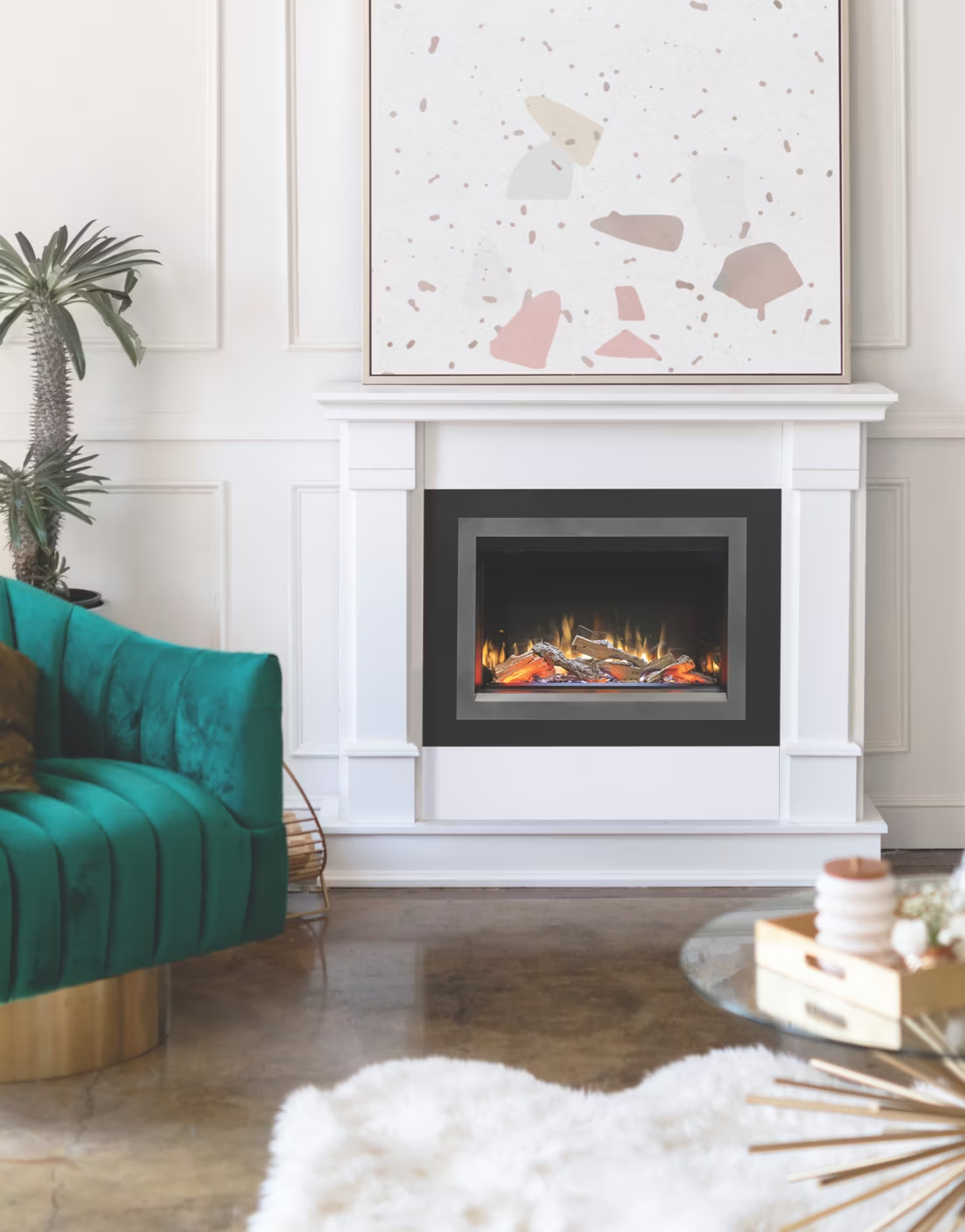
With ComEd serving electric distribution across most of the county—Joliet, Plainfield, Bolingbrook, Romeoville, Crest Hill—and reliable grid service outside of severe storm events, an electric fireplace or insert is a low-friction way to add a focal point to a living room or finished basement. There's no venting, no gas line, and in many cases no permit at all for a plug-in unit. Built-in electric fireplaces that require a dedicated circuit are a bigger project, but still far simpler than a wood or gas installation—which is part of why electric has become a standard, mainstream choice throughout the county rather than a niche one.
Three steps. No salesperson until you're ready.
Tell us about your project
Your zip code, your situation, and the fuel you're leaning toward—or let the answers point you to one.
See what's actually available
The brands dealers within 100 miles genuinely carry—real options, never a catalog mirage.
Get your dealer & Project Guide
A trusted local dealer, plus the free Project Guide & Parts List that names every component of the job.
Frequently Asked Questions
How much does an electric fireplace installation cost in Will County?
Plug-in electric fireplaces and freestanding inserts typically run $400 to $1,200 installed in Will County, and that range covers most of what homeowners in Joliet, Plainfield, and Bolingbrook actually buy—a unit that drops into an existing mantel surround or a wall-mounted model on a standard outlet. Built-in models that require a dedicated 20-amp circuit run toward the higher end of that range once an electrician is involved, especially in older Joliet housing stock where panel capacity can be tight. There's no chimney, venting, or gas line to budget for, which is the main reason electric costs so much less than wood or gas installations in the same home.
Do I need a permit to install an electric fireplace in Will County?
Most plug-in electric fireplaces and inserts that use a standard 120-volt outlet don't require a permit anywhere in Will County, whether you're in Joliet, unincorporated county land, or one of the smaller municipalities. If you're adding a dedicated circuit for a built-in unit, that electrical work typically does require a permit through your local building department—Joliet's Building Division, Plainfield's, or the Will County Land Use Department for unincorporated areas—and should be pulled by a licensed electrician. Local dealers who install built-in units generally coordinate this as part of the job.
Is an electric fireplace enough heat for a Will County winter?
For most rooms, yes, as supplemental heat—but not as your only heat source through a Will County winter. With average lows around 17°F and a winter heating season that runs long and steady, most electric fireplaces (typically 1,500 watts, around 5,000 BTU) are sized to comfortably heat a single room of 400 to 1,000 square feet, not a whole house. They're best paired with your existing furnace, used to take the edge off a chilly bonus room, finished basement, or primary bedroom rather than replacing central heat. If you're looking for whole-home backup heat during a furnace outage, a gas fireplace or insert is generally a better fit for this climate.
What's the difference between an electric fireplace insert and a built-in unit?
An electric insert is designed to slide into an existing fireplace opening—including old wood-burning fireboxes that have been capped or converted—and plugs into a standard outlet or nearby receptacle. A built-in electric fireplace is designed to be framed into a wall during a remodel or new construction, often wired to a dedicated circuit, and can be finished flush with drywall and trim for a more custom look. For Will County homes with an existing masonry fireplace that's no longer used for wood burning, an insert is usually the faster, less invasive option. For a new build or full renovation in Naperville-adjacent or Plainfield subdivisions, a built-in is more common.
Will an electric fireplace work if the power goes out?
No—electric fireplaces require power to run the heater, blower, and flame effect, so they go dark along with everything else during an outage. This is worth planning around in Will County, where summer storms and occasional winter ice events can knock out ComEd service for hours at a time. If backup heat during outages matters to your household, a wood stove or a gas fireplace with battery-backed ignition (like Valor's thermocouple-powered pilot, which needs no batteries at all) is a better complement to an electric unit than a substitute for one.
Are electric fireplaces expensive to run in Will County?
Running costs are modest. A typical 1,500-watt electric fireplace costs roughly 15 to 25 cents per hour to run on heat mode, based on typical ComEd residential electric rates—meaning a few hours of evening use adds maybe $10 to $20 a month to a winter electric bill. Running just the flame effect without heat costs only a few cents an hour. That's a fraction of what a comparable amount of gas fireplace runtime costs, though gas delivers more raw BTU per dollar if you're trying to heat a larger space rather than add ambiance to one room.
Are wood or pellet stoves an option in Will County?
They're uncommon here, and for good reason. Will County sits in the Chicago metro area with reliable natural gas service through Nicor Gas and Peoples Gas across most of the county, no local air quality restrictions on solid-fuel appliances, and a housing stock—think Joliet, Plainfield, Bolingbrook—where lot sizes and HOA rules often don't favor a woodpile or pellet delivery. A small number of rural Will County homeowners with acreage still burn oak, hickory, or walnut cut on their own property, and a few pellet stoves show up as backup heat, but the overwhelming majority of Will County homeowners choosing supplemental or accent heat go with gas or electric instead. If you're specifically interested in wood or pellet, a local dealer can tell you honestly whether it makes sense for your property.
Electric vs. gas fireplace—which is right for my Will County home?
Electric fireplaces cost less to install, require no venting or gas line, and can go almost anywhere with an outlet—but they produce modest heat output and won't help during a power outage. Gas fireplaces cost more to install but produce real BTU output capable of heating a room through a Will County cold spell, and models with standing pilot or Valor's self-powered ignition keep working even when the grid doesn't. For a bedroom, basement, or accent wall where ambiance and low cost matter most, electric usually wins. For a primary living space where you want genuine supplemental heat, gas is usually the better long-term choice. Plenty of Will County homes end up with both.
Can an electric fireplace be installed in an apartment or condo in Will County?
In most cases, yes—this is one of the biggest advantages of electric over wood or gas. A plug-in electric fireplace or a wall-mounted unit typically doesn't require any venting, gas line, or structural change, which means it's often allowed in rental units and condos throughout Joliet, Plainfield, and Bolingbrook where wood or gas installations would be off the table entirely. Always check with a property manager or HOA before installing a built-in unit that requires cutting into a wall, but freestanding and mantel-style electric units are usually a straightforward add.
Can I put a TV above my fireplace?
Yes—with an asterisk. Fireplaces are hot and TVs don't like heat. Either put a mantel between them to deflect rising warmth, or choose a fireplace with heat-management technology that creates a cool zone on the wall above—the wall stays around 125 degrees, barely warm, while the room still gets full heat. If you like clean lines and don't want a mantel, heat management is the answer.
How much does an electric fireplace cost to run?
With the heater on, a typical unit draws about 1,500 watts—at average electric rates that's roughly 20 cents an hour. Run the flame effect alone and it costs pennies; the flames are LED-driven and use about as much power as a light bulb. There's no pilot light, no fuel delivery, and essentially no maintenance.
What is an in-home preview and do I need one?
It's a visit where a hearth professional measures your space, confirms the model you picked actually works in your home, and walks the specs—framing, gas line, venting, finish work—before anything is ordered. Some details you just can't know until you see the house. Never make a down payment without one; it's the single most-skipped step that burns buyers.
Can a fireplace actually lower my heating bill?
Yes—by creating a comfort zone. A furnace heats every square foot of the house just to warm the one room you're in; a gas fireplace on low burns roughly a sixth of the gas a typical furnace does. Set the furnace around 55–60 degrees as a baseline, then heat the rooms your family actually uses. Families who heat this way commonly save $20–$60 a month.
Stove and Fireplace Dealers in Will County
Listings include WhyFire partner dealers, dealers we have verified as authorized for the brands we recommend, and established local businesses that carry hearth products. Every listing shows which one it is. The ones marked Preferred run on WhyFire's software, so they can show you real pricing and book your appointment right here. No manufacturer pays for placement. How we verify dealers →
A Cozy Fireplace
A Fireplace Store And More
Cugini Woodworking
A Cozy Fireplace
Find your electric fireplace in Will County.
Tell us a bit about your home and we'll match you with the right electric fireplace or insert, plus a free Project Guide & Parts List with your recommended local Will County dealer.
Find Your Fireplace →