
Electric Heat That Fits Every New Lenox Home.
No chimney, no gas line, no permit headaches—just real ambiance and supplemental warmth for New Lenox living rooms, basements, and primary suites. Find the right unit and a trusted local dealer to install it.
Every Project Starts From One of These Five Situations
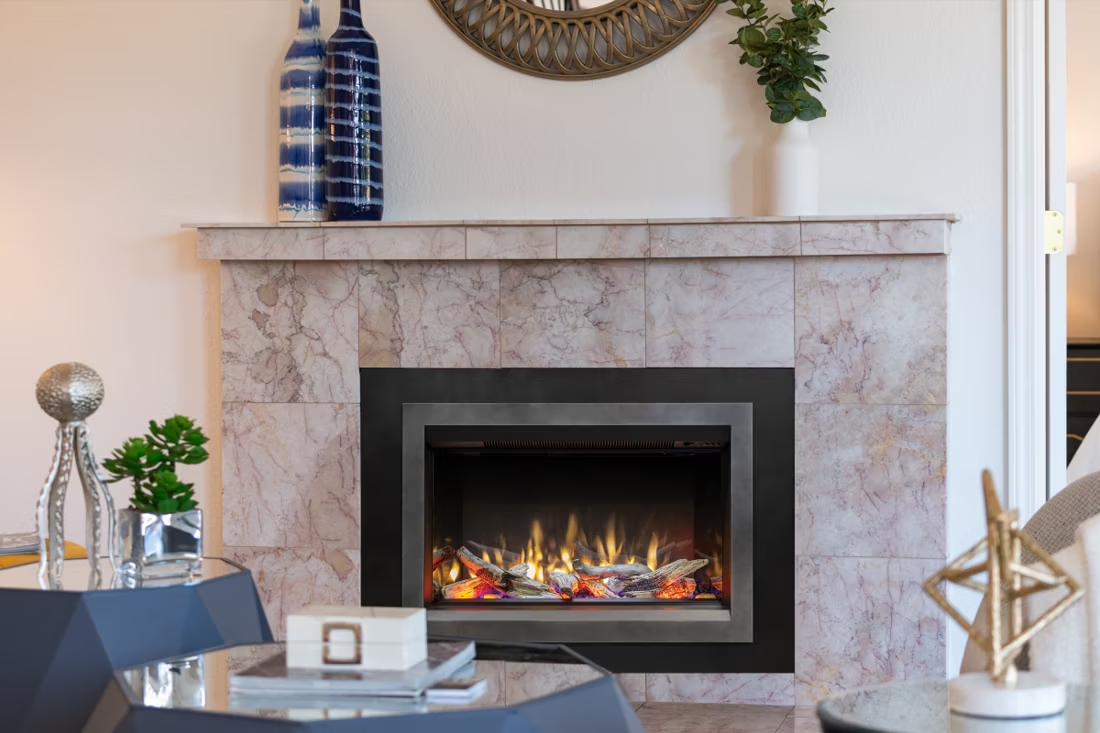
Real warmth, no chimney needed.
New Lenox sits in climate zone 5A with a winter heating load a bit more than double Atlanta's and average winter lows around 17°F—cold enough that a fireplace matters, but not so extreme that homeowners need a primary wood-burning setup. Much of New Lenox's housing stock is newer construction built after the 1990s Will County growth boom, and a lot of it went up without masonry chimneys or fireplace rough-ins at all. That's exactly the gap electric fireplaces fill.
Commonwealth Edison serves electric service throughout New Lenox, and at a residential rate around 13.39 cents per kWh, running an electric fireplace for a few hours a night in a family room or finished basement costs pennies compared to a whole-house furnace cycle. Most units plug into a standard outlet or a dedicated 20-amp circuit—no venting, no gas line permit, no annual chimney sweep. For subdivisions with HOA restrictions on solid-fuel appliances, or homeowners who just want instant, zero-maintenance ambiance, electric is often the most practical fireplace option in town.
Three steps. No salesperson until you're ready.
Tell us about your project
Your zip code, your situation, and the fuel you're leaning toward—or let the answers point you to one.
See what's actually available
The brands dealers within 100 miles genuinely carry—real options, never a catalog mirage.
Get your dealer & Project Guide
A trusted local dealer, plus the free Project Guide & Parts List that names every component of the job.
Frequently Asked Questions
How much does an electric fireplace installation cost in New Lenox?
A plug-in electric insert or freestanding unit typically runs $300 to $1,500 for the unit itself, with little to no installation labor if it uses a standard outlet. Built-in linear electric fireplaces or mantel-surround installations that require a dedicated 240V circuit, wall framing, or a finish carpenter usually land between $1,500 and $5,000 once electrical work and trim-out are included. Because New Lenox has so much newer, drywall-and-stud construction, built-in electric units are a popular remodel option where a masonry fireplace was never part of the original floor plan.
Will an electric fireplace actually heat my New Lenox home?
Most electric fireplaces produce 4,600 to 10,000 BTU (roughly 1,000 to 1,500 watts of resistance heat), which is enough to comfortably warm a single room—a family room, finished basement, or primary suite—but it won't replace your furnace on a 17°F January night. Given New Lenox's long, demanding winter heating season, think of electric as supplemental zone heat: it lets you turn down the thermostat in the room you're actually using while your furnace keeps the rest of the house at baseline. Homeowners looking for a true primary heat backup usually pair electric ambiance with gas or a high-efficiency HVAC system instead.
Do I need a permit to install an electric fireplace in New Lenox?
In most cases, no separate fireplace permit is required since there's no venting or gas line involved—this is one of the appeals of electric. If your installation requires a new dedicated circuit or panel work, a licensed electrician will typically pull an electrical permit through the Village of New Lenox Building Department as part of that work. Simple plug-in units that use an existing outlet usually don't trigger any permit at all. Your local dealer can tell you exactly what your specific unit and wall configuration requires.
What's the difference between an electric insert, built-in, and freestanding unit?
An electric insert is sized to slide into an existing fireplace opening—useful if you have an old, unused masonry firebox you want to convert to clean, no-maintenance heat. A built-in electric fireplace is designed to be framed into a wall like a linear TV-height feature, common in New Lenox remodels and new-construction great rooms. A freestanding electric stove or mantel unit needs no framing at all—it plugs in and sits against a wall, which makes it the fastest and cheapest option for renters or homeowners who want to test the look before committing to a built-in.
Do I need an electrician, or can I just plug it in?
Smaller electric fireplaces (under about 1,500 watts) run on a standard 120V household outlet—no electrician required if the outlet is already there and on its own circuit. Larger built-in units, especially wide linear models over 50 inches, sometimes require a dedicated 20-amp circuit or 240V line, which does call for a licensed electrician. ComEd's standard residential service handles either setup fine; the limiting factor is usually your home's existing wiring and panel capacity, not the utility. A local dealer will spec the electrical requirements before you buy.
What will an electric fireplace cost to run in New Lenox?
At ComEd's residential rate of about 13.39 cents per kWh, a 1,500-watt electric fireplace running on high costs roughly 20 cents an hour to operate. Most units let you run the flame effect alone (a few watts) without the heater engaged, so you can keep the ambiance going for a fraction of a cent per hour and only switch on the heat element when you actually want warmth in the room. Compared to running a furnace to heat an entire house, this is a meaningful reason homeowners use electric fireplaces as a zone-heating strategy during Will County's long heating season.
Electric vs. gas fireplace—which is right for my New Lenox home?
Gas fireplaces deliver more real heat output and a more traditional flame, but they require a gas line, venting (or careful vent-free code compliance), and periodic professional service. Electric fireplaces need none of that—no gas line, no venting, no annual inspection—which makes them faster and cheaper to install, especially in homes without an existing gas appliance nearby. If you already have gas service to your home and want a fireplace that can genuinely take the edge off a cold night, gas is worth the extra installation cost. If you want ambiance, supplemental warmth, and the simplest possible install in a New Lenox subdivision home, electric is usually the better fit.
Why don't more New Lenox homes have wood-burning fireplaces?
Wood-burning fireplaces and stoves are uncommon in New Lenox's newer subdivisions—lot sizes, HOA covenants, and homes built without masonry chimneys all work against them, and there's little local infrastructure for firewood permits or chimney sweeps compared to more rural parts of Illinois. Homeowners who want the look and feel of a real fire without the smoke, ash, or chimney maintenance typically choose an electric unit instead, which can replicate the flame effect convincingly with none of the upkeep or building constraints.
What features should I look for in an electric fireplace for a New Lenox home?
Look for a realistic flame technology (LED-driven flame effects from brands like Dimplex, Napoleon, and Amantii tend to look the most convincing rather than the older shimmering-light-strip style), a heater that can be run independently of the flame effect, and a wattage rating that matches your room size rather than the biggest unit that fits the wall. For finished basements—common in New Lenox's larger newer homes—look for units rated for slightly damper environments and confirm the electrical circuit can handle the heater load without tripping a shared breaker.
Can I put a TV above my fireplace?
Yes—with an asterisk. Fireplaces are hot and TVs don't like heat. Either put a mantel between them to deflect rising warmth, or choose a fireplace with heat-management technology that creates a cool zone on the wall above—the wall stays around 125 degrees, barely warm, while the room still gets full heat. If you like clean lines and don't want a mantel, heat management is the answer.
Do electric fireplaces actually produce heat?
Yes—most put out around 4,800–5,000 BTUs from a standard outlet, which comfortably warms a bedroom, office, or den as a comfort-zone heater. What they won't do is carry a whole house the way wood, gas, or pellet can. Think of electric as ambiance-first with honest supplemental heat: flames on with no heat in July, flames plus warmth in January.
How much should I budget for a fireplace?
For an average home—covering the fireplace, the vent pipe, and basic installation—a budget between $3,900 and $5,500 gives you a lot of options across wood, gas, and pellet. By the time you add finish work, gas line, and electrical, the average complete installation lands between $5,000 and $12,000 all-in. In a remodel or new build, a good rule is to put about 2.5% of the total project cost toward the fireplace.
Can a fireplace actually lower my heating bill?
Yes—by creating a comfort zone. A furnace heats every square foot of the house just to warm the one room you're in; a gas fireplace on low burns roughly a sixth of the gas a typical furnace does. Set the furnace around 55–60 degrees as a baseline, then heat the rooms your family actually uses. Families who heat this way commonly save $20–$60 a month.
Nearby Dealers
Hearth shops serving New Lenox and the surrounding area. Every listing shows whether it is a WhyFire partner, a dealer we have verified as authorized for the brands we recommend, or a local business carrying hearth products. No manufacturer pays for placement. How we verify dealers →
A Cozy Fireplace
A Fireplace Store And More
Cugini Woodworking
A Cozy Fireplace
Electric Service in New Lenox
An electric fireplace's heater draws about 1,500 watts—pennies per hour at local rates.
Commonwealth Edison Co
Find your electric fireplace in New Lenox.
Tell us a bit about your home and we'll match you with the right electric fireplace or insert, plus a free Project Guide & Parts List with the exact parts and a trusted local New Lenox dealer to install it.
Find Your Fireplace →