
Real heat, zero venting, for Lockport's historic and modern homes.
From canal-era brick homes downtown to newer builds near I-355, electric fireplaces give Lockport homeowners heat and ambiance without a chimney, gas line, or wood permit. Find the right unit and a local dealer who installs it right.
Every Project Starts From One of These Five Situations
No chimney required—and in a lot of Lockport homes, that's the point.
Lockport sits in climate zone 5A with a heating season comparable to winters around Chicago and winter lows that average around 16°F—cold enough that supplemental zone heat matters, but nowhere near the wood-heavy heating culture you'd find in a place like Madison, WI. Wood and pellet appliances see almost no demand here; the housing stock skews toward the historic brick homes of the Lockport Historic District along the I&M Canal and newer subdivisions further from downtown, and neither lends itself to firewood storage or venting retrofits the way rural Midwest homes do.
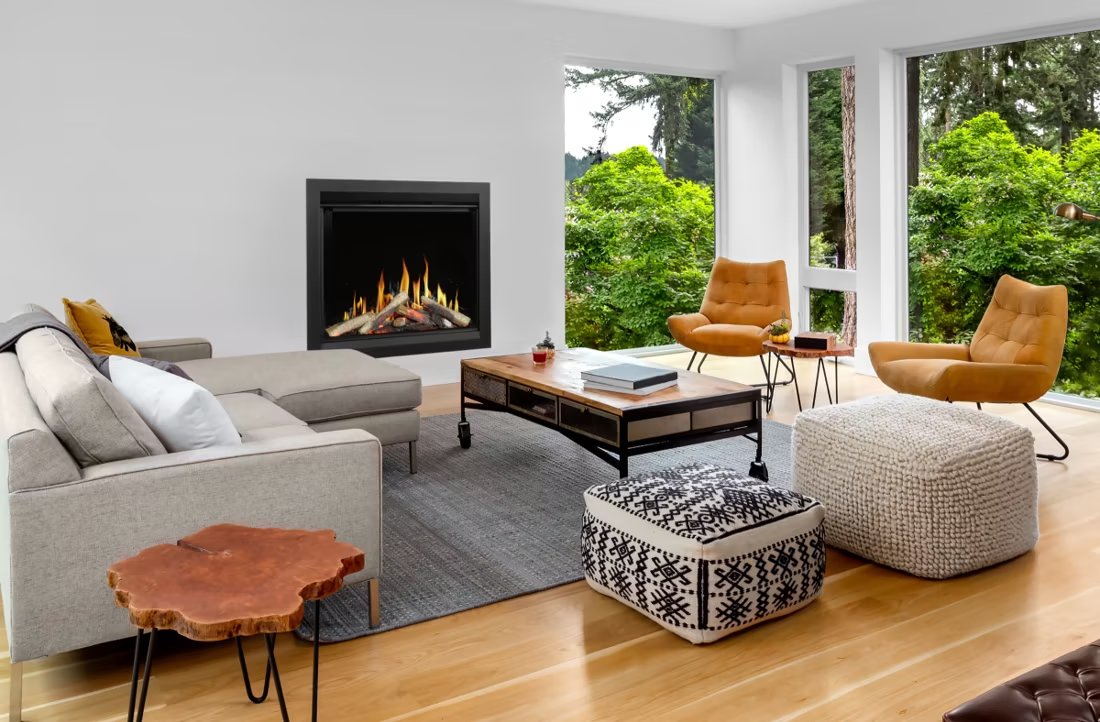
Electric fireplaces fill that gap well. A unit plugs into a standard outlet, needs no chimney or gas line, and can be dropped into an existing masonry firebox in one of Lockport's older homes or built into a wall in a newer one. Commonwealth Edison serves the area at roughly 13.4 cents per kWh, which keeps typical running costs for supplemental heat modest, and because there's no combustion, there's no venting inspection or make-up air calculation to worry about—just an electrical circuit and, for larger built-ins, a dedicated line.
Three steps. No salesperson until you're ready.
Tell us about your project
Your zip code, your situation, and the fuel you're leaning toward—or let the answers point you to one.
See what's actually available
The brands dealers within 100 miles genuinely carry—real options, never a catalog mirage.
Get your dealer & Project Guide
A trusted local dealer, plus the free Project Guide & Parts List that names every component of the job.
Frequently Asked Questions
How much does an electric fireplace installation cost in Lockport?
Costs vary widely by unit type. A plug-in electric insert that slides into an existing masonry firebox typically runs $300 to $900 installed, since there's no venting or gas work involved—often just trim work and an outlet check. A built-in wall unit or a linear electric fireplace set into new framing, which usually requires a licensed electrician to run a dedicated 20-amp circuit, runs closer to $1,200 to $2,500 depending on the size of the unit and any surrounding millwork or stone facing. Local dealers can quote a firm number after seeing your wall or existing firebox.
Is electric or gas the better choice for a Lockport home?
Gas is the stronger primary or supplemental heat source in this climate—a direct-vent gas insert can genuinely offset a furnace on the coldest nights common at Lockport's 16°F average winter low. Electric fireplaces produce real, controllable heat too (most units put out around 4,600–5,000 BTU, enough to warm a single room), but they're better suited to homes without an easy gas line run, condos and townhomes where venting isn't an option, or homeowners who want flame ambiance in a room that doesn't need serious heating. A lot of Lockport homeowners choose electric specifically because it skips the Village permitting and gas-line coordination that a gas project requires.
What will an electric fireplace add to my ComEd bill?
At Commonwealth Edison's residential rate of about 13.4 cents per kWh, a typical 1,500-watt electric fireplace running on high costs roughly 20 cents an hour to operate. Run it 4–5 hours a night through a Lockport winter and you're looking at somewhere around $25–$35 a month in added electricity use—noticeably cheaper than most people expect, since the heating element is the only real draw (the flame effect itself uses negligible power). Units with a thermostat or eco-mode setting cut that further by cycling the heater on and off rather than running continuously.
Can I install an electric insert into my home's existing fireplace?
Yes, and it's a common project in Lockport's older housing stock, particularly homes near the historic district with existing brick fireboxes. An electric insert slides into the opening, plugs into a nearby outlet (or a new one added behind the unit), and gives you flame effect and heat without touching the chimney, which can simply be capped. It's one of the fastest fireplace upgrades available—often a single afternoon—and it's a good option for homeowners who want to preserve a period mantel and surround rather than remodel around a gas or wood conversion.
Do I need a permit to install an electric fireplace in Lockport?
A simple plug-in electric insert generally doesn't require a permit through the Village of Lockport Building Department since there's no gas line, venting, or structural change involved. A built-in wall unit is a different story if it requires new electrical wiring—running a new dedicated circuit typically does require an electrical permit and inspection, which most licensed installers pull as part of the job. When in doubt, ask your local dealer whether your specific unit and installation type triggers a permit before work starts.
Will my electric fireplace still work during a power outage?
No—and this is the main tradeoff worth knowing before you buy. Because electric fireplaces run entirely on household current, they shut off the moment the power does, unlike a battery-backed gas fireplace or a wood stove. For Lockport homeowners who want backup heat during a winter outage, electric alone isn't the answer; some households pair an electric fireplace for daily ambiance and supplemental heat with a portable generator or a gas appliance elsewhere in the house for true outage coverage.
What size electric fireplace do I need for my room?
Most electric fireplaces are sized by width rather than BTU output for aesthetic fit, but the heating side matters too: a standard 1,500-watt unit (the size found in most 40–50 inch models) comfortably heats about 400 square feet, which covers a typical Lockport living room or family room. Larger open-concept spaces common in newer subdivisions may need a higher-wattage unit or a secondary heat source, since most electric fireplaces cap out around 5,000 BTU regardless of size—going bigger typically buys you a wider flame display, not more heat.
Which electric fireplace brands do local dealers carry?
Dealers serving the Lockport area typically stock Dimplex, Napoleon, and Touchstone for both insert-style and linear wall units, with Dimplex generally regarded as having the most realistic flame technology in the mid-range price point. For built-in projects with custom surrounds, some installers also work with Amantii. Availability shifts by dealer, so the local match matters more than the brand name—a dealer can tell you what they actually stock and can service, rather than what's simply listed on a manufacturer's website.
Electric insert vs. wall-mount vs. freestanding electric stove—which fits my home?
An electric insert is built for an existing masonry firebox and is the natural choice for Lockport's older homes with a fireplace already in place. A wall-mount or built-in linear unit works best in newer construction or a remodel where you're framing a feature wall from scratch—common in the subdivisions further from downtown. A freestanding electric stove mimics a wood stove's footprint and look, and works well in a room without any existing fireplace opening, such as a basement or converted sunroom, since it just needs floor space and an outlet. A local dealer can walk through your specific room and existing structure to point you toward the right format.
Can I put a TV above my fireplace?
Yes—with an asterisk. Fireplaces are hot and TVs don't like heat. Either put a mantel between them to deflect rising warmth, or choose a fireplace with heat-management technology that creates a cool zone on the wall above—the wall stays around 125 degrees, barely warm, while the room still gets full heat. If you like clean lines and don't want a mantel, heat management is the answer.
Do electric fireplaces actually produce heat?
Yes—most put out around 4,800–5,000 BTUs from a standard outlet, which comfortably warms a bedroom, office, or den as a comfort-zone heater. What they won't do is carry a whole house the way wood, gas, or pellet can. Think of electric as ambiance-first with honest supplemental heat: flames on with no heat in July, flames plus warmth in January.
Can a fireplace actually lower my heating bill?
Yes—by creating a comfort zone. A furnace heats every square foot of the house just to warm the one room you're in; a gas fireplace on low burns roughly a sixth of the gas a typical furnace does. Set the furnace around 55–60 degrees as a baseline, then heat the rooms your family actually uses. Families who heat this way commonly save $20–$60 a month.
Can I install a fireplace myself?
If you're putting a fire in your house on purpose, it's best to work with an expert. Unless you're genuinely experienced in framing, gas line, vent pipe, and the national code on clearances to combustibles, have a professional do it—and ideally the same company that sells you the fireplace, so warranty, service, and liability all live under one roof.
Nearby Dealers
Hearth shops serving Lockport and the surrounding area. Every listing shows whether it is a WhyFire partner, a dealer we have verified as authorized for the brands we recommend, or a local business carrying hearth products. No manufacturer pays for placement. How we verify dealers →
A Cozy Fireplace
A Fireplace Store And More
A Cozy Fireplace
Ember Glow
Electric Service in Lockport
An electric fireplace's heater draws about 1,500 watts—pennies per hour at local rates.
Commonwealth Edison Co
Find your electric fireplace in Lockport.
Tell us about your room and your existing fireplace or wall, and we'll match you with the right electric insert, built-in, or stove—plus a trusted local dealer and a free Project Guide & Parts List.andY
Find Your Fireplace →