
Find the fireplace that fits your Will County home.
Gas and electric fireplaces are the practical default across Will County's suburban Chicago communities. We'll also point you toward the small number of local dealers who handle wood or pellet installs for the exurban and rural exceptions—and connect you with a trusted local retailer either way.
Every Project Starts From One of These Five Situations
A gas-and-electric heating market in Will County, Illinois.
Will County is home to more than 565,000 people spread across Joliet, Plainfield, Bolingbrook, New Lenox, Romeoville, and dozens of smaller towns south and southwest of Chicago. Winters here sit in climate zone 5A with a heating season comparable to Madison, Wisconsin, and an average winter low near 17°F—though without the extended sub-zero stretches you'd see farther north. Nicor Gas serves most of the county's natural gas infrastructure and ComEd covers electric service, which is why gas fireplaces and electric units are what most local retailers actually stock and install. Oak, hickory, walnut, and maple grow throughout the county's forest preserves, but wood-burning fireplaces are uncommon here—dense suburban lot sizes, municipal ordinances, and the convenience of existing gas lines mean most homeowners never consider them.
Pellet stoves follow a similar pattern. Regional pellet producers like Indeck Energy Services, Lignetics, and Somerset Pellet Fuel supply bagged pellets to the broader Illinois market, but residential pellet stove ownership in Will County is low—it's a niche choice rather than a mainstream one. This hub still covers wood and pellet options for the homeowners who genuinely want them (a cabin-style property in Wilmington or Manhattan, for instance), but the bulk of what you'll find below is gas and electric: local retailers, installation costs, and the dealers who actually service this market. Pick your fuel below to get specific.
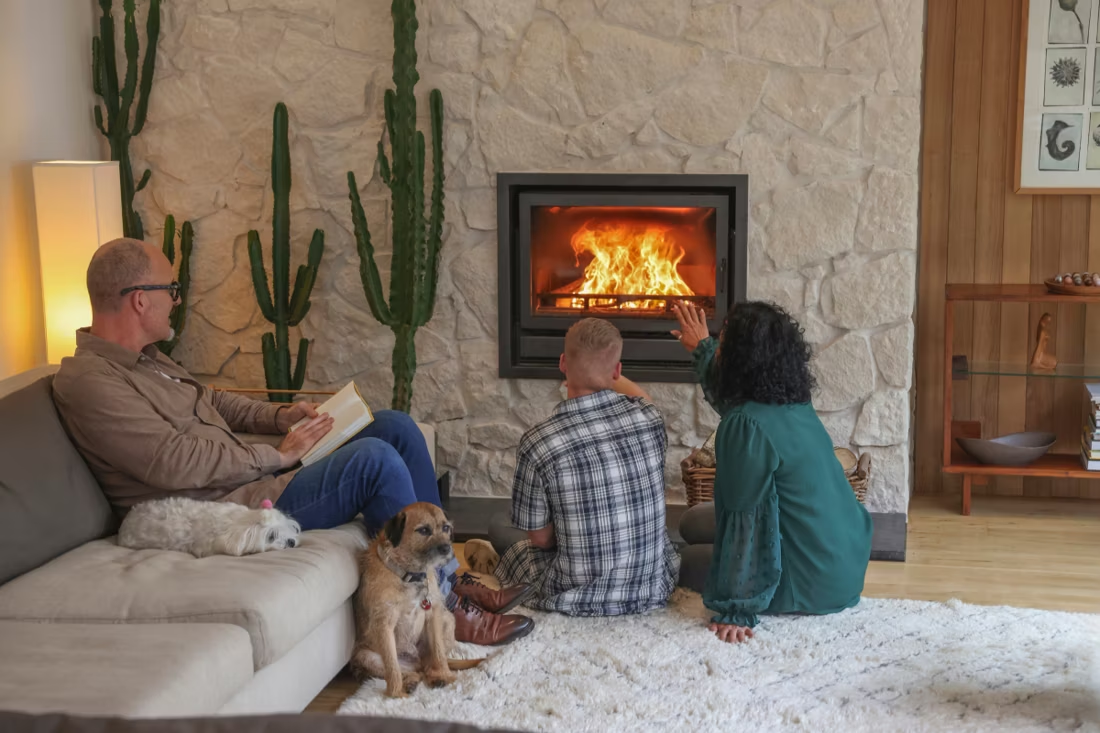
Four fuels. One honest answer for Will County.
Three steps. No salesperson until you're ready.
Tell us about your project
Your zip code, your situation, and the fuel you're leaning toward—or let the answers point you to one.
See what's actually available
The brands dealers within 100 miles genuinely carry—real options, never a catalog mirage.
Get your dealer & Project Guide
A trusted local dealer, plus the free Project Guide & Parts List that names every component of the job.
Frequently Asked Questions
Which fuel works best in Will County?
For most Will County homes, it's gas. Nicor Gas service reaches nearly every subdivision in Joliet, Plainfield, Bolingbrook, and the surrounding suburbs, and a gas fireplace or insert gives you instant heat with none of the maintenance a wood setup requires. Electric fireplaces from ComEd-served homes work well as supplemental heat in bedrooms, basements, or additions where running a gas line isn't practical. Wood-burning fireplaces are uncommon here—lot sizes, local ordinances, and the convenience of gas mean most homeowners skip them, though a handful of exurban properties near Wilmington or Manhattan still burn oak or hickory for ambiance. Pellet stoves are rarer still; regional producers like Indeck Energy Services supply the market, but very few Will County homes actually run one as a primary heat source.
Do I need a permit to install a fireplace in Will County?
In most cases, yes. Gas fireplace and insert installations require a building permit plus a licensed gas-fitter for the line connection—whether you're in Joliet, Plainfield, or one of the smaller municipalities, your local building department handles this, and for unincorporated areas it runs through the county. Electric fireplace installs typically don't require a permit unless you're adding a new circuit for a built-in or hardwired unit. Wood stove or insert installs, while uncommon, still require a permit and inspection if you go that route. Most local retailers handle the permitting paperwork as part of the installation, so you generally aren't filing it yourself.
Are there air quality restrictions on burning in Will County?
No—Will County has no wood-smoke nonattainment designation and no seasonal burn advisories like you'd find in a basin community. That's part of why wood-burning here is a matter of preference rather than regulation: there's no yellow-curtailment system or mandatory burn-ban to work around. It's simply that, in a densely suburban gas-served county like this one, most homeowners default to gas or electric because it's more convenient, not because burning wood is restricted.
Can one local retailer handle gas, electric, wood, and pellet?
A few of the larger Joliet-area retailers carry all four, but it's more common for Will County dealers to specialize in gas and electric—that's where the volume is. If you're one of the homeowners looking for a wood-burning insert or a pellet stove, expect a smaller pool of dealers to choose from, and expect them to double-check that your home's setup (chimney, clearances, venting) actually supports it before quoting anything. If you're unsure which fuel fits, a multi-fuel dealer can walk you through working displays and the real trade-offs for your house.
What about homes outside Nicor Gas service, on the edges of the county?
Some rural and exurban properties near Peotone, Wilmington, or unincorporated pockets of the county sit outside the Nicor Gas main and rely on propane instead. Propane-fed fireplaces and inserts work the same way as natural gas units mechanically, just with a tank and a local propane supplier instead of a utility line. If you're in one of these areas, your local retailer can tell you which propane suppliers service your address before you commit to a gas appliance.
What's the typical installation cost across fuel types in Will County?
Gas fireplace, insert, or stove: roughly $4,500–$11,000 depending on whether a new gas line needs to be run and how much venting work is involved; conversions of existing wood-burning fireplaces to gas inserts tend to land on the lower end. Electric fireplace: $200–$3,000 for the unit itself, plus $400–$1,200 in labor for anything beyond a plug-and-play install. Wood stove or insert: $4,500–$9,000 where it applies, though this is a small share of Will County installs. Pellet stove or insert: $4,500–$7,500, also uncommon locally. For exact numbers tied to your address, a local dealer's quote will beat any general range.
Wood, gas, pellet, or electric—how do I choose?
Match the fuel to your life, not the other way around. Wood: lowest fuel cost and total power-outage independence, but you're hauling and stacking. Gas: press a button, set a thermostat, no maintenance to speak of. Pellet: wood economics with automatic feeding, in exchange for weekly cleaning and a need for electricity. Electric: plugs in anywhere with honest supplemental heat. Nobody regrets the fuel that fits how they actually live.
What is an in-home preview and do I need one?
It's a visit where a hearth professional measures your space, confirms the model you picked actually works in your home, and walks the specs—framing, gas line, venting, finish work—before anything is ordered. Some details you just can't know until you see the house. Never make a down payment without one; it's the single most-skipped step that burns buyers.
How much should I budget for a fireplace?
For an average home—covering the fireplace, the vent pipe, and basic installation—a budget between $3,900 and $5,500 gives you a lot of options across wood, gas, and pellet. By the time you add finish work, gas line, and electrical, the average complete installation lands between $5,000 and $12,000 all-in. In a remodel or new build, a good rule is to put about 2.5% of the total project cost toward the fireplace.
Can a fireplace actually lower my heating bill?
Yes—by creating a comfort zone. A furnace heats every square foot of the house just to warm the one room you're in; a gas fireplace on low burns roughly a sixth of the gas a typical furnace does. Set the furnace around 55–60 degrees as a baseline, then heat the rooms your family actually uses. Families who heat this way commonly save $20–$60 a month.
Stove and Fireplace Dealers in Will County
Listings include WhyFire partner dealers, dealers we have verified as authorized for the brands we recommend, and established local businesses that carry hearth products. Every listing shows which one it is. The ones marked Preferred run on WhyFire's software, so they can show you real pricing and book your appointment right here. No manufacturer pays for placement. How we verify dealers →
A Cozy Fireplace
A Fireplace Store And More
Cugini Woodworking
A Cozy Fireplace
Find your fireplace in Will County.
Tell us your fuel and your Will County city, and we'll match you with a trusted local dealer and send over a free Project Guide & Parts List—the exact parts, including the vent kit, and the dealer we recommend for your project.
Find Your Fireplace →