
Modern Heat for Beecher's Long Winters.
No chimney, no gas line, no venting—just plug-in or hardwired warmth for Will County's cold-climate stretch. Find the right unit and connect with a trusted local dealer.
Every Project Starts From One of These Five Situations
Electric heat that fits small-town living.
Beecher sits in Will County's farm country at 737 feet, in climate zone 5A with average winter lows near 15°F and a solid six-month heating season—a real Midwest winter, if not an extreme one. Unlike heavily forested parts of the state, Beecher and the surrounding township are agricultural, not timbered, and there's no local Forest Service cutting-permit infrastructure the way you'd find farther north or out west. That's part of why wood and pellet appliances see little uptake here, while gas and electric have become the default.
For homeowners who don't already have a masonry chimney or an existing gas line, electric is often the simplest path to a fireplace. There's no flue to run, no combustion air to plan for, and no annual chimney sweep. ComEd serves Beecher at a residential rate around 13.4 cents per kWh, which keeps day-to-day operating cost predictable—a typical 1,500-watt insert runs roughly 20 cents an hour on the heat setting, and effectively nothing when it's running flame-effect only. Many Beecher homeowners use electric units for supplemental warmth in a family room or finished basement, paired with a furnace for whole-house heat.
Three steps. No salesperson until you're ready.
Tell us about your project
Your zip code, your situation, and the fuel you're leaning toward—or let the answers point you to one.
See what's actually available
The brands dealers within 100 miles genuinely carry—real options, never a catalog mirage.
Get your dealer & Project Guide
A trusted local dealer, plus the free Project Guide & Parts List that names every component of the job.
Frequently Asked Questions
How much does an electric fireplace installation cost in Beecher?
Plug-in electric fireplace inserts and mantel packages generally run $300 to $1,500 for the unit itself, with little to no installation cost since they use a standard outlet. Built-in wall units or units wired to a dedicated 120V or 240V circuit typically add $200 to $600 in electrician labor for the circuit run, and full mantel-and-surround installations with custom framing can reach $2,000 to $4,000 total. Because there's no venting or masonry work involved, electric installs in Beecher are consistently the fastest and least invasive of any fireplace fuel—most are done in a day.
Do I need a permit to install an electric fireplace in Beecher?
Simple plug-in units generally don't require a permit—they're treated like any other appliance you plug into a wall outlet. If your installer is running a new dedicated circuit or doing built-in electrical work, that typically requires an electrical permit through the Village of Beecher or the Will County Building Division depending on your property's jurisdiction. A licensed electrician handling the circuit work will usually pull the permit as part of the job, so it's worth confirming that's included in your quote.
What size electric fireplace do I need for my home?
Most electric fireplaces are sized more by room and visual impact than by whole-home heating capacity, since the heater component tops out around 5,000 BTU regardless of unit size—enough to noticeably warm a single room, not a whole floor. For a bedroom or den, a 26–36 inch insert is common. For a great room or open living/kitchen area, homeowners in Beecher often step up to 50-inch-plus linear units, sized primarily for the visual anchor with the heater as a bonus on cold evenings. A local dealer can walk you through sightlines and mounting height for your specific room.
Electric vs. gas fireplace—which makes more sense in Beecher?
Gas fireplaces put out real heat—enough to serve as legitimate supplemental or zone heat on a 15°F January night—and many Beecher homes already have the gas service to support one. Electric units are better suited to rooms without existing gas infrastructure, rentals, finished basements, or anywhere a fast, no-venting install matters more than heating capacity. If you're trying to meaningfully offset your furnace load during a cold snap, gas usually wins. If you want ambiance and modest supplemental warmth without construction, electric is the more practical fit—and it's the reason electric has become the standard choice for secondary rooms across town.
How much does it cost to run an electric fireplace in Beecher?
At ComEd's residential rate of roughly 13.4 cents per kWh, a typical 1,500-watt electric fireplace on its heat setting costs about 20 cents per hour to run—around $1.60 for an 8-hour evening. Running the unit on flame-effect only, without the heater engaged, draws closer to 30–50 watts and costs a fraction of a cent per hour. That makes electric fireplaces one of the cheapest supplemental heat sources to operate in Will County, even if the total BTU output is modest compared to gas.
Why don't wood or pellet stoves show up much in Beecher?
Beecher sits in open farm country rather than timberland, and there's no nearby Forest Service district issuing cutting permits the way there is in more forested parts of Illinois or the upper Midwest. While oak, hickory, walnut, and maple all grow locally on private woodlots, there's little of the public-land firewood infrastructure that makes wood heat practical and affordable in forested regions. Pellet appliances see the same limited uptake—most regional pellet brands like Lignetics and Somerset Pellet Fuel are sold through farm and hardware stores rather than dedicated hearth shops nearby. For most Beecher homeowners, that gap is exactly where electric and gas fill in.
What's the difference between an electric fireplace insert, an electric stove, and a wall-mount unit?
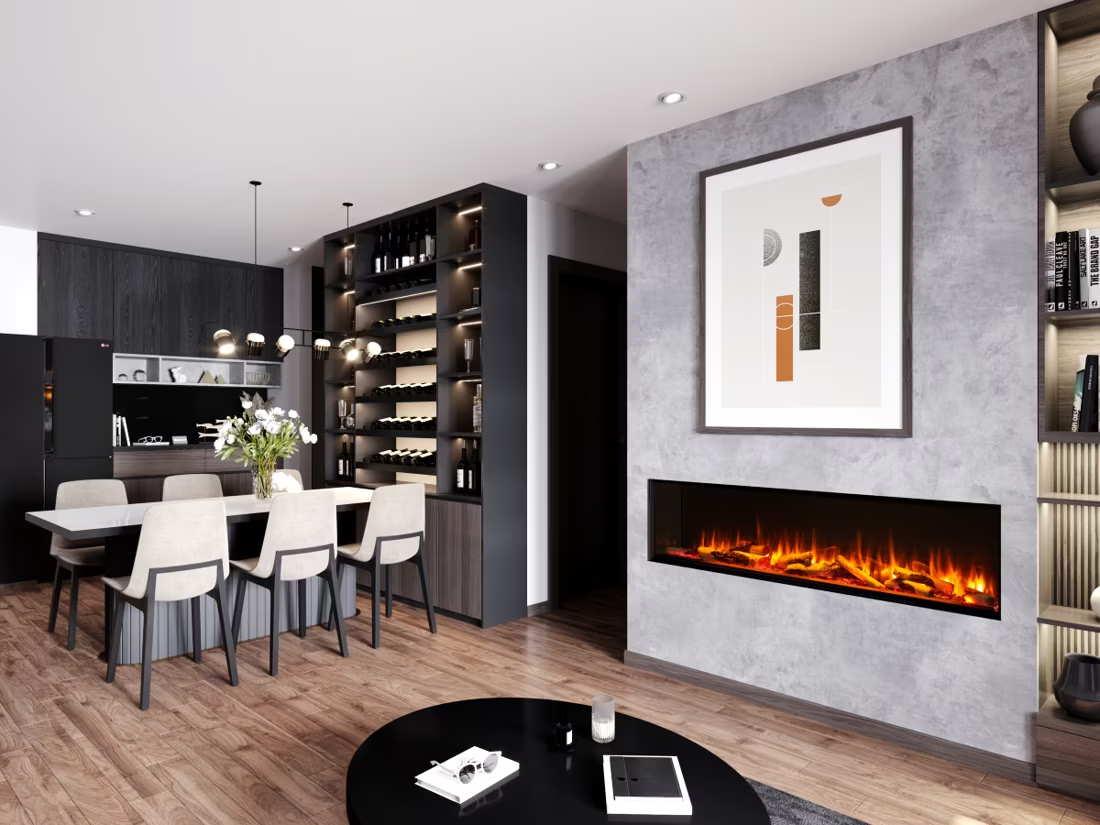
An electric insert is built to slide into an existing masonry firebox or a framed cavity, giving an old fireplace opening new life without venting changes. An electric stove is a freestanding cabinet-style unit that sits on the floor, styled to look like a traditional wood or gas stove—a good option if you want a stove aesthetic without a chimney. A wall-mount or linear unit hangs flush on a wall like a large-format TV, popular in newer Beecher homes and finished basements where a modern, minimal look matters more than a traditional firebox opening. All three plug into standard household power or a dedicated circuit—none require venting.
Will my electric fireplace still work if the power goes out?
No—electric fireplaces require power to run the heater, LED flame effect, and any fan, so a ComEd outage takes the unit offline along with everything else in the house. This is the main tradeoff against wood or gas, both of which can provide heat during an outage. If backup heat during storms matters to you, some Beecher homeowners pair an electric fireplace with a portable generator, or choose a vented gas unit with battery-backup ignition for the rooms where reliability matters most.
What should I look for when choosing an electric fireplace brand?
Look for a UL-listed unit—this matters more for electric appliances than almost any other fuel, since the entire unit is essentially a certified electrical heater with a flame-effect display built in. Brands like Dimplex, Napoleon, and Amantii are widely available through hearth dealers and are known for realistic flame technology and reliable heating elements that hold up over years of daily use. A local dealer can also advise on whether your chosen unit needs a dedicated circuit—many larger linear units draw close to 1,500 watts and are safer on their own circuit rather than sharing one with other household loads.
Can I put a TV above my fireplace?
Yes—with an asterisk. Fireplaces are hot and TVs don't like heat. Either put a mantel between them to deflect rising warmth, or choose a fireplace with heat-management technology that creates a cool zone on the wall above—the wall stays around 125 degrees, barely warm, while the room still gets full heat. If you like clean lines and don't want a mantel, heat management is the answer.
Do electric fireplaces actually produce heat?
Yes—most put out around 4,800–5,000 BTUs from a standard outlet, which comfortably warms a bedroom, office, or den as a comfort-zone heater. What they won't do is carry a whole house the way wood, gas, or pellet can. Think of electric as ambiance-first with honest supplemental heat: flames on with no heat in July, flames plus warmth in January.
Can I install a fireplace myself?
If you're putting a fire in your house on purpose, it's best to work with an expert. Unless you're genuinely experienced in framing, gas line, vent pipe, and the national code on clearances to combustibles, have a professional do it—and ideally the same company that sells you the fireplace, so warranty, service, and liability all live under one roof.
How much should I budget for a fireplace?
For an average home—covering the fireplace, the vent pipe, and basic installation—a budget between $3,900 and $5,500 gives you a lot of options across wood, gas, and pellet. By the time you add finish work, gas line, and electrical, the average complete installation lands between $5,000 and $12,000 all-in. In a remodel or new build, a good rule is to put about 2.5% of the total project cost toward the fireplace.
Nearby Dealers
Hearth shops serving Beecher and the surrounding area. Every listing shows whether it is a WhyFire partner, a dealer we have verified as authorized for the brands we recommend, or a local business carrying hearth products. No manufacturer pays for placement. How we verify dealers →
Cugini Woodworking
Judd & Son Chimney Services
Von Tobel Lumber & Hardware
Fireside Hearth & Home - Merrillville
A Cozy Fireplace
Electric Service in Beecher
An electric fireplace's heater draws about 1,500 watts—pennies per hour at local rates.
Commonwealth Edison Co
Find your electric fireplace in Beecher.
Tell us a bit about your home and we'll put together a free Project Guide & Parts List—the right electric fireplace or insert for your room, plus a trusted local dealer to install it.
Find Your Fireplace →