
Keep Your Family Warm and Safe—No Matter What
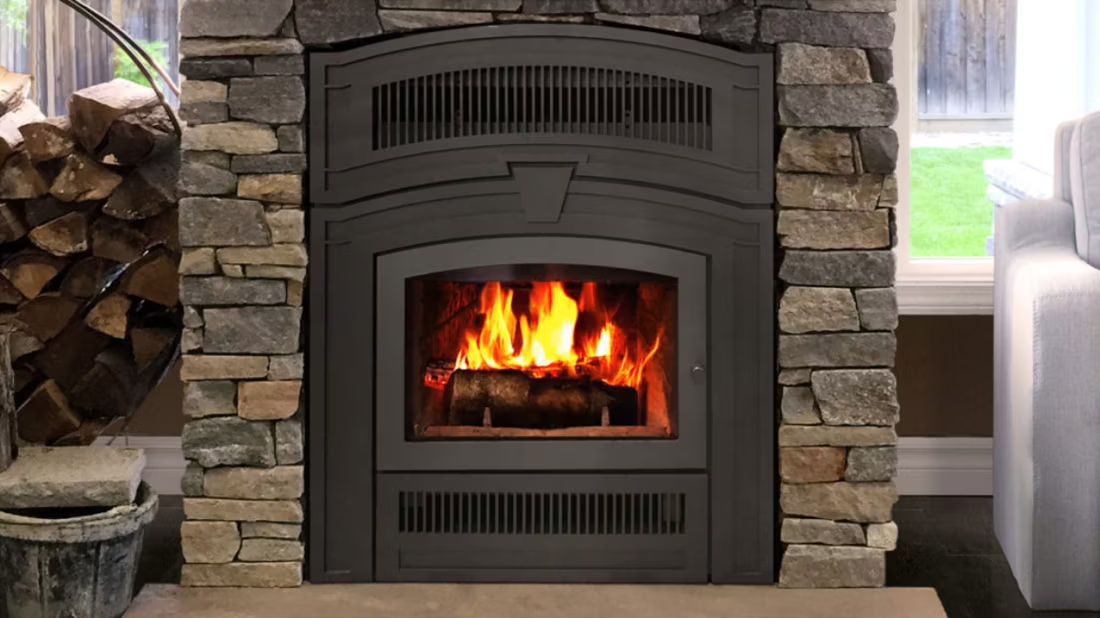
Most of Lake County runs on natural gas furnaces, but a niche of homeowners on larger lots or older lake-area properties still add a wood stove or insert for backup heat or ambiance. We'll help you figure out if it makes sense for your home, and connect you with a local dealer who actually installs them.
Every Project Starts From One of These Five Situations
A niche fuel in a natural-gas county.
Lake County sits in northeastern Illinois along the Chicago lakefront and the Wisconsin border, home to over 900,000 people across suburbs and small cities like Waukegan, Gurnee, Libertyville, Vernon Hills, Highland Park, and Antioch. Winters here are genuinely cold—climate zone 5A, with a long, demanding heating season and average winter lows near 15°F, in the same range as Madison, WI or Minneapolis, MN. But almost all of that housing stock, especially the postwar subdivisions that make up most of the county, was built around forced-air natural gas furnaces, and many municipal fire codes and tight lot setbacks make new wood-burning installations impractical or simply not permitted in denser neighborhoods.
That said, wood heat hasn't disappeared entirely. In unincorporated pockets and larger-lot areas—around the Chain O'Lakes, near Antioch and Wadsworth, or wooded parcels along the Des Plaines River corridor—some homeowners install a wood stove or insert as supplemental heat, a backup during outages, or simply for the fire itself. Local hardwoods are genuinely abundant: oak, hickory, walnut, and maple come down regularly through Lake County Forest Preserves land management and residential tree removal, and unlike wildfire-prone western counties, Lake County has no wood-smoke air quality advisories to work around. If you're one of the homeowners for whom wood still makes sense, it's worth doing right—sized correctly and installed by someone who's done it before in this county's housing stock.
Three steps. No salesperson until you're ready.
Tell us about your project
Your zip code, your situation, and the fuel you're leaning toward—or let the answers point you to one.
See what's actually available
The brands dealers within 100 miles genuinely carry—real options, never a catalog mirage.
Get your dealer & Project Guide
A trusted local dealer, plus the free Project Guide & Parts List that names every component of the job.
Frequently Asked Questions
Is a wood stove even a realistic option in Lake County?
For most Lake County homes, no—natural gas is the default heating fuel, and the vast majority of the county's housing stock was built around forced-air gas furnaces with no chimney or masonry fireplace to work with. Where it does make sense is larger-lot homes, older lake-area cottages around the Chain O'Lakes, or rural pockets near Antioch and the Wisconsin border where a stove can serve as a real supplemental heat source or an emergency backup during a winter power outage. If your goal is primary heat for a typical subdivision home, gas is almost always the better fit. If you're on a bigger parcel with access to firewood and want backup heat or a fire feature, a wood stove is still very doable—it just isn't the mainstream choice here the way it is farther north or out west.
Can I legally install a wood stove in Lake County?
It depends heavily on where in the county you live. Unincorporated areas generally have more flexibility, while many of the county's incorporated municipalities layer their own building and fire codes on top of state requirements, and some subdivisions carry HOA covenants that restrict new solid-fuel appliances outright. Nationally, any new wood stove must meet EPA 2020 NSPS emissions standards regardless of where you install it. Before you buy anything, check with your local building department—a dealer who regularly works in Lake County will already know which municipalities are straightforward and which require extra paperwork.
What size wood stove do I need for a Lake County home?
With a long, demanding heating season and average winter lows around 15°F, Lake County's climate is cold enough that undersizing a stove leaves you cold on the worst nights—but most installations here are supplemental rather than whole-home primary heat, which changes the math. A small stove is often plenty for a single great room or a lake cottage used seasonally; a home relying on wood as real backup heat during outages should size closer to what you'd need for whole-floor coverage. Older homes near the Chain O'Lakes with less insulation than modern construction typically need a size up from what square footage alone would suggest. A local dealer will walk your space and size it based on layout, insulation, and how you actually plan to use it.
Where do I find a dealer who actually installs wood stoves in Lake County?
This is exactly the gap Find My Fireplace exists to close. Because wood heat is a niche install here rather than the norm, not every hearth retailer in the county handles it regularly—some focus almost entirely on gas fireplaces and inserts, which make up the bulk of their business. We match you with a trusted local dealer who genuinely installs wood-burning appliances in this market, knows which municipalities require what permitting, and can size and vent the unit correctly for your specific home.
What firewood is actually available locally?
Oak, hickory, walnut, and maple are the common hardwoods in Lake County, coming down regularly through Lake County Forest Preserves management work and residential tree removal around the county's older, well-treed neighborhoods. Oak and hickory both burn hot and long and season well, making them a solid choice for anyone using a stove for real supplemental heat rather than occasional ambiance. If you're not cutting your own, local tree services and firewood sellers are generally your best source—ask your installer for a recommendation, since most have a working relationship with someone reliable.
Should I get a freestanding stove or an insert for an older lake-area home?
If your home already has a masonry fireplace—common in some of the older cottages and homes around the Chain O'Lakes and Fox Lake area—an insert is usually the better call. It uses the chimney you already have, seals up a drafty open hearth, and turns what was mostly a decorative feature into a real heat source. A freestanding stove makes more sense if you don't have an existing fireplace, or if you're setting up a garage, workshop, or outbuilding on a larger rural parcel. Either way, proper clearances and Class A chimney work matter more in this climate than they might farther south—a local installer will know what your specific structure needs.
Do I need a permit to install a wood stove in Lake County?
In nearly every case, yes—a building permit is required for a new wood-burning installation, whether that's through your municipality if you're incorporated, or through the county building department if you're in an unincorporated area. The stove itself needs to meet EPA 2020 NSPS emissions standards. Most reputable installers handle the permit application as part of the job, which is one more reason to work with a dealer who's done this before in Lake County specifically rather than a generalist contractor unfamiliar with local code.
How often should my chimney be inspected in a climate like this?
The CSIA recommends an annual inspection for any wood-burning appliance, and that holds in Lake County even though usage here tends to be lighter than in a wood-primary-heat region—a stove used mainly for supplemental heat or occasional fires still builds creosote over a season. Plan on a sweep and inspection once a year, typically before the burning season starts in fall. If you're using the stove more heavily as backup heat during outages, or burning several times a week through the coldest months, check more often—a chimney fire risk doesn't scale down just because your overall usage is lower than a full-time wood household.
Wood vs. gas—which actually makes sense for my Lake County home?
For the overwhelming majority of Lake County homes, gas is the right answer: natural gas service is widely available across the county, gas fireplaces and inserts install into far more housing types, and they don't require chimney maintenance, firewood storage, or ash cleanup. Wood makes sense in narrower cases—a home without natural gas access, a larger rural parcel where firewood is genuinely convenient, or a household that specifically wants backup heat that works without electricity during a winter outage. If you're weighing the two, it's worth talking through your specific situation with a local dealer rather than assuming either fuel is automatically right.
Why is a fireplace insert so efficient?
An insert does two things: it seals the chimney completely, so you stop losing air you already paid to heat, and it radiates warmth into the room through the firebox and glass. Most add a heat-exchange fan that pulls cool room air underneath, wraps it around the hot firebox, and pushes it back out warm. Your home is more efficient before you've even lit the first fire.
Why won't my new wood stove get going like my old one?
New wood stoves are 70%+ efficient, so far less heat goes up the flue—which also means less draft to get a fire established. The rule: build a genuinely hot fire for about 45 minutes before you choke it down. Skip that and you get smoke in the room, creosote in the chimney, and a fire that never takes off. Most performance complaints trace straight back to this.
How much should I budget for a fireplace?
For an average home—covering the fireplace, the vent pipe, and basic installation—a budget between $3,900 and $5,500 gives you a lot of options across wood, gas, and pellet. By the time you add finish work, gas line, and electrical, the average complete installation lands between $5,000 and $12,000 all-in. In a remodel or new build, a good rule is to put about 2.5% of the total project cost toward the fireplace.
Can I install a fireplace myself?
If you're putting a fire in your house on purpose, it's best to work with an expert. Unless you're genuinely experienced in framing, gas line, vent pipe, and the national code on clearances to combustibles, have a professional do it—and ideally the same company that sells you the fireplace, so warranty, service, and liability all live under one roof.
Stove and Fireplace Dealers in Lake County
Listings include WhyFire partner dealers, dealers we have verified as authorized for the brands we recommend, and established local businesses that carry hearth products. Every listing shows which one it is. The ones marked Preferred run on WhyFire's software, so they can show you real pricing and book your appointment right here. No manufacturer pays for placement. How we verify dealers →
Smokin' Deal Bbq
Fireplaces Plus
Fireplace And Patio
General Masonry Supply
Jhb Group, Inc.
Find your wood stove or insert in Lake County.
Tell us about your home and how you'd actually use a wood stove—supplemental heat, power-outage backup, or ambiance—and we'll match you with a local dealer who installs them here, plus a free Project Guide & Parts List for your specific setup.
Find Your Fireplace →