
Keep Your Family Warm and Safe—No Matter What
North Barrington's winters are genuinely cold, but this Lake County village runs mostly on natural gas and electric. We'll help you find out honestly whether wood heat fits your home—and connect you with a trusted local dealer either way.
Every Project Starts From One of These Five Situations
Cold Winters, but Gas and Electric Dominate the Local Hearth Market.
North Barrington sits in Lake County at just under 800 feet elevation, with winters that average lows near 14°F and a long, cold heating season—comparable to Madison, Wisconsin. Despite that, wood-burning stoves and fireplaces are a niche choice here. This is a low-density, large-lot equestrian community of roughly 3,100 residents, and most homeowners heat primary living spaces with natural gas or electric systems rather than cordwood.
Part of this is practicality: North Barrington isn't near public forest land or Forest Service cutting permits the way rural Wisconsin or downstate Illinois communities are, so firewood here comes from local tree services and arborists rather than a $20-a-cord national forest permit. Local hearth dealers serving the North Shore and Barrington area stock far more gas inserts and electric units than wood stoves, simply because that's what most buyers ask for. That said, a handful of North Barrington homeowners do install wood-burning stoves or inserts—usually in barns, workshops, or as a deliberate design choice in a great room—and oak, hickory, walnut, and maple, all common on North Barrington's wooded lots, make excellent firewood if you go that route.
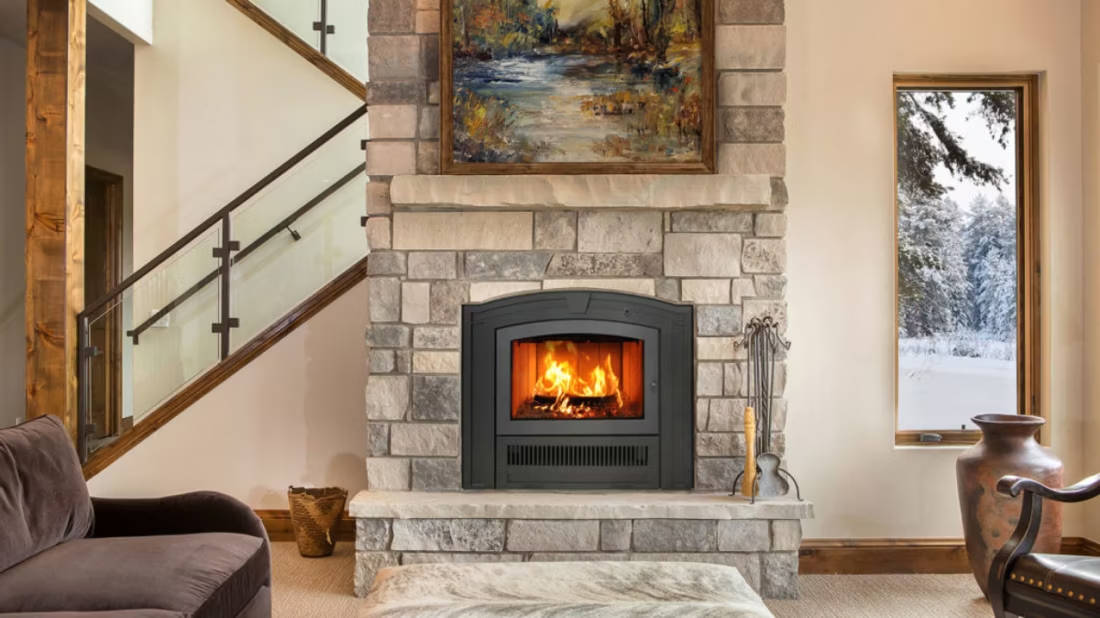
Three steps. No salesperson until you're ready.
Tell us about your project
Your zip code, your situation, and the fuel you're leaning toward—or let the answers point you to one.
See what's actually available
The brands dealers within 100 miles genuinely carry—real options, never a catalog mirage.
Get your dealer & Project Guide
A trusted local dealer, plus the free Project Guide & Parts List that names every component of the job.
Frequently Asked Questions
Does a wood-burning fireplace make sense for a home in North Barrington?
It can, but it's genuinely a minority choice here. North Barrington's winters are cold enough to justify wood heat—average lows near 14°F put it in the same range as Madison, Wisconsin—but this is a low-density, large-lot village where most homeowners already have natural gas service and choose a gas fireplace or insert for the main living space. Wood stoves and fireplaces still show up in North Barrington, most often in barns, pole buildings, workshops, or as a deliberate design choice in a great room, but they're the exception rather than the default. If you're set on wood heat, a local dealer can tell you honestly whether your lot, structure, and any subdivision covenants support it before you commit.
What does a wood stove or fireplace installation cost in North Barrington?
Because wood-burning installs are less common here than in downstate Illinois or rural Wisconsin, published local pricing is thinner, but expect a range similar to the broader Chicago-Lake County market: roughly $4,000 to $9,000 for a freestanding stove with new Class A chimney venting, or $5,000 to $10,000-plus if you're adding a full masonry or factory-built wood fireplace to a room that doesn't already have a chimney. Because fewer North Barrington-area dealers stock and install wood units regularly, get two or three quotes—pricing tends to vary more here than in markets where wood heat is the norm.
Where do North Barrington homeowners get firewood, since there's no national forest nearby?
Unlike wood-heating regions near national forest land, North Barrington doesn't have Forest Service cutting permits to rely on. Firewood here typically comes from local tree services and arborists clearing storm-damaged or diseased trees on Lake County properties, plus a handful of regional firewood delivery companies serving the Barrington area. Oak, hickory, walnut, and maple—all common on wooded North Barrington lots—are excellent seasoned firewood, and a cord of mixed hardwood typically runs in line with broader northern Illinois pricing, generally $250 to $350 delivered and stacked.
Do I need a permit to install a wood stove in North Barrington, and are there HOA restrictions?
Yes—a building permit through the Village of North Barrington's building department is required for any new wood-burning appliance, and the unit itself needs to meet current EPA 2020 NSPS emissions standards, same as anywhere in Illinois. Beyond the village permit, check your subdivision's covenants: North Barrington includes several large-lot equestrian communities with architectural review requirements that can restrict exterior chimney chases or venting on the primary residence. A local installer familiar with the village will typically confirm both the permit and any covenant requirements before scheduling work.
If winters are this cold, why don't more North Barrington homes burn wood?
The climate would support it—winter lows averaging 14°F put North Barrington in the same cold-climate tier as Bismarck, North Dakota. But this is an affluent, low-density Lake County village with reliable natural gas service and Commonwealth Edison electric infrastructure already in place, and most homeowners prioritize the convenience of instant-on gas or electric heat over cordwood handling and chimney maintenance. Large lots also mean more people install wood stoves in secondary structures—barns, workshops, guest houses—rather than the main house.
What firewood species work best for a wood stove in North Barrington?
Oak, hickory, walnut, and maple are the four species most common on North Barrington's wooded lots, and they're all strong firewood choices. Oak and hickory are dense, high-BTU hardwoods that burn long and hot once properly seasoned—plan on a full year to season split oak. Walnut and maple burn a bit faster and cooler but season more quickly, making them useful for shoulder-season fires. Whatever species you use, a moisture meter reading under 20% before burning is the single biggest factor in stove performance and creosote control.
Wood, gas, or electric—which is the better fit for a North Barrington home?
For most North Barrington homes, gas is the practical default: natural gas service is available locally, installation typically runs $4,500 to $11,000 depending on the unit and venting, and it delivers instant, thermostat-controlled heat without wood handling. Electric fireplaces and inserts are the lowest-cost, easiest-install option—often $400 to $1,200—and work well as supplemental or ambiance heat, though at Commonwealth Edison's residential rate of about 13.4 cents per kWh they're not the cheapest way to heat a large room continuously. Wood remains a legitimate choice for a barn, workshop, or homeowners who specifically want off-grid backup heat, but it's a deliberate choice here rather than the local norm.
How often does a wood stove or chimney need to be inspected in North Barrington?
Annually, regardless of location—the Chimney Safety Institute of America recommends a yearly Level 1 inspection and sweep for any wood-burning appliance in regular use. Because wood stoves are less common in North Barrington than in wood-heavy markets, you may need to look slightly further afield in Lake County or the broader Barrington area to find a chimney sweep who regularly services wood-burning units rather than only gas fireplaces—worth confirming when you install.
Does a wood stove make sense as backup heat during a ComEd power outage?
It's one of the better arguments for wood heat in North Barrington. Commonwealth Edison outages during winter storms can leave gas furnaces, which need electricity for the blower and ignition, and electric heat completely offline, while a wood stove keeps producing heat with no power at all. If backup heat during outages is your main motivation, a wood stove or insert sized for one or two rooms can be a smart supplemental system even in a home whose primary heat is gas or electric—talk to a local dealer about a properly sized unit for that specific use case rather than trying to heat the whole house.
Why is my open fireplace making my house colder?
Open fireplaces suck—literally. As the fire burns, it consumes air your furnace already paid to heat and pulls it out through the chimney, so the house is actually colder after the fire goes out than before you lit it. An insert fixes this: it seals the chimney, puts fixed glass across the front, and turns that hole in your house into a real heat source.
Why won't my new wood stove get going like my old one?
New wood stoves are 70%+ efficient, so far less heat goes up the flue—which also means less draft to get a fire established. The rule: build a genuinely hot fire for about 45 minutes before you choke it down. Skip that and you get smoke in the room, creosote in the chimney, and a fire that never takes off. Most performance complaints trace straight back to this.
Does a fireplace add value to my home?
On average, a fireplace adds back to the home about the same amount you spent installing it. Add the monthly savings from heating the rooms you actually use instead of the whole house—often hundreds of dollars a year—and the value case is strong before you even count what a fire does for how your family uses the room.
What is an in-home preview and do I need one?
It's a visit where a hearth professional measures your space, confirms the model you picked actually works in your home, and walks the specs—framing, gas line, venting, finish work—before anything is ordered. Some details you just can't know until you see the house. Never make a down payment without one; it's the single most-skipped step that burns buyers.
Nearby Dealers
Hearth shops serving North Barrington and the surrounding area. Every listing shows whether it is a WhyFire partner, a dealer we have verified as authorized for the brands we recommend, or a local business carrying hearth products. No manufacturer pays for placement. How we verify dealers →
Smokin' Deal Bbq
Fireplace And Patio
Jhb Group, Inc.
Fireplaces Plus
General Masonry Supply
Ember Glow
Find your wood fireplace in North Barrington.
Tell us about your home and we'll connect you with a local dealer who can tell you honestly whether a wood stove, insert, or a gas or electric alternative is the better fit—plus a free Project Guide & Parts List for whichever path makes sense.
Find Your Fireplace →