Keep Your Family Warm and Safe—No Matter What
Wood heat isn't the default in Gurnee's newer subdivisions, but for the right home - an older property with an existing chimney, a larger lot on the edge of town, or a household that wants backup heat during an outage - it can still make sense. We'll give you an honest read, and connect you with a trusted local dealer if it does.
Every Project Starts From One of These Five Situations
Gurnee's suburban lots make wood heat impractical for most homes.
Gurnee sits about 40 miles north of Chicago in Lake County, close enough to the Wisconsin border that its winters are genuinely cold - average lows around 16°F and a winter heating season that runs long and deep, a climate that tracks closer to Madison, Wisconsin than to the rest of northern Illinois. That's cold enough for wood heat to make thermal sense. But most of Gurnee's housing was built as planned subdivisions from the 1980s through the 2000s, with small lots, HOA architectural covenants, and gas-plumbed construction as the default. There's also no national forest nearby offering personal cutting permits, so self-sourced firewood isn't part of the local culture the way it is in downstate Illinois.
That's why gas and electric dominate the hearth market here, served by Commonwealth Edison for electric service. Wood still fits a smaller set of Gurnee homes - mainly older properties near the original downtown along Grand Avenue with an existing masonry fireplace, or larger parcels on the outskirts of the village where clearances and chimney routing are simpler. For those homes, a modern EPA-certified wood stove or insert burning local oak, hickory, walnut, or maple can genuinely outperform an old open fireplace and provide heat that keeps working when the power doesn't.
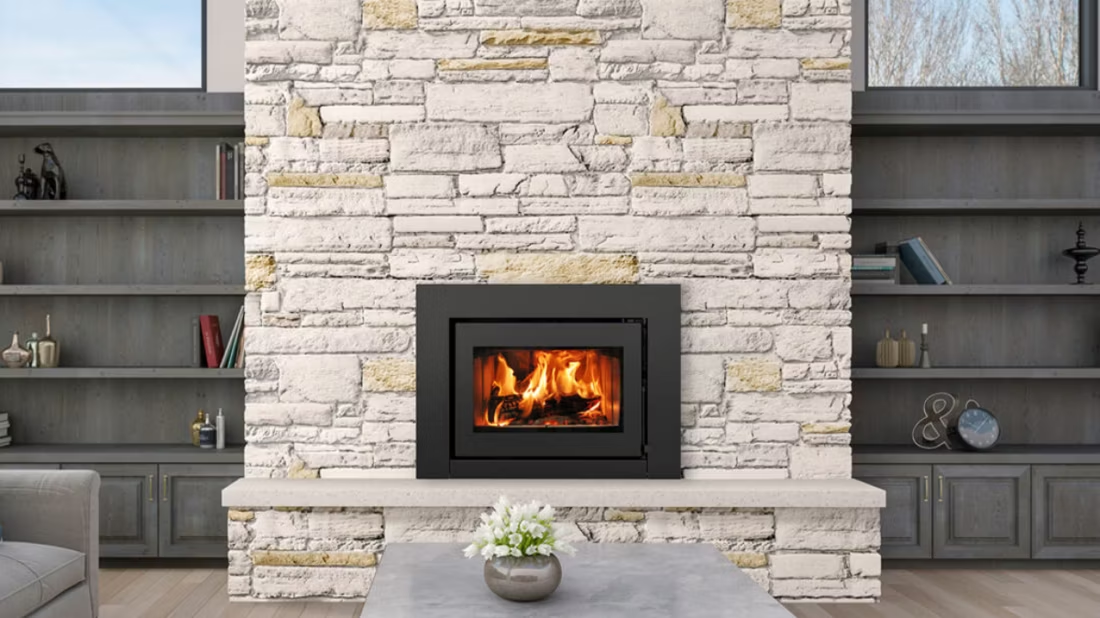
Three steps. No salesperson until you're ready.
Tell us about your project
Your zip code, your situation, and the fuel you're leaning toward—or let the answers point you to one.
See what's actually available
The brands dealers within 100 miles genuinely carry—real options, never a catalog mirage.
Get your dealer & Project Guide
A trusted local dealer, plus the free Project Guide & Parts List that names every component of the job.
Frequently Asked Questions
Is a wood-burning fireplace or stove even a realistic option in Gurnee?
It's uncommon, but not impossible. Most residential hearth installs in Gurnee are gas, and most local dealers lead with gas or electric because that's what the majority of homes are plumbed and built for. The winters here are cold enough for wood to work thermally - Gurnee's winter heating load runs about as high as Madison, Wisconsin - but the mix of newer subdivision construction, HOA covenants, and no nearby national forest for cutting permits means wood serves a smaller slice of the local market. Homes with an existing masonry fireplace, especially in Gurnee's older sections near downtown, or larger parcels on the edge of the village are the best candidates.
What does it cost to install a wood stove or insert in Gurnee?
Because wood-burning installs are a small share of the local hearth market, pricing tends to track general Chicago-suburb averages rather than a discounted regional rate. Expect roughly $3,500 to $8,500 for a freestanding EPA-certified stove with a new Class A chimney chase, or $4,000 to $7,000 for a wood insert retrofit into an existing masonry fireplace - the swing depends heavily on whether new venting has to run through two stories or simply reline an existing chimney. Because relatively few Gurnee installers specialize in wood, get at least two quotes; the gap between a dealer who does this often and one who rarely does shows up fast in the final number.
Do I need a permit from the Village of Gurnee to install a wood-burning stove?
Yes. Any new wood-burning appliance, freestanding stove or insert, requires a building permit through the Village of Gurnee Building & Zoning Department, and the unit itself must meet current EPA New Source Performance Standards. Because wood stoves are a less common request here than gas conversions, expect the inspector to look closely at clearances and Class A chimney penetration details - it's not the rubber-stamp process it can be in more wood-heavy parts of the state.
What firewood species are actually available around Gurnee?
Northern Illinois hardwoods are the local standard: oak, hickory, walnut, and maple are all common throughout Lake County and all season into solid, high-BTU firewood. Oak and hickory are the workhorses for overnight burns; maple splits easier and works well as a starter wood. Since Gurnee doesn't sit near national forest land with cutting permits, almost nobody self-cuts here - most homeowners buy seasoned cordwood from firewood suppliers serving Lake County, typically $250 to $325 per cord depending on species and whether it's kiln-dried or air-seasoned.
Can I put a wood insert into my existing fireplace in one of Gurnee's older homes?
Yes, and it's usually the more sensible wood project in Gurnee compared to adding wood-burning capability where none exists. Homes built closer to the original downtown near Grand Avenue are more likely to already have a masonry fireplace. An EPA-certified insert reuses that existing chimney, typically with a stainless liner, and turns a drafty, inefficient open fireplace into a real heat source. It's a simpler permit and a simpler install than starting from scratch.
Will my HOA or subdivision restrict a wood-burning stove?
Possibly, and it's worth checking before you plan too far. A large share of Gurnee's housing was built as part of planned subdivisions from the 1980s through the 2000s, and many of those covenants restrict exterior changes, including new chimney chases or flue penetrations, even when the village itself would approve the permit. If you're in one of these subdivisions, check your HOA's architectural review process first - it's a more common obstacle to a wood stove install here than in Gurnee's older, non-HOA neighborhoods.
Are there any air quality restrictions on wood burning in Gurnee?
No - Lake County isn't a designated non-attainment area, and Gurnee doesn't have the winter-inversion smoke problems that trigger burn bans elsewhere. That said, an EPA 2020 NSPS-certified stove is still required for any new install under village building code, and it remains the cleaner-burning, lower-maintenance choice regardless of local air quality rules.
Wood vs. gas vs. electric - what actually makes sense for a Gurnee home?
For most Gurnee homeowners, gas wins on convenience and matches how the local housing stock is built - most new construction is already plumbed for it, and installers field far more gas requests than wood. Electric fireplaces, running through Commonwealth Edison at Illinois' typical residential rate of around 13-14 cents per kWh, are the easiest retrofit for homes with no chimney and no appetite for venting work. Wood remains a genuine option mainly for two situations: a home with an existing masonry fireplace worth upgrading, or a household that specifically wants heat that works without electricity during a Lake County winter storm outage. Outside of those cases, gas or electric will almost always be the more practical call.
Where can I buy firewood in the Gurnee area?
Most Gurnee residents source firewood from commercial suppliers delivering across Lake County rather than cutting their own, since there's no nearby national forest offering personal cutting permits the way there is in downstate or western Illinois. Look for suppliers advertising seasoned oak and hickory specifically - unseasoned, or green, firewood needs six to twelve months to dry properly, and burning it too early is one of the most common causes of poor stove performance and creosote buildup in this climate.
Why is a fireplace insert so efficient?
An insert does two things: it seals the chimney completely, so you stop losing air you already paid to heat, and it radiates warmth into the room through the firebox and glass. Most add a heat-exchange fan that pulls cool room air underneath, wraps it around the hot firebox, and pushes it back out warm. Your home is more efficient before you've even lit the first fire.
Why is my open fireplace making my house colder?
Open fireplaces suck—literally. As the fire burns, it consumes air your furnace already paid to heat and pulls it out through the chimney, so the house is actually colder after the fire goes out than before you lit it. An insert fixes this: it seals the chimney, puts fixed glass across the front, and turns that hole in your house into a real heat source.
What is an in-home preview and do I need one?
It's a visit where a hearth professional measures your space, confirms the model you picked actually works in your home, and walks the specs—framing, gas line, venting, finish work—before anything is ordered. Some details you just can't know until you see the house. Never make a down payment without one; it's the single most-skipped step that burns buyers.
Does a fireplace add value to my home?
On average, a fireplace adds back to the home about the same amount you spent installing it. Add the monthly savings from heating the rooms you actually use instead of the whole house—often hundreds of dollars a year—and the value case is strong before you even count what a fire does for how your family uses the room.
Nearby Dealers
Hearth shops serving Gurnee and the surrounding area. Every listing shows whether it is a WhyFire partner, a dealer we have verified as authorized for the brands we recommend, or a local business carrying hearth products. No manufacturer pays for placement. How we verify dealers →
Smokin' Deal Bbq
Fireplaces Plus
General Masonry Supply
Fireplace And Patio
Jhb Group, Inc.
Alaskan Fireplace Co
See if a wood fireplace makes sense for your Gurnee home.
Tell us about your home and we'll give you an honest read on whether wood heat fits - and if it does, match you with a trusted local dealer and a free Project Guide & Parts List covering the exact parts, venting, and install plan for your Gurnee project.
Find Your Fireplace →