
Keep Your Family Warm and Safe—No Matter What
Knollwood's tight lots and long-standing gas infrastructure mean most homes never see a wood stove—but for the few that want one, we'll connect you with a local dealer who can do it right.
Every Project Starts From One of These Five Situations
Wood heat here is the exception, not the rule.
Knollwood is a village of under 1,800 residents tucked into Lake County's North Shore, a few minutes from Lake Forest and Lake Michigan. Winters here are genuinely cold—average lows near 16°F and a heating season about as heavy as Madison, Wisconsin's, putting Knollwood in the same heating-load territory as Madison, Wisconsin. But unlike Madison or the rural stretches of downstate Illinois, Knollwood's lots are small, homes sit close together, and the village has been built out on natural gas and electric service for decades. That combination—dense residential platting, no adjacent public timberland, and mature gas infrastructure—is why wood heat never took hold here the way it has in more rural parts of the Midwest.
That doesn't mean a wood stove is off the table. A handful of Knollwood homeowners each year add one anyway—usually for the ambiance of a real fire, as backup heat for winter storm outages, or because they're restoring an older home's original masonry fireplace. If that's you, the same considerations apply as anywhere in Lake County: proper clearances on a tight lot, a code-compliant chimney, and a dealer who's actually installed a unit in a village this size before. Firewood itself is not a problem—oak, hickory, walnut, and maple are all common regional hardwoods available from Lake County tree services and firewood dealers, even though there's no nearby national forest or cutting-permit program to source your own.
Three steps. No salesperson until you're ready.
Tell us about your project
Your zip code, your situation, and the fuel you're leaning toward—or let the answers point you to one.
See what's actually available
The brands dealers within 100 miles genuinely carry—real options, never a catalog mirage.
Get your dealer & Project Guide
A trusted local dealer, plus the free Project Guide & Parts List that names every component of the job.
Frequently Asked Questions
How much does a wood stove installation cost in Knollwood?
There isn't much local pricing history to draw on—Knollwood is a village of under 1,800 people, and most hearth dealers who cover this part of Lake County might install one or two wood stoves here in a given year. Based on regional North Shore and Chicago-suburb pricing, expect $4,000 to $8,500 for a freestanding EPA-certified stove with new Class A chimney, or somewhat less if you're inserting a unit into an existing masonry fireplace. Get a firm number from an in-home consultation rather than a phone quote—chimney height, roofline, and clearance-to-combustibles on a tight Knollwood lot all affect the final cost.
Why is wood heat so uncommon in Knollwood?
A few things stack up against it. Knollwood's lots are small and homes sit close together, which limits chimney placement and outdoor wood storage. The village has been on natural gas and Commonwealth Edison electric service for decades, so most homes were built with central gas heat and never needed a backup solid-fuel source. And there's no adjacent national forest or public land cutting-permit program the way there is in more rural parts of Illinois—firewood has to be bought, not cut. None of that makes wood heat impossible, just rare enough that it's worth working with a dealer who has actually installed a unit in a village this size.
Can I still install a wood stove if I live in Knollwood?
Yes. Local building codes don't prohibit wood-burning appliances—you'll need a building permit, an EPA-certified stove, and correctly sized clearances to combustibles, which matters more on Knollwood's tighter lots than it would on a rural five-acre parcel. Most homeowners who add one do it for backup heat during outages or to bring a decorative masonry fireplace back into real use. A local dealer will walk your specific lot and home before quoting anything.
What firewood species are available near Knollwood?
Oak, hickory, walnut, and maple are the common hardwoods across this part of Lake County and the wider Chicago region, and they're what most local firewood dealers and tree services sell by the cord or half-cord. Oak and hickory both burn long and hot, which suits Knollwood's cold winters (average lows around 16°F). Since there's no national forest or public cutting-permit program nearby, expect to buy seasoned or green firewood rather than cut your own—budget accordingly and buy a season ahead if you want fully seasoned wood.
Should I get a wood stove or a wood insert?
It depends on what you're starting with. If your Knollwood home already has a masonry fireplace—common in some of the older homes near the Lake Forest border—a wood insert is usually the better move, since it uses the chimney you already have and turns a decorative, heat-losing fireplace into an actual heat source. If you don't have an existing fireplace, a freestanding stove gives you more flexibility, but placement needs to account for Knollwood's tighter setbacks and clearance-to-combustibles rules. Either way, a local dealer should assess your specific chimney and floor plan before recommending one over the other.
Do I need a permit to install a wood stove in Knollwood?
Yes—any new wood-burning appliance install requires a building permit, and the stove itself needs to meet current EPA emissions standards. Knollwood doesn't have air quality restrictions or burn bans on the books the way some Illinois non-attainment areas do, so once it's installed and permitted, there's no seasonal curtailment to worry about. Most hearth dealers handle the permitting paperwork as part of the installation.
What's the best wood stove for Knollwood's climate?
With winter lows averaging around 16°F and a heating season about as heavy as Madison, Wisconsin's—similar to Madison, Wisconsin—a mid-size EPA-certified stove in the 1,800–2,500 sq ft heating range is usually enough for supplemental or backup heat in a typical Knollwood home. Non-catalytic stoves from brands like Pacific Energy or Lopi tend to be a good fit for occasional-use, backup-heat scenarios, since they're simpler to operate and don't require the same attention as a catalytic model running long overnight burns. If you're aiming for a stove as genuine primary heat, a catalytic stove will hold a longer, more even burn, but that's a heavier commitment than most Knollwood households need.
How often should a wood stove chimney be inspected?
Once a year, per CSIA guidelines, regardless of how often the stove is used. That matters even more for the occasional-use case that's typical in Knollwood—a stove that only gets lit a handful of times a winter can still build up creosote, and infrequent use means problems are easier to miss without a professional look. Schedule the sweep in late summer or early fall before the first cold snap.
Wood vs. gas—which makes more sense for a Knollwood home?
For most homes here, gas is the practical answer—natural gas service is well established throughout the village, gas fireplaces and inserts install faster, and they don't require firewood storage on a tight lot. Wood makes sense as a secondary choice: for genuine backup heat during a power outage (standard-ignition gas fireplaces still need electricity unless they're battery-backed), for restoring an old masonry fireplace, or simply because you want a real fire. Most Knollwood homeowners who go with wood do it as a second heat source alongside an existing gas system, not as a replacement for it.
Why is my open fireplace making my house colder?
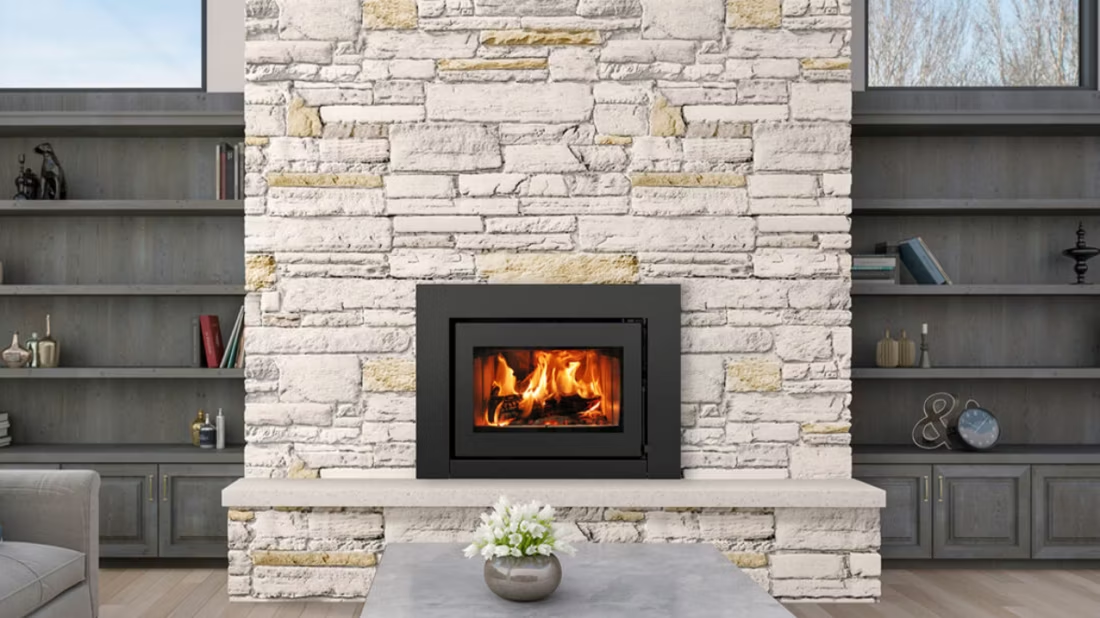
Open fireplaces suck—literally. As the fire burns, it consumes air your furnace already paid to heat and pulls it out through the chimney, so the house is actually colder after the fire goes out than before you lit it. An insert fixes this: it seals the chimney, puts fixed glass across the front, and turns that hole in your house into a real heat source.
Do I have to leave the stove door cracked open to start a fire?
On many stoves, yes—a new fire needs extra air, and cracking the door a couple inches is how most stoves get it. But some modern stoves offer an automatic startup air system: engage it when you light, and timed air jets feed the fire for the first 20 minutes with the door fully shut, then close automatically. It's mechanical—like an egg timer, no electricity—and it means you can load it, light it, and walk away.
What is an in-home preview and do I need one?
It's a visit where a hearth professional measures your space, confirms the model you picked actually works in your home, and walks the specs—framing, gas line, venting, finish work—before anything is ordered. Some details you just can't know until you see the house. Never make a down payment without one; it's the single most-skipped step that burns buyers.
How much should I budget for a fireplace?
For an average home—covering the fireplace, the vent pipe, and basic installation—a budget between $3,900 and $5,500 gives you a lot of options across wood, gas, and pellet. By the time you add finish work, gas line, and electrical, the average complete installation lands between $5,000 and $12,000 all-in. In a remodel or new build, a good rule is to put about 2.5% of the total project cost toward the fireplace.
Nearby Dealers
Hearth shops serving Knollwood and the surrounding area. Every listing shows whether it is a WhyFire partner, a dealer we have verified as authorized for the brands we recommend, or a local business carrying hearth products. No manufacturer pays for placement. How we verify dealers →
Fireplaces Plus
Smokin' Deal Bbq
General Masonry Supply
Fireplace And Patio
Jhb Group, Inc.
Ember Glow
Find your wood stove option in Knollwood.
Tell us about your home and we'll match you with a local Lake County dealer who installs wood stoves and inserts on lots like yours—plus a free Project Guide & Parts List with the exact parts, including your vent kit, for a Knollwood wood project.
Find Your Fireplace →