
Find the right gas fireplace for your DuPage County home.
Reliable, instant heat for Chicago-suburb winters—from Naperville to Wheaton to Elmhurst. I'll match you with a trusted local dealer who can size, permit, and install it right.
Every Project Starts From One of These Five Situations
Instant heat that fits suburban Chicago living.
DuPage County sits in climate zone 5A with average winter lows near 17°F and a heating season comparable to Madison, WI, that runs from late fall well into March. Nearly 880,000 people live across a dense mix of established subdivisions and newer construction from Naperville to Downers Grove to Glen Ellyn, and in nearly all of it, natural gas service is already run to the house. That makes gas fireplaces the default upgrade for homeowners who want real heat without hauling wood or tending a fire.
Wood-burning simply isn't part of the picture here the way it is in more rural, forested counties—DuPage has no meaningful public land for cutting permits and no local air-quality mandate pushing households toward cordwood, so it stays a niche, ambiance-only choice for the rare homeowner who wants one. Gas, by contrast, is the practical mainstream option: direct-vent inserts that upgrade an existing masonry fireplace, built-in units for new construction, and freestanding gas stoves for additions or basements. Whatever the housing stock—brick ranch, 1990s two-story, or new-build—a local dealer can match a unit to your existing gas line and venting path.
Three steps. No salesperson until you're ready.
Tell us about your project
Your zip code, your situation, and the fuel you're leaning toward—or let the answers point you to one.
See what's actually available
The brands dealers within 100 miles genuinely carry—real options, never a catalog mirage.
Get your dealer & Project Guide
A trusted local dealer, plus the free Project Guide & Parts List that names every component of the job.
Frequently Asked Questions
How much does a gas fireplace installation cost in DuPage County?
Costs vary by project type more than by location within the county. A direct-vent gas insert dropped into an existing masonry fireplace, using a gas line that's already run to the hearth, sits on the lower end. A new built-in gas fireplace for a remodel or an addition—with framing, a fresh gas line, and venting through an exterior wall—runs higher. Because natural gas service already reaches the overwhelming majority of DuPage County homes, most projects skip the propane-tank costs that drive up pricing in more rural counties. A trusted local dealer will give you a firm number after seeing your specific fireplace or wall location.
Can I convert my existing wood fireplace to gas?
Yes, and it's one of the most common upgrades in older DuPage County housing stock—the brick ranches and two-story colonials built through the 1970s-90s that came with a standard masonry fireplace. A gas insert goes into that existing opening, using a stainless liner run through your current chimney as the vent path. Since most of the county already has natural gas at the house, the conversion usually just means running a branch line to the fireplace rather than plumbing a whole new gas service. The result keeps the look of your original fireplace while swapping smoke, ash, and low heat output for a clean, thermostat-controlled flame.
Do I need a permit to install a gas fireplace in DuPage County?
Yes. Whether you're in Naperville, Wheaton, Downers Grove, or unincorporated DuPage County, a new gas fireplace installation requires both a building permit and a gas line permit through your local municipal building department (or the county building division for unincorporated areas). The gas line work specifically has to be done by a licensed gas-fitter. This is one of the real advantages of using a certified hearth dealer rather than a handyman: they coordinate the gas line, venting, and inspection sign-off as one job instead of leaving you to schedule multiple trades and permits yourself.
Will my gas fireplace work if the power goes out?
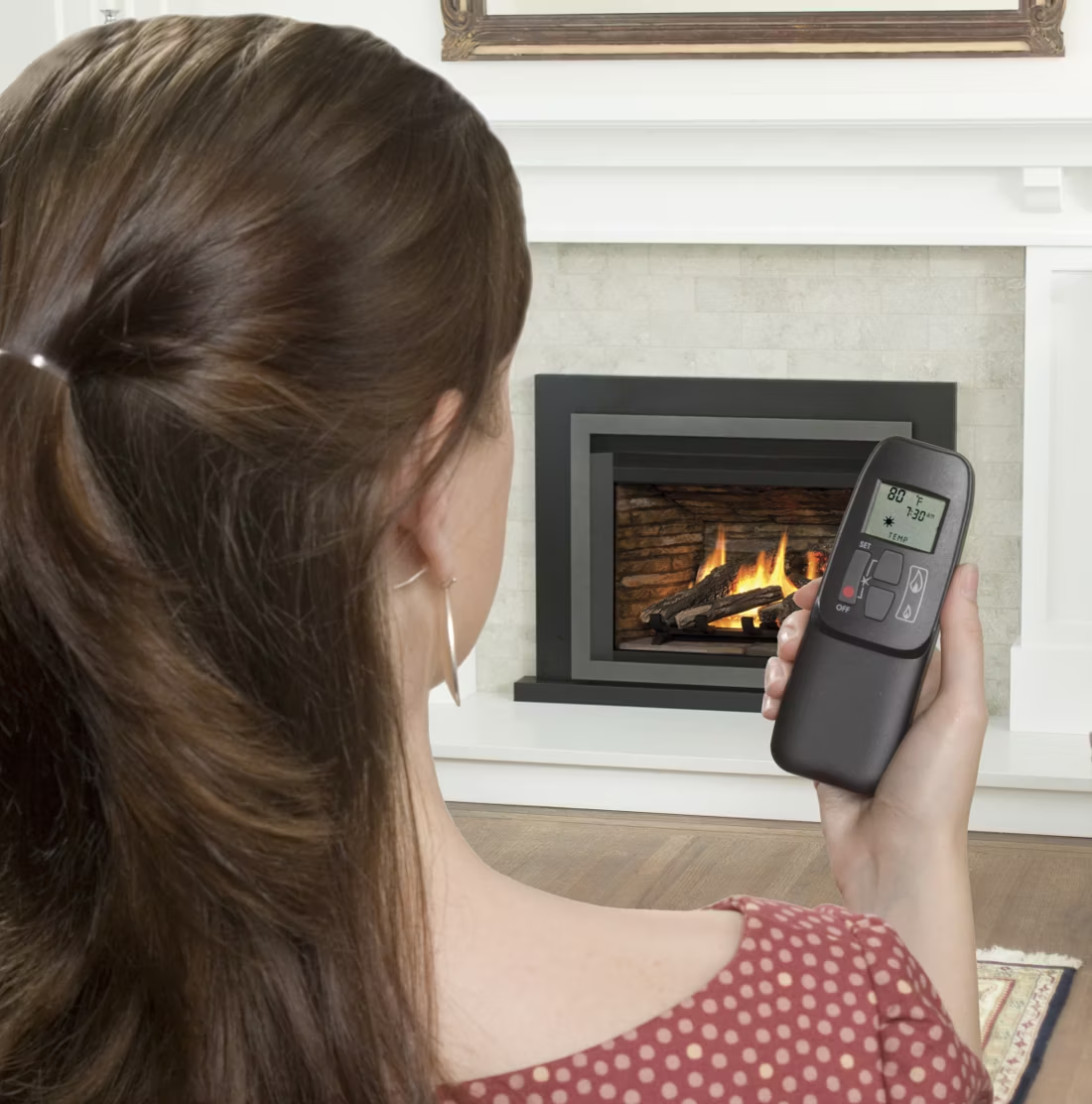
Most modern direct-vent gas fireplaces will. Units with IPI (intermittent pilot ignition) run on a small battery backup—typically AA batteries inside the unit—that kicks in automatically and lets the fireplace light on demand even with the house dark. Valor fireplaces handle this differently: their pilot generates its own electricity through the thermocouple, so there's no battery to remember to swap. DuPage County doesn't see outages on the scale of a mountain-state winter storm, but summer storm season and occasional ice events do knock out power locally, so it's worth asking your dealer which ignition system a given model uses.
What's the difference between a gas fireplace, gas insert, and gas stove?
A gas fireplace is a fully built-in unit framed into a wall—the right call for new construction or a remodel with no existing fireplace. A gas insert slides into an existing masonry firebox and uses the current chimney as its vent path, which fits the majority of older DuPage County homes that already have a brick fireplace. A gas stove is a freestanding unit that sits on the floor, similar in footprint to a wood stove, and works well in a basement or an addition where there's no existing hearth. For most homeowners here upgrading a 30- or 40-year-old fireplace, the insert is the straightforward answer.
What's the difference between vented and vent-free gas fireplaces?
Vented (direct-vent or B-vent) units draw combustion air from outside and exhaust it back outside through a sealed pipe—they're the cleaner, code-compliant standard almost everywhere, including throughout DuPage County. Vent-free (ventless) units burn directly into the room without any external venting; they're legal in Illinois with proper room-sizing and oxygen-depletion sensors, but they release some combustion byproducts into your living space. Given how easy it is to run direct-vent piping through an exterior wall in typical suburban DuPage construction, most local dealers steer homeowners toward vented units by default and reserve vent-free for very specific situations, like an interior room with no outside wall access.
How often should my gas fireplace be serviced?
Plan on an annual inspection, ideally before the heating season starts in the fall. A technician checks the burner, pilot assembly, venting, gas connections, and glass, and confirms the ignition system is working properly. It's a quicker, less involved visit than a wood-stove chimney sweep, but skipping it is how minor issues—a dirty pilot, a degraded gasket—turn into a fireplace that won't light on the coldest night of a Chicago-area winter. Expect to pay somewhere in the $150-$250 range for a standard annual service call from a local gas appliance technician.
Is a wood-burning fireplace or stove a realistic option in DuPage County?
It's uncommon, and for good reason. DuPage County has no national forest or public cutting land nearby, so firewood has to be purchased rather than permit-cut, and the dense suburban lot sizes here don't lend themselves to storing several cords of oak, hickory, or maple through a winter. A small number of homeowners still install wood stoves or keep a traditional masonry fireplace for ambiance, occasional use, or a cabin-style feel in a family room, but it's a niche choice rather than a primary heat source the way it might be in a more rural, forested county. Gas is the practical option for anyone in DuPage looking for real, regular heat from a fireplace.
Gas vs. electric fireplace—which is right for my DuPage County home?
Gas delivers genuine BTU output—enough to meaningfully heat a room on a 17-degree January night—plus the look and sound of a real flame, and it runs off the natural gas line already at most DuPage County homes. Electric fireplaces install almost anywhere with just a standard outlet, cost far less upfront ($400-$1,200 versus a full gas installation), and involve zero venting or gas line work, but they're supplemental ambiance rather than a real heat source for a cold night. For a primary living room fireplace people will actually use for heat, gas is usually the better fit here; for a bedroom, basement rec room, or rental unit where ambiance and easy installation matter more than heat output, electric is worth a look.
Why is my open fireplace making my house colder?
Open fireplaces suck—literally. As the fire burns, it consumes air your furnace already paid to heat and pulls it out through the chimney, so the house is actually colder after the fire goes out than before you lit it. An insert fixes this: it seals the chimney, puts fixed glass across the front, and turns that hole in your house into a real heat source.
Can I put a TV above my fireplace?
Yes—with an asterisk. Fireplaces are hot and TVs don't like heat. Either put a mantel between them to deflect rising warmth, or choose a fireplace with heat-management technology that creates a cool zone on the wall above—the wall stays around 125 degrees, barely warm, while the room still gets full heat. If you like clean lines and don't want a mantel, heat management is the answer.
Can a fireplace actually lower my heating bill?
Yes—by creating a comfort zone. A furnace heats every square foot of the house just to warm the one room you're in; a gas fireplace on low burns roughly a sixth of the gas a typical furnace does. Set the furnace around 55–60 degrees as a baseline, then heat the rooms your family actually uses. Families who heat this way commonly save $20–$60 a month.
Can I install a fireplace myself?
If you're putting a fire in your house on purpose, it's best to work with an expert. Unless you're genuinely experienced in framing, gas line, vent pipe, and the national code on clearances to combustibles, have a professional do it—and ideally the same company that sells you the fireplace, so warranty, service, and liability all live under one roof.
Stove and Fireplace Dealers in DuPage County
Listings include WhyFire partner dealers, dealers we have verified as authorized for the brands we recommend, and established local businesses that carry hearth products. Every listing shows which one it is. The ones marked Preferred run on WhyFire's software, so they can show you real pricing and book your appointment right here. No manufacturer pays for placement. How we verify dealers →
Ember Glow
A Cozy Fireplace
A Fireplace Store And More
Urban Rooftops
General Masonry Supply
A Cozy Fireplace
Get your DuPage County gas fireplace Project Guide.
Tell me a bit about your home and I'll match you with a trusted local dealer, plus a free Project Guide & Parts List—the right unit, the vent kit, and everything needed to get it installed correctly.
Find Your Fireplace →