
Reliable Gas Heat for Wayne's Long Illinois Winters.
From the equestrian estates near Pratt's Wayne Woods to the wooded lots along Dunham Woods, Wayne homeowners are turning to gas for heat that starts at the flip of a switch. Find the right fireplace, insert, or stove, and get matched with a trusted local dealer.
Every Project Starts From One of These Five Situations
Clean heat built for DuPage County winters.
Wayne sits at about 740 feet in western DuPage County, where winter lows average 16°F and the village faces a winter heating load in the same range as Madison, Wisconsin. Many of Wayne's older farmhouses and horse-country estates were built with wood-burning masonry fireplaces meant to burn the oak, hickory, walnut, and maple that still fill the woodlots around Pratt's Wayne Woods and Elsen's Hill. Today, plenty of those same homeowners are converting to gas—trading the wood-hauling and chimney upkeep for heat that's ready the moment the temperature drops.
Natural gas service through Nicor Gas reaches most of the village center, though a number of Wayne's larger equestrian properties sit far enough off the main grid that propane tanks remain the practical choice. Either fuel path gets you the same result: a direct-vent gas fireplace or insert that keeps a horse barn's tack room or a century farmhouse's living room warm through a Chicago-area winter without anyone needing to split a log.
Three steps. No salesperson until you're ready.
Tell us about your project
Your zip code, your situation, and the fuel you're leaning toward—or let the answers point you to one.
See what's actually available
The brands dealers within 100 miles genuinely carry—real options, never a catalog mirage.
Get your dealer & Project Guide
A trusted local dealer, plus the free Project Guide & Parts List that names every component of the job.
Frequently Asked Questions
How much does a gas fireplace installation cost in Wayne?
Most gas fireplace and insert installations in Wayne run somewhere between $4,000 and $10,000, with the spread driven mainly by venting distance and whether a gas line already reaches the room. A direct-vent insert dropped into an existing masonry fireplace—common in Wayne's older farmhouses—tends to land on the lower end if the chimney is in decent shape. New construction, barns converted to living space, or installations on the outer edges of the village where a propane line has to be run will sit higher. A local dealer will give you a firm number after seeing the space in person.
Can I convert my wood-burning fireplace to gas?
Yes, and it's one of the more common projects among Wayne's older homes, many of which have original masonry fireplaces built for oak and hickory cordwood. A gas insert typically slides into the existing firebox, using a stainless liner run through your current chimney for venting. Expect $4,000 to $9,000 depending on the insert and whether the flue needs relining or repair. The conversion keeps the look of the original hearth while removing the ash, creosote buildup, and wood-hauling that come with an open wood fireplace.
Is natural gas available everywhere in Wayne, or do I need propane?
It depends on where in the village you are. Nicor Gas serves much of central Wayne, so homes there can usually tie a fireplace into an existing gas line. But Wayne is known for its large-lot equestrian properties, and many of those sit outside the natural gas footprint—propane is the standard fallback, either from an existing tank serving the house or a new tank set for the fireplace alone. Most gas fireplace models can be configured for either fuel; your installer sets the orifice and regulator accordingly.
Will my gas fireplace still work if the power goes out?
Most will, with a caveat. Units with standing pilot or IPI (intermittent pilot ignition) systems run on a small battery backup that keeps the fireplace lighting on demand even when ComEd service drops during a winter storm—a real consideration in a wooded village like Wayne where downed limbs can take out power for hours. Valor fireplaces skip the battery question entirely: their pilot assembly generates its own electricity through the thermocouple, so there's nothing to remember to replace. Ask your local dealer about the ignition system on any unit before you buy if outage backup matters to you.
What's the difference between a gas fireplace, insert, and stove?
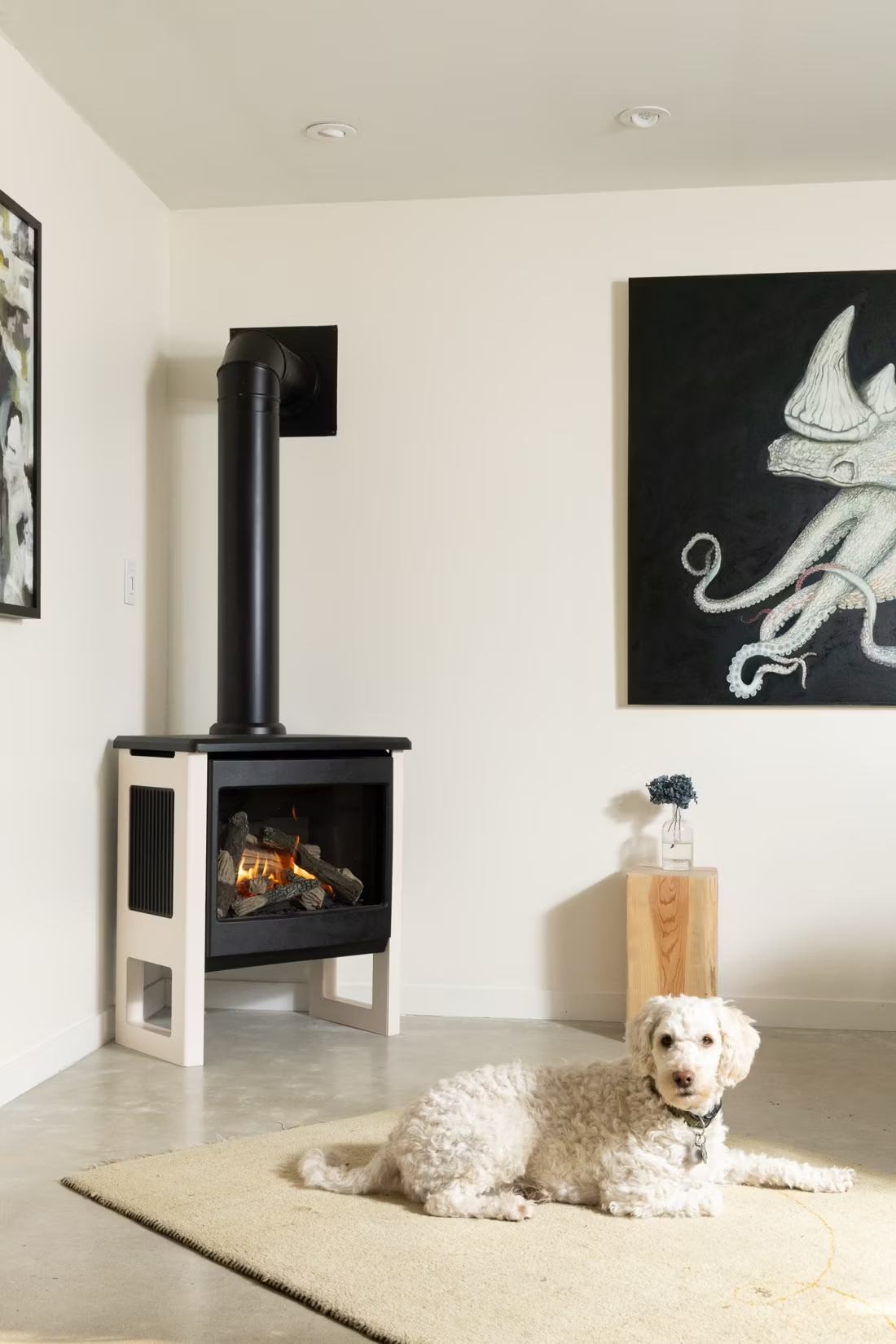
A gas fireplace is a fully built-in unit, framed into a wall—the right call for new construction or a remodel without an existing hearth. A gas insert is built to slide into an existing masonry fireplace opening, which fits a lot of Wayne's older farmhouse and estate-style homes. A gas stove is freestanding, sitting on its own hearth pad, and works well in a barn conversion, sunroom, or any space without a chimney at all. Most Wayne homeowners upgrading an existing fireplace go with an insert; new spaces usually call for a built-in unit or a freestanding stove.
Do I need a permit to install a gas fireplace in Wayne?
Yes—a building permit and gas line permit are required for new gas fireplace installations, coordinated through the Village of Wayne Building Department in conjunction with DuPage County code requirements. The gas line connection itself has to be run by a licensed gas-fitter. Most hearth dealers who install fireplaces regularly in this area handle the permitting and inspection scheduling as part of the job, so it's rarely something the homeowner has to manage directly.
Should I get a vented or vent-free gas fireplace?
Vented, direct-vent units draw combustion air from outside and exhaust it back outside through sealed venting—they're the standard recommendation for a climate like Wayne's, where winter lows average 16°F and the house is sealed up tight for months. Vent-free units burn directly into the room and are legal in Illinois with proper room-sizing and an oxygen depletion sensor, but they add moisture and combustion byproducts to indoor air during a season when windows are already staying shut. For most Wayne homes, a direct-vent fireplace or insert is the more practical, better-performing choice—ask a local dealer to walk through both if you're weighing it.
How often does a gas fireplace need to be serviced?
Plan on an annual inspection, ideally before the start of heating season. A technician checks the burner, pilot assembly, venting, and gas connections, and cleans the glass and interior—a much lighter job than sweeping a wood chimney but still important for safe operation. Local service providers typically charge $150 to $250 for a standard annual visit, and it's worth keeping that appointment consistent, especially for units that run daily through a long DuPage County winter.
Gas vs. wood—which makes more sense for a Wayne home?
Wood gives you higher radiant heat output and keeps working during a power outage, and Wayne's surrounding woodlots of oak, hickory, and walnut are the same species that have heated local farmhouses for generations—though firewood typically comes from local tree services and suppliers rather than public cutting permits, since the Forest Preserve District of DuPage County land isn't open to cutting. Gas trades some of that heat output for convenience: no hauling, no ash, no chimney sweeping, and instant on-off operation from a wall switch or remote. For Wayne's equestrian estates and older farmhouses, it's common to see both—a gas insert in the main living space for everyday use, with an original wood fireplace kept for ambiance or backup heat.
Why is my open fireplace making my house colder?
Open fireplaces suck—literally. As the fire burns, it consumes air your furnace already paid to heat and pulls it out through the chimney, so the house is actually colder after the fire goes out than before you lit it. An insert fixes this: it seals the chimney, puts fixed glass across the front, and turns that hole in your house into a real heat source.
Can I put a TV above my fireplace?
Yes—with an asterisk. Fireplaces are hot and TVs don't like heat. Either put a mantel between them to deflect rising warmth, or choose a fireplace with heat-management technology that creates a cool zone on the wall above—the wall stays around 125 degrees, barely warm, while the room still gets full heat. If you like clean lines and don't want a mantel, heat management is the answer.
Does a fireplace add value to my home?
On average, a fireplace adds back to the home about the same amount you spent installing it. Add the monthly savings from heating the rooms you actually use instead of the whole house—often hundreds of dollars a year—and the value case is strong before you even count what a fire does for how your family uses the room.
How much should I budget for a fireplace?
For an average home—covering the fireplace, the vent pipe, and basic installation—a budget between $3,900 and $5,500 gives you a lot of options across wood, gas, and pellet. By the time you add finish work, gas line, and electrical, the average complete installation lands between $5,000 and $12,000 all-in. In a remodel or new build, a good rule is to put about 2.5% of the total project cost toward the fireplace.
Nearby Dealers
Hearth shops serving Wayne and the surrounding area. Every listing shows whether it is a WhyFire partner, a dealer we have verified as authorized for the brands we recommend, or a local business carrying hearth products. No manufacturer pays for placement. How we verify dealers →
A Cozy Fireplace
Ember Glow
Jhb Group, Inc.
A Fireplace Store And More
Fireplace And Patio
Smokin' Deal Bbq
Find your gas fireplace in Wayne.
Tell us about your home and we'll put together a free Project Guide & Parts List—the right gas fireplace, insert, or stove for your space, the vent kit and parts it needs, and a trusted local dealer near Wayne to install it.
Find Your Fireplace →