
Warm Up Naperville Winters, One Switch at a Time.
Direct-vent gas heat built for DuPage County winters in the same range as Madison, Wisconsin. Find the right fireplace or insert, and get matched with a trusted local dealer.
Every Project Starts From One of These Five Situations
The go-to hearth fuel for DuPage County homes.
Naperville sits at about 705 feet in DuPage County, with a heating load in the same range as Madison, Wisconsin, and winter lows that average in the upper teens. Across the ranch homes of the older east side, the colonials built through the 1980s and 90s, and the new construction filling in near Route 59, gas is by far the dominant hearth fuel. Most of the city sits on an established natural gas grid, and a direct-vent gas fireplace or insert delivers real, on-demand heat without anyone needing to stack cordwood in a subdivision backyard.
Wood and pellet stoves are genuinely uncommon here—DuPage County doesn't have the national-forest cutting permits or rural firewood supply chain you'd find in a mountain town, and plenty of Naperville HOAs frown on open burning anyway. Electric fireplaces show up as a low-cost, low-commitment option in bedrooms and basements, split between Commonwealth Edison and the City of Naperville's own municipal electric utility, with residential rates running roughly $0.13 to $0.134 per kWh. But for anyone who wants a fireplace that can actually take the chill off a Chicago-area winter, gas remains the clear default.
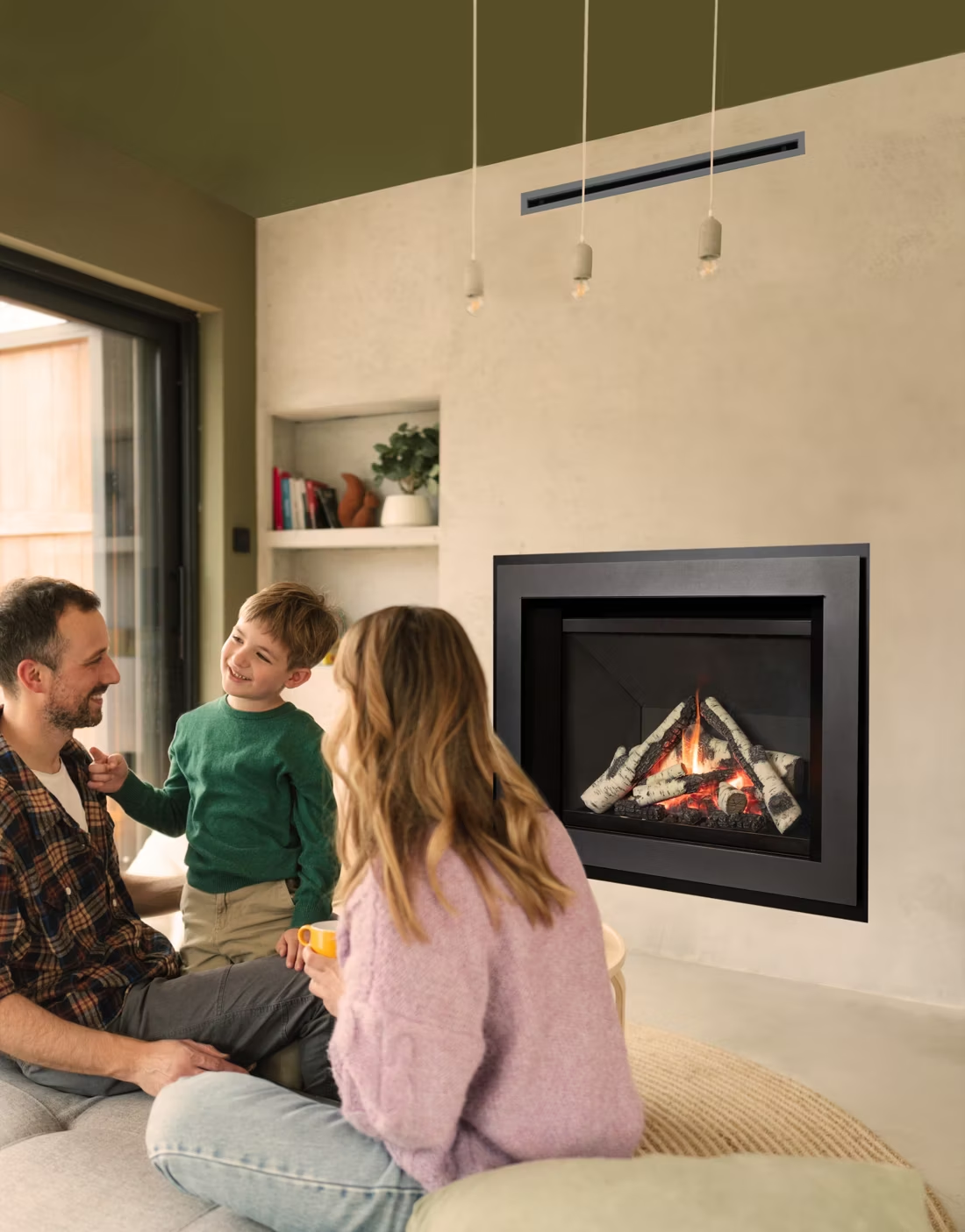
Three steps. No salesperson until you're ready.
Tell us about your project
Your zip code, your situation, and the fuel you're leaning toward—or let the answers point you to one.
See what's actually available
The brands dealers within 100 miles genuinely carry—real options, never a catalog mirage.
Get your dealer & Project Guide
A trusted local dealer, plus the free Project Guide & Parts List that names every component of the job.
Frequently Asked Questions
How much does a gas fireplace installation cost in Naperville?
A gas fireplace or insert installation in Naperville typically runs $4,000 to $9,500, depending on whether you're adding a direct-vent insert to an existing masonry fireplace—common in the ranch and colonial-style homes built across DuPage County from the 1960s through the 1990s—or installing a new built-in unit during a remodel that requires framing and a fresh gas line. Homes already on Nicor Gas service with an existing line nearby land on the lower end; extending a line from the street or through a finished basement adds cost. Local dealers will give a firm number after walking the space.
Can I convert my existing wood-burning fireplace to gas?
Yes, and it's one of the more common requests we see from Naperville homeowners. Many subdivisions here have wood-burning masonry fireplaces original to the house, and a direct-vent gas insert converts that same masonry chimney into a sealed, efficient heat source using a stainless liner. Given how few Naperville homeowners actually burn cordwood as primary heat—there's no nearby national forest firewood-permit system the way there is in mountain states, and many HOAs discourage open burning—a gas conversion is usually the practical upgrade. Expect $3,800 to $7,500 for a typical insert conversion where a gas line already runs nearby.
Do I need natural gas, or can I use propane?
Nearly all of Naperville is served by natural gas through Nicor Gas, so propane is rarely necessary here—unlike more rural stretches of outer DuPage County or exurban areas further west where propane tanks are still common. If your home already has a gas water heater, furnace, or range, adding a fireplace is usually a straightforward tap into your existing service. Propane tends to come up only for detached structures, like a pool house or outbuilding, where running a gas line isn't practical.
Will my gas fireplace work during a power outage?
Most direct-vent gas fireplaces with intermittent pilot ignition (IPI) run on a small battery backup, so they'll still light and heat during an outage—worth having in a city split between Commonwealth Edison and the City of Naperville's own municipal electric utility, both of which see occasional outages during summer derechos and winter ice storms. Valor fireplaces take a different approach: their pilot generates its own electricity through the thermocouple, so there's no battery to maintain at all. Ask your local dealer which ignition system is on any unit you're considering.
What's the difference between a gas fireplace, gas insert, and gas stove?
A gas fireplace is a fully built-in unit installed into a framed wall—common in new construction and major remodels near new Naperville developments. A gas insert is designed to slide into an existing masonry fireplace opening, sealing it and venting through the existing chimney with a liner—the right call for the many older DuPage County homes with an original wood-burning fireplace. A gas stove is a freestanding unit that sits on the floor like a wood stove but burns gas, useful in a basement or room without an existing chimney. Most Naperville homeowners upgrading an existing fireplace end up with an insert.
Do I need a permit to install a gas fireplace in Naperville?
Yes. Homes within Naperville city limits need a building permit and a separate gas permit through the City of Naperville Building Division before installation; homes in unincorporated DuPage County go through the DuPage County Building & Zoning Division instead. Most hearth dealers who do regular installation work in the area handle this paperwork as part of the job, including scheduling the final inspection.
What's the difference between vented and vent-free gas fireplaces?
Illinois allows vent-free gas fireplaces in most residential applications, but they come with strict room-sizing and ventilation requirements, and most Naperville homeowners we hear from prefer the performance of a direct-vent unit instead—it draws combustion air from outside and exhausts it back outside through a sealed pipe, so it doesn't affect indoor air quality. Given DuPage County's winters, which run in the same range as Madison, Wisconsin, a direct-vent fireplace also tends to hold a steadier, higher heat output than a vent-free unit, which matters when it's actually being used to take the edge off a cold living room rather than for looks alone.
How often should my gas fireplace be serviced?
An annual inspection is recommended for any gas fireplace or insert—a technician checks the burner, pilot assembly, venting, and gas connections, and cleans the glass. Local gas appliance service companies in the Naperville area typically charge $150 to $225 for this visit, usually scheduled in early fall before the heating season starts.
Gas vs. electric fireplace—which is right for my Naperville home?
Gas and electric are really the two realistic hearth options for most Naperville homes—wood-burning and pellet stoves are uncommon here, since there's no local firewood-permit culture the way there is in more rural or mountain regions, and pellet fuel isn't widely stocked at retail in DuPage County. Gas delivers genuine radiant heat, keeps working during a power outage with battery-backup ignition, and can meaningfully offset a furnace on the coldest nights. Electric fireplaces and inserts cost far less to install, often under $1,000, plug into a standard outlet, and are simple to add to a bedroom or basement, but they produce ambient warmth rather than real supplemental heat, and running one all winter adds up at roughly $0.13 to $0.134 per kWh through ComEd or the City of Naperville's electric utility. For anyone who wants heat, not just ambiance, gas is usually the better fit.
Can I put a TV above my fireplace?
Yes—with an asterisk. Fireplaces are hot and TVs don't like heat. Either put a mantel between them to deflect rising warmth, or choose a fireplace with heat-management technology that creates a cool zone on the wall above—the wall stays around 125 degrees, barely warm, while the room still gets full heat. If you like clean lines and don't want a mantel, heat management is the answer.
What's the difference between an insert and a zero-clearance fireplace?
An insert is a fireplace that slides into a pre-existing wood-burning fireplace—if you don't have one, there's nothing to insert it into. A zero-clearance fireplace is built into a framed wall, which makes it the answer for remodels and new construction. Simple test: existing masonry fireplace means insert; blank or framed wall means zero-clearance.
How much should I budget for a fireplace?
For an average home—covering the fireplace, the vent pipe, and basic installation—a budget between $3,900 and $5,500 gives you a lot of options across wood, gas, and pellet. By the time you add finish work, gas line, and electrical, the average complete installation lands between $5,000 and $12,000 all-in. In a remodel or new build, a good rule is to put about 2.5% of the total project cost toward the fireplace.
Does a fireplace add value to my home?
On average, a fireplace adds back to the home about the same amount you spent installing it. Add the monthly savings from heating the rooms you actually use instead of the whole house—often hundreds of dollars a year—and the value case is strong before you even count what a fire does for how your family uses the room.
Nearby Dealers
Hearth shops serving Naperville and the surrounding area. Every listing shows whether it is a WhyFire partner, a dealer we have verified as authorized for the brands we recommend, or a local business carrying hearth products. No manufacturer pays for placement. How we verify dealers →
A Cozy Fireplace
A Fireplace Store And More
Ember Glow
A Cozy Fireplace
Find your gas fireplace in Naperville.
Tell us about your home and we'll match you with a trusted local Naperville dealer and send a free Project Guide & Parts List—the exact parts, vent kit, and dealer recommendation for your gas fireplace project.
Find Your Fireplace →