
Warm, instant heat for Bensenville's long Chicago-area winters.
With a hefty winter heating load and winter lows that regularly dip into the teens, Bensenville homes need heat that comes on the moment you flip a switch. Find the right gas fireplace or insert, and connect with a trusted local dealer.
Every Project Starts From One of These Five Situations
Instant, consistent heat for a long Chicago winter.
Bensenville sits at 676 feet in DuPage County, just west of O'Hare, in climate zone 5A with an average winter low of 19°F and a hefty winter heating load—a heating season roughly on par with Buffalo, NY. Many Bensenville homes, especially the ranch and split-level houses built in the 1960s through 1980s, came with a builder-grade masonry fireplace originally designed for wood. In a busy commuter suburb where nobody's stacking cords of oak or hickory in the garage, most of those fireplaces sit unused—which is exactly why gas conversions are one of the most common projects local hearth dealers handle here.
Nicor Gas serves natural gas throughout most of Bensenville and the surrounding DuPage County suburbs, making a direct-vent gas fireplace or insert a straightforward addition for homes that already have gas service for their furnace or water heater. ComEd provides electric service locally, and residential rates around 13.4 cents per kWh mean an electric fireplace can also make sense as a low-cost supplemental option in condos, townhomes, or rooms without a gas line. Either way, gas heat means no wood handling, no ash, and a flame you can turn on during a February cold snap without waiting for a fire to catch.
Three steps. No salesperson until you're ready.
Tell us about your project
Your zip code, your situation, and the fuel you're leaning toward—or let the answers point you to one.
See what's actually available
The brands dealers within 100 miles genuinely carry—real options, never a catalog mirage.
Get your dealer & Project Guide
A trusted local dealer, plus the free Project Guide & Parts List that names every component of the job.
Frequently Asked Questions
How much does a gas fireplace installation cost in Bensenville?
Most gas fireplace and insert installations in the Bensenville area run between roughly $4,000 and $10,000, depending on the unit, the venting path, and whether new gas line work is needed. A direct-vent insert dropped into an existing masonry fireplace with gas already run to that wall sits toward the low end. A new built-in gas fireplace for a remodel—with framing, direct-vent piping through an exterior wall, and a fresh gas line from the meter—lands in the middle to upper end. Local dealers will give you a firm number after seeing your existing chimney or wall setup in person.
Can I convert my existing wood-burning fireplace to gas?
Yes, and it's one of the more common requests we see from Bensenville homeowners. A large share of the ranch and split-level homes in this part of DuPage County came with a builder masonry fireplace that was rarely, if ever, actually used for wood fires. A gas insert can go into that same firebox, using a stainless liner run up the existing chimney, and typically costs somewhere in the $4,000 to $9,000 range depending on the insert and whether new gas piping needs to reach the fireplace wall. The result looks similar to what you have now but lights instantly and heats far better than an open masonry hearth ever did.
Do I need natural gas service, or can I use propane?
Nicor Gas covers natural gas service across most of Bensenville, so if your home already has gas for the furnace, water heater, or range, adding a fireplace is usually a matter of running a branch line rather than bringing gas to the house for the first time. Propane is rarely necessary in this area and typically only comes up for outbuildings or specific situations where running a gas line isn't practical. Most gas fireplace models can be set up for either fuel, but for the vast majority of Bensenville homes, natural gas is the simpler and more common route.
Will my gas fireplace still work if the power goes out?
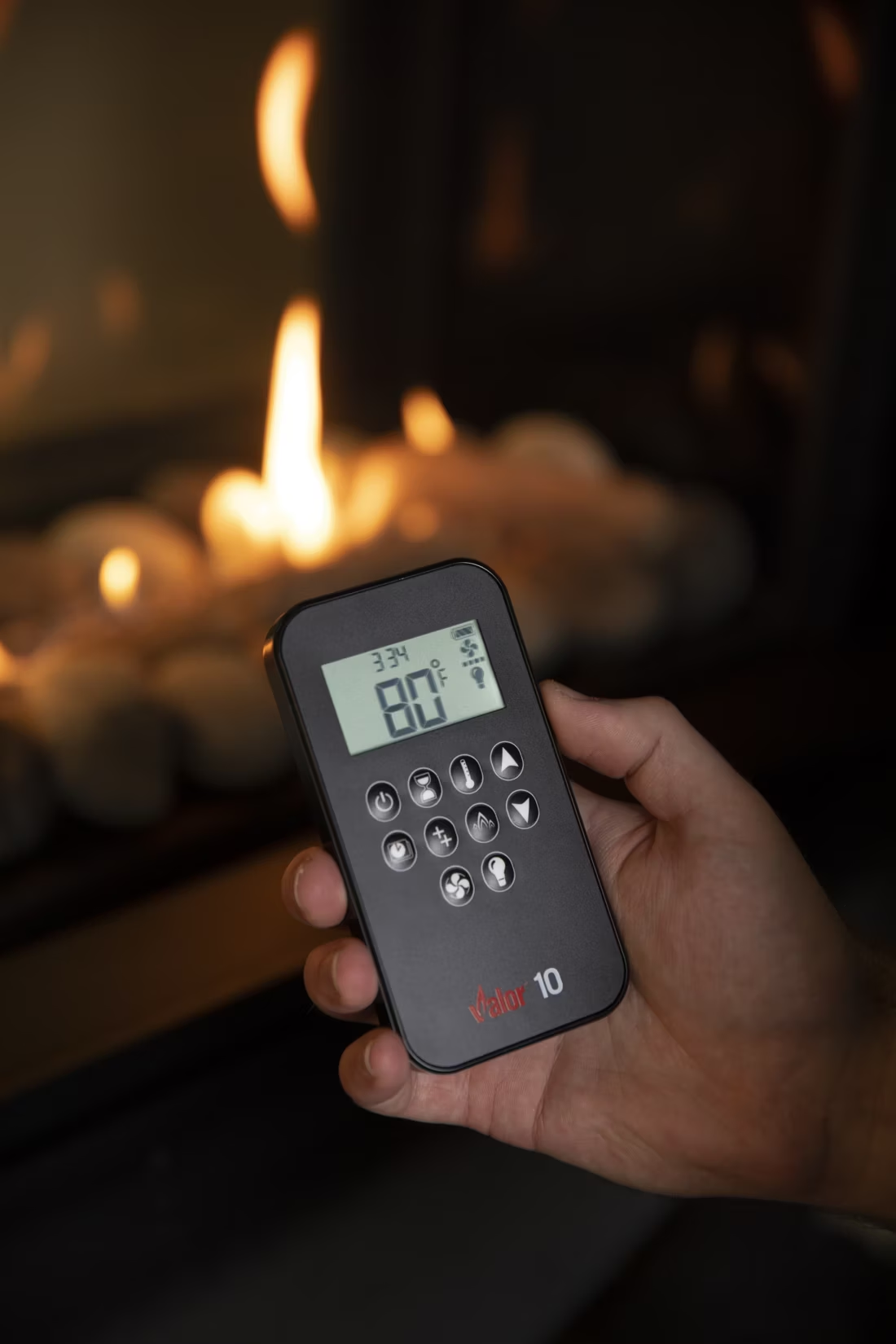
Most modern gas fireplaces will, with the right ignition system. Units with intermittent pilot ignition (IPI) include a battery backup—usually a set of AA batteries inside the unit—that takes over automatically when ComEd power drops, so the fireplace still lights on demand. Valor fireplaces work a bit differently: their pilot assembly generates its own electricity through the thermocouple, so there are no batteries to remember at all. Given how ice storms and high winds off Lake Michigan can knock out power in this area, that's worth asking about when you're comparing units with a local dealer.
What's the difference between a gas fireplace, gas insert, and gas stove?
A gas fireplace is a fully built-in unit installed into a framed wall—the standard choice for new construction or a full remodel. A gas insert is sized to slide into an existing masonry firebox, sealing it up and using the chimney as the vent path, which makes it the natural fit for the older wood-designed fireplaces common in Bensenville's ranch and split-level homes. A gas stove is a freestanding cast-iron or steel unit that sits on the floor and can go almost anywhere with the right clearances, including rooms that never had a fireplace to begin with. Most Bensenville homeowners with an existing hearth go with an insert; homes without one usually look at a built-in fireplace or a freestanding stove.
Do I need a permit to install a gas fireplace in Bensenville?
Yes. New gas fireplace installations in Bensenville require a building permit through the Village of Bensenville, and any new or modified gas line needs to be run by a licensed plumber or gas-fitter per Illinois code. Most established hearth dealers coordinate all of this as part of the installation—pulling the permit, scheduling the gas line work, and setting up the required inspection—so you're not left managing separate trades and appointments yourself.
What's the difference between vented and vent-free gas fireplaces?
Vented gas fireplaces, whether direct-vent or B-vent, pull combustion air from outside and exhaust the byproducts back outside through a sealed pipe. Vent-free units burn gas directly into the room with no outside venting at all, which makes them easier to install but means water vapor and small amounts of combustion gas end up in your living space. Illinois permits vent-free units, but they're subject to room-size minimums and oxygen depletion sensor requirements, and they're a harder sell in a well-sealed, energy-efficient Bensenville home where indoor air quality matters. Direct-vent units are by far the more common recommendation from local dealers and give you real heat output without any of those tradeoffs.
How often does a gas fireplace need to be serviced?
Plan on an annual inspection, ideally in early fall before the heating season ramps up. A technician will check the burner and pilot assembly, inspect the venting for blockages or corrosion, test any battery backup or electronic ignition, and clean the glass and interior. This runs roughly $150 to $250 in the Bensenville area and is far less involved than chimney sweeping for a wood-burning unit, but skipping it is the most common reason a gas fireplace stops lighting reliably or starts sooting up the glass.
Gas fireplace or electric fireplace—which makes more sense for my home?
Gas gives you real, substantial heat output—enough to take the chill off a cold DuPage County evening—plus the look and sound of an actual flame, and it's the natural fit for the many Bensenville homes that already have gas service and an existing masonry fireplace to convert. Electric fireplaces install almost anywhere with a standard outlet, cost far less upfront, and at Commonwealth Edison's residential rate of about 13.4 cents per kWh, are inexpensive to run for ambiance or light supplemental heat—but they won't heat a room the way a gas unit does, and most produce a simulated rather than real flame. For a condo, townhome, or a room without gas service, electric is often the practical answer; for a primary living space in a single-family home, gas is usually the better long-term choice.
What's the difference between an insert and a zero-clearance fireplace?
An insert is a fireplace that slides into a pre-existing wood-burning fireplace—if you don't have one, there's nothing to insert it into. A zero-clearance fireplace is built into a framed wall, which makes it the answer for remodels and new construction. Simple test: existing masonry fireplace means insert; blank or framed wall means zero-clearance.
Why is my open fireplace making my house colder?
Open fireplaces suck—literally. As the fire burns, it consumes air your furnace already paid to heat and pulls it out through the chimney, so the house is actually colder after the fire goes out than before you lit it. An insert fixes this: it seals the chimney, puts fixed glass across the front, and turns that hole in your house into a real heat source.
Can I install a fireplace myself?
If you're putting a fire in your house on purpose, it's best to work with an expert. Unless you're genuinely experienced in framing, gas line, vent pipe, and the national code on clearances to combustibles, have a professional do it—and ideally the same company that sells you the fireplace, so warranty, service, and liability all live under one roof.
Does a fireplace add value to my home?
On average, a fireplace adds back to the home about the same amount you spent installing it. Add the monthly savings from heating the rooms you actually use instead of the whole house—often hundreds of dollars a year—and the value case is strong before you even count what a fire does for how your family uses the room.
Nearby Dealers
Hearth shops serving Bensenville and the surrounding area. Every listing shows whether it is a WhyFire partner, a dealer we have verified as authorized for the brands we recommend, or a local business carrying hearth products. No manufacturer pays for placement. How we verify dealers →
Ember Glow
General Masonry Supply
A Fireplace Store And More
Urban Rooftops
A Cozy Fireplace
Fireplaces Plus
Smokin' Deal Bbq
Find your gas fireplace in Bensenville.
Tell us a bit about your home and heating goals, and we'll match you with a trusted local dealer and send over a free Project Guide & Parts List—the exact parts, vent kit, and recommended installer for your Bensenville gas fireplace project.
Find Your Fireplace →