
Fireplace options for every DuPage County suburb.
Natural gas is the default heating fuel for most DuPage County homes, with units filling in for bedrooms, condos, and secondary rooms. Stoves are uncommon here—this hub connects you with the local retailers who actually stock and install what works in this county.
Every Project Starts From One of These Five Situations
Suburban heating across Chicago's DuPage County.
DuPage County packs nearly 880,000 residents into nine incorporated municipalities across nine roughly 330 square miles just west of Chicago—Naperville, Wheaton, Downers Grove, Elmhurst, and Lombard among them. Winters here run cold but not extreme: an average low of 17°F and about 5,976 heating degree days, roughly the same heating load as Madison, Wisconsin. What sets DuPage apart isn't the climate, it's the density. Lot sizes are small, most subdivisions were built out with natural gas already run to the house, and many municipal codes and HOA covenants either restrict solid-fuel appliances outright or make new wood stove installations impractical. Local hardwoods like oak, hickory, walnut, and maple are common in the county's forest preserves, but they show up as firewood for existing builder-installed masonry fireplaces far more often than as fuel for a dedicated wood stove.
That's why this hub leads with gas and electric. Gas fireplaces, inserts, and stoves are the dominant choice across the county—Nicor Gas territory covers most of DuPage, with Peoples Gas serving pockets closer to the Chicago border, and the infrastructure is already in the wall. Electric units cover everything from Naperville condos to finished basements where venting a gas line isn't worth the trouble. Pellet stoves are rare for a related reason: the regional pellet names you'll see locally, like Indeck Energy Services, are industrial biomass energy producers, not residential hearth retailers, so there's little dealer infrastructure for pellet appliances here. Pick your fuel below to see local dealers, installation costs, and the retailers who actually serve your municipality.
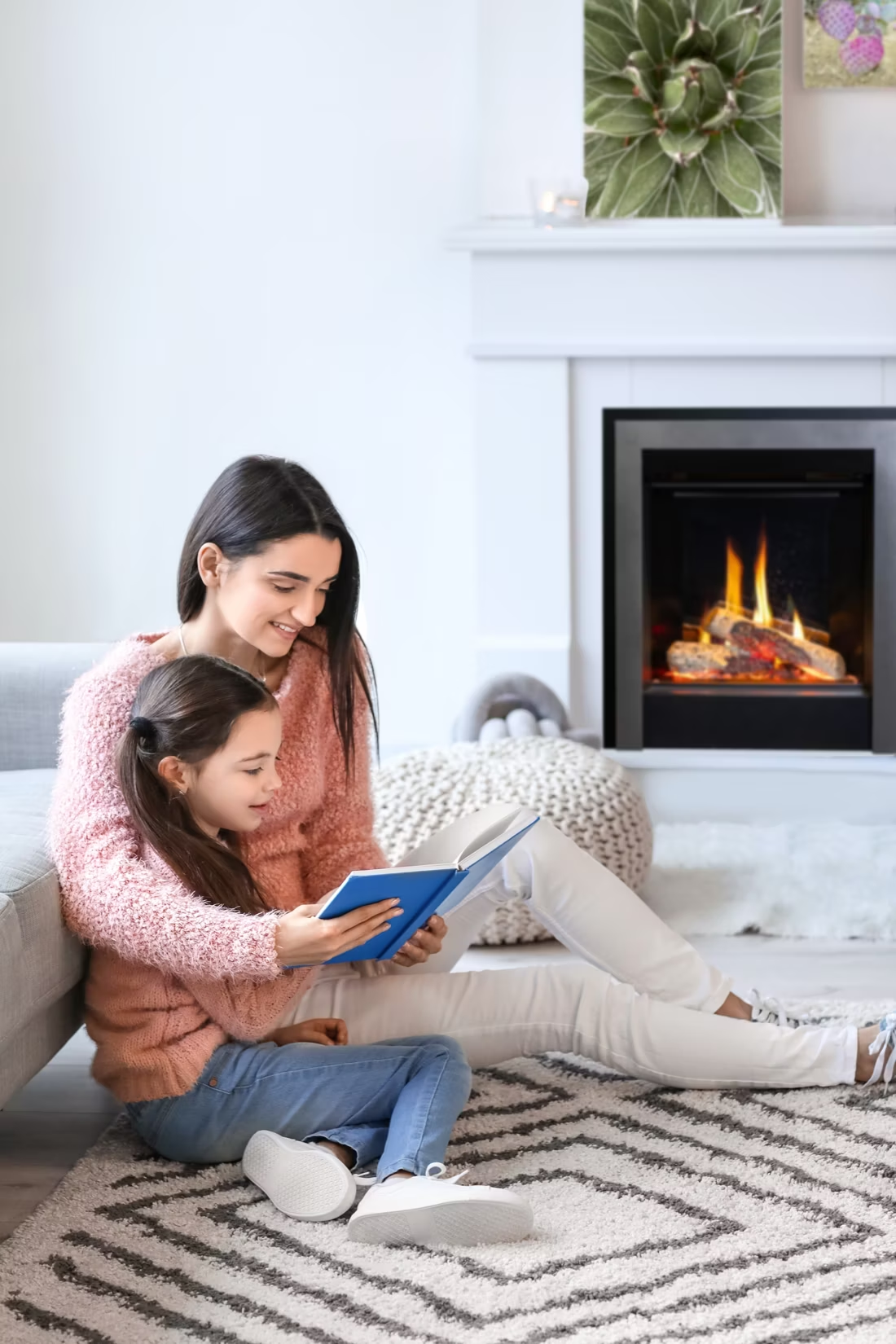
Four fuels. One honest answer for DuPage County.
Three steps. No salesperson until you're ready.
Tell us about your project
Your zip code, your situation, and the fuel you're leaning toward—or let the answers point you to one.
See what's actually available
The brands dealers within 100 miles genuinely carry—real options, never a catalog mirage.
Get your dealer & Project Guide
A trusted local dealer, plus the free Project Guide & Parts List that names every component of the job.
Frequently Asked Questions
Which fuel works best in DuPage County?
For most DuPage County homes, it's gas. Natural gas is already run to nearly every subdivision in the county, and gas fireplaces, inserts, and stoves deliver instant heat with none of the fuel storage or venting hassle that comes with solid-fuel appliances. Electric is the right call for condos, finished basements, or bedrooms where running gas line isn't practical or worth the cost—it's plug-and-play and works anywhere there's an outlet. Wood stoves are uncommon in DuPage County; small lot sizes, HOA covenants, and municipal codes in many villages make new wood stove installations rare, even though builder-installed masonry fireplaces (burning local oak, hickory, or walnut) are still common in older homes. Pellet stoves are similarly rare—there's little residential dealer infrastructure locally, since the pellet names associated with the region, like Indeck Energy Services, serve industrial biomass markets rather than home hearth retail.
Do I need a permit to install a fireplace in DuPage County?
Almost always, yes—but who issues it depends on where you live. DuPage County's 39 municipalities each handle their own building permits for gas line work, new gas fireplace installs, and electrical work tied to built-in electric units; Naperville, Wheaton, Elmhurst, and the rest each have their own building department rather than routing through the county. Gas installations also require a licensed gas-fitter and a separate gas permit in most jurisdictions. Plug-in electric fireplaces typically don't need a permit, but hardwired built-ins do. Most local retailers who install gas or electric fireplaces in DuPage County handle the permit filing with your specific village as part of the installation, so you're usually not tracking down the paperwork yourself.
Are there air quality restrictions on burning in DuPage County?
DuPage County isn't in an EPA non-attainment area, so there's no county-wide wood smoke advisory system like you'd find in a basin community out West. That said, several DuPage municipalities have local nuisance ordinances that restrict or discourage new wood-burning appliance installations, largely because of how tightly homes are spaced in most subdivisions. If you already have a masonry wood-burning fireplace, using it occasionally is generally fine; installing a new wood stove or insert is where you're more likely to run into a village-specific restriction. Check with your local building department before planning a wood stove project—for gas and electric installs, air quality isn't a factor.
Can one local hearth retailer handle both gas and electric fireplaces?
Yes—most DuPage County hearth retailers carry both fuel types, since gas and electric cover the overwhelming majority of local demand. A dealer with a Naperville or Wheaton showroom will typically have working gas fireplace displays alongside a range of electric wall-mount and insert units, so you can compare heat output, venting requirements, and price side by side. Very few local retailers stock wood stoves or pellet appliances given how little residential demand there is for those fuels in this county—if you specifically want one, expect a smaller pool of dealers and possibly a drive toward more rural counties.
How does fireplace service work in a dense suburban county like DuPage?
Service is fast here compared to rural counties—most technicians covering DuPage County are based centrally in the Naperville-Wheaton-Lombard corridor and can reach any village in the county within 20-30 minutes, so travel fees are rare or minimal. Annual gas fireplace inspections (checking the pilot, IPI system, and venting) are the most common service call, along with the occasional chimney sweep for older masonry fireplaces. Booking in early fall, before the first cold snap hits, gets you the widest scheduling window; a broken pilot assembly in January means a longer wait.
What's the typical cost range for fireplace installation in DuPage County?
Gas fireplace, insert, or stove: $4,500–$10,000 depending on whether new gas line work is needed or you're connecting to existing service, plus venting. Electric fireplace: $200–$3,000 for the unit itself, with $400–$1,200 in labor for anything beyond a simple plug-in—most wall-mount and insert installs in DuPage County fall in that labor range. Wood or pellet installs are quoted case by case given how few local dealers carry them; expect costs closer to $5,000-$9,000 if you can find a retailer willing to take on the project. For fuel-specific detail, see the county + fuel pages above.
Can I install a fireplace myself?
If you're putting a fire in your house on purpose, it's best to work with an expert. Unless you're genuinely experienced in framing, gas line, vent pipe, and the national code on clearances to combustibles, have a professional do it—and ideally the same company that sells you the fireplace, so warranty, service, and liability all live under one roof.
How much should I budget for a fireplace?
For an average home—covering the fireplace, the vent pipe, and basic installation—a budget between $3,900 and $5,500 gives you a lot of options across wood, gas, and pellet. By the time you add finish work, gas line, and electrical, the average complete installation lands between $5,000 and $12,000 all-in. In a remodel or new build, a good rule is to put about 2.5% of the total project cost toward the fireplace.
What is an in-home preview and do I need one?
It's a visit where a hearth professional measures your space, confirms the model you picked actually works in your home, and walks the specs—framing, gas line, venting, finish work—before anything is ordered. Some details you just can't know until you see the house. Never make a down payment without one; it's the single most-skipped step that burns buyers.
I know I want a fireplace—where do I actually start?
Do two things today: snap a photo of the wall or fireplace you want to transform, and take a tape measure to the space—width, height, depth. Those two artifacts answer most of a hearth professional's first questions. Then settle fuel (wood, gas, pellet, or electric) and set a realistic budget: $3,900–$5,500 covers fireplace, vent, and basic install for most homes.
Stove and Fireplace Dealers in DuPage County
Listings include WhyFire partner dealers, dealers we have verified as authorized for the brands we recommend, and established local businesses that carry hearth products. Every listing shows which one it is. The ones marked Preferred run on WhyFire's software, so they can show you real pricing and book your appointment right here. No manufacturer pays for placement. How we verify dealers →
Ember Glow
A Cozy Fireplace
A Fireplace Store And More
Urban Rooftops
General Masonry Supply
A Cozy Fireplace
Find your fireplace in DuPage County.
Pick your fuel below and I'll match you with a trusted local dealer and send over a free Project Guide & Parts List—the exact parts, including the vent kit, for your project in DuPage County.
Find Your Fireplace →