
Bring Real Flame Indoors, Leesburg—No Wood, No Smoke, No Hassle.
Central Florida winters rarely demand heat, but a gas fireplace still adds real flame, ambiance, and hurricane-season backup warmth to Leesburg homes. Find the right unit and connect with a trusted local dealer.
Every Project Starts From One of These Five Situations
Ambiance-driven heat for a Zone 2A climate.
Leesburg sits at just 63 feet of elevation in Lake County, in the heart of Central Florida's citrus and lake country. With an average winter low of 49°F and only a light, short heating season each year, this is about as mild as heating climates get in the continental U.S.—compare that to a place like Duluth, Minnesota, where the winter heating load runs many times higher. Furnaces here run for a handful of weeks a year, if at all, and most Leesburg homes were built on slab foundations without a chimney in sight.
That doesn't mean gas fireplaces are an afterthought. Around Leesburg and neighboring communities like The Villages, homeowners install direct-vent gas fireplaces and linear units for the ambiance of real flame on the occasional 40-degree January morning, for the resale appeal in a living room or lanai, and increasingly as a backup heat and light source during the power outages that follow Central Florida's hurricane season. Duke Energy Florida serves electric service to most of the city, and outside the pockets of Leesburg with natural gas mains, propane is the standard fuel source for a new gas fireplace install.
Three steps. No salesperson until you're ready.
Tell us about your project
Your zip code, your situation, and the fuel you're leaning toward—or let the answers point you to one.
See what's actually available
The brands dealers within 100 miles genuinely carry—real options, never a catalog mirage.
Get your dealer & Project Guide
A trusted local dealer, plus the free Project Guide & Parts List that names every component of the job.
Frequently Asked Questions
How much does a gas fireplace installation cost in Leesburg?
Most gas fireplace installations in the Leesburg area run between $3,500 and $8,500, with cost driven mainly by whether the home already has propane or natural gas plumbed in and whether the unit is a simple direct-vent box or a larger linear fireplace built into a custom wall surround. Because most homes in Lake County are slab-built without an existing masonry fireplace, the bulk of local installs are new zero-clearance units framed into a wall rather than insert conversions—a different, and often less expensive, project than retrofitting an old chimney. A local dealer can give you a firm number after seeing your framing and gas access.
Is natural gas available in Leesburg, or do I need propane?
Natural gas mains reach only a portion of Leesburg and unincorporated Lake County, so a majority of new gas fireplace installs in the area run on propane, either from an existing tank or a new tank set by a local propane supplier. If your home already has a natural gas range or water heater, tying in a fireplace is usually straightforward. If not, propane is the practical default, and nearly every gas fireplace on the market can be configured to run on either fuel—your installer sets the correct orifice for whichever you have.
Should I get a vented or vent-free gas fireplace?
Vent-free (unvented) gas fireplaces are popular in Florida in part because there's no need to run venting through a slab home with no existing chimney chase, and the mild climate means the small amount of humidity and combustion byproducts they release rarely becomes an issue. That said, direct-vent units—which exhaust to the outside through a wall—remain the safer, more universally recommended choice, especially for larger rooms or bedrooms. Florida allows both, but a local dealer can walk you through the room-sizing rules that apply to vent-free models before you commit.
Will a gas fireplace still work if the power goes out?
This is one of the most common reasons Leesburg homeowners give for adding a gas fireplace. Units with a standing pilot or with battery-backed intermittent pilot ignition (IPI) will light and run without utility power, which matters after a summer hurricane knocks out Duke Energy Florida service for days at a time. Valor fireplaces take this further—their pilot generates its own electricity through the thermocouple, so there are no batteries to remember to replace. Ask your local dealer about the ignition system on any model you're considering if storm-season reliability matters to you.
What's the best gas fireplace for a warm climate like Leesburg's?
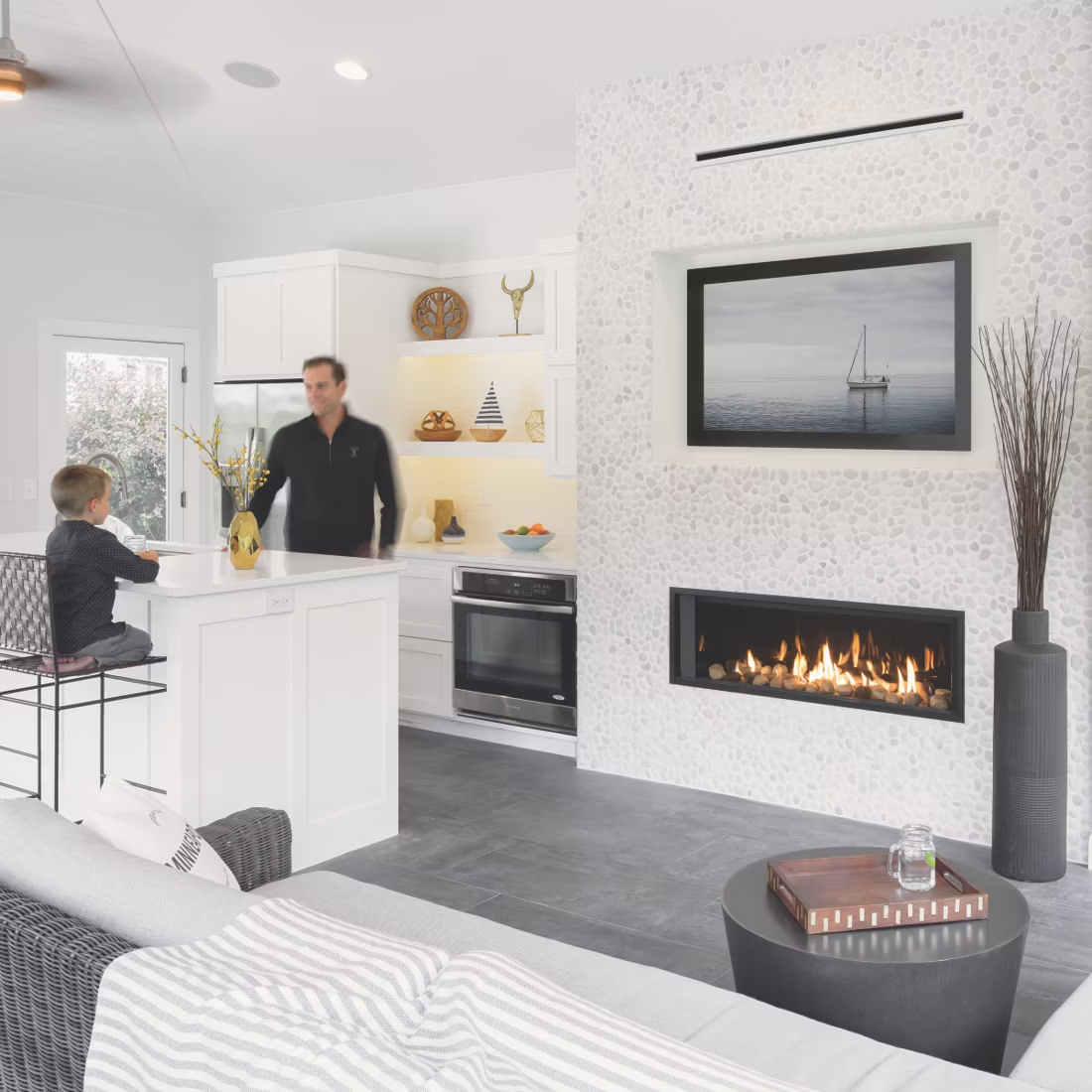
Since heat output rarely needs to compete with a Central Florida winter, most homeowners here choose fireplaces for the look of the flame rather than maximum BTUs. Linear direct-vent units with a wide glass viewing area and adjustable low-BTU settings are popular for main living areas and lanais, while smaller see-through or corner units work well in bedrooms or dens. A unit with a BTU range that dials down low, rather than one built for cold-climate output, will keep the room comfortable without overheating a Florida living room.
Do I need a permit to install a gas fireplace in Leesburg?
Yes—a new gas fireplace typically requires both a building permit and a gas line permit through the City of Leesburg Building Division, or Lake County if your home is outside city limits, plus inspection of any propane tank work by the tank supplier. Most local hearth dealers pull these permits as part of the installation and schedule the inspections, so you generally don't have to coordinate it yourself.
What's the difference between a gas fireplace, insert, and stove?
A gas fireplace is a built-in, framed unit—the standard choice for Leesburg's slab-built homes since there's no existing masonry fireplace to retrofit. A gas insert is designed to slide into an existing wood-burning fireplace, which is uncommon in newer Central Florida construction but does show up in some of Leesburg's older lakefront homes. A gas stove is a freestanding cabinet-style unit that sits on the floor. For most local homeowners without an existing chimney, a built-in direct-vent fireplace or a linear wall unit is the natural fit.
How often should a gas fireplace be serviced in Leesburg?
An annual inspection is still recommended even though Leesburg's mild winters mean lighter use than in a colder climate—a technician checks the burner, pilot assembly, glass seal, and venting. This is a good task to schedule before hurricane season starts in June, since that's often when homeowners lean on the fireplace for backup light and warmth during outages. Expect to pay in the neighborhood of $150 to $250 for a standard annual service call from a local gas appliance technician.
Should I consider a wood-burning fireplace instead of gas?
Wood-burning fireplaces are uncommon in Leesburg, and for good reason—with only a light, short heating season each year and winter lows averaging 49°F, there's rarely enough sustained cold to justify sourcing, storing, and burning cordwood, and Lake County doesn't have the wood-supply infrastructure you'd find further north. A small number of homeowners with older lakefront homes keep an existing wood fireplace for occasional ambiance, but nearly everyone adding a new fireplace in Leesburg chooses gas for the instant on-off convenience and zero ash cleanup. If you're drawn to the wood-fire look without the maintenance, ask a local dealer about gas log sets designed to mimic oak or pine cordwood.
Is my gas fireplace wasting gas?
If it was installed more than 15 years ago, probably. Older gas fireplaces keep a standing pilot light burning all the time, and that little flame can cost a couple hundred dollars a year. Newer models use pilot-on-demand ignition—the pilot lights only when you use the fireplace and goes out when you turn it off.
What do I measure to size a fireplace insert?
Four numbers tell you what fits: the front width, the front height, the back width, and the overall depth of your existing fireplace opening. Grab a tape measure, jot those down, and snap a photo of the wall—those two things do more to move your project forward than anything else you can do today.
Can a fireplace actually lower my heating bill?
Yes—by creating a comfort zone. A furnace heats every square foot of the house just to warm the one room you're in; a gas fireplace on low burns roughly a sixth of the gas a typical furnace does. Set the furnace around 55–60 degrees as a baseline, then heat the rooms your family actually uses. Families who heat this way commonly save $20–$60 a month.
What is an in-home preview and do I need one?
It's a visit where a hearth professional measures your space, confirms the model you picked actually works in your home, and walks the specs—framing, gas line, venting, finish work—before anything is ordered. Some details you just can't know until you see the house. Never make a down payment without one; it's the single most-skipped step that burns buyers.
Nearby Dealers
Hearth shops serving Leesburg and the surrounding area.
Find your gas fireplace in Leesburg.
Tell us about your home and we'll match you with the right gas fireplace or linear unit, plus a free Project Guide & Parts List—the exact parts, vent kit, and a trusted local Leesburg-area dealer to install it.
Find Your Fireplace →