
Fireplace warmth, no chimney required.
From Wooster Square condos in New Haven to shoreline homes in Guilford and Madison, electric fireplaces bring real ambiance and zone heat to rooms a flue was never going to reach. Find the right unit and connect with a trusted local dealer.
Every Project Starts From One of These Five Situations
The fix for homes without a flue—or the patience for one.
South Central Connecticut—the New Haven, Milford, Hamden, Meriden, Wallingford, North Haven, Guilford, and Madison area—runs milder than inland New England. Winter lows average around 23°F and the region sees a moderate heating season, a fraction of what places like Burlington, VT or Duluth, MN see. That matters for fireplace choice: this isn't a climate that demands 20-hour overnight burns. It's a climate where a lot of housing stock—postwar capes in Hamden, brick multifamilies near Yale, condo conversions along the Milford waterfront—simply doesn't have a usable chimney, and homeowners want heat and ambiance without cutting a new one in.
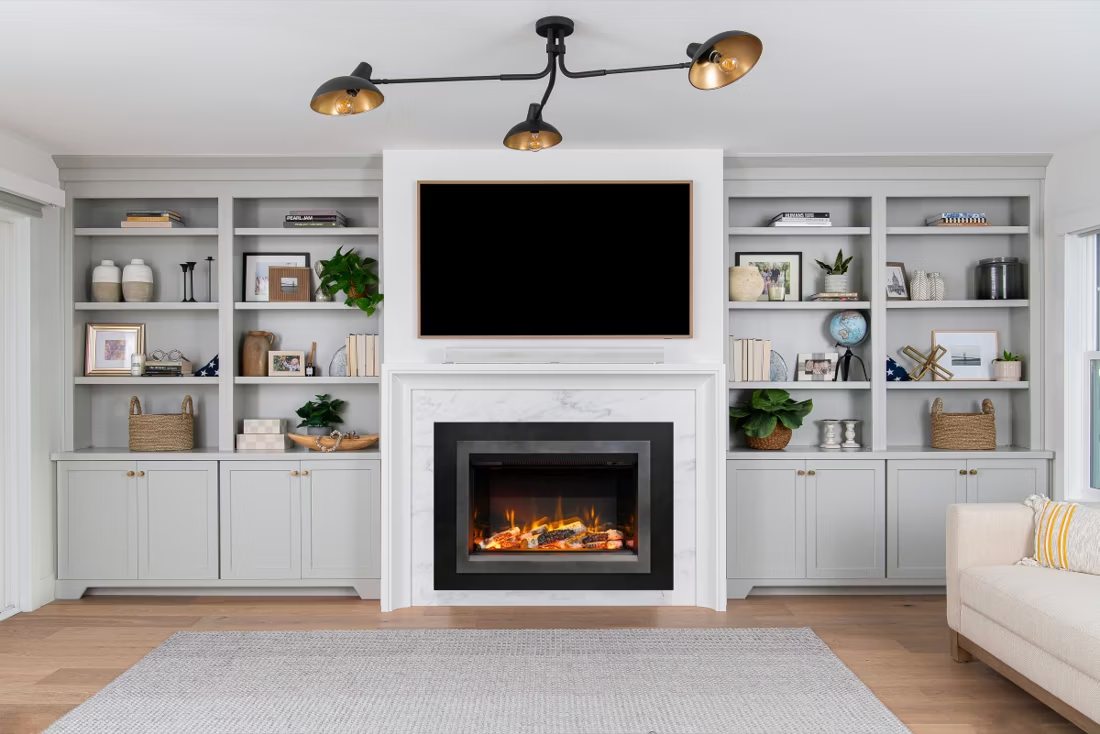
That's where electric fireplaces do their best work. No venting, no masonry, and in most plug-in cases, no permit—just an outlet and a wall. United Illuminating serves New Haven and Milford; Eversource covers most of the inland towns like Meriden and Wallingford. Either way, Connecticut runs among the higher electricity rates in the country, so most owners here run the heater function selectively for zone heat and lean on flame-only mode the rest of the time. A local dealer can size the unit to the room, confirm your circuit can handle it, and—for a built-in—coordinate the trim carpentry and any electrical work with a licensed electrician.
Three steps. No salesperson until you're ready.
Tell us about your project
Your zip code, your situation, and the fuel you're leaning toward—or let the answers point you to one.
See what's actually available
The brands dealers within 100 miles genuinely carry—real options, never a catalog mirage.
Get your dealer & Project Guide
A trusted local dealer, plus the free Project Guide & Parts List that names every component of the job.
Frequently Asked Questions
How much does an electric fireplace installation cost in South Central Connecticut?
A plug-in electric insert or wall-mount unit typically runs $300 to $1,200 installed, since most just need an existing outlet and some trim work. A built-in linear electric fireplace—framed into a wall with custom surround and mantel—runs closer to $1,500 to $4,500 once carpentry and any electrical upgrades are included. If the unit needs a new dedicated circuit, which is common for larger 1,500-watt heaters in older Hamden or New Haven homes with dated panels, add an electrician's time to that estimate. Local dealers in the area will quote firm numbers after seeing the room and the panel.
Do I need a permit for an electric fireplace in South Central Connecticut?
Usually not for a plug-in unit that runs off an existing outlet—there's no venting or gas line involved, so most towns in the region, from New Haven to Milford to Meriden, don't require a building permit for that. Where a permit does come into play is electrical work: if you're adding a new circuit or a dedicated outlet for a built-in unit, that work needs to be done by a licensed electrician and typically gets a permit through your local building department. A reputable local dealer will tell you upfront whether your project crosses that line.
Where do electric fireplaces make the most sense in this area?
They're a natural fit for exactly the housing stock that's common across South Central Connecticut: condo conversions in New Haven and Milford where a condo association won't allow venting through a shared wall, historic homes in Guilford and Madison where owners don't want to touch an existing masonry chimney, and finished basements in Hamden or Meriden that never had a flue to begin with. They're also popular as a second fireplace—a bedroom or den unit that supplements a wood or gas fireplace already doing the main heavy lifting in the living room.
Is it expensive to run an electric fireplace given Connecticut's electric rates?
Connecticut's electricity rates, through both United Illuminating and Eversource, run above the national average, so running an electric fireplace's heater element as your main heat source for a whole room around the clock adds up faster here than in lower-rate states. Most local owners treat it as targeted heat—running the heater function on cold evenings in the room they're actually using, and switching to flame-only mode (which draws very little power) the rest of the time for ambiance. Used that way, it's a reasonable supplement, not a meaningful spike on the bill.
Will my electric fireplace work if the power goes out?
No—and this is worth being direct about. Electric fireplaces need power to run both the heater and the flame effect, so a storm-related outage (not uncommon along the Connecticut shoreline in winter) will take yours offline along with everything else on the circuit. If backup heat during outages matters to you, that's a case for pairing an electric fireplace in one room with a wood stove or vented gas unit elsewhere in the house—plenty of homes in the region do both.
Electric vs. wood—which fits my home better?
Wood remains a strong choice for South Central Connecticut homes with an existing, code-compliant chimney and access to local hardwoods like oak, maple, birch, and ash—it runs without power and produces real radiant heat. But a large share of the region's housing—condos, additions, homes with no chimney or one that's not rated for solid fuel—simply can't take a wood stove without major construction. That's exactly the gap electric fills: real flame appearance and supplemental warmth in a room wood can't reach without a costly retrofit.
Electric vs. gas—which is the better fit here?
Gas delivers more heat output and can be set up to run during a power outage with a battery-backup ignition system, which matters in a coastal region that sees its share of winter storms. But not every town in South Central Connecticut has natural gas access on every street, and a propane tank installation adds cost and a permanent fixture in the yard. Electric skips both issues entirely—no gas line, no tank, no venting—at the tradeoff of lower heat output and no backup during an outage. For a secondary room or a home already relying on gas or wood elsewhere, electric is often the simpler add.
Electric vs. pellet stove—which makes more sense?
Pellet stoves burn bagged fuel from regional suppliers like Lignetics, New England Wood Pellet, or Maine Woods Pellet Co, and they put out real heat—but they require a hopper to load, ash to empty, and a vent through an exterior wall or existing chimney. Electric units need none of that: no fuel storage, no venting, no periodic loading. For homeowners in South Central Connecticut who want fireplace ambiance with zero maintenance and don't need it as a primary heat source, electric is the lower-effort option. For anyone leaning on supplemental heat through a long stretch of winter, pellet still has the edge on output.
What should I look for in an electric fireplace unit?
Look at the flame technology first—models from brands like Dimplex and Napoleon use layered LED and mirror effects that read far more convincingly than older units. Check the heater wattage against your room size; a standard 1,500-watt heater is rated for roughly 400 square feet, which covers most bedrooms and dens in the area but won't do much for an open-concept living room. And confirm whether it's designed as a built-in, insert, or wall-mount, since that decision drives whether you need carpentry, a new outlet, or just a spot on the wall. A local dealer walking your room in person will catch sizing issues that are easy to miss ordering online.
Can I put a TV above my fireplace?
Yes—with an asterisk. Fireplaces are hot and TVs don't like heat. Either put a mantel between them to deflect rising warmth, or choose a fireplace with heat-management technology that creates a cool zone on the wall above—the wall stays around 125 degrees, barely warm, while the room still gets full heat. If you like clean lines and don't want a mantel, heat management is the answer.
Do electric fireplaces actually produce heat?
Yes—most put out around 4,800–5,000 BTUs from a standard outlet, which comfortably warms a bedroom, office, or den as a comfort-zone heater. What they won't do is carry a whole house the way wood, gas, or pellet can. Think of electric as ambiance-first with honest supplemental heat: flames on with no heat in July, flames plus warmth in January.
Does a fireplace add value to my home?
On average, a fireplace adds back to the home about the same amount you spent installing it. Add the monthly savings from heating the rooms you actually use instead of the whole house—often hundreds of dollars a year—and the value case is strong before you even count what a fire does for how your family uses the room.
Can I install a fireplace myself?
If you're putting a fire in your house on purpose, it's best to work with an expert. Unless you're genuinely experienced in framing, gas line, vent pipe, and the national code on clearances to combustibles, have a professional do it—and ideally the same company that sells you the fireplace, so warranty, service, and liability all live under one roof.
Stove and Fireplace Dealers in South Central Connecticut County
Listings include WhyFire partner dealers, dealers we have verified as authorized for the brands we recommend, and established local businesses that carry hearth products. Every listing shows which one it is. The ones marked Preferred run on WhyFire's software, so they can show you real pricing and book your appointment right here. No manufacturer pays for placement. How we verify dealers →
Neighborhood Chimney Service
New Haven Masonry
Fireplace Surplus
Jj Sullivan Inc.
Tani’s Masonry Supply, LLC
Fireworks Hearth And Home LLC
Best In Backyards
Spotless Chimney Sweeping & Solutions
Find your electric fireplace in South Central Connecticut.
Tell us about your room and we'll put together a free Project Guide & Parts List—the right unit, what it takes to install it, and a trusted local dealer to do the work.
Find Your Fireplace →