
No chimney? No problem, in Branford Center.
Zone heat and real ambiance for the Green's historic homes and harbor condos—no venting, no masonry work, no chimney required.
Every Project Starts From One of These Five Situations
Zone heat for homes where venting isn't simple.
Branford Center's housing stock is a mix of 18th- and 19th-century homes clustered around the Green, harborfront condos, and tightly-set lots close to Long Island Sound. Salt air, shared walls, and historic-district restrictions make running a new chimney or venting a wood or pellet appliance impractical for a lot of homeowners here—which is part of why wood and pellet stoves stay rare in this part of the shoreline, even though winter lows average 23°F and the town logs a fairly demanding, mid-Atlantic-style heating season.
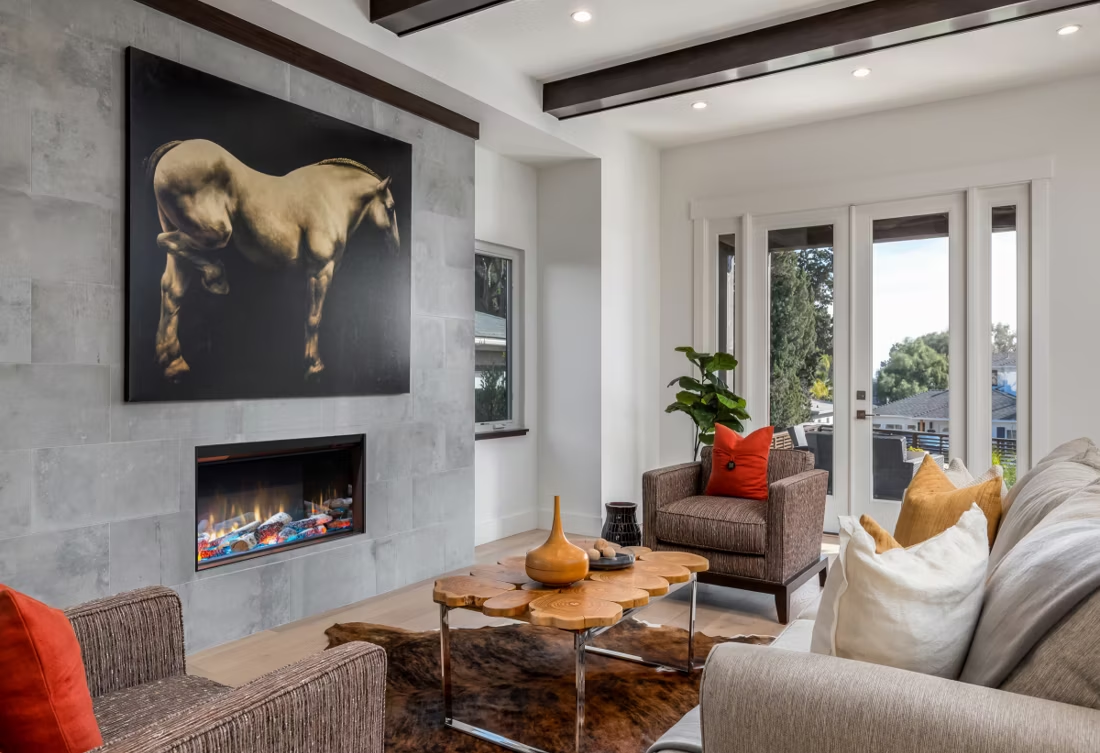
Electric fireplaces sidestep the venting problem entirely. An insert drops into an existing masonry firebox on the Green's older homes, or a built-in unit goes into a condo wall with no chimney at all—just a dedicated circuit. Branford Center is served by United Illuminating and, in some pockets, Connecticut Light & Power, both of which carry residential rates well above the national average. That makes electric heat a smart choice for supplemental, one-room warmth and ambiance rather than a whole-house heating strategy—which is exactly how most local buyers use them.
Three steps. No salesperson until you're ready.
Tell us about your project
Your zip code, your situation, and the fuel you're leaning toward—or let the answers point you to one.
See what's actually available
The brands dealers within 100 miles genuinely carry—real options, never a catalog mirage.
Get your dealer & Project Guide
A trusted local dealer, plus the free Project Guide & Parts List that names every component of the job.
Frequently Asked Questions
How much does an electric fireplace installation cost in Branford Center?
A plug-in electric insert or freestanding unit that uses a standard outlet typically runs $300 to $1,200 installed, since there's no venting or gas line involved. A built-in electric fireplace or a larger insert that needs a dedicated 20-amp circuit run by a licensed electrician usually falls between $1,500 and $3,500, depending on how far the wiring has to travel and whether an existing masonry firebox on a Green-area home needs surround work. Local dealers can size the unit and quote the electrical work together during an in-home visit.
Do I need a chimney or venting for an electric fireplace?
No—this is the main reason electric units are popular in Branford Center's older, tightly-built homes. Electric fireplaces and inserts produce heat with a resistance coil or infrared element and don't burn fuel, so there's no combustion byproduct to vent outside. That makes them a realistic option for condos along the harbor, historic homes near the Green where adding a new flue isn't practical, and rentals where permanent structural changes aren't allowed.
Will an electric fireplace keep my house warm if the power goes out?
No. Unlike a wood stove, an electric fireplace depends entirely on grid power from United Illuminating or Connecticut Light & Power, so it shuts down the moment service is interrupted—something worth planning around given how often nor'easters and coastal storms knock out power along this stretch of shoreline. If backup heat during outages matters to your household, a gas fireplace or a generator-backed circuit for your electric unit is worth discussing with a local dealer.
How much does it cost to run an electric fireplace with Branford Center's electric rates?
United Illuminating's residential rate runs around 31 cents per kWh, and Connecticut Light & Power customers pay closer to 25 cents per kWh—both are among the higher rates in the country. A typical 1,500-watt electric fireplace on its heat setting draws about 1.5 kWh per hour, which works out to roughly 46 cents an hour on UI service or 38 cents an hour on CL&P. Most owners keep costs down by running the unit as supplemental zone heat in one room rather than as a whole-home heat source.
Should I get an electric insert or a freestanding electric fireplace?
If you own one of the older homes near the Branford Green with an existing masonry fireplace that's no longer in regular use, an electric insert is usually the better fit—it slides into the opening you already have and eliminates any draft or heat-loss issues from an old, unused flue. Condo owners and renters along the harbor without an existing firebox typically do better with a freestanding or wall-mount electric unit that needs nothing more than a standard outlet or a new circuit.
Do I need a permit to install an electric fireplace in Branford Center?
A simple plug-in unit generally doesn't require a permit. If your installation needs a new dedicated circuit, an electrical permit through the Town of Branford Building Department is typically required, and the wiring has to be done by a licensed electrician. Most local dealers coordinate this as part of the installation, so homeowners usually aren't filing anything themselves.
Does the salt air near Long Island Sound affect electric fireplace equipment?
Coastal humidity and salt air can accelerate corrosion on exposed metal components over time, which is worth mentioning to your installer if your home sits close to the harbor or Branford Point. Most modern electric units use sealed electronics and powder-coated housings that hold up fine indoors, but if you're installing on an exterior wall or in a sunroom with a lot of moisture exposure, ask your local dealer about models built with additional corrosion resistance.
Electric vs. gas fireplace—which makes more sense for my Branford Center home?
Gas is the standard choice here for homeowners who want a fireplace that can serve as a real heat source and keep working during a power outage—natural gas and propane service both reach most of Branford Center. Electric wins on installation simplicity: no gas line, no venting, and a much lower upfront cost, which makes it the better fit for condos, rentals, and historic homes where adding gas infrastructure or a chimney isn't realistic. Many homeowners near the Green choose electric specifically because it's the only option that doesn't touch the home's existing structure.
Why don't more people in Branford Center use wood or pellet stoves?
Wood and pellet stoves are uncommon here—not because of air quality rules, since Branford Center doesn't have the inversion or non-attainment issues some other regions face, but because the town's dense, historic housing stock near the Green and along the harbor makes running a new chimney or pellet vent difficult and often at odds with historic-district guidelines. A small number of owners with detached garages or older homes with existing masonry chimneys still burn oak, maple, birch, or ash for supplemental heat, but for most residential lots here, electric or gas is the more practical route.
Can I put a TV above my fireplace?
Yes—with an asterisk. Fireplaces are hot and TVs don't like heat. Either put a mantel between them to deflect rising warmth, or choose a fireplace with heat-management technology that creates a cool zone on the wall above—the wall stays around 125 degrees, barely warm, while the room still gets full heat. If you like clean lines and don't want a mantel, heat management is the answer.
Do electric fireplaces actually produce heat?
Yes—most put out around 4,800–5,000 BTUs from a standard outlet, which comfortably warms a bedroom, office, or den as a comfort-zone heater. What they won't do is carry a whole house the way wood, gas, or pellet can. Think of electric as ambiance-first with honest supplemental heat: flames on with no heat in July, flames plus warmth in January.
What is an in-home preview and do I need one?
It's a visit where a hearth professional measures your space, confirms the model you picked actually works in your home, and walks the specs—framing, gas line, venting, finish work—before anything is ordered. Some details you just can't know until you see the house. Never make a down payment without one; it's the single most-skipped step that burns buyers.
Can a fireplace actually lower my heating bill?
Yes—by creating a comfort zone. A furnace heats every square foot of the house just to warm the one room you're in; a gas fireplace on low burns roughly a sixth of the gas a typical furnace does. Set the furnace around 55–60 degrees as a baseline, then heat the rooms your family actually uses. Families who heat this way commonly save $20–$60 a month.
Nearby Dealers
Hearth shops serving Branford Center and the surrounding area. Every listing shows whether it is a WhyFire partner, a dealer we have verified as authorized for the brands we recommend, or a local business carrying hearth products. No manufacturer pays for placement. How we verify dealers →
Neighborhood Chimney Service
New Haven Masonry
Jj Sullivan Inc.
Fireplace Surplus
Tani’s Masonry Supply, LLC
Fireworks Hearth And Home LLC
Best In Backyards
Electric Service in Branford Center
An electric fireplace's heater draws about 1,500 watts—pennies per hour at local rates.
United Illuminating Co
Connecticut Light & Power Co
Find your electric fireplace in Branford Center.
Tell us about your home near the Green or the harbor and we'll send a free Project Guide & Parts List—sized to your space, matched with a trusted local dealer, and built around Branford Center's electric rates and wiring realities.
Find Your Fireplace →