
Instant heat and glow, without a chimney, in Northford.
Electric fireplaces and inserts for Northford and South Central Connecticut homes—real flame-effect ambiance and supplemental zone heat, with no venting, gas line, or wood permit involved. Find the right unit and connect with a trusted local dealer.
Every Project Starts From One of These Five Situations
Zone heat that makes sense at Connecticut's electric rates.
Northford sits at about 172 feet in the village section of North Branford, where winter lows average around 20°F and the area experiences a solid, multi-month New England heating season—real but not an extreme one. Homes here are served by United Illuminating or Connecticut Light & Power (Eversource), and residential rates on both—25 to 31 cents per kilowatt-hour—are among the highest in the country. That number matters more for electric fireplace shoppers than almost anything else: it shapes whether a unit makes sense as whole-room heat or strictly as supplemental warmth and ambiance.
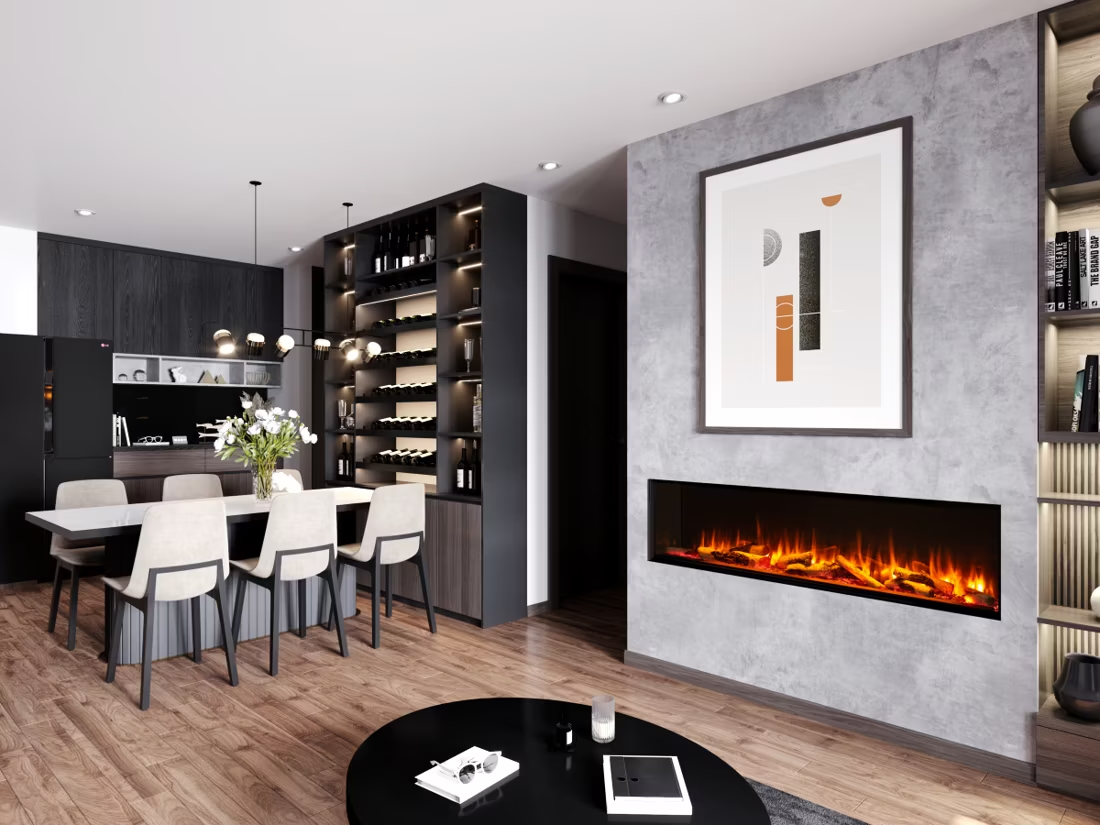
That's exactly how most Northford homeowners use them. An electric fireplace or insert works well in a finished basement, a bedroom without ductwork, a condo where a chimney isn't an option, or a colonial addition that never got a hearth. There's no permit hassle for a plug-in unit, no clearance-to-combustibles calculation like a wood stove, and no impact on indoor air quality—Northford has no local air quality restrictions, so the decision here is really about placement and the electric bill math, not emissions rules. Plenty of local households also run a wood stove burning oak, maple, birch, or ash as their primary heat and add an electric unit in a secondary room purely for the visual.
Three steps. No salesperson until you're ready.
Tell us about your project
Your zip code, your situation, and the fuel you're leaning toward—or let the answers point you to one.
See what's actually available
The brands dealers within 100 miles genuinely carry—real options, never a catalog mirage.
Get your dealer & Project Guide
A trusted local dealer, plus the free Project Guide & Parts List that names every component of the job.
Frequently Asked Questions
How much does it cost to run an electric fireplace in Northford?
Most electric fireplaces draw about 1,500 watts on the heat setting. At United Illuminating's residential rate of roughly 31 cents per kWh, that's about 47 cents an hour; at Connecticut Light & Power's roughly 25-cent rate, closer to 38 cents an hour. Run one for a typical evening—say four or five hours—and you're looking at $1.50 to $2.30 in electricity. Flame-only mode with the heater off draws only 30-100 watts, so running it purely for ambiance costs pennies. Given Connecticut's rates, most homeowners here use these units for zone heat in one room rather than as a substitute for central heat.
What does it cost to install an electric fireplace or insert in Northford?
A plug-in freestanding or wall-mount electric fireplace typically runs $150 to $500 installed, since it just needs a standard outlet and no electrical work. A built-in electric fireplace or insert that requires a dedicated 240-volt circuit, in-wall wiring, and surround finish work runs closer to $1,200 to $3,000, largely driven by electrician labor and any carpentry to frame the opening. Local dealers can tell you which category your project falls into after seeing the room and the existing electrical panel capacity.
Do I need a permit to install an electric fireplace in Northford?
A plug-in electric fireplace that uses an existing outlet doesn't require a permit. If you're adding a built-in unit that needs a new dedicated circuit or any wiring changes, that electrical work requires a permit through the North Branford Building Department and must be done or inspected by a licensed Connecticut electrician. Most local hearth dealers coordinate this as part of the installation so you're not chasing down the permit yourself.
Does it matter whether I'm served by United Illuminating or Eversource?
It matters for your monthly bill more than for the installation itself. Both utilities serve parts of Northford and the surrounding South Central Connecticut area, and their residential rates have run in the 25 to 31 cent per kWh range recently—a meaningful gap if you're running a 1,500-watt heater for hours at a time. Check your most recent bill for your actual supply and delivery rate before deciding how much you'll lean on an electric fireplace for daily heat versus occasional use.
What's the difference between an electric fireplace and an electric insert?
A freestanding electric fireplace is a self-contained unit—mantel, media console, or wall-mount style—that plugs in and needs no modification to the room. An electric insert is built to slide into an existing masonry or wood-burning fireplace opening, giving an old, unused hearth a working flame effect and heat again without touching the chimney. For Northford homes with an existing but disused fireplace, an insert is usually the simpler and more cost-effective upgrade than converting to gas or reactivating wood burning.
Electric vs. wood—which makes more sense for my Northford home?
Wood—burning local oak, maple, birch, or ash—delivers more total heat for the cost and keeps working through a power outage, which matters here given the ice storms that periodically knock out lines across South Central Connecticut. Electric fireplaces need power to run at all, so they're not a backup heat source. What electric does offer is zero mess, no chimney or clearances to plan around, and instant on-off convenience—which is why it's common as a second-room or supplemental option in homes where wood or a furnace already handles the bulk of the heating load.
Which electric fireplace brands are worth looking at?
Dimplex and Napoleon are the two most established names for realistic flame technology and are widely stocked by hearth dealers in the region, with Touchstone a popular choice for smaller wall-mount units in bedrooms or apartments. Realism and flame quality vary a lot between price tiers, so it's worth seeing a unit running in a showroom rather than judging from a product photo—a local dealer can show you a few side by side.
Will an electric fireplace actually heat a room in a Connecticut winter?
For supplemental heat, yes—a typical 1,500-watt unit puts out roughly 5,000 BTU, enough to noticeably warm a single room of 300 to 400 square feet, especially with the door closed. It will not replace central heat on a night when Northford drops to 20°F or below across a whole house; the wattage simply isn't there. Think of it as heat for the room you're actually sitting in, not a whole-home solution, and size your expectations—and your electric bill—accordingly.
Electric vs. gas fireplace—which should I choose?
Gas fireplaces put out considerably more heat and can be sized to actually warm a living area, but they require a gas line (natural gas or propane), venting in most cases, and a higher upfront installation cost. Electric fireplaces install almost anywhere with just an outlet, cost far less upfront, and skip any gas line or venting work entirely—the tradeoff is lower heat output and a higher per-hour running cost given Connecticut's electric rates. For a room where running a gas line isn't practical, or where ambiance matters more than serious heat output, electric is usually the better fit in Northford homes.
Can I put a TV above my fireplace?
Yes—with an asterisk. Fireplaces are hot and TVs don't like heat. Either put a mantel between them to deflect rising warmth, or choose a fireplace with heat-management technology that creates a cool zone on the wall above—the wall stays around 125 degrees, barely warm, while the room still gets full heat. If you like clean lines and don't want a mantel, heat management is the answer.
Do electric fireplaces actually produce heat?
Yes—most put out around 4,800–5,000 BTUs from a standard outlet, which comfortably warms a bedroom, office, or den as a comfort-zone heater. What they won't do is carry a whole house the way wood, gas, or pellet can. Think of electric as ambiance-first with honest supplemental heat: flames on with no heat in July, flames plus warmth in January.
Can I install a fireplace myself?
If you're putting a fire in your house on purpose, it's best to work with an expert. Unless you're genuinely experienced in framing, gas line, vent pipe, and the national code on clearances to combustibles, have a professional do it—and ideally the same company that sells you the fireplace, so warranty, service, and liability all live under one roof.
Can a fireplace actually lower my heating bill?
Yes—by creating a comfort zone. A furnace heats every square foot of the house just to warm the one room you're in; a gas fireplace on low burns roughly a sixth of the gas a typical furnace does. Set the furnace around 55–60 degrees as a baseline, then heat the rooms your family actually uses. Families who heat this way commonly save $20–$60 a month.
Nearby Dealers
Hearth shops serving Northford and the surrounding area. Every listing shows whether it is a WhyFire partner, a dealer we have verified as authorized for the brands we recommend, or a local business carrying hearth products. No manufacturer pays for placement. How we verify dealers →
Neighborhood Chimney Service
Fireplace Surplus
New Haven Masonry
Jj Sullivan Inc.
Tani’s Masonry Supply, LLC
Fireworks Hearth And Home LLC
Spotless Chimney Sweeping & Solutions
Superior Hearth, Spas & Leisure
Four Seasons Fire & Hearth
Electric Service in Northford
An electric fireplace's heater draws about 1,500 watts—pennies per hour at local rates.
United Illuminating Co
Connecticut Light & Power Co
Find your electric fireplace in Northford.
Tell us a bit about your home and we'll put together a free Project Guide & Parts List for your electric fireplace project in Northford—the right unit, the exact parts, and a trusted local dealer to install it.
Find Your Fireplace →