
Warm up your Guilford Center home, no chimney required.
For shoreline colonials and cottages near Long Island Sound, an electric insert or built-in adds real zone heat without a flue, a gas line, or a masonry rebuild. Get matched with a local dealer who can size it right.
Every Project Starts From One of These Five Situations
Coastal Connecticut winters, without the wood or gas line.
Guilford Center sits at just 13 feet of elevation on Connecticut's shoreline, a few miles from Long Island Sound in the Town of Guilford. Winters here average lows around 23°F, with a cold season that's real but milder and shorter than what inland New England towns like Burlington, VT deal with each winter. Many of the older saltbox colonials and shingled cottages that make up this small village were never built with a second chimney, and adding masonry venting for a wood or gas unit isn't always practical.
That's where electric fireplaces do their best work. There's no flue to build, no gas line to trench from the street, and no cutting into an exterior wall for venting—an electric insert or built-in unit can go into an existing fireplace opening, a new wall, or a mantel surround with nothing more than an outlet or a dedicated circuit. Electricity here runs through United Illuminating or Eversource (formerly CL&P), and Connecticut's residential rates—among the highest in the country—mean these units make the most financial sense as supplemental zone heat for a den, sunroom, or primary bedroom rather than a whole-house replacement for the furnace.
Three steps. No salesperson until you're ready.
Tell us about your project
Your zip code, your situation, and the fuel you're leaning toward—or let the answers point you to one.
See what's actually available
The brands dealers within 100 miles genuinely carry—real options, never a catalog mirage.
Get your dealer & Project Guide
A trusted local dealer, plus the free Project Guide & Parts List that names every component of the job.
Frequently Asked Questions
How much does an electric fireplace installation cost in Guilford Center?
Plug-in freestanding units and inserts that use a standard 120V outlet typically run $150 to $800 for the unit, with no real installation cost beyond mounting. Built-in wall units or fireplace-opening inserts that need a dedicated circuit run higher—typically $400 to $2,000 once a licensed electrician runs new wiring and a local carpenter handles any surround or mantel work. Custom built-ins with a full mantel and hearth surround in a Guilford Center colonial can push toward the top of that range. A local dealer will quote a firm number after seeing your fireplace opening or wall.
Do I need a permit to install an electric fireplace in Guilford Center?
A plug-in unit that runs off an existing outlet typically doesn't require a permit. If your installer is adding a new dedicated circuit or doing any wiring work—common with built-in units—that work needs an electrical permit through the Town of Guilford Building Department and must be pulled by a licensed electrician. Because there's no chimney, flue, or gas line involved, electric installations avoid most of the inspection steps that come with wood or gas projects.
Will an electric fireplace actually lower my heating bill given Connecticut's electric rates?
It depends on how you use it. United Illuminating customers in Guilford Center pay around $0.31 per kWh and Eversource customers around $0.25 per kWh—both well above the national average. A typical electric fireplace draws about 1,500 watts on its highest heat setting, which works out to roughly $0.38 to $0.47 an hour to run. Used to heat a single room while you turn down the thermostat elsewhere in the house, that's usually cheaper than running central heat to warm the whole home. Used as your only heat source across a drafty shoreline cottage, it will not compete with a furnace on cost.
What's the difference between an electric fireplace insert and a freestanding electric unit?
An insert is built to slide into an existing fireplace opening or a framed wall niche, giving a built-in look with a flush finish—a natural fit for the many Guilford Center homes with an existing but unused masonry firebox. A freestanding electric stove or mantel package sits on the floor and can go virtually anywhere there's an outlet, which works well for homes without any existing fireplace opening, like a sunroom or finished basement. Both heat the same way; the choice mostly comes down to what opening or wall you're working with.
Can I add one to an older cottage without a working chimney?
Yes—this is one of the more common projects in Guilford Center's older housing stock. Because electric units don't burn fuel, they don't need a flue, chimney liner, or any outside venting. An insert can go directly into a bricked-up or non-functional fireplace opening, or a freestanding unit can be placed against any wall with power nearby. It's often the most affordable way to restore the look and warmth of a fireplace in a cottage where the original chimney was capped or removed years ago.
Which electric fireplace is best for supplemental heat in a shoreline home?
For a single room in the 200 to 400 square foot range—a den, sunroom, or primary bedroom common in Guilford Center's colonials and cottages—a 1,500-watt insert or built-in with a real heater element (not just the flame effect) will noticeably take the edge off on a 23°F night. If you're heating an open-concept living/dining area, look at a larger insert or a linear wall unit and plan to run it alongside, not instead of, your existing heat. A local dealer can walk through your specific room and recommend wattage and placement.
Do electric fireplaces work during a power outage?
No—because they run entirely on electricity, an electric fireplace goes dark the moment the power does, which matters on the Connecticut shoreline where nor'easters and coastal storms regularly knock out United Illuminating and Eversource service for hours or days. If backup heat during outages is a real concern for your Guilford Center home, that's a case for pairing an electric unit for everyday ambiance with a separate wood or gas appliance for emergencies rather than relying on electric alone.
Electric vs. gas—which is right for my Guilford Center home?
Gas fireplaces deliver more heat output and can run on propane where natural gas mains don't reach—a real consideration in a village like Guilford Center, where gas line access varies street to street and extending a line can add real cost to a project. Electric skips that entirely: no line to trench, no propane tank to place, and simple installation into an existing opening or wall. Gas wins on raw heat output and outage resilience with the right ignition system; electric wins on installation simplicity, upfront cost, and safety in homes with kids or pets, since the surfaces stay cool to the touch.
How long do electric fireplaces last, and what maintenance do they need?
Most quality electric fireplaces last 10 to 15 years before the heating element or LED components need replacement, and many manufacturers sell the heater cartridge as a swappable part rather than requiring a whole new unit. Maintenance is minimal compared to wood or gas—no annual chimney sweep, no gas line inspection. Occasional dusting of the vents and keeping the unit free of debris is typically all that's needed. Local dealers can also service or replace heater components if a unit stops producing heat but the flame effect still works.
Can I put a TV above my fireplace?
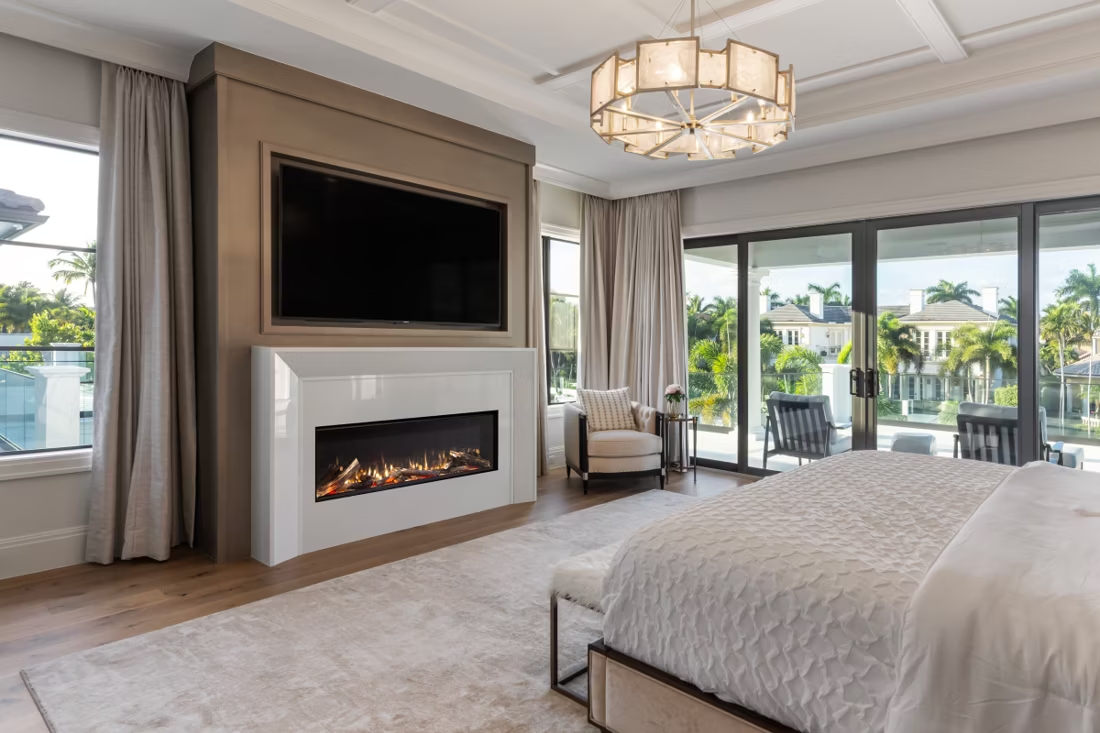
Yes—with an asterisk. Fireplaces are hot and TVs don't like heat. Either put a mantel between them to deflect rising warmth, or choose a fireplace with heat-management technology that creates a cool zone on the wall above—the wall stays around 125 degrees, barely warm, while the room still gets full heat. If you like clean lines and don't want a mantel, heat management is the answer.
Does an electric fireplace need a vent or chimney?
No—that's its superpower. An electric fireplace needs a wall and an outlet, period. No vent pipe, no gas line, no clearances to design around, which is why it works in bedrooms, offices, apartments, and walls where venting a gas or wood unit would be impractical or impossible. Installation is typically the simplest and least expensive of any fireplace type.
Can I install a fireplace myself?
If you're putting a fire in your house on purpose, it's best to work with an expert. Unless you're genuinely experienced in framing, gas line, vent pipe, and the national code on clearances to combustibles, have a professional do it—and ideally the same company that sells you the fireplace, so warranty, service, and liability all live under one roof.
How much should I budget for a fireplace?
For an average home—covering the fireplace, the vent pipe, and basic installation—a budget between $3,900 and $5,500 gives you a lot of options across wood, gas, and pellet. By the time you add finish work, gas line, and electrical, the average complete installation lands between $5,000 and $12,000 all-in. In a remodel or new build, a good rule is to put about 2.5% of the total project cost toward the fireplace.
Nearby Dealers
Hearth shops serving Guilford Center and the surrounding area. Every listing shows whether it is a WhyFire partner, a dealer we have verified as authorized for the brands we recommend, or a local business carrying hearth products. No manufacturer pays for placement. How we verify dealers →
Jj Sullivan Inc.
New Haven Masonry
Fireworks Hearth And Home LLC
Fireplace Surplus
Tani’s Masonry Supply, LLC
Spicer Advanced Gas<br>The Propane Store
Spotless Chimney Sweeping & Solutions
Electric Service in Guilford Center
An electric fireplace's heater draws about 1,500 watts—pennies per hour at local rates.
United Illuminating Co
Connecticut Light & Power Co
Find your electric fireplace in Guilford Center.
Tell us a bit about your home and we'll put together a free Project Guide & Parts List—the right unit, the wiring it needs, and a trusted local dealer near Guilford Center who can install it correctly.
Find Your Fireplace →