
Warmth That Fits Every Woodmont Cottage.
No chimney, no gas line, no venting—just plug it in or wire it in. Find the right electric fireplace for your Long Island Sound cottage or condo, and connect with a trusted local dealer.
Every Project Starts From One of These Five Situations
No chimney? No problem on the Sound.
Woodmont is a small borough on Milford's Long Island Sound shoreline—about 1,600 residents packed into narrow lots and a dense grid of early-1900s beach cottages, many of them seasonal or converted for year-round use. A lot of these homes were never built with a masonry chimney, and many sit close enough to a neighboring lot that adding one now isn't realistic. With winter lows averaging in the low 20s and a solid, months-long heating season, Woodmont still needs real heat through the season—it's a milder maritime climate than inland Connecticut or a place like Burlington, VT, but the Sound doesn't stop January from being cold.
That's where electric fireplaces do their best work here: zero-clearance installs that don't touch your roofline, no gas line to run, and nothing that trips an air-quality concern (Woodmont has none on record). Electric service comes through United Illuminating, whose residential rate runs around $0.31/kWh—noticeably higher than Connecticut Light & Power's roughly $0.25/kWh serving other parts of the state. That rate matters when you're sizing a unit: a well-chosen electric fireplace works as efficient supplemental zone heat for a single room or cottage, not a replacement for your furnace or heat pump.
Three steps. No salesperson until you're ready.
Tell us about your project
Your zip code, your situation, and the fuel you're leaning toward—or let the answers point you to one.
See what's actually available
The brands dealers within 100 miles genuinely carry—real options, never a catalog mirage.
Get your dealer & Project Guide
A trusted local dealer, plus the free Project Guide & Parts List that names every component of the job.
Frequently Asked Questions
How much does an electric fireplace installation cost in Woodmont?
A plug-in electric insert or freestanding unit—the most common choice for Woodmont's smaller cottages—typically runs $300 to $1,500 installed, since it just needs a standard 120V outlet and no venting or gas work. A built-in wall unit or a larger model requiring a dedicated 240V circuit runs closer to $2,000 to $4,500 once you add a licensed electrician's labor for the new circuit. Because there's no chimney, flue, or gas line involved, electric is consistently the least expensive fireplace category to install in this area—a real advantage on Woodmont's tight lots.
Do I need a permit to install an electric fireplace in Woodmont?
A simple plug-in electric fireplace generally doesn't require a permit—it's treated like any other appliance. If you're having an electrician add a new dedicated circuit or a 240V line for a larger built-in unit, that electrical work typically does require a permit through the City of Milford Building Department, since Woodmont falls under Milford's jurisdiction. Most licensed electricians pull this permit as a routine part of the job, so it's rarely something you have to manage yourself.
What size electric fireplace do I need for a Woodmont cottage?
Most electric fireplace inserts and freestanding units put out somewhere between 4,000 and 5,200 BTUs—enough to comfortably supplement heat in a single room of 300 to 500 square feet, which fits the scale of a lot of Woodmont's original beach cottages. For an open-concept living/dining area or a larger year-round renovation, a wider built-in unit or two smaller units in separate rooms usually works better than trying to size one unit to the whole house. Given United Illuminating's rate, it's worth being honest that electric fireplaces are best treated as zone heat and ambiance rather than a primary furnace replacement.
Will an electric fireplace actually heat my Woodmont home?
It will meaningfully heat a single room, but it's not a substitute for central heat during Woodmont's real winter stretches. Electric fireplace heaters top out around 5,000 BTUs—enough to take the chill off a den or converted sunroom, especially in a milder shoreline winter with lows around 23°F, but not enough for a whole cottage once a nor'easter sets in. Homeowners here typically pair an electric fireplace with existing baseboard, forced air, or a heat pump, and use the fireplace for the room they actually live in.
What's the difference between an electric insert, a wall-mount, and a freestanding electric fireplace?
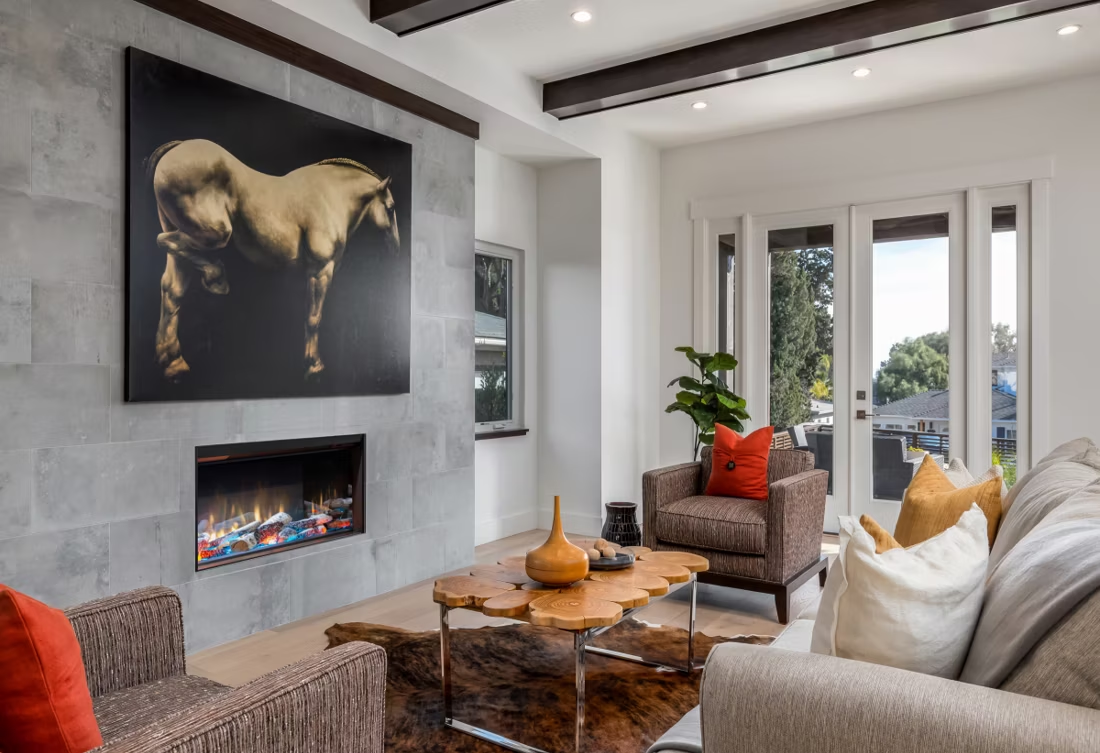
An electric insert is built to slide into an existing fireplace opening—a common retrofit for Woodmont cottages that have an old, unused masonry firebox they'd rather not gut. A wall-mount unit hangs flush like a large-format TV and works well in a condo or a renovated room with no existing hearth. A freestanding electric stove or mantel package sits on the floor and mimics a traditional stove or fireplace look without any structural changes at all—often the simplest option for a rental or seasonal cottage. All three plug into a standard outlet unless you're stepping up to a larger 240V model.
Will my electric fireplace work if the power goes out?
No—electric fireplaces need power to run, full stop. That's worth weighing seriously in Woodmont, where shoreline exposure to nor'easters and the occasional hurricane remnant means United Illuminating outages do happen, sometimes for days. If backup heat during an outage matters to you, a wood stove or a battery-backed gas unit is the better choice for that specific role. Many homeowners here run electric as their everyday, no-hassle heat and keep a secondary wood or propane option for storm season.
How much does it cost to run an electric fireplace in Woodmont?
At United Illuminating's residential rate of roughly $0.31 per kWh, a typical 1,500-watt electric fireplace running on high costs about $0.46 an hour, or a little over $3 for a full evening. That's noticeably higher than Connecticut Light & Power's roughly $0.25/kWh rate in other parts of the state, so Woodmont homeowners tend to get more value running an electric fireplace as supplemental, as-needed heat rather than leaving it on all day as a primary source.
What's the best electric fireplace for a historic Woodmont cottage?
For cottages with an existing but unused masonry fireplace, a zero-clearance electric insert from a brand like Dimplex or Napoleon slides into the opening without any structural work, preserving the original mantel and brickwork while adding real supplemental heat and a realistic flame effect. For rooms with no existing hearth—a converted sunporch or an addition—a slim wall-mount unit avoids adding any floor footprint, which matters in Woodmont's compact floor plans. A local dealer can tell you which fits your specific opening and framing.
Electric vs. wood or gas—which makes more sense in Woodmont?
Wood is a real option here—oak, maple, birch, and ash are all common regionally—but it depends on having (or adding) a proper chimney, which many of Woodmont's older cottages simply don't have room for. Gas is workable too, but this part of Milford isn't served by a natural gas main in most areas, so a gas fireplace usually means a propane tank and delivery service rather than a utility hookup. Electric sidesteps both issues entirely—no chimney, no tank, no gas line—which is exactly why it's the practical first choice for a lot of Woodmont's smaller, older, or seasonal homes. Where whole-home backup heat during outages matters most, wood still has the edge; where simplicity and low install cost matter most, electric usually wins.
Can I put a TV above my fireplace?
Yes—with an asterisk. Fireplaces are hot and TVs don't like heat. Either put a mantel between them to deflect rising warmth, or choose a fireplace with heat-management technology that creates a cool zone on the wall above—the wall stays around 125 degrees, barely warm, while the room still gets full heat. If you like clean lines and don't want a mantel, heat management is the answer.
How much does an electric fireplace cost to run?
With the heater on, a typical unit draws about 1,500 watts—at average electric rates that's roughly 20 cents an hour. Run the flame effect alone and it costs pennies; the flames are LED-driven and use about as much power as a light bulb. There's no pilot light, no fuel delivery, and essentially no maintenance.
Can I install a fireplace myself?
If you're putting a fire in your house on purpose, it's best to work with an expert. Unless you're genuinely experienced in framing, gas line, vent pipe, and the national code on clearances to combustibles, have a professional do it—and ideally the same company that sells you the fireplace, so warranty, service, and liability all live under one roof.
Can a fireplace actually lower my heating bill?
Yes—by creating a comfort zone. A furnace heats every square foot of the house just to warm the one room you're in; a gas fireplace on low burns roughly a sixth of the gas a typical furnace does. Set the furnace around 55–60 degrees as a baseline, then heat the rooms your family actually uses. Families who heat this way commonly save $20–$60 a month.
Nearby Dealers
Hearth shops serving Woodmont and the surrounding area. Every listing shows whether it is a WhyFire partner, a dealer we have verified as authorized for the brands we recommend, or a local business carrying hearth products. No manufacturer pays for placement. How we verify dealers →
New Haven Masonry
Fireplace Surplus
Hearth Products, LLC
Best In Backyards
Jj Sullivan Inc.
Tani’s Masonry Supply, LLC
Hocon Gas Of Norwalk
Electric Service in Woodmont
An electric fireplace's heater draws about 1,500 watts—pennies per hour at local rates.
United Illuminating Co
Connecticut Light & Power Co
Find your electric fireplace in Woodmont.
Tell us a bit about your cottage or condo and we'll put together a free Project Guide & Parts List—the right electric fireplace, the exact parts, and a trusted local Woodmont-area dealer to install it.
Find Your Fireplace →