
Warmth on demand for Riverside County's short, mild winters.
From the Corona and Temecula valleys to the Coachella Valley low desert and the pines above Idyllwild, gas delivers instant heat and real ambiance without smoke, ash, or fuel storage. Find the right unit and connect with a trusted local dealer.
Every Project Starts From One of These Five Situations
Instant heat where cold snaps are the exception, not the rule.
Riverside County sits in climate zone 3B with an average winter low around 43°F and a very light winter heating load—a fraction of what a place like Bozeman, MT or Fargo, ND racks up in a single month. That's true from downtown Riverside and Corona through Moreno Valley, Temecula, and the low desert cities of Indio, Coachella, and Palm Springs. Wood heat is essentially a non-factor here: the region falls under South Coast Air Quality Management District non-attainment status, wildfire smoke is already a recurring air quality issue most falls, and there's little practical need for cordwood heat when nighttime lows rarely threaten pipes. The exception is the San Jacinto Mountains around Idyllwild, adjacent to San Bernardino National Forest, where a handful of cabin owners still burn oak or Douglas fir—but for the vast majority of Riverside County, a real fireplace means gas.
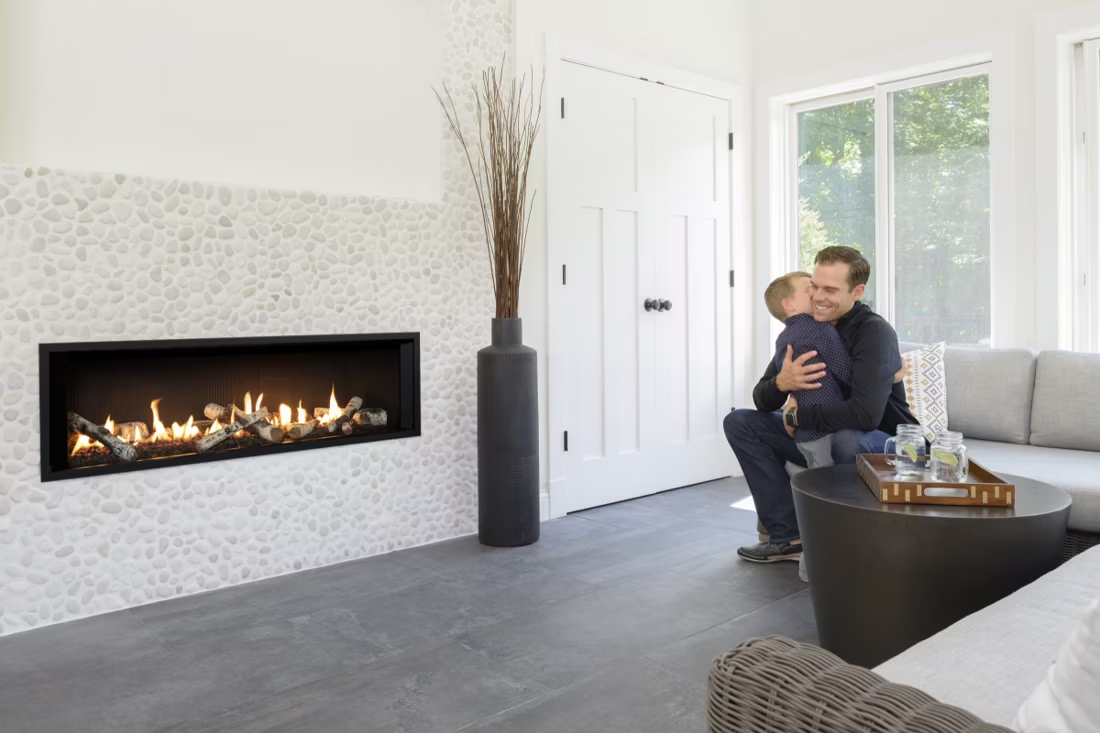
SoCalGas serves natural gas throughout most of the urbanized western county—Riverside, Corona, Temecula, Murrieta, Moreno Valley, and Hemet all have gas mains reaching most neighborhoods. Outside those service areas—parts of the Coachella Valley backcountry, unincorporated desert lots, and mountain communities like Anza and Idyllwild—propane fills the gap, delivered and stored in a tank on the property. Either way, a direct-vent gas fireplace or insert gives you flip-a-switch heat for the handful of genuinely cold nights each winter, plus year-round ambiance that doesn't add particulates to an air basin that's already working overtime.
Three steps. No salesperson until you're ready.
Tell us about your project
Your zip code, your situation, and the fuel you're leaning toward—or let the answers point you to one.
See what's actually available
The brands dealers within 100 miles genuinely carry—real options, never a catalog mirage.
Get your dealer & Project Guide
A trusted local dealer, plus the free Project Guide & Parts List that names every component of the job.
Frequently Asked Questions
How much does a gas fireplace installation cost in Riverside County?
Costs vary with the unit, venting path, and whether new gas line work is needed, but a straightforward direct-vent gas insert into an existing fireplace typically runs toward the lower end of a broader $3,500–$10,000 range, while a new built-in gas fireplace with framing, venting, and a fresh gas line run sits higher. Permit fees also vary by jurisdiction—Riverside, Corona, Temecula, Palm Springs, and Indio each administer their own building department, while unincorporated areas go through Riverside County Building & Safety. A local retailer will give you a firm number after an in-home consultation.
Can I convert my existing wood or masonry fireplace to gas?
Yes—it's a common project in Riverside County's older stucco ranch homes, especially in Riverside, Corona, and Moreno Valley neighborhoods built with a traditional masonry fireplace. A gas insert typically drops into that existing firebox and vents through a stainless liner run up the same chimney, preserving the look of the fireplace while adding real, controllable heat output. If the home is on propane rather than SoCalGas service, your installer will configure the insert's orifice and regulator for that fuel instead—the hardware itself works with either.
Do I need natural gas, or can I use propane?
Either works, and which one you use mostly comes down to where you live. Inside SoCalGas's service territory—most of Riverside, Corona, Temecula, Murrieta, and Moreno Valley—natural gas is usually the simpler and cheaper option if your home already has gas appliances. Outside that footprint, including parts of the Coachella Valley backcountry and mountain communities like Idyllwild and Anza, propane is the standard alternative, supplied from a tank installed on the property. Nearly every gas fireplace model on the market can be configured for either fuel.
Will my gas fireplace work during a power outage?
Most modern gas fireplaces will, which matters in Riverside County given how often Southern California Edison calls Public Safety Power Shutoffs during high fire-risk red flag conditions. Units with intermittent pilot ignition (IPI) carry a battery backup—typically AA batteries built into the unit—that keeps the fireplace lighting on demand even with the grid down. Valor fireplaces take a different approach: they generate their own electricity through the pilot's thermocouple, so there's no battery to remember or replace. Ask your local retailer about the ignition system on any model you're considering, especially if you live in a PSPS-prone area.
What's the difference between a gas fireplace, gas insert, and gas stove?
A gas fireplace is a fully built-in unit framed into a wall—the usual choice for new construction or a remodel in newer Riverside County developments. A gas insert slides into an existing masonry firebox, which is common in older homes throughout Riverside, Corona, and the Pass area. A gas stove is a freestanding cabinet-style unit that sits on the floor, often used in homes without an existing fireplace or chimney at all. For most homeowners here upgrading an existing fireplace, an insert is the straightforward answer.
Do I need a permit to install a gas fireplace in Riverside County?
Yes—a building permit and a gas line permit are required for a new gas fireplace or insert installation. In incorporated cities such as Riverside, Corona, Temecula, Palm Springs, and Indio, permits are pulled through that city's own building department; in unincorporated areas, they go through Riverside County Building & Safety. The gas line connection has to be handled by a licensed gas-fitter, which is one reason working with an established hearth dealer helps—they coordinate the gas work, venting, and inspection sign-off as one job instead of three separate trades.
What's the difference between vented and vent-free gas fireplaces?
Vented (direct-vent) gas fireplaces draw combustion air from outside and exhaust it back outside through sealed venting, keeping combustion byproducts out of the living space entirely. Vent-free units burn without any outdoor venting and release some water vapor and trace combustion gases into the room, governed by strict room-sizing and oxygen-depletion-sensor rules. California allows vent-free units within those limits, but given that Riverside County already sits in a South Coast AQMD non-attainment area and deals with wildfire smoke most falls, most local dealers steer homeowners toward sealed direct-vent units for better indoor air quality—and they're the far more common install here regardless.
How often should my gas fireplace be serviced?
Plan on an annual inspection, ideally before the fireplace sees regular use in late fall. A technician checks the burner, pilot assembly, venting, and gas connections, and cleans the glass and interior. In the low desert—Indio, Coachella, Palm Springs—wind-blown sand and dust can clog vent terminations faster than in the coastal-influenced parts of the county, so homes out there sometimes benefit from a mid-year check as well. Most local service providers charge in the $150–$250 range for a standard annual visit.
Should I consider wood instead of gas?
For nearly all of Riverside County, no—wood heat just doesn't fit the climate or the air district rules. With average winter lows around 43°F and a very light winter heating load, there's little practical need for cordwood heat, and South Coast AQMD's non-attainment status combined with regular wildfire smoke makes wood-burning restrictions a real factor most falls. The one exception is the mountain community of Idyllwild and nearby San Jacinto forest cabins, where a small number of homeowners still burn oak or Douglas fir cut under Forest Service permits from San Bernardino National Forest. Everywhere else in the county—Riverside, Corona, Temecula, Moreno Valley, the Coachella Valley—gas is the practical and by far the more common choice for a real fireplace.
What's the difference between an insert and a zero-clearance fireplace?
An insert is a fireplace that slides into a pre-existing wood-burning fireplace—if you don't have one, there's nothing to insert it into. A zero-clearance fireplace is built into a framed wall, which makes it the answer for remodels and new construction. Simple test: existing masonry fireplace means insert; blank or framed wall means zero-clearance.
What do I measure to size a fireplace insert?
Four numbers tell you what fits: the front width, the front height, the back width, and the overall depth of your existing fireplace opening. Grab a tape measure, jot those down, and snap a photo of the wall—those two things do more to move your project forward than anything else you can do today.
Does a fireplace add value to my home?
On average, a fireplace adds back to the home about the same amount you spent installing it. Add the monthly savings from heating the rooms you actually use instead of the whole house—often hundreds of dollars a year—and the value case is strong before you even count what a fire does for how your family uses the room.
Can I install a fireplace myself?
If you're putting a fire in your house on purpose, it's best to work with an expert. Unless you're genuinely experienced in framing, gas line, vent pipe, and the national code on clearances to combustibles, have a professional do it—and ideally the same company that sells you the fireplace, so warranty, service, and liability all live under one roof.
Stove and Fireplace Dealers in Riverside County
Palm Springs True Value Hardware & Patio
Find your gas fireplace in Riverside County.
Tell us a bit about your home and we'll match you with the right gas fireplace or insert, and hand you a free Project Guide & Parts List with the exact parts—including the vent kit—and your recommended local dealer.
Find Your Fireplace →