
Gas Heat That Fits San Jacinto Valley Evenings.
Hemet winters are mild, but the desert cools fast after sunset. Find the right gas fireplace or insert, and connect with a trusted local dealer who can install it correctly.
Every Project Starts From One of These Five Situations
The right fit for a mild, dry climate.
Hemet sits at about 1,500 feet in the San Jacinto Valley, in the shadow of Mt. San Jacinto, where winter lows average around 40 degrees and the winter heating season is light—just a fraction of what a place like Bozeman, Montana sees. That's not a climate that demands a wood-burning primary heat source. It's a climate where a gas fireplace or insert covers the cool desert evenings, the occasional frosty morning, and the ambiance homeowners want without the upkeep of a solid-fuel appliance.
Hemet also sits within South Coast AQMD's non-attainment area, and wildfire smoke from the San Bernardino and San Jacinto mountains is a real seasonal concern—both of which push the region toward cleaner-burning appliances. SoCalGas provides natural gas service through most of the city, and a direct-vent gas fireplace or insert delivers instant, controllable heat at the flip of a switch or a wall thermostat, without the particulate emissions of an open wood fire. For homes without an existing fireplace, or for those converting an old masonry fireplace that rarely gets used, gas is now the default choice for most Hemet homeowners.
Three steps. No salesperson until you're ready.
Tell us about your project
Your zip code, your situation, and the fuel you're leaning toward—or let the answers point you to one.
See what's actually available
The brands dealers within 100 miles genuinely carry—real options, never a catalog mirage.
Get your dealer & Project Guide
A trusted local dealer, plus the free Project Guide & Parts List that names every component of the job.
Frequently Asked Questions
How much does a gas fireplace installation cost in Hemet?
Most gas fireplace and insert installations in Hemet run in the $4,500 to $10,000 range, depending on the unit, whether an existing gas line is nearby, and the venting path. A direct-vent gas insert dropped into an existing masonry fireplace with gas already run to the room sits toward the lower end. A new built-in gas fireplace in a room addition or remodel—with framing, venting through an exterior wall, and a new gas line from the meter—runs higher. Local dealers will give you a firm number after seeing your home, since the gas line distance from the meter is usually the biggest cost swing in Hemet's older stucco tract homes.
Can I convert my old wood-burning fireplace to gas?
Yes, and it's a common project in Hemet's older neighborhoods, many of which still have builder-grade masonry fireplaces that rarely get used. South Coast AQMD's Rule 445 restricts the installation of new wood-burning fireplaces and limits wood burning on high-pollution and wildfire-smoke days, which pushes most homeowners toward gas anyway. A gas insert typically drops into the existing firebox and vents through a stainless liner run up the old chimney, with the conversion running roughly $4,500 to $8,500 depending on whether new gas piping is needed. The result keeps your existing mantel and surround while eliminating smoke, ash, and AQMD burn-day restrictions entirely.
Do I need natural gas, or can I use propane?
SoCalGas serves most of the City of Hemet, so if you already have gas appliances—a water heater, range, or furnace—adding a fireplace usually means tapping into that existing line. In outlying unincorporated pockets of Riverside County near Valle Vista or East Hemet where natural gas service doesn't reach, propane from a local supplier is the standard alternative, using either a buried tank or an above-ground tank set. Most gas fireplace models can be ordered or field-converted for either fuel—your installer sets the correct orifice for whichever gas you have.
Will my gas fireplace still work if the power goes out?
This matters more in Hemet than in a lot of places, since Southern California Edison periodically calls Public Safety Power Shutoffs during high fire-danger wind events in the San Jacinto foothills. Most gas fireplaces with intermittent pilot ignition (IPI) run on a small battery backup that kicks in automatically when SCE cuts power, so the fireplace still lights and operates normally. Valor's gas fireplaces go a step further—they generate their own electricity from the pilot flame's thermocouple, so there's no battery to remember to replace before a shutoff event. Ask your local dealer which ignition system a model uses if outage backup matters to you.
What's the difference between a gas fireplace, gas insert, and gas stove?
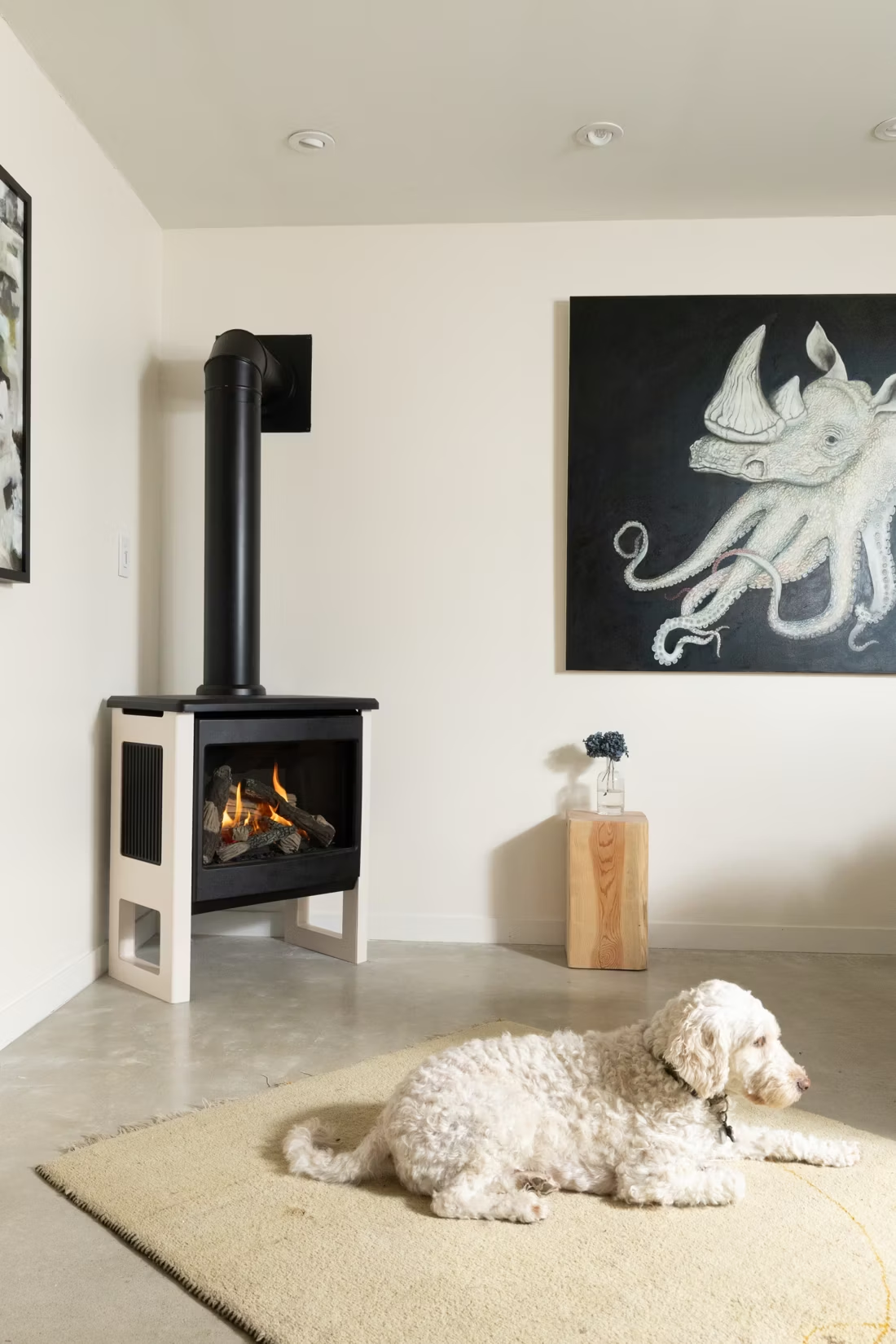
A gas fireplace is a fully built-in unit framed into a wall, typically used in new construction or a remodel where there's no existing masonry firebox. A gas insert is sized to slide into an existing masonry fireplace opening, sealing off the old chimney draft and turning a decorative fireplace into a real heat source. A gas stove is a freestanding, cabinet-style unit that sits on the floor and vents through a wall or roof, useful in a room without any existing fireplace footprint. Given how many Hemet homes already have a builder-installed masonry fireplace that's rarely used, an insert is the most common upgrade path. Sizing runs from small units under 20,000 BTU for a single room to larger 30,000+ BTU fireplaces meant to heat an open-concept living area—a local dealer will size it to your square footage rather than guessing off a box label.
Do I need a permit to install a gas fireplace in Hemet?
Yes. New gas fireplace installations require a building permit and a gas permit, pulled through the City of Hemet Building & Safety Division for properties inside city limits, or the Riverside County Building & Safety Department for unincorporated areas like parts of Valle Vista. Any new or modified gas line has to be run and pressure-tested by a licensed contractor. Most established hearth dealers include permitting and inspection scheduling as part of the installation price, which is one of the practical reasons to avoid a big-box or handyman install for gas work.
What's the difference between vented and vent-free gas fireplaces?
Vented (direct-vent) gas fireplaces draw combustion air from outside and exhaust it back outside through sealed pipe, keeping combustion byproducts out of the living space entirely. Vent-free units burn gas directly into the room and rely on oxygen depletion sensors to shut off if room air quality drops—they're legal in California but come with strict room-size and ventilation requirements, and given Hemet's non-attainment status and its wildfire-smoke season, most local code officials and dealers steer homeowners toward direct-vent units instead. Direct-vent is also the more common recommendation for anyone converting an old masonry fireplace, since it doesn't add any combustion byproducts to a house that may already be dealing with smoke infiltration during red-flag warning days.
How often does a gas fireplace need to be serviced?
Plan on an annual inspection, ideally before the cooler months arrive in Hemet—even though the heating season here is short, dust and desert grit accumulate in the burner and pilot assembly year-round. A certified technician checks the burner, pilot or IPI system, venting, and gas connections, and cleans the glass. This typically runs $150 to $250 and is far less involved than wood-stove chimney sweeping, but skipping it is still the most common cause of ignition problems and sooted glass reported by local service techs.
Why don't more Hemet homes use wood-burning or pellet stoves?
With such a light winter heating season and winter lows that rarely dip below the high 30s, Hemet simply doesn't have the sustained cold that makes a wood or pellet stove worth the investment the way it would in a place like Duluth, Minnesota. On top of that, South Coast AQMD's non-attainment status and the region's wildfire-smoke season make new wood-burning installations both discouraged and, in many cases, permit-restricted. A small number of rural properties outside city limits still keep a wood stove burning oak or madrone for backup heat during outages, but for the vast majority of Hemet homeowners, gas and electric fireplaces are the practical, code-friendly choice—gas for lower operating cost given SCE's $0.2825 per kWh residential rate, electric where there's no gas line and a simpler plug-in install is preferred.
Is my gas fireplace wasting gas?
If it was installed more than 15 years ago, probably. Older gas fireplaces keep a standing pilot light burning all the time, and that little flame can cost a couple hundred dollars a year. Newer models use pilot-on-demand ignition—the pilot lights only when you use the fireplace and goes out when you turn it off.
What's the difference between an insert and a zero-clearance fireplace?
An insert is a fireplace that slides into a pre-existing wood-burning fireplace—if you don't have one, there's nothing to insert it into. A zero-clearance fireplace is built into a framed wall, which makes it the answer for remodels and new construction. Simple test: existing masonry fireplace means insert; blank or framed wall means zero-clearance.
Can I install a fireplace myself?
If you're putting a fire in your house on purpose, it's best to work with an expert. Unless you're genuinely experienced in framing, gas line, vent pipe, and the national code on clearances to combustibles, have a professional do it—and ideally the same company that sells you the fireplace, so warranty, service, and liability all live under one roof.
How much should I budget for a fireplace?
For an average home—covering the fireplace, the vent pipe, and basic installation—a budget between $3,900 and $5,500 gives you a lot of options across wood, gas, and pellet. By the time you add finish work, gas line, and electrical, the average complete installation lands between $5,000 and $12,000 all-in. In a remodel or new build, a good rule is to put about 2.5% of the total project cost toward the fireplace.
Nearby Dealers
Hearth shops serving Hemet and the surrounding area.
Palm Springs True Value Hardware & Patio
Find your gas fireplace in Hemet.
Tell us a bit about your home and we'll match you with the right gas fireplace, insert, or stove—plus a free Project Guide & Parts List and a trusted local Hemet dealer to install it.
Find Your Fireplace →