
Smoke-Free Evenings in Lake Elsinore, On Demand.
Instant, clean heat for the Elsinore Valley's cool lake evenings—heat that keeps working even when wood-burning gets restricted. Find the right gas fireplace or insert and connect with a trusted local dealer.
Every Project Starts From One of These Five Situations
Reliable warmth, even on a Check Before You Burn day.
Lake Elsinore sits at about 1,279 feet in a valley ringed by the Santa Ana Mountains and the Cleveland National Forest, with a mild Mediterranean climate—winter lows average around 42°F and the area has a light overall winter heating need, a fraction of what a place like Bozeman, Montana sees in a single hard winter. That means most homes here don't need a fireplace to survive January; they want one for evenings on the water, cool desert-adjacent nights, and the ambiance that makes a living room feel finished.
Riverside County falls within a South Coast Air Quality Management District non-attainment area, and wildfire smoke is a real seasonal concern in the foothills near the Cleveland National Forest. On high-pollution days, SCAQMD's Check Before You Burn program restricts uncertified wood-burning devices—but gas fireplaces are unaffected. Natural gas service reaches most of Lake Elsinore's developed neighborhoods; homes further out toward the Ortega Highway corridor or the forest edge more often rely on propane. Either way, a gas fireplace gives you heat on demand without waiting on a burn-day clearance, and with Southern California Edison's residential rate near 28 cents per kWh, gas is usually the cheaper way to heat a room for hours at a time compared to electric space heaters.
Three steps. No salesperson until you're ready.
Tell us about your project
Your zip code, your situation, and the fuel you're leaning toward—or let the answers point you to one.
See what's actually available
The brands dealers within 100 miles genuinely carry—real options, never a catalog mirage.
Get your dealer & Project Guide
A trusted local dealer, plus the free Project Guide & Parts List that names every component of the job.
Frequently Asked Questions
How much does a gas fireplace installation cost in Lake Elsinore?
Most gas fireplace and insert installations in Lake Elsinore run in the $4,000 to $9,500 range, depending on the unit, whether a gas line already reaches the fireplace location, and how much venting work is involved. A direct-vent insert going into an existing masonry fireplace with gas already stubbed in sits toward the lower end. New construction in neighborhoods like Canyon Hills or Tuscany Hills—where the fireplace, framing, and gas line are all being built at once—tends to land in the middle to upper end. Propane tank installs for homes outside the natural gas grid add to the total. A local dealer will confirm the exact number after seeing your setup.
Can I convert my existing wood fireplace to gas?
Yes, and it's a common request in Lake Elsinore, partly because it sidesteps SCAQMD's Check Before You Burn restrictions entirely. A gas insert typically slides into your existing masonry firebox, using a stainless liner run through the existing chimney for venting. Costs generally run $4,000 to $8,500 depending on whether the home already has a gas line nearby and which insert you choose. For older homes near downtown Lake Elsinore with existing wood-burning fireplaces, this is usually the fastest path to reliable, code-compliant heat that isn't sidelined during a smog alert.
Do I need natural gas, or should I plan on propane?
It depends on where in Lake Elsinore you're located. Most of the city's developed tracts are served by the regional natural gas utility, and if your home already has gas appliances—a water heater or range—adding a fireplace is straightforward. Homes further out toward the Cleveland National Forest foothills or along the more rural stretches near Ortega Highway are more likely to run on propane, either from an existing tank or a new one set by a local supplier. Nearly every gas fireplace on the market can be configured for either fuel; your installer sets the correct orifice and regulator for whichever you have.
Will my gas fireplace still work if the power goes out?
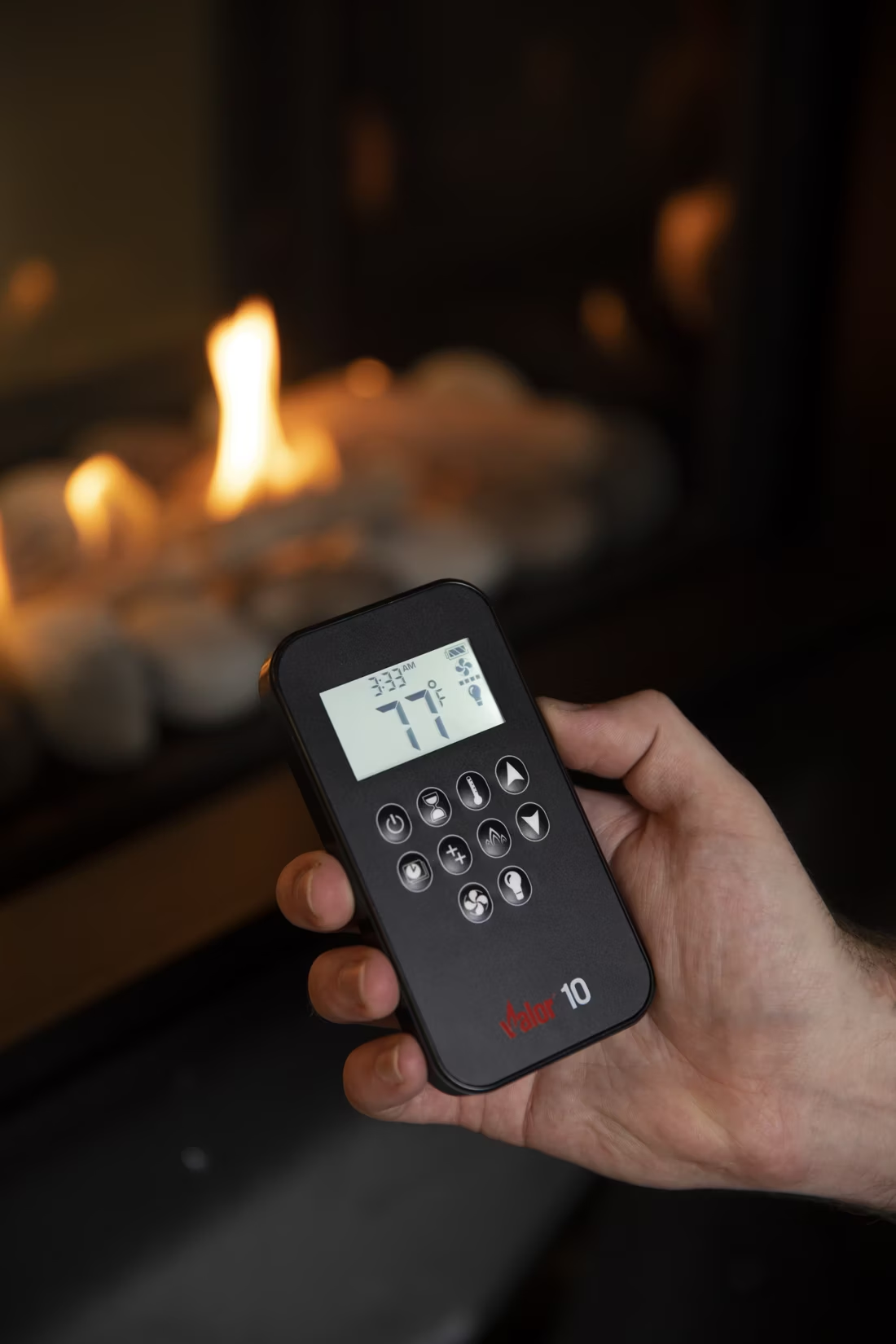
Most modern gas fireplaces will, which matters more in Lake Elsinore than it might elsewhere—Southern California Edison conducts Public Safety Power Shutoffs in high fire-risk conditions near the Cleveland National Forest and surrounding foothills, and those outages can run longer than a typical storm-related blackout. Units with intermittent pilot ignition (IPI) run off a small battery backup that kicks in automatically. Valor fireplaces take a different approach: their pilot assembly generates its own electricity through the thermocouple, so there's no battery to remember or replace. If PSPS events are a concern for your address, ask your local dealer about ignition type specifically.
What's the difference between a gas fireplace, gas insert, and gas stove?
A gas fireplace is a built-in unit framed into a wall—the standard choice for new construction in newer Lake Elsinore developments. A gas insert drops into an existing masonry firebox and uses the chimney as its vent path, which is why it's the go-to option for older homes near the lake and downtown with an existing wood-burning fireplace. A gas stove is a freestanding unit, useful in rooms without an existing hearth or chimney. Most homeowners here with an existing fireplace they want to upgrade end up choosing an insert; homes without one usually go built-in or freestanding.
Do I need a permit to install a gas fireplace in Lake Elsinore?
Yes—a building permit through the City of Lake Elsinore Building & Safety Division is required for new gas fireplace installs, along with a gas line permit if new piping is being run. The gas line portion has to be done by a licensed gas-fitter, which is one of the reasons working with an established local hearth dealer helps—they coordinate the gas work, venting, and inspection sign-off as one job instead of leaving you to manage separate trades.
Should I get a vented or vent-free gas fireplace?
Vented (direct-vent) units draw combustion air from outside and exhaust it back outside through sealed venting—they're the standard, code-friendly choice everywhere, including Lake Elsinore. Vent-free units burn fuel directly into the room and are subject to strict room-sizing rules and oxygen-depletion-sensor requirements under California's building code; some jurisdictions restrict where they can be installed, particularly bedrooms. Given the area's air quality non-attainment status, most local dealers steer homeowners toward direct-vent units by default—they deliver real heat without any indoor air quality trade-offs. Ask your installer which option applies to your specific room.
How often should a gas fireplace be serviced?
Plan on an annual inspection—a technician checks the burner, pilot assembly, gas connections, and venting, and cleans the glass and interior. It's a lighter job than sweeping a wood chimney but still important, especially given how much dust and occasional wildfire ash settles around Lake Elsinore homes near the foothills. Local gas appliance service providers typically charge $150 to $250 for a standard annual visit.
Gas vs. wood—which makes more sense in Lake Elsinore?
Wood offers a lower fuel cost if you're willing to self-cut—oak, madrone, and Douglas fir are available through permits from the San Bernardino and Angeles National Forests for $5 to $20 per cord during the May-to-October season—plus the authentic experience of a real fire. But wood-burning devices are subject to SCAQMD's Check Before You Burn curtailments on high-pollution days, which happen with some regularity in this non-attainment area, and wildfire smoke season can make outdoor air quality unpredictable anyway. Gas sidesteps all of that: instant on-off operation, no curtailment days, and no ash or smoke. Given Lake Elsinore's mild winters—this isn't a place burning wood for survival heat—most homeowners here find gas better matches how they actually use a fireplace: for comfort and ambiance on demand, any night of the year.
What's the difference between an insert and a zero-clearance fireplace?
An insert is a fireplace that slides into a pre-existing wood-burning fireplace—if you don't have one, there's nothing to insert it into. A zero-clearance fireplace is built into a framed wall, which makes it the answer for remodels and new construction. Simple test: existing masonry fireplace means insert; blank or framed wall means zero-clearance.
Is my gas fireplace wasting gas?
If it was installed more than 15 years ago, probably. Older gas fireplaces keep a standing pilot light burning all the time, and that little flame can cost a couple hundred dollars a year. Newer models use pilot-on-demand ignition—the pilot lights only when you use the fireplace and goes out when you turn it off.
Does a fireplace add value to my home?
On average, a fireplace adds back to the home about the same amount you spent installing it. Add the monthly savings from heating the rooms you actually use instead of the whole house—often hundreds of dollars a year—and the value case is strong before you even count what a fire does for how your family uses the room.
What is an in-home preview and do I need one?
It's a visit where a hearth professional measures your space, confirms the model you picked actually works in your home, and walks the specs—framing, gas line, venting, finish work—before anything is ordered. Some details you just can't know until you see the house. Never make a down payment without one; it's the single most-skipped step that burns buyers.
Nearby Dealers
Hearth shops serving Lake Elsinore and the surrounding area.
Palm Springs True Value Hardware & Patio
Find your gas fireplace in Lake Elsinore.
Tell us about your home and your project, and we'll match you with a trusted local dealer and send over a free Project Guide & Parts List—the exact parts, including the vent kit, and a dealer recommendation for your Lake Elsinore gas fireplace project.
Find Your Fireplace →