
Ambiance and Warmth, Without the Wood Smoke.
Jurupa Valley winters rarely demand serious heat, but on the cool Inland Empire evenings when they do, a gas fireplace delivers instant warmth with none of the smoke restrictions wood-burning units face here. Find the right unit and connect with a trusted local dealer.
Every Project Starts From One of These Five Situations
Mild winters, real heat when it counts.
At 756 feet in the Inland Empire, Jurupa Valley sees an average winter low of 44°F and has a mild, short heating season—just a fraction of the winter heating load a cold-climate city like Duluth, Minnesota carries in a single winter. Most local homes don't need a fireplace to survive January; they want one for the handful of genuinely chilly evenings between December and February, and for the ambiance a gas flame adds to a living room or patio.
Jurupa Valley sits within the South Coast Air Quality Management District's non-attainment zone, and the region's wildfire-smoke season adds another layer of scrutiny to anything that burns. SCAQMD Rule 445 has restricted new wood-burning fireplace installations across the Inland Empire since 2008, pushing most builders and remodelers toward gas or EPA-certified alternatives. A direct-vent gas fireplace sidesteps that entirely—no particulate emissions, no burn-day restrictions under the county's Check Before You Burn program, and clean startup on demand through SoCalGas, the natural gas provider serving most of the city.
Three steps. No salesperson until you're ready.
Tell us about your project
Your zip code, your situation, and the fuel you're leaning toward—or let the answers point you to one.
See what's actually available
The brands dealers within 100 miles genuinely carry—real options, never a catalog mirage.
Get your dealer & Project Guide
A trusted local dealer, plus the free Project Guide & Parts List that names every component of the job.
Frequently Asked Questions
How much does a gas fireplace installation cost in Jurupa Valley?
Most gas fireplace and insert installations in the Inland Empire run somewhere between $3,500 and $9,000, with the spread driven mainly by venting complexity and whether a new gas line needs to be run. A direct-vent insert into an existing masonry fireplace with SoCalGas service already at the house sits toward the lower end. A new built-in unit in a remodel—with framing, venting through an exterior wall, and a fresh gas tap—lands higher. Local retailers will give you a firm number after walking your home.
Can I convert my existing wood-burning fireplace to gas?
Yes, and it's a common project in Jurupa Valley, particularly in older homes built before SCAQMD Rule 445 tightened rules on solid-fuel appliances. A gas insert typically drops into your existing masonry firebox using a stainless liner run through the same chimney, so you keep the look of the fireplace while eliminating wood smoke, ash, and the periodic no-burn-day restrictions that apply to open wood fires in this district. Expect the conversion to run in the same $3,500 to $8,000 range as a standard insert install, depending on whether new gas piping is needed.
Do I need natural gas service, or can I use propane?
Most Jurupa Valley neighborhoods are served by SoCalGas, so if your home already has a gas water heater, range, or furnace, adding a fireplace is usually a straightforward tap into the existing line. Propane is the fallback for the handful of more rural pockets, including parts of the 91752 area, that sit outside SoCalGas's service footprint. Nearly every gas fireplace model on the market can be configured for either fuel—your installer sets the orifice and regulator accordingly.
Will my gas fireplace still work if the power goes out?
Most will. Standard IPI (intermittent pilot ignition) units run on a small battery backup that kicks in the moment power drops, so the fireplace lights the same way it always does. That matters here—Southern California Edison has run Public Safety Power Shutoffs during peak wildfire-risk periods in recent fire seasons, and a battery-backed fireplace is one of the few heat sources that keeps working through one. Valor fireplaces take a different approach, generating their own electricity off the pilot's thermocouple with no batteries at all. Ask your dealer which ignition system a given model uses.
What's the difference between a gas fireplace, gas insert, and gas stove?
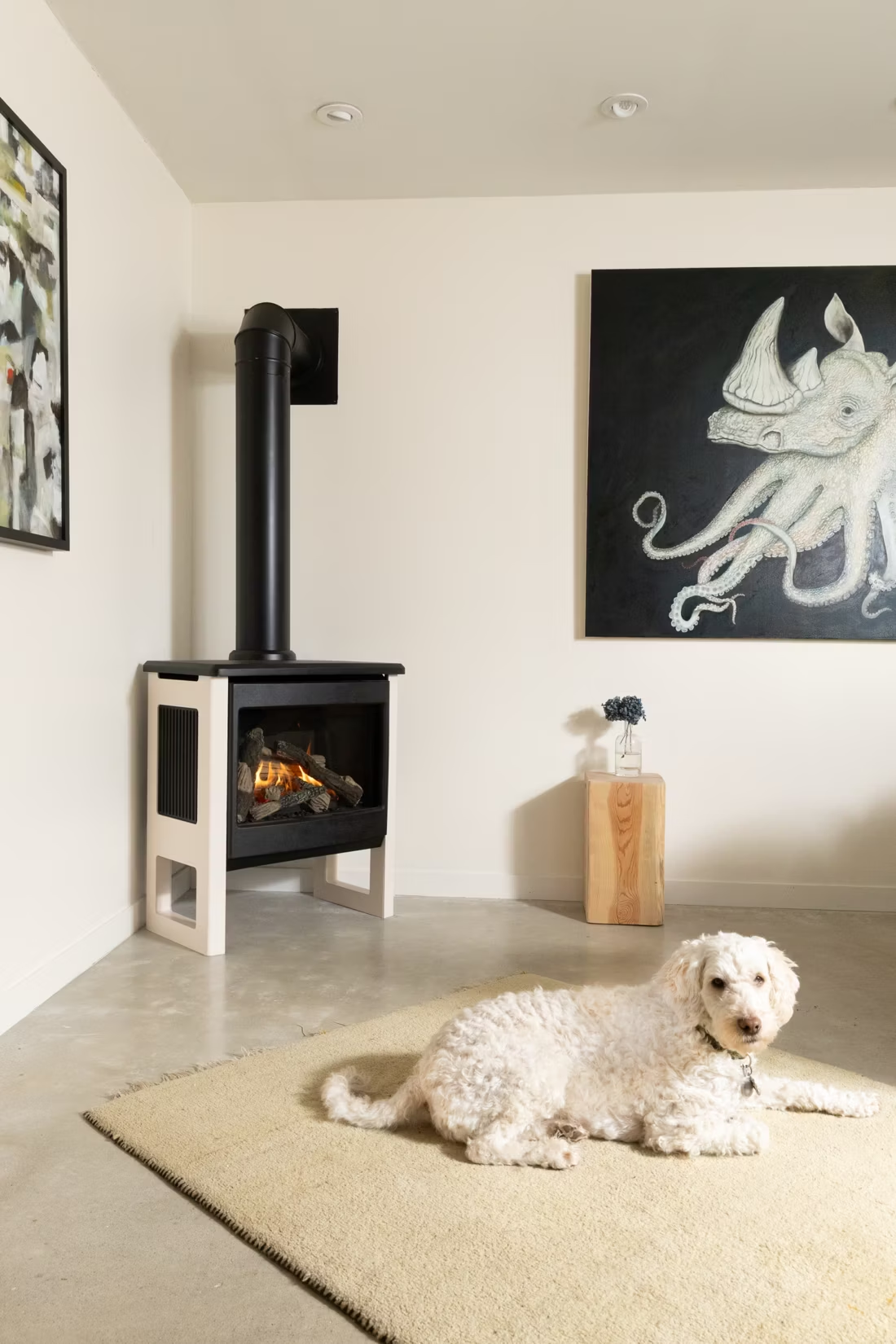
A gas fireplace is a fully built-in unit framed into a wall, typically chosen for new construction or a full remodel. A gas insert slides into an existing masonry firebox and vents through the same chimney, which makes it the natural fit for the many older Jurupa Valley homes with a wood-burning fireplace already in place. A gas stove is a freestanding cabinet unit, less common here than in colder markets but occasionally used in a family room or converted garage space. For most homeowners here upgrading an existing hearth, an insert is the right call.
Do I need a permit to install a gas fireplace in Jurupa Valley?
Yes—a building permit and a gas line permit are both required, typically pulled through the City of Jurupa Valley's building and safety division, which handles some functions in coordination with Riverside County. Most licensed hearth retailers include permitting in the installation price and coordinate the gas line work with a licensed gas-fitter directly, so you're not managing separate trades. If you're replacing an existing wood-burning fireplace, note that SCAQMD Rule 445 makes gas one of the compliant paths for new hearth appliances in this district.
What's the difference between vented and vent-free gas fireplaces, and which is allowed here?
Vented (direct-vent) units draw combustion air from outside and exhaust byproducts back outside through sealed venting—they're the standard choice in California and the only option most Jurupa Valley retailers stock. Vent-free (ventless) units burn directly into the room air and face tighter restrictions statewide, and several jurisdictions in Riverside County limit or prohibit them, particularly in bedrooms. If a dealer offers you a vent-free unit, confirm with the city's building department that it's allowed for your specific installation before you commit.
How often does a gas fireplace need to be serviced?
Plan on an annual inspection, ideally in early fall before the cooler months arrive. A technician checks the burner, pilot assembly, venting, and gas connections, and cleans the glass and interior—a much lighter lift than chimney sweeping for a wood unit. Local gas appliance service providers typically charge $150 to $250 for the visit. Skipping it for years at a time is the most common reason for pilot and ignition failures we hear about.
Why does gas make more sense than wood or electric heat in Jurupa Valley?
Wood-burning fireplaces face real headwinds here: the South Coast AQMD's non-attainment status and Rule 445 restrict new solid-fuel installations, wildfire-smoke season already strains local air quality several weeks a year, and with a winter low averaging 44°F, most homes simply don't need wood's higher heat output to get through the season. Electric heat is the other alternative, but Southern California Edison's residential rate runs about 28 cents per kWh—among the higher rates in the state—which makes an electric fireplace's supplemental heat function costly to run regularly. Gas splits the difference: instant, controllable heat, a clean burn that doesn't trigger air-quality restrictions, and a fuel cost that's meaningfully lower than electric resistance heat per BTU.
Are new gas fireplaces really better than old ones?
Two ways, and they're both big. Looks: modern gas fireplaces are realistic enough that it's hard to believe they aren't burning wood. Cost: old units burn a standing pilot year-round (roughly $200 a year), while new ones use pilot-on-demand ignition and modern burners. Add remote controls and thermostat operation, and the day-to-day experience isn't close.
Is my gas fireplace wasting gas?
If it was installed more than 15 years ago, probably. Older gas fireplaces keep a standing pilot light burning all the time, and that little flame can cost a couple hundred dollars a year. Newer models use pilot-on-demand ignition—the pilot lights only when you use the fireplace and goes out when you turn it off.
Does a fireplace add value to my home?
On average, a fireplace adds back to the home about the same amount you spent installing it. Add the monthly savings from heating the rooms you actually use instead of the whole house—often hundreds of dollars a year—and the value case is strong before you even count what a fire does for how your family uses the room.
Can I install a fireplace myself?
If you're putting a fire in your house on purpose, it's best to work with an expert. Unless you're genuinely experienced in framing, gas line, vent pipe, and the national code on clearances to combustibles, have a professional do it—and ideally the same company that sells you the fireplace, so warranty, service, and liability all live under one roof.
Nearby Dealers
Hearth shops serving Jurupa Valley and the surrounding area.
Palm Springs True Value Hardware & Patio
Find your gas fireplace in Jurupa Valley.
Tell us about your home and we'll match you with a trusted local dealer and send over a free Project Guide & Parts List—the exact parts, including the vent kit, for your gas fireplace project in Jurupa Valley.
Find Your Fireplace →