
Warm Desert Evenings, Done Right.
Winter nights in the foothills of the Santa Catalina Mountains can dip into the low 30s. A gas fireplace delivers instant zone heat and year-round ambiance without asking your whole HVAC system to work overtime. Find the right unit and connect with a trusted local dealer.
Every Project Starts From One of These Five Situations
Ambiance and instant warmth for cool desert nights.
Oro Valley sits at roughly 2,747 feet in the foothills north of Tucson, where the climate is mild by any national standard—a winter heating season that's only a fraction of what a place like Bismarck, ND or Duluth, MN racks up. Winter lows average around 31°F, with cold snaps rather than sustained deep freezes. Wood heat never really took hold here in a practical sense, and Pima County's non-attainment status for particulate matter, plus periodic winter inversions over the Tucson basin, means wood-burning isn't the default it is in colder, higher-elevation markets. Gas has become the go-to for homeowners who want real, controllable heat plus the visual centerpiece of a fireplace, without the smoke restrictions.
Southwest Gas serves natural gas connections across most of Oro Valley's core neighborhoods, including the 85755, 85704, 85742, and 85737 zip codes; homes on larger foothill lots near Catalina State Park or outside the service footprint typically run on propane instead. Either way, a direct-vent gas fireplace or insert gives you push-button heat for the cooler evenings and December mornings, pairs well with the open, Southwestern-style great rooms common in Oro Valley construction, and doesn't compete with the mandatory no-burn day restrictions that apply to wood appliances in the Tucson basin.
Three steps. No salesperson until you're ready.
Tell us about your project
Your zip code, your situation, and the fuel you're leaning toward—or let the answers point you to one.
See what's actually available
The brands dealers within 100 miles genuinely carry—real options, never a catalog mirage.
Get your dealer & Project Guide
A trusted local dealer, plus the free Project Guide & Parts List that names every component of the job.
Frequently Asked Questions
How much does a gas fireplace installation cost in Oro Valley?
Most gas fireplace and insert installations in Oro Valley run between roughly $3,500 and $9,500, with the spread driven by whether you already have a gas line to the room, the venting path, and whether you're installing a direct-vent insert into an existing masonry firebox versus a new built-in unit during a remodel. Many Oro Valley homes built since the 1990s already have gas plumbed to the kitchen or water heater, which keeps line-extension costs down. Properties on propane, or homes needing a new gas line run to a great room addition, tend to land at the higher end. A local installer will give you a firm number after seeing the space.
Can I convert my existing wood-burning fireplace to gas?
Yes, and it's a common project here. A number of older Oro Valley and foothills homes were originally built with a wood-burning fireplace meant for occasional use with local mesquite or pinyon, but Pima County's non-attainment designation and periodic winter inversion advisories over the Tucson basin mean wood burning is restricted on some days each winter. Converting to a direct-vent gas insert uses your existing masonry chimney with a stainless liner, sidesteps burn-ban restrictions entirely, and typically runs $4,000 to $8,500 depending on the insert and whether new gas line work is needed.
Do I need natural gas, or is propane an option in Oro Valley?
Either works, and which one applies to you depends on where you're located. Southwest Gas provides natural gas service across most of the core Oro Valley zip codes—85755, 85704, 85742, and 85737. Homes on larger parcels toward the foothills or near Catalina State Park that sit outside the service area typically run on a propane tank instead. Most gas fireplace models can be set up for either fuel; your installer configures the correct orifice and regulator for whichever you have.
Will my gas fireplace still work if the power goes out?
In most cases, yes. Monsoon season in southern Arizona (roughly July through September) brings the occasional microburst-related outage, and most modern gas fireplaces with IPI (intermittent pilot ignition) include a battery backup—typically a few AA batteries inside the unit—that keeps the pilot lighting on demand when the grid drops. Valor fireplaces take a different approach: their pilot generates its own electricity through the thermocouple, so there's no battery to remember at all. Worth asking about when you're comparing units with a local dealer.
What's the difference between a gas fireplace, insert, and stove?
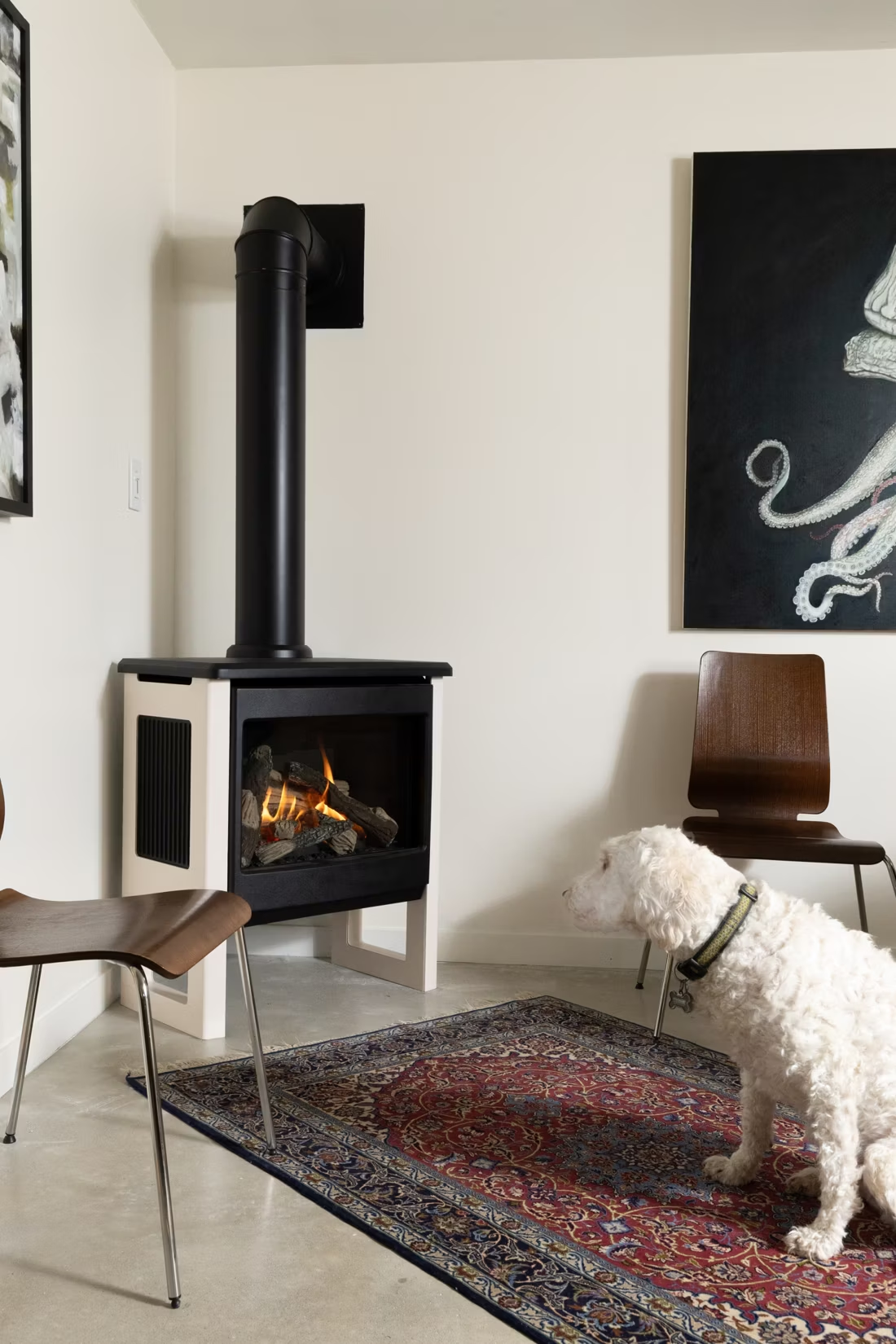
A gas fireplace is a fully built-in unit framed into a wall—the standard choice for new construction or a great-room remodel, which is common in newer Oro Valley subdivisions. A gas insert drops into an existing masonry firebox, converting an older wood-burning fireplace into a sealed, efficient gas unit using the same chimney. A gas stove is a freestanding cabinet-style unit that sits on the floor. For the many Oro Valley homes with an existing but rarely-used wood fireplace, an insert is usually the simplest upgrade.
Do I need a permit to install a gas fireplace in Oro Valley?
Yes. New gas fireplace installations require a building permit and gas line permit through the Town of Oro Valley Building Safety Division; homes in unincorporated Pima County just outside town limits go through Pima County Development Services instead. The gas line connection has to be run or verified by a licensed gas fitter, which is one reason working with an established local hearth dealer is worth it—they coordinate the permit, gas work, and inspection as one process instead of you juggling separate trades.
Should I get a vented or vent-free gas fireplace?
Vented (direct-vent) gas fireplaces pull combustion air from outside and exhaust it back outside through sealed venting—they're the most common and most universally recommended choice, including in Oro Valley. Vent-free units are legal in Arizona and burn without external venting, releasing some combustion byproducts into the room, which matters more in the tightly sealed, well-insulated homes common in newer Oro Valley construction built for AC efficiency. For that reason, most local dealers steer homeowners toward direct-vent models for anything beyond a small supplemental unit.
How often does a gas fireplace need to be serviced in Oro Valley?
An annual inspection is recommended for any gas appliance, and it matters more here than you might expect—fine desert dust works its way into burner orifices and pilot assemblies over a dry Arizona summer even when the fireplace hasn't been used. A technician will check the burner, pilot, gas connections, and glass seal, typically for $150 to $250. Plan the service for early fall, before the cooler evenings when you'll actually want to use it.
Gas vs. electric fireplace—which makes more sense in Oro Valley?
Electric fireplaces are cheap to install (typically $400–$1,200), need no venting or gas line, and run on power from Tucson Electric Power at roughly 15–16 cents per kWh—fine for ambiance in a bedroom or den where real heat output isn't the point. Gas delivers meaningfully more heat, which matters on the handful of genuinely cold December and January mornings, and gives you the look and sound of a real flame. For a great room or a primary living space where you want both usable heat and presence, gas is usually the better investment; for a secondary room or rental property, electric can make sense.
Can I put a TV above my fireplace?
Yes—with an asterisk. Fireplaces are hot and TVs don't like heat. Either put a mantel between them to deflect rising warmth, or choose a fireplace with heat-management technology that creates a cool zone on the wall above—the wall stays around 125 degrees, barely warm, while the room still gets full heat. If you like clean lines and don't want a mantel, heat management is the answer.
Why is my open fireplace making my house colder?
Open fireplaces suck—literally. As the fire burns, it consumes air your furnace already paid to heat and pulls it out through the chimney, so the house is actually colder after the fire goes out than before you lit it. An insert fixes this: it seals the chimney, puts fixed glass across the front, and turns that hole in your house into a real heat source.
What is an in-home preview and do I need one?
It's a visit where a hearth professional measures your space, confirms the model you picked actually works in your home, and walks the specs—framing, gas line, venting, finish work—before anything is ordered. Some details you just can't know until you see the house. Never make a down payment without one; it's the single most-skipped step that burns buyers.
Does a fireplace add value to my home?
On average, a fireplace adds back to the home about the same amount you spent installing it. Add the monthly savings from heating the rooms you actually use instead of the whole house—often hundreds of dollars a year—and the value case is strong before you even count what a fire does for how your family uses the room.
Nearby Dealers
Hearth shops serving Oro Valley and the surrounding area. Every listing shows whether it is a WhyFire partner, a dealer we have verified as authorized for the brands we recommend, or a local business carrying hearth products. No manufacturer pays for placement. How we verify dealers →
Earth Energy's Hearth & Patio
Find your gas fireplace in Oro Valley.
Tell us about your home and we'll match you with a trusted local Oro Valley dealer and send over a free Project Guide & Parts List—the exact parts, vent kit, and recommended installer for your gas fireplace project.
Find Your Fireplace →