
Keep Your Family Warm and Safe—No Matter What
With a long, demanding winter heating season and average lows near 2°F, wood heat is a working necessity here, not a hobby. Find the right stove or insert and get matched with a trusted local dealer.
Every Project Starts From One of These Five Situations
A climate that demands serious heat.
Barron County sits in climate zone 6A, with a long, demanding winter heating season and winter lows that average around 2°F—cold enough to sit alongside Duluth and International Falls in terms of raw heating demand. From Rice Lake to Cumberland to the farms and lake properties scattered between them, wood stoves aren't decorative here—they're doing real work supplementing propane and electric heat through five-plus months of cold, and in some rural households, they're carrying most of the load.
The county's mixed hardwood forests supply the fuel: oak and maple for long, dense overnight burns, birch for a hot, fast-catching fire, and aspen for easy-splitting kindling and shoulder-season heat. There's no air quality non-attainment designation here and no winter inversion advisories, which means Barron County homeowners can run a wood stove daily through the coldest stretches without the burn curtailments that complicate wood heat in some other regions. Combined with cutting access through the nearby Chequamegon-Nicolet National Forest, wood remains one of the most practical, cost-effective heat sources in the county.
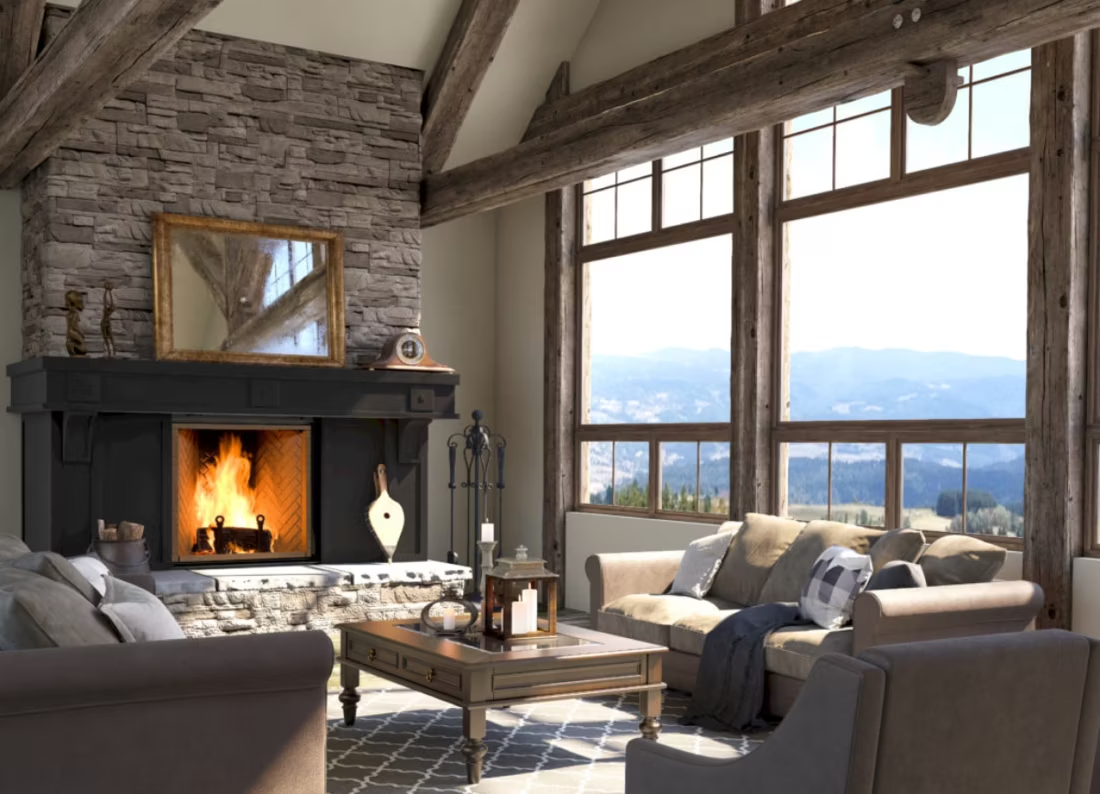
Firewood Cutting Permits Near Barron County
Three steps. No salesperson until you're ready.
Tell us about your project
Your zip code, your situation, and the fuel you're leaning toward—or let the answers point you to one.
See what's actually available
The brands dealers within 100 miles genuinely carry—real options, never a catalog mirage.
Get your dealer & Project Guide
A trusted local dealer, plus the free Project Guide & Parts List that names every component of the job.
Frequently Asked Questions
How much does a wood stove installation cost in Barron County?
Most wood stove installations in Barron County run $4,500 to $9,500, depending on the stove model, whether you're venting through an existing masonry chimney or need new Class A chimney pipe, and whether a hearth pad upgrade is required for clearance. Homes without an existing chimney—common in newer construction around Rice Lake and Chetek—usually land on the higher end once through-roof venting is factored in. Rural properties farther from Rice Lake or Cumberland may see a modest travel charge added to the install quote.
What size wood stove do I need for a Barron County home?
With average winter lows around 2°F and a heating season that runs long and hard here, sizing tends to run larger than in milder parts of the Midwest. A small stove (up to 1,000 sq ft) suits a cabin, lake house, or single zone; a medium stove (1,000–2,000 sq ft) covers most main-floor living areas in a farmhouse or ranch; a large stove (2,000+ sq ft) can serve as genuine primary heat in a well-insulated home. Older farmhouses with less insulation, common throughout the county, often need to size up a notch from what square footage alone would suggest. A local dealer will size your space correctly during an in-home visit—undersizing means the stove can't keep up on the coldest nights, and oversizing leads to smoldering, low-temperature burns that build creosote fast.
Where can I find certified wood stove installers near me?
Look for NFI (National Fireplace Institute) or CSIA (Chimney Safety Institute of America) certified installers—both credentials indicate proper training in clearances, venting, and code compliance for wood-burning appliances. Hearth dealers serving Barron County typically cover Rice Lake, Barron, Cameron, Chetek, and Cumberland, with a travel fee for more remote rural addresses. Stick with an installer who specializes in hearth products rather than a general contractor—improper chimney clearance and venting work is the leading cause of residential chimney fires, and it's the detail a generalist is most likely to get wrong.
What's the difference between a wood stove and a wood insert?
A wood stove is a freestanding unit installed on a hearth pad with its own chimney system—it can go almost anywhere clearances allow, including a home with no existing fireplace. A wood insert slides into an existing masonry fireplace opening and uses a stainless liner run up the existing chimney, converting a drafty open hearth into a sealed, high-efficiency heat source. Barron County has plenty of older farmhouses with existing masonry fireplaces that are poor heat performers as-is—for those, an insert is usually the better upgrade. Homes without an existing fireplace, or new construction, are better suited to a freestanding stove.
Do I need a permit to install a wood stove in Barron County?
Yes—a building permit is required for new wood stove installations, and the unit itself needs to meet current EPA emissions standards. Most local hearth dealers handle the permitting paperwork as part of the installation, so it's rarely something you have to manage yourself. Barron County has no air quality non-attainment designation and no winter inversion advisories, so unlike counties that impose seasonal burn curtailments, there's no restriction on when you can run your stove once it's installed and permitted.
What's the best wood stove for Barron County's climate?
With winter lows averaging 2°F and stretches well below zero, a catalytic stove from a brand like Blaze King is worth a serious look—catalytic models can hold a fire 20+ hours on a single load of oak or maple, which matters when you want heat through a long overnight without reloading. Non-catalytic stoves from Pacific Energy, Lopi, or Kuma are a strong fit too, especially for supplemental heat rather than all-night, all-winter primary heat. Given the local hardwood mix—dense oak and maple for overnight burns, birch for quick, hot fires, aspen for kindling—most stoves rated for cold-climate use will perform well here. A local dealer can match burn time and output to your specific square footage and insulation level.
How often should my chimney be inspected and cleaned?
The CSIA recommends an annual inspection for any wood-burning appliance, and in Barron County that's best scheduled in late summer or early fall, ahead of a burning season that often starts by October and can run into April. Households using wood as a significant heat source—burning 4 or more cords through the winter, which is common on rural properties here—sometimes need a mid-season cleaning if creosote builds up faster than expected. Skipping this step is the leading cause of chimney fires, and it matters more in outlying parts of the county where fire department response time is longer.
Where can I get firewood or cutting permits in Barron County?
Local firewood sellers around Rice Lake, Barron, and Cumberland typically sell by the cord, with oak, maple, birch, and aspen all common species in the mix—oak and maple bring the longest burn times, while birch and aspen catch fast and work well for shoulder-season fires. For self-cut wood, permits are available through the Chequamegon-Nicolet National Forest for $10 to $20 per cord, with a cutting season that runs May through October. Given the county's harsh winters and high heating demand, many rural households supplement purchased firewood with a permit and a weekend of cutting to build up their woodpile before the cold sets in.
Wood stove vs. pellet stove—which is right for me?
Wood stoves run without electricity, which matters in Barron County when winter storms knock out power for hours or days—you can keep burning cordwood regardless. They also pair well with low-cost cutting permits through the Chequamegon-Nicolet National Forest and the abundant local oak, maple, birch, and aspen supply. Pellet stoves, using brands like Indeck Energy Services, Lignetics, or Somerset Pellet Fuel, are more convenient day to day—load the hopper, set the thermostat, less ash—but they need electricity to run the auger and blower, so they go dark in an outage unless paired with a battery backup. For rural Barron County properties where outages are a real concern, wood tends to be the more resilient choice; for homes in town with reliable power and a preference for convenience, pellet is a strong alternative.
Why is a fireplace insert so efficient?
An insert does two things: it seals the chimney completely, so you stop losing air you already paid to heat, and it radiates warmth into the room through the firebox and glass. Most add a heat-exchange fan that pulls cool room air underneath, wraps it around the hot firebox, and pushes it back out warm. Your home is more efficient before you've even lit the first fire.
What's the difference between an insert and a zero-clearance fireplace?
An insert is a fireplace that slides into a pre-existing wood-burning fireplace—if you don't have one, there's nothing to insert it into. A zero-clearance fireplace is built into a framed wall, which makes it the answer for remodels and new construction. Simple test: existing masonry fireplace means insert; blank or framed wall means zero-clearance.
Can a fireplace actually lower my heating bill?
Yes—by creating a comfort zone. A furnace heats every square foot of the house just to warm the one room you're in; a gas fireplace on low burns roughly a sixth of the gas a typical furnace does. Set the furnace around 55–60 degrees as a baseline, then heat the rooms your family actually uses. Families who heat this way commonly save $20–$60 a month.
Can I install a fireplace myself?
If you're putting a fire in your house on purpose, it's best to work with an expert. Unless you're genuinely experienced in framing, gas line, vent pipe, and the national code on clearances to combustibles, have a professional do it—and ideally the same company that sells you the fireplace, so warranty, service, and liability all live under one roof.
Stove and Fireplace Dealers in Barron County
Listings include WhyFire partner dealers, dealers we have verified as authorized for the brands we recommend, and established local businesses that carry hearth products. Every listing shows which one it is. The ones marked Preferred run on WhyFire's software, so they can show you real pricing and book your appointment right here. No manufacturer pays for placement. How we verify dealers →
Earth Sense Energy Systems- Rice Lake
The Stove Works, Inc
Kindled Hearth Fireplace Store
Allram Lumber Company
Get your free Project Guide & Parts List for wood heat in Barron County.
Tell us about your home and heating goals, and we'll match you with a trusted local dealer and send a free Project Guide & Parts List—the exact parts, including the vent kit, for your wood stove or insert project.
Find Your Fireplace →