
Find your electric fireplace in Barron County.
Zone heat and instant ambiance for Barron County homes, from Rice Lake to Cumberland—no chimney, no gas line, no venting. Find the right unit and connect with a trusted local dealer.
Every Project Starts From One of These Five Situations
A no-venting option for a county that heats mostly with wood.
Barron County sits in Wisconsin's climate zone 6A, with 8,464 heating degree days and winter lows averaging 2°F—cold enough to put it in the same company as Duluth, MN, just up the shore. Spread across Rice Lake, Barron, Cameron, Chetek, Cumberland, and the farm townships between them, most of the county's roughly 22,400 residents heat primarily with cordwood (oak, maple, birch, and aspen are all common locally) or propane, since natural gas service is limited outside the larger towns. Electric fireplaces don't try to compete with that—they fill a different role: supplemental zone heat and real ambiance in rooms where running a chimney or gas line isn't practical or worth the cost.
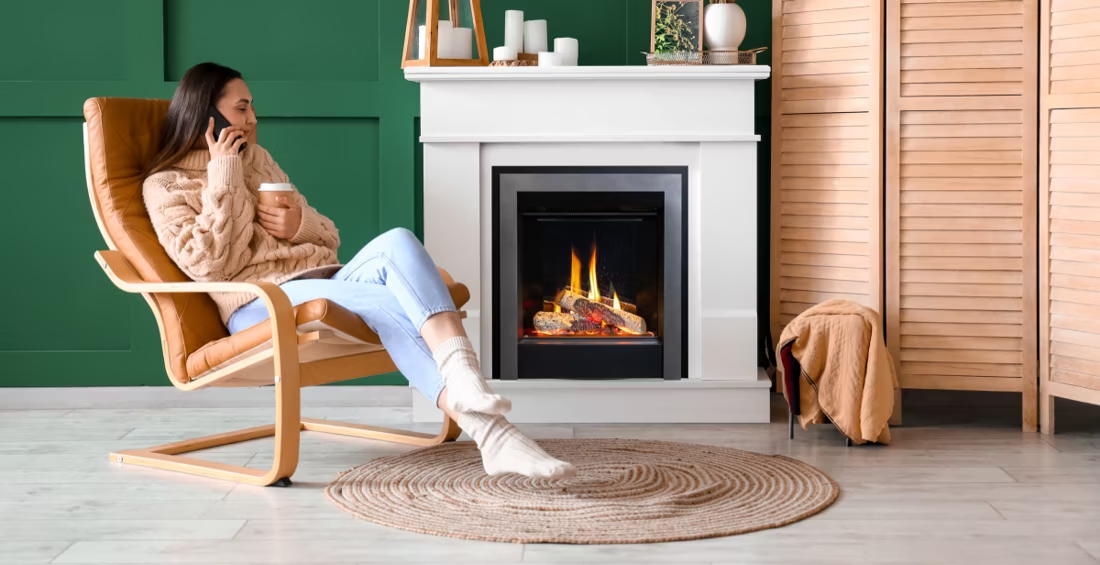
That's exactly where electric units earn their keep here. A finished basement, a three-season porch conversion, a bedroom addition, a cabin near the Red Cedar or Chippewa River—anywhere you want heat and fire-look without tearing into the wall for venting, an electric insert or built-in plugs in or wires into an existing circuit and runs. Barron Electric Cooperative serves much of the county's rural grid, and most 1,500-watt units run fine on a standard household circuit; larger built-ins may call for a dedicated line from a licensed electrician. Given the outages that come with Wisconsin winter storms, most local homeowners pair an electric fireplace with wood or propane for actual backup heat rather than relying on it alone.
Three steps. No salesperson until you're ready.
Tell us about your project
Your zip code, your situation, and the fuel you're leaning toward—or let the answers point you to one.
See what's actually available
The brands dealers within 100 miles genuinely carry—real options, never a catalog mirage.
Get your dealer & Project Guide
A trusted local dealer, plus the free Project Guide & Parts List that names every component of the job.
Frequently Asked Questions
How much does an electric fireplace installation cost in Barron County?
Plug-in electric inserts and wall-mount units typically run $300 to $1,200 installed in Barron County, including the unit and any minor mounting or trim work—most plug into an existing outlet and need no electrician. Built-in electric fireplaces that require a dedicated 120V or 240V circuit run higher once you add electrician labor, typically landing in the $1,200 to $3,000 range depending on how far the new wiring has to travel and whether drywall or trim carpentry is involved. Homes in the more rural parts of the county—out toward Prairie Farm or Turtle Lake—may see a modest travel charge from installers.
Can an electric fireplace actually heat a room in Barron County's winters?
It can hold its own in a smaller, well-insulated space, but be realistic about the math: with 8,464 heating degree days and winter lows averaging 2°F, a standard 1,500-watt electric heater (about 5,000 BTU) is built for zone heating a single room, not for carrying a whole house through a Barron County January. It works well as supplemental heat in a finished basement, a bonus room, or a bedroom, or as the sole heat source in a small, tight space like a sunroom or converted porch. For primary heat in this climate, most local homes still lean on wood or propane, with the electric unit adding comfort and ambiance in one specific room.
Do I need a permit to install an electric fireplace in Barron County?
A plug-in electric insert or freestanding unit generally doesn't require a permit—it's no different than plugging in a space heater. If you're having a built-in unit hardwired on a new dedicated circuit, that electrical work typically does require a permit through your local township or the Barron County zoning office, and it needs to be done by a licensed electrician regardless of permit requirements. Local dealers who handle installation will usually tell you upfront whether your specific unit and setup triggers a permit.
What's the difference between an electric insert, an electric stove, and a wall-mount electric fireplace?
An electric insert is built to slide into an existing masonry or wood-fireplace opening, giving an old, unused fireplace a working flame effect and heat without any venting changes. An electric stove is a freestanding cabinet-style unit that mimics a wood stove's look and can sit anywhere near an outlet—popular for cabins and additions around the county's lakes. A wall-mount unit hangs flat against a wall like a large-format TV, which works well in newer construction or remodels in Rice Lake and Chetek where a slim, modern look is the goal. All three plug in or hardwire the same way; the choice mostly comes down to the space and the look you want.
Will my electric fireplace still work during a power outage?
No—and this matters more in Barron County than in milder climates. Electric fireplaces have no battery backup and no way to run without grid power, so during the ice storms and heavy snow events that regularly knock out rural lines served by Barron Electric Cooperative, an electric unit goes dark along with everything else. That's the main reason most local homeowners treat electric fireplaces as a comfort and ambiance add-on rather than their only heat source, and keep a wood stove, insert, or propane appliance in the house for real outage backup.
What's the best electric fireplace setup for a cold-climate Barron County home?
Look for a unit with a true 1,500-watt heater element and a thermostat, rather than a decorative-only flame unit—that gives you real supplemental BTU output for a room in the 150-400 square foot range, which covers most additions, basements, and bedrooms in the county's housing stock. For larger open rooms, talk to a local dealer about running two smaller units rather than one oversized one, since electric heat output tops out at what a standard circuit can supply. If you're finishing a basement in a Rice Lake or Cumberland-area home, an insert or built-in with a heat-only mode (no flame) for shoulder-season use is worth asking about too.
Electric vs. wood—which fits my Barron County home?
Wood is still the backbone of home heating for a lot of Barron County households, with oak, maple, birch, and aspen all cut locally and Forest Service permits through the Chequamegon-Nicolet National Forest running $10 to $20 per cord during the May-to-October cutting season. Wood keeps working when the power's out, and it puts out serious BTUs for the coldest stretches. Electric fireplaces can't replace that, but they win on convenience—no cutting, splitting, hauling, or chimney maintenance, just a switch or remote. A lot of local homes run both: wood or a pellet stove for the real heat lift, electric for the room where a chimney doesn't make sense.
Electric vs. pellet stove—which makes more sense here?
Pellet stoves burn bagged fuel from regional suppliers like Indeck Energy Services, Lignetics, or Somerset Pellet Fuel, and they put out enough heat to be a legitimate primary or near-primary source for a Barron County home in a way electric fireplaces simply can't at this climate's 8,464 heating degree days. The tradeoff is that pellet stoves need venting, a hopper to load, and—like electric units—electricity to run the auger and blower, so they're not an outage solution either. Electric fireplaces are simpler still: no fuel to buy, no venting, minimal maintenance, but strictly zone heat. If you want real heat output with less mess than wood, pellet is the closer match; if you want a plug-and-play accent for one room, electric is the simpler answer.
Where can I get an electric fireplace installed near me in Barron County?
A handful of hearth and appliance dealers serving Rice Lake, Barron, Chetek, and Cumberland carry and install electric fireplaces, inserts, and wall-mount units, and most will handle any electrical circuit work directly or coordinate with a licensed electrician. Big-box stores sell electric units off the shelf, but they generally don't handle in-home sizing, dedicated-circuit wiring, or trim-out for a built-in installation—for anything beyond a simple plug-in unit, a local dealer who can assess your space in person is the safer route.
Can I put a TV above my fireplace?
Yes—with an asterisk. Fireplaces are hot and TVs don't like heat. Either put a mantel between them to deflect rising warmth, or choose a fireplace with heat-management technology that creates a cool zone on the wall above—the wall stays around 125 degrees, barely warm, while the room still gets full heat. If you like clean lines and don't want a mantel, heat management is the answer.
Do electric fireplaces actually produce heat?
Yes—most put out around 4,800–5,000 BTUs from a standard outlet, which comfortably warms a bedroom, office, or den as a comfort-zone heater. What they won't do is carry a whole house the way wood, gas, or pellet can. Think of electric as ambiance-first with honest supplemental heat: flames on with no heat in July, flames plus warmth in January.
Can a fireplace actually lower my heating bill?
Yes—by creating a comfort zone. A furnace heats every square foot of the house just to warm the one room you're in; a gas fireplace on low burns roughly a sixth of the gas a typical furnace does. Set the furnace around 55–60 degrees as a baseline, then heat the rooms your family actually uses. Families who heat this way commonly save $20–$60 a month.
What is an in-home preview and do I need one?
It's a visit where a hearth professional measures your space, confirms the model you picked actually works in your home, and walks the specs—framing, gas line, venting, finish work—before anything is ordered. Some details you just can't know until you see the house. Never make a down payment without one; it's the single most-skipped step that burns buyers.
Stove and Fireplace Dealers in Barron County
Listings include WhyFire partner dealers, dealers we have verified as authorized for the brands we recommend, and established local businesses that carry hearth products. Every listing shows which one it is. The ones marked Preferred run on WhyFire's software, so they can show you real pricing and book your appointment right here. No manufacturer pays for placement. How we verify dealers →
Earth Sense Energy Systems- Rice Lake
The Stove Works, Inc
Kindled Hearth Fireplace Store
Allram Lumber Company
Get your Barron County electric fireplace Project Guide.
Tell us a bit about your home and we'll put together a free Project Guide & Parts List—the right unit, the electrical requirements, and a trusted local Barron County dealer to install it.
Find Your Fireplace →