
Every fireplace fuel, matched to Barron County's long winters.
Wood, gas, pellet, and electric fireplace resources for the whole county—from Rice Lake and Barron out to Cumberland, Chetek, and Cameron. Pick a fuel and get matched with a local dealer who actually installs it in this part of the Northwoods.
Every Project Starts From One of These Five Situations
8,464 heating degree days and a county still built around cordwood.
Barron County sits in northwestern Wisconsin's lake country, where winter lows average 2°F and the county racks up 8,464 heating degree days a year—a heating load in the same range as Fargo, North Dakota. Oak, maple, birch, and aspen are the hardwoods most local households burn, much of it cut on private woodlots or under Forest Service permits through the Chequamegon-Nicolet National Forest, which keeps wood heat both affordable and deeply rooted in how people here get through a Wisconsin winter that regularly runs from October into April.
Unlike some western basins, Barron County has no air-quality non-attainment designation and no curtailment days—the only real air-quality driver here is making sure a new wood or pellet stove meets current EPA 2020 NSPS emissions standards, which any licensed local installer will handle as part of the permit. That straightforward regulatory picture, combined with reliable firewood supply and pellet brands like Lignetics and Somerset Pellet Fuel produced regionally, means all four fuel types are genuinely viable across the county. This hub rolls up hearth retailers, service techs, and fuel suppliers from Rice Lake and Barron down through Cumberland, Chetek, Cameron, and Turtle Lake. Pick your fuel below for local dealers, install costs, and unit recommendations specific to your town.
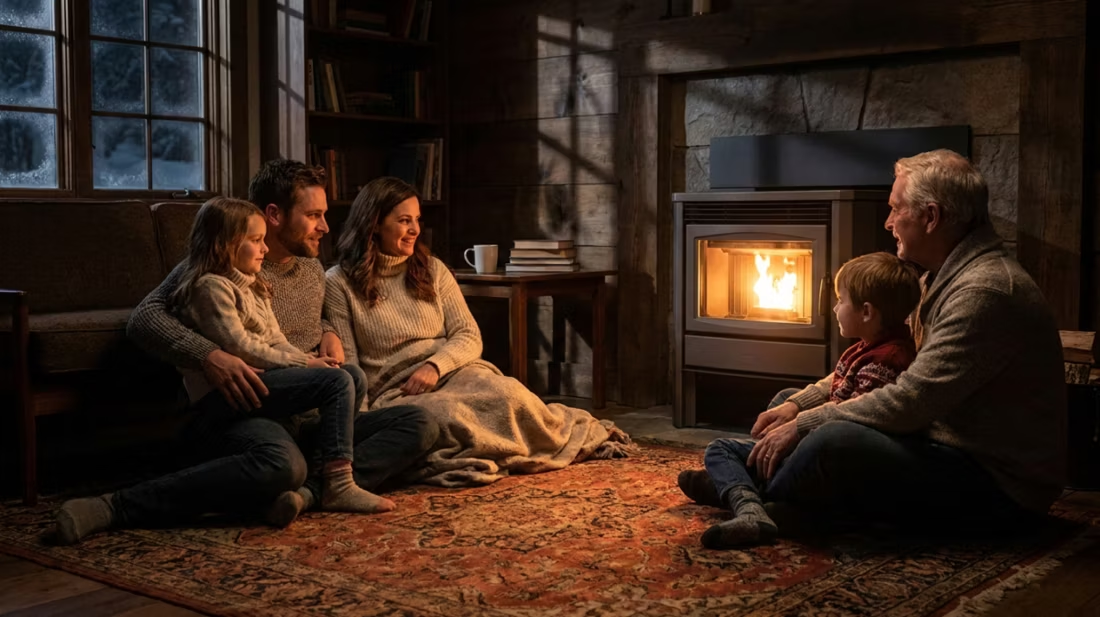
Four fuels. One honest answer for Barron County.
Three steps. No salesperson until you're ready.
Tell us about your project
Your zip code, your situation, and the fuel you're leaning toward—or let the answers point you to one.
See what's actually available
The brands dealers within 100 miles genuinely carry—real options, never a catalog mirage.
Get your dealer & Project Guide
A trusted local dealer, plus the free Project Guide & Parts List that names every component of the job.
Frequently Asked Questions
Which fireplace fuel makes the most sense in Barron County?
All four fuels work here, and the right pick usually comes down to how hands-on you want to be through an eight-and-a-half-thousand-degree-day winter. Wood is the traditional backbone in this county—oak and maple burn long and hot, birch lights easily, and aspen is common as a supplemental species, with a lot of it self-cut from private woodlots or under Forest Service permits through the Chequamegon-Nicolet National Forest. A modern catalytic wood stove will hold a fire through a night at 2°F without trouble. Gas is the low-maintenance option in and around Rice Lake and Barron where mains service reaches; propane fills that role further out in the townships. Pellet stoves have a solid regional supply chain thanks to producers like Lignetics and Somerset Pellet Fuel, and they're a good fit for anyone who wants wood-like heat without splitting and stacking cordwood. Electric fireplaces are supplemental almost everywhere in the county—they're not built to carry a primary heating load through this climate, but they're a clean, no-venting option for a bedroom, basement, or a second living space.
Do I need a permit to install a wood stove or fireplace in Barron County?
Generally yes. New wood stoves and inserts need to meet current EPA 2020 NSPS emissions standards, and installation permits go through the Barron County Planning & Zoning Department for unincorporated areas or your local municipal building inspector if you're inside city limits like Rice Lake, Barron, or Cumberland. Gas installations require a separate gas-line permit and a licensed installer for the connection, whether you're on natural gas or propane. Pellet stove permitting follows a similar path to wood but without any curtailment restrictions, since the county has no non-attainment designation. Electric fireplaces usually skip the permit process unless you're hardwiring a built-in unit that needs a new dedicated circuit. Most retailers we match homeowners with handle this paperwork as part of the install.
Does Barron County have wood-burning restrictions like some other counties do?
No. Barron County has no designated air-quality non-attainment areas and no winter curtailment days, which is a real point of difference from western basin counties where inversions trap smoke and restrict older stoves on bad-air days. The only requirement here is that any new wood or pellet stove meet EPA 2020 NSPS certification at the time of install—a standard efficiency and emissions bar, not a seasonal restriction on when you can burn. That said, most homeowners still schedule an annual chimney sweep given how much wood this county burns each winter, since creosote buildup is a real fire-safety concern independent of any air-quality rule.
Can I find a retailer that carries more than one fuel type?
Yes, and it's common here—many Barron County households run wood or pellet as their primary heat source with a gas or electric unit somewhere else in the house, so most local dealers carry at least two or three fuel types rather than specializing in one. A multi-fuel retailer lets you compare working wood, gas, and pellet displays side by side and talk through what actually fits your address, your woodlot access, and whether you're inside a natural gas service area or relying on propane. We match you with the retailer whose lineup and service area genuinely fits your project.
How does installation and service work for homes outside Rice Lake?
Installation crews and service techs are concentrated around Rice Lake and Barron but regularly travel out to Cumberland, Chetek, Cameron, Turtle Lake, and the surrounding townships. Expect a modest trip charge for the farthest calls, and expect scheduling to tighten up fast once temperatures drop toward that 2°F average low—booking your annual chimney sweep or gas inspection in late summer, well before the first hard freeze, keeps you off the fall waiting list. For rural properties well outside town, it's worth asking your installer about spare igniters or battery backup for gas systems, since a heavy lake-effect snow event can delay a return visit by a day or two.
What does a fireplace installation typically cost in Barron County?
Costs vary by fuel and by how much venting or gas-line work is involved. Wood stove or insert installs typically run $4,000–$8,500, with full chimney construction for new builds pushing toward $12,000—EPA 2020 NSPS certification is included in any new unit's price. Gas fireplaces, inserts, and stoves run roughly $4,000–$10,000 depending on whether you're extending a gas line or working with an existing hearth. Pellet stove or insert installs generally land at $4,000–$7,000. Electric fireplaces are the outlier—$200–$3,000 for the unit itself, plus $400–$1,200 in labor for anything beyond a plug-and-play placement. The county + fuel pages above break these numbers down further with local retailer pricing.
Can a fireplace actually lower my heating bill?
Yes—by creating a comfort zone. A furnace heats every square foot of the house just to warm the one room you're in; a gas fireplace on low burns roughly a sixth of the gas a typical furnace does. Set the furnace around 55–60 degrees as a baseline, then heat the rooms your family actually uses. Families who heat this way commonly save $20–$60 a month.
What is an in-home preview and do I need one?
It's a visit where a hearth professional measures your space, confirms the model you picked actually works in your home, and walks the specs—framing, gas line, venting, finish work—before anything is ordered. Some details you just can't know until you see the house. Never make a down payment without one; it's the single most-skipped step that burns buyers.
Wood, gas, pellet, or electric—how do I choose?
Match the fuel to your life, not the other way around. Wood: lowest fuel cost and total power-outage independence, but you're hauling and stacking. Gas: press a button, set a thermostat, no maintenance to speak of. Pellet: wood economics with automatic feeding, in exchange for weekly cleaning and a need for electricity. Electric: plugs in anywhere with honest supplemental heat. Nobody regrets the fuel that fits how they actually live.
I know I want a fireplace—where do I actually start?
Do two things today: snap a photo of the wall or fireplace you want to transform, and take a tape measure to the space—width, height, depth. Those two artifacts answer most of a hearth professional's first questions. Then settle fuel (wood, gas, pellet, or electric) and set a realistic budget: $3,900–$5,500 covers fireplace, vent, and basic install for most homes.
Stove and Fireplace Dealers in Barron County
Listings include WhyFire partner dealers, dealers we have verified as authorized for the brands we recommend, and established local businesses that carry hearth products. Every listing shows which one it is. The ones marked Preferred run on WhyFire's software, so they can show you real pricing and book your appointment right here. No manufacturer pays for placement. How we verify dealers →
Earth Sense Energy Systems- Rice Lake
The Stove Works, Inc
Kindled Hearth Fireplace Store
Allram Lumber Company
Get matched with a local Barron County dealer.
Pick your fuel below and we'll put together a free Project Guide & Parts List—the right unit, the vent kit it needs, and the local dealer we recommend for your project.
Find Your Fireplace →