
Keep Your Family Warm and Safe—No Matter What
At 2°F average winter lows and one of the longest heating seasons in the Lower 48, Rice Lake is as cold as Duluth most winters—yet most homes here lean on electric or propane heat rather than a wood stove. If a wood system still makes sense for your place, I'll match you with a trusted local dealer who knows what actually works here.
Every Project Starts From One of These Five Situations
Cold degree days, but a hearth market built around electricity and propane.
Barron County's numbers read like Duluth or Fargo—an average winter low of 2°F and one of the longest, coldest heating seasons in the Lower 48. That kind of cold usually pushes wood stove demand up, and it certainly could here, but Rice Lake's residential heat mix skews heavily toward the grid: Northern States Power and Barron Electric Cooperative serve most of the city and surrounding townships, and propane fills in where natural gas doesn't reach. A wood stove or insert is far less often the primary heat source in town than it might be in a more wood-centric corner of northern Wisconsin.
That doesn't mean wood heat is absent—oak, maple, birch, and aspen are all common on the landscape, and the Chequamegon-Nicolet National Forest issues cutting permits for $10 to $20 a cord across a May-through-October season, which is genuinely cheap fuel for anyone set up to burn it. What we see locally is more of a niche pattern: hunting camps, older farmhouses on acreage outside city limits, and homeowners who want a hedge against a Barron Electric outage during an ice storm. If that's you, a correctly sized, EPA-certified stove still makes sense—it's just a smaller, more deliberate purchase here than in towns where wood is the default.
Firewood Cutting Permits Near Rice Lake
Three steps. No salesperson until you're ready.
Tell us about your project
Your zip code, your situation, and the fuel you're leaning toward—or let the answers point you to one.
See what's actually available
The brands dealers within 100 miles genuinely carry—real options, never a catalog mirage.
Get your dealer & Project Guide
A trusted local dealer, plus the free Project Guide & Parts List that names every component of the job.
Frequently Asked Questions
Is a wood stove actually a good fit for a Rice Lake home?
It can be, but it's a more deliberate choice here than in many cold-climate towns. Most Rice Lake homes already heat through Northern States Power, Barron Electric Cooperative, or propane, so a wood stove tends to show up as backup heat for winter storm outages, a secondary heat source in a detached garage or shop, or a primary system on rural acreage outside city limits where propane delivery is less reliable. Given the area's long, demanding heating season, a stove that's actually used will earn its keep—it's just not the default hearth purchase in this market the way it is farther north in the Chequamegon region.
What does a wood stove installation cost in Rice Lake?
Because indoor wood installs are less common here than in more wood-dependent parts of northern Wisconsin, there isn't a deep well of local pricing data to pull from. Comparable cold-climate installs in this part of the state typically run somewhere in the $4,000-$8,500 range, with the low end covering an insert into an existing masonry chimney and the high end covering a freestanding stove with a full new Class A chimney run through a roof. A local dealer can tighten that estimate once they see your home's existing chimney situation, if any.
Where can I get a cheap firewood permit near Rice Lake?
The Chequamegon-Nicolet National Forest, which sits within driving distance of Barron County, issues personal-use cutting permits for $10 to $20 per cord with a season that runs May through October. Oak and maple are the woods worth prioritizing if you're planning to burn primary or overnight—both season well and put out more heat per cord than birch or aspen, which burn faster and are better suited to shoulder-season fires or kindling.
What size wood stove makes sense for a Rice Lake winter?
With average winter lows around 2°F and routine drops well below that during Arctic outbreaks off the plains, undersizing is the real risk if you're using wood as anything more than occasional supplemental heat. A stove rated for 1,500 to 2,500 square feet is the common recommendation for a main living area in this climate, sized against actual insulation levels and ceiling height rather than square footage alone—a local dealer can walk through that with you, since a stove that's too small will run flat-out and still leave a Barron County farmhouse cold on the worst nights.
Do I need a permit to install a wood stove in Rice Lake?
Yes—new solid-fuel appliance installations typically require a building permit through your local municipal building inspection office or, outside city limits, Barron County's zoning and building department, and the stove itself needs to meet EPA 2020 NSPS certification. Because these installs are relatively infrequent here compared to a place like Superior or International Falls, it's worth confirming permit specifics directly with your jurisdiction before work starts—most hearth dealers who do install here are used to handling that paperwork as part of the job.
Would a wood stove help during a Barron Electric or NSP power outage?
This is actually the strongest local case for wood heat in Rice Lake. Ice storms and heavy snow loads periodically knock out service from both Northern States Power and Barron Electric Cooperative, and a wood stove keeps producing heat with zero dependence on the grid—unlike most gas or electric options, which need power for ignition, blowers, or controls. Homeowners who've been through a multi-day outage in a Barron County winter are often the ones who end up installing a stove specifically as a resilience measure rather than for daily heating.
Wood stove or insert—which fits my house better?
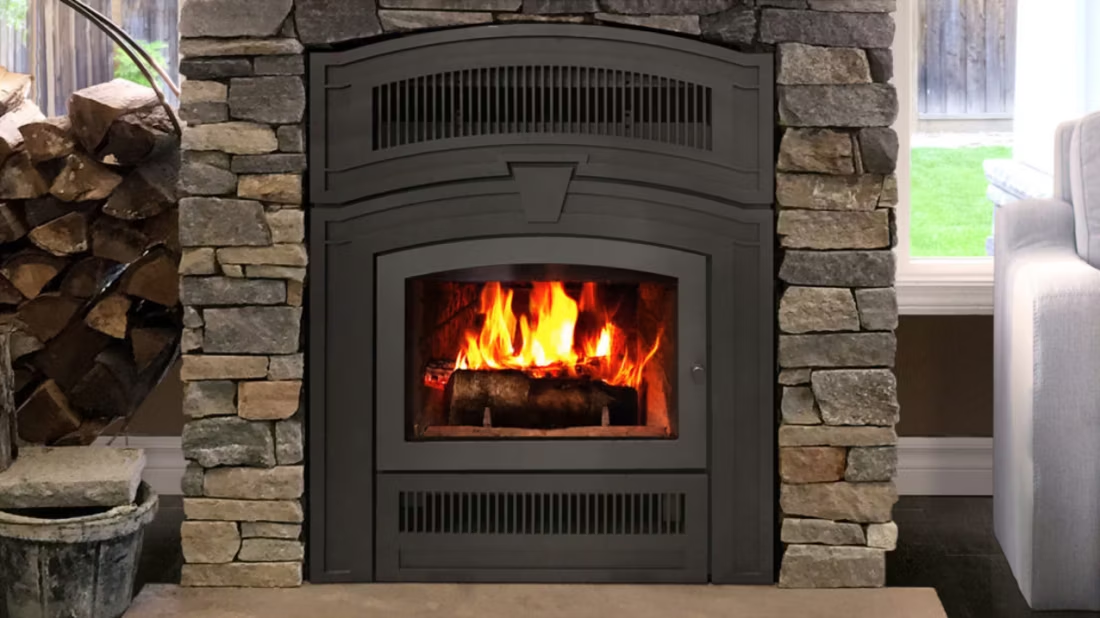
A freestanding stove sits on a hearth pad and vents through new Class A pipe, which works well in newer Rice Lake homes and outbuildings that never had a masonry fireplace to begin with. An insert slides into an existing masonry firebox and reuses the chimney you already have, which suits some of the older farmhouses and homes near downtown Rice Lake built with a wood-burning fireplace decades ago. Given how uncommon full wood systems are in this market overall, whichever route you take, expect your dealer to spend real time confirming your chimney or venting path is actually viable before quoting the job.
Why isn't pellet heat more common in Rice Lake if wood species are so available?
Pellet stoves face the same niche pattern as wood stoves here—even though regional brands like Indeck Energy Services, Lignetics, and Somerset Pellet Fuel are all produced within reach of Barron County, most local homes are already set up with electric or propane heat and don't have a strong reason to add a pellet appliance. Pellet stoves also need electricity to run the auger and blower, which cancels out the outage-resilience advantage that makes wood stoves appealing here in the first place. If you're choosing between the two purely for backup heat during a Barron Electric outage, wood is the more dependable pick.
Wood vs. gas—which makes more sense for a Rice Lake home?
Gas is the more typical choice in this market simply because it's a smaller lift—no chimney sweep schedule, no cordwood to split and stack, and instant heat at the flip of a switch or remote. Wood earns its place mainly as a hedge: it keeps working through a Barron Electric or NSP outage, and with oak or maple cut under a cheap Chequamegon-Nicolet National Forest permit, fuel cost is close to nothing if you're already set up to process it. Most Rice Lake households we hear from run gas or propane as the daily system and consider wood only if they have the land, the time, and a real reason—like a detached shop or a rural property—to make it worthwhile.
Why is a fireplace insert so efficient?
An insert does two things: it seals the chimney completely, so you stop losing air you already paid to heat, and it radiates warmth into the room through the firebox and glass. Most add a heat-exchange fan that pulls cool room air underneath, wraps it around the hot firebox, and pushes it back out warm. Your home is more efficient before you've even lit the first fire.
What's the difference between an insert and a zero-clearance fireplace?
An insert is a fireplace that slides into a pre-existing wood-burning fireplace—if you don't have one, there's nothing to insert it into. A zero-clearance fireplace is built into a framed wall, which makes it the answer for remodels and new construction. Simple test: existing masonry fireplace means insert; blank or framed wall means zero-clearance.
How much should I budget for a fireplace?
For an average home—covering the fireplace, the vent pipe, and basic installation—a budget between $3,900 and $5,500 gives you a lot of options across wood, gas, and pellet. By the time you add finish work, gas line, and electrical, the average complete installation lands between $5,000 and $12,000 all-in. In a remodel or new build, a good rule is to put about 2.5% of the total project cost toward the fireplace.
Can I install a fireplace myself?
If you're putting a fire in your house on purpose, it's best to work with an expert. Unless you're genuinely experienced in framing, gas line, vent pipe, and the national code on clearances to combustibles, have a professional do it—and ideally the same company that sells you the fireplace, so warranty, service, and liability all live under one roof.
Nearby Dealers
Hearth shops serving Rice Lake and the surrounding area. Every listing shows whether it is a WhyFire partner, a dealer we have verified as authorized for the brands we recommend, or a local business carrying hearth products. No manufacturer pays for placement. How we verify dealers →
Earth Sense Energy Systems- Rice Lake
The Stove Works, Inc
Kindled Hearth Fireplace Store
Allram Lumber Company
Get your free Project Guide & Parts List for a Rice Lake wood stove project.
Tell me about your home, whether you're inside city limits or out on Barron County acreage, and I'll match you with a trusted local dealer and send a free Project Guide & Parts List—sized for real winter lows near 2°F, with the vent kit and parts specified.
Find Your Fireplace →