
Reliable gas heat for King County's mild, wet winters.
From downtown Seattle condos to foothill homes in Enumclaw and North Bend, gas delivers instant, low-maintenance warmth for King County's damp marine climate. Find the right unit and get matched with a trusted local dealer.
Every Project Starts From One of These Five Situations
Convenience wins in a marine climate.
King County stretches from the Seattle waterfront up into the Cascade foothills near North Bend and Enumclaw, home to over five million people across a Zone 4C marine climate. Winters here are mild by national standards—the average winter low sits around 37°F and the county logs roughly 4,482 heating degree days a year, a fraction of what a place like Duluth or Fargo racks up. But the Pacific Northwest's defining trait isn't cold, it's damp: long stretches of gray, wet weather from November through March where a fire that lights instantly, without hauling wood or tending coals, has real appeal.
Puget Sound Energy (PSE) is the dominant natural gas utility across most of urban and suburban King County, from Seattle and Bellevue through Kent, Renton, and Federal Way. Head out toward the Cascade foothills—Enumclaw, Snoqualmie Pass, the Skykomish corridor—and natural gas lines often don't reach, so propane fills the gap. Either way, a properly sized direct-vent gas fireplace or insert gives King County homeowners heat on demand, no ash or creosote to manage, and in many models, the ability to keep running through one of the Puget Sound's periodic windstorm-driven power outages.
Three steps. No salesperson until you're ready.
Tell us about your project
Your zip code, your situation, and the fuel you're leaning toward—or let the answers point you to one.
See what's actually available
The brands dealers within 100 miles genuinely carry—real options, never a catalog mirage.
Get your dealer & Project Guide
A trusted local dealer, plus the free Project Guide & Parts List that names every component of the job.
Frequently Asked Questions
How much does a gas fireplace installation cost in King County?
A gas fireplace or insert installation in King County typically runs $5,000 to $12,000, with the spread driven by the unit itself, the venting path, and whether new gas line work is required. Converting an existing masonry fireplace to a direct-vent gas insert—common in older Seattle bungalows and Craftsman homes with a chimney already in place—tends to land on the lower end if a gas line is already run to that wall. New construction or a remodel that requires framing a new chase, running gas line, and installing fresh direct venting sits higher. Labor costs in the Seattle metro core also run a bit above rural King County rates, so get a firm quote from a local installer after an in-home walkthrough.
Can I convert my existing wood fireplace to gas?
Yes, and it's one of the more common projects local hearth dealers handle in King County, particularly in the older housing stock scattered through Seattle, Shoreline, and Kirkland where a masonry wood fireplace was standard when the home was built. A gas insert slides into the existing firebox and uses a stainless liner run up the original chimney for venting. If the home already has natural gas service from PSE—likely if you're inside Seattle city limits or most of the inner suburbs—the conversion is usually straightforward. Homes further out toward Enumclaw or the Sammamish plateau without gas mains nearby will typically need a propane setup instead.
Do I need natural gas, or can I use propane?
Either works, and which one applies mostly comes down to where in King County you live. Puget Sound Energy runs natural gas lines through most of the urban and inner-suburban parts of the county—Seattle, Bellevue, Renton, Kent, Burien, and similar areas. Once you're out toward the Cascade foothills—Enumclaw, North Bend, the Snoqualmie Pass corridor, or rural pockets near Skykomish—natural gas mains often don't reach, and propane becomes the standard fuel, either from an existing tank or a new one set by a local propane supplier. Most gas fireplace models can be configured for either fuel; your installer sets the correct orifice and regulator for whichever you have.
Will my gas fireplace work during a power outage?
Most modern gas fireplaces are built to keep working when the power goes out, which matters in King County given how often Puget Sound windstorms knock out electricity for hours or days in the wooded suburbs and foothill communities. Units with IPI (intermittent pilot ignition) run on a battery backup that kicks in automatically when the grid drops, so the fireplace lights on demand just like normal. Valor's lineup takes a different route: their gas fireplaces generate their own power off the pilot's thermocouple, so there's no battery to remember to replace. If storm-driven outages are a real concern for your part of the county, ask your local dealer about the ignition system before you settle on a model.
What's the difference between a gas fireplace, gas insert, and gas stove?
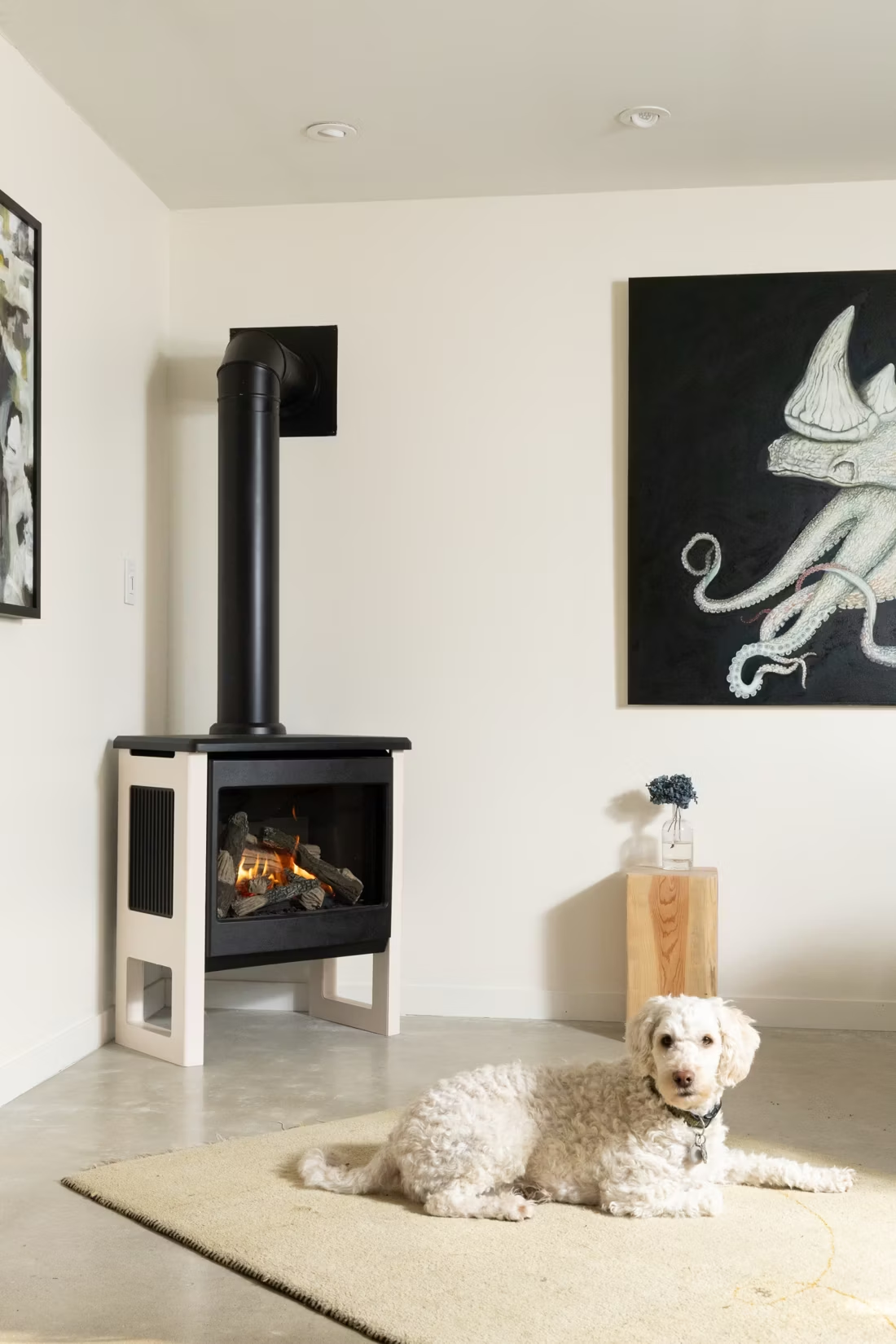
A gas fireplace is a fully built-in unit framed into a wall—the right call for new construction or a remodel without an existing hearth. A gas insert is built to slot into an existing masonry fireplace, which describes a large share of King County's older housing stock in neighborhoods like Ballard, Wallingford, and Capitol Hill. A gas stove is a freestanding unit that sits on a hearth pad much like a wood stove, but burns gas—a good fit for a room without an existing fireplace where you don't want to frame in a built-in. Most homeowners with an existing chimney are best served by an insert; everyone else usually chooses between a built-in fireplace or a freestanding stove based on the room's layout.
Do I need a permit to install a gas fireplace in King County?
Yes. Gas fireplace installations require both a building permit and a gas line permit, and which office issues it depends on where in the county you're located. Inside city limits, you'll go through that city's building department—Seattle's Department of Construction and Inspections (SDCI), or the equivalent office in Bellevue, Renton, Kent, or Kirkland. In unincorporated King County, permits run through the King County Department of Local Services, Permitting Division. Most established hearth dealers handle this paperwork as part of the installation, coordinating the gas line, venting, and inspection so you're not managing multiple trades yourself.
What's the difference between vented and vent-free gas fireplaces?
Vented (direct-vent or B-vent) gas fireplaces pull combustion air from outside and exhaust the byproducts back outside through a sealed vent, which keeps the unit's combustion process fully separated from your indoor air. Vent-free units burn gas directly into the room with no external venting at all. Vent-free is legal in Washington under specific sizing and ventilation rules, but it's a harder sell in a lot of King County's newer, tightly sealed construction, where indoor air quality already gets less turnover than an older, leakier home. Direct-vent units are by far the more common choice with local dealers here, and they don't require any compromise on air quality to get real heat output.
How often should my gas fireplace be serviced?
Plan on an annual inspection, ideally before the wet season sets in around late fall. A technician checks the burner, pilot assembly, venting, and gas connections, and cleans the glass and firebox interior—a much lighter job than sweeping a wood chimney, but still important for safe, efficient operation. Local gas appliance service providers in King County typically charge $150 to $250 for a standard annual visit, and most will flag any wear on ignition components before it becomes a mid-winter no-heat call.
Gas vs. wood—which is right for my King County home?
Wood is still burned throughout King County, particularly in the rural foothill communities where Douglas fir, red alder, and lodgepole pine are cut locally under Forest Service permits from Mt. Baker-Snoqualmie or Olympic National Forest. But wildfire smoke season and periodic burn restrictions from the Puget Sound Clean Air Agency during stagnant winter air have pushed a lot of homeowners, especially in denser Seattle-area neighborhoods, toward gas. Gas gives you instant on-off heat, no ash or creosote, and no smoke to manage on days when regional air quality is already compromised. Wood still wins on authentic ambiance and off-grid resilience for homes further from the urban core. Many King County homes end up with both: gas for daily convenience in the main living space, wood elsewhere for backup heat or atmosphere.
Is my gas fireplace wasting gas?
If it was installed more than 15 years ago, probably. Older gas fireplaces keep a standing pilot light burning all the time, and that little flame can cost a couple hundred dollars a year. Newer models use pilot-on-demand ignition—the pilot lights only when you use the fireplace and goes out when you turn it off.
What's the difference between an insert and a zero-clearance fireplace?
An insert is a fireplace that slides into a pre-existing wood-burning fireplace—if you don't have one, there's nothing to insert it into. A zero-clearance fireplace is built into a framed wall, which makes it the answer for remodels and new construction. Simple test: existing masonry fireplace means insert; blank or framed wall means zero-clearance.
Does a fireplace add value to my home?
On average, a fireplace adds back to the home about the same amount you spent installing it. Add the monthly savings from heating the rooms you actually use instead of the whole house—often hundreds of dollars a year—and the value case is strong before you even count what a fire does for how your family uses the room.
Should the dealer who sells my fireplace also install it?
Ideally, yes. A fireplace project involves vent pipe, gas line, electrical, and often tile or stone. Hire three or four separate trades and you own the liability and the game of telephone between them. One company selling and installing means one accountable party, start to finish—ask about factory training, on-time completion records, and what happens if an inspection fails.
Stove and Fireplace Dealers in King County
Listings include WhyFire partner dealers, dealers we have verified as authorized for the brands we recommend, and established local businesses that carry hearth products. Every listing shows which one it is. The ones marked Preferred run on WhyFire's software, so they can show you real pricing and book your appointment right here. No manufacturer pays for placement. How we verify dealers →
Aqua Quip
Rich's Stoves & Spas
Rich's For The Home
Chimney And Fireplace Solutions
Good Earth Works
Cressy Door & Fireplace
Rich’s Woodstoves & Spas
Dowell Company
Economy Wiring
Rcs Fireplace
Fireside Hearth & Home-Auburn
Kirkland Fireplace
Pristine Sweeps
Sundance Energy Services, Inc.
Find your gas fireplace in King County.
Tell us about your home and we'll put together a free Project Guide & Parts List—the right gas fireplace or insert, the exact vent kit for your setup, and a match with a trusted local King County dealer.
Find Your Fireplace →