
Instant Heat, Built for Puget Sound's Long Wet Season.
Steady, instant heat for Federal Way's long, damp winters—find the right gas fireplace or insert and get matched with a trusted local dealer.
Every Project Starts From One of These Five Situations
Mild winters, steady demand for clean heat.
Federal Way sits in King County's marine-influenced climate zone 4C, about 20 miles south of downtown Seattle. At 372 feet in elevation, winters here average a mild 37°F, and the city's winter heating need is roughly less than half what a Fargo, ND or Bismarck, ND homeowner deals with, and nowhere near the cold-snap extremes seen east of the Cascades. That mildness doesn't mean heat isn't needed; it means the season is long, gray, and wet rather than brutally cold, and most homeowners want heat that comes on instantly on a rain-soaked 40-degree evening without tending a fire.
Puget Sound Energy, the region's dominant utility, supplies both electricity and natural gas to most of Federal Way, and gas fireplaces have become the default upgrade for the city's stock of 1970s-to-1990s ramblers and split-levels that were originally built with drafty, open wood-burning fireboxes. A direct-vent gas insert turns that heat-losing masonry fireplace into a sealed, efficient unit that keeps running through the wind and atmospheric-river storms that periodically knock out power along the I-5 corridor. For newer townhomes and condos near the Commons or Dash Point that were never built with a fireplace at all, a built-in gas fireplace or freestanding gas stove is usually the more practical route.
Three steps. No salesperson until you're ready.
Tell us about your project
Your zip code, your situation, and the fuel you're leaning toward—or let the answers point you to one.
See what's actually available
The brands dealers within 100 miles genuinely carry—real options, never a catalog mirage.
Get your dealer & Project Guide
A trusted local dealer, plus the free Project Guide & Parts List that names every component of the job.
Frequently Asked Questions
How much does a gas fireplace installation cost in Federal Way?
Most gas fireplace and insert installations in Federal Way run $4,500 to $10,000, depending on the unit, whether a masonry chimney is already in place, and how much gas line work is needed. A direct-vent insert dropped into an existing wood-burning fireplace with a nearby gas line is usually on the lower end. A new built-in fireplace in a home addition or a Commons-area condo without existing venting—where a fresh Puget Sound Energy gas line and full venting have to be run from scratch—sits at the higher end. Local dealers will walk your specific home before quoting a firm number.
Can I convert my wood-burning fireplace to gas?
Yes, and it's one of the most common upgrades in Federal Way's older neighborhoods, where many ramblers and split-levels built between the 1960s and 1990s came standard with an open, smoke-prone masonry firebox. A gas insert slides into that existing opening and vents through a stainless liner run up the same chimney, so you keep the look of the fireplace while gaining a sealed, efficient heat source. Conversions typically run $4,500 to $9,000 depending on the insert and whether Puget Sound Energy service already reaches the fireplace wall or a new gas line has to be routed.
Is natural gas available in Federal Way, or will I need propane?
Natural gas service from Puget Sound Energy covers the great majority of Federal Way, including the neighborhoods around zip codes 98003, 98023, and 98093, so most homeowners already have gas service or a nearby line to tap for a fireplace. Propane comes into play mainly for homes on the edges of unincorporated King County or in pockets PSE's gas main doesn't reach. Either fuel works in most modern gas fireplace and insert models—your installer simply sets the correct orifice and regulator for whichever service you have.
Will my gas fireplace still work if the power goes out?
Most direct-vent gas fireplaces use intermittent pilot ignition (IPI) with a battery backup, so they'll still light and run during the windstorms that periodically knock out power along the I-5 corridor and around Puget Sound. The batteries just need to be fresh—it's the one maintenance item people forget until a storm actually hits. Valor fireplaces skip batteries entirely; their pilot generates its own electricity through a thermocouple, so the unit lights and runs with zero battery dependence. For a household that wants heat guaranteed through a multi-day outage, that's worth asking your local dealer about directly.
Gas fireplace, insert, or stove—which fits my Federal Way home?
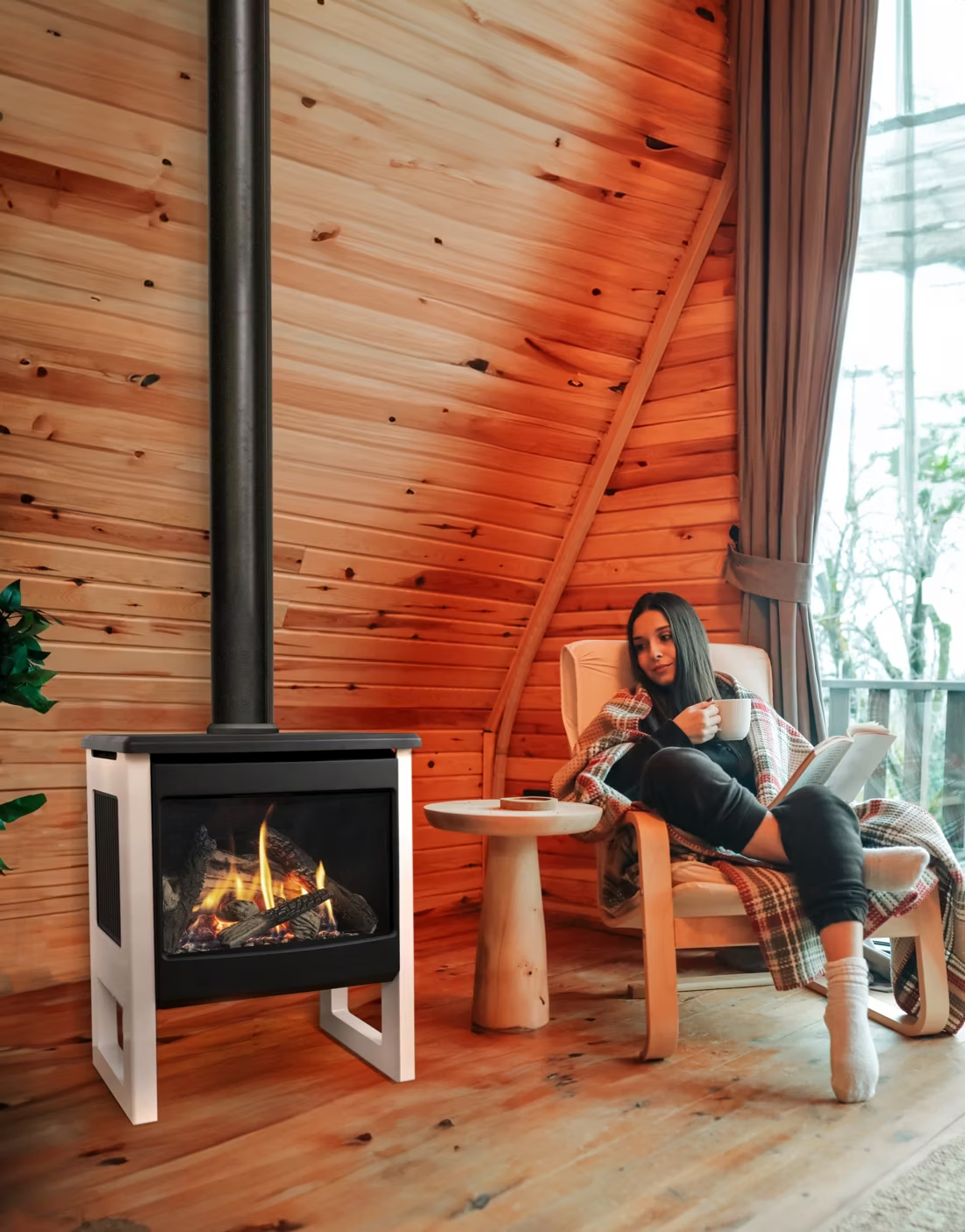
A gas insert is the right call if you already have a masonry fireplace—common in Federal Way's older rambler and split-level stock—since it reuses the existing chimney as a venting path. A built-in gas fireplace is better for new construction, additions, or the newer townhomes and condos near the Commons that were never built with a fireplace at all. A freestanding gas stove is a third option that sits on a small hearth pad and vents through a wall or short chimney run, useful in a room where you don't want to frame in a full fireplace. A local dealer can walk your specific room and tell you which of the three actually fits.
Do I need a permit for a gas fireplace installation in Federal Way?
Yes. Installations within city limits go through the City of Federal Way Building Division, and homes in unincorporated pockets of King County go through the King County Department of Permitting and Environmental Review. Both require a building permit for the appliance and a separate gas permit for any new gas line work, and the gas line itself has to be run by a licensed gas fitter. Most hearth dealers pull these permits as part of the installation, so you're not coordinating inspections yourself.
What's the difference between vented and vent-free gas fireplaces?
Vented (direct-vent) gas fireplaces draw combustion air from outside and exhaust it back outside through a sealed pipe, keeping combustion byproducts out of the house. Vent-free units burn without any outside venting at all. Washington is one of the states that restricts vent-free gas appliances—they're prohibited or tightly limited in many jurisdictions, including much of King County—so nearly every gas fireplace and insert installed in Federal Way is a direct-vent model. That's not a downside here: direct-vent units perform well in the region's mild, damp climate and don't force any tradeoffs on indoor air quality.
How often does a gas fireplace need service in Federal Way?
Plan on an annual inspection, ideally before the wet season sets in around October. A technician checks the burner, pilot assembly, venting, and gas connections, and cleans the glass—the region's long damp stretches can accelerate corrosion on venting components if a unit sits unused for months. Most local gas appliance service providers charge in the $150 to $250 range for a standard annual visit.
Should I choose gas or wood heat in Federal Way?
Federal Way's mild, marine climate—a winter heating need less than half that of Fargo or Bismarck, and winter lows that average around 37°F—means wood is rarely anyone's only heat source here the way it would be east of the Cascades. Douglas fir, red alder, and lodgepole pine are the common local species, and Forest Service cutting permits through Mt. Baker-Snoqualmie or Olympic National Forest run $5 to $20 per cord during the May-to-October season for homeowners who want to self-cut. But between the region's summer wildfire smoke concerns and the sheer convenience of instant heat during a nine-month wet season, gas is the more popular choice for primary and supplemental heating in most Federal Way homes. Wood stoves still show up for backup heat or ambiance in households with easy access to a woodlot.
What's the difference between an insert and a zero-clearance fireplace?
An insert is a fireplace that slides into a pre-existing wood-burning fireplace—if you don't have one, there's nothing to insert it into. A zero-clearance fireplace is built into a framed wall, which makes it the answer for remodels and new construction. Simple test: existing masonry fireplace means insert; blank or framed wall means zero-clearance.
Can I put a TV above my fireplace?
Yes—with an asterisk. Fireplaces are hot and TVs don't like heat. Either put a mantel between them to deflect rising warmth, or choose a fireplace with heat-management technology that creates a cool zone on the wall above—the wall stays around 125 degrees, barely warm, while the room still gets full heat. If you like clean lines and don't want a mantel, heat management is the answer.
Can I install a fireplace myself?
If you're putting a fire in your house on purpose, it's best to work with an expert. Unless you're genuinely experienced in framing, gas line, vent pipe, and the national code on clearances to combustibles, have a professional do it—and ideally the same company that sells you the fireplace, so warranty, service, and liability all live under one roof.
Can a fireplace actually lower my heating bill?
Yes—by creating a comfort zone. A furnace heats every square foot of the house just to warm the one room you're in; a gas fireplace on low burns roughly a sixth of the gas a typical furnace does. Set the furnace around 55–60 degrees as a baseline, then heat the rooms your family actually uses. Families who heat this way commonly save $20–$60 a month.
Nearby Dealers
Hearth shops serving Federal Way and the surrounding area.
Rich's Stoves & Spas
Find your gas fireplace in Federal Way.
Tell us about your home and we'll match you with a trusted local Federal Way dealer and send over a free Project Guide & Parts List—the exact parts, vent kit, and recommended installer for your gas fireplace project.
Find Your Fireplace →