
Warm, clean heat for Burien's damp Puget Sound winters.
Burien's marine climate rarely drops below freezing, but the steady Pacific Northwest chill and short daylight hours make a gas fireplace the easiest way to add real, on-demand warmth. Find the right unit and connect with a trusted local dealer.
Every Project Starts From One of These Five Situations
Mild climate, real demand for instant heat.
Burien sits at just 368 feet in elevation along the west side of King County, inside Seattle's marine climate zone (4C). Winter lows average around 38°F and the area's winter heating load is roughly a quarter of what a place like Duluth or Fargo sees, but enough steady, damp cold from November through March that most homes run some form of heat nearly every day. Gas fireplaces have become the default choice for that kind of climate: no deep freeze to plan around, just consistent, on-demand warmth for a family room or open-concept living space.
Wood stoves are uncommon in Burien itself—dense residential lots, HOA restrictions in many neighborhoods, and Puget Sound Clean Air Agency burn-ban rules during winter inversions make wood a poor fit for most in-city homes, even though the surrounding forests (Mt. Baker-Snoqualmie, Olympic National Forest) still issue cutting permits each May through October. Pellet stoves see similarly limited demand here. Gas sidesteps all of that: most Burien neighborhoods already have natural gas service through Puget Sound Energy, and a direct-vent gas fireplace or insert installs cleanly into an existing masonry fireplace or a new wall without any wood handling, ash, or smoke to manage.
Three steps. No salesperson until you're ready.
Tell us about your project
Your zip code, your situation, and the fuel you're leaning toward—or let the answers point you to one.
See what's actually available
The brands dealers within 100 miles genuinely carry—real options, never a catalog mirage.
Get your dealer & Project Guide
A trusted local dealer, plus the free Project Guide & Parts List that names every component of the job.
Frequently Asked Questions
How much does a gas fireplace installation cost in Burien?
Expect somewhere between $5,000 and $12,000 for a typical Burien installation, with the low end covering a direct-vent gas insert dropped into an existing masonry fireplace that already has a nearby gas line, and the high end covering a new built-in gas fireplace in a remodel that needs framing, venting, and a fresh gas line run from the meter. Homes already on Puget Sound Energy natural gas service tend to land toward the lower end; homes relying on a propane tank or needing a longer gas line run cost more. A local retailer will give you a firm number after seeing your fireplace or wall location in person.
Can I convert my existing wood-burning fireplace to gas?
Yes, and it's one of the more common projects in Burien's older housing stock—plenty of the mid-century ramblers and split-levels around Burien, Riverview, and White Center still have the original open masonry fireplace. A gas insert or gas log set slides into that existing opening, uses the existing chimney (typically relined with a stainless liner for a full insert), and eliminates the wood handling and ash cleanup while keeping the look of the original hearth. Since wood heat sees limited use in Burien to begin with, most homeowners doing this are converting a fireplace that already sits unused most of the year.
Do I need natural gas, or can I use propane?
Most of Burien has natural gas service through Puget Sound Energy, so if your home already has gas appliances—a furnace, water heater, or range—adding a fireplace usually just means running a new branch line to the fireplace location. In the pockets of unincorporated King County or newer developments without gas mains nearby, propane is the standard fallback, using either an existing tank or a new tank set by a local propane supplier. Nearly every gas fireplace on the market can be configured for either fuel; your installer sets the correct orifice and regulator for whichever you have.
Will my gas fireplace still work if the power goes out?
In most cases, yes. Puget Sound windstorms are the more common outage trigger here than deep cold, and most gas fireplaces with intermittent pilot ignition (IPI) run on AA battery backup that kicks in automatically when the power drops—the unit lights and operates normally off the batteries. Valor fireplaces skip the battery question entirely: their pilot assembly generates its own electricity through a thermocouple, so there's no battery to remember or replace. Given how often a fall or winter windstorm knocks out power along the I-5 corridor through Burien, that's worth asking your local retailer about directly.
Gas fireplace vs. gas insert vs. gas stove—what's the difference?
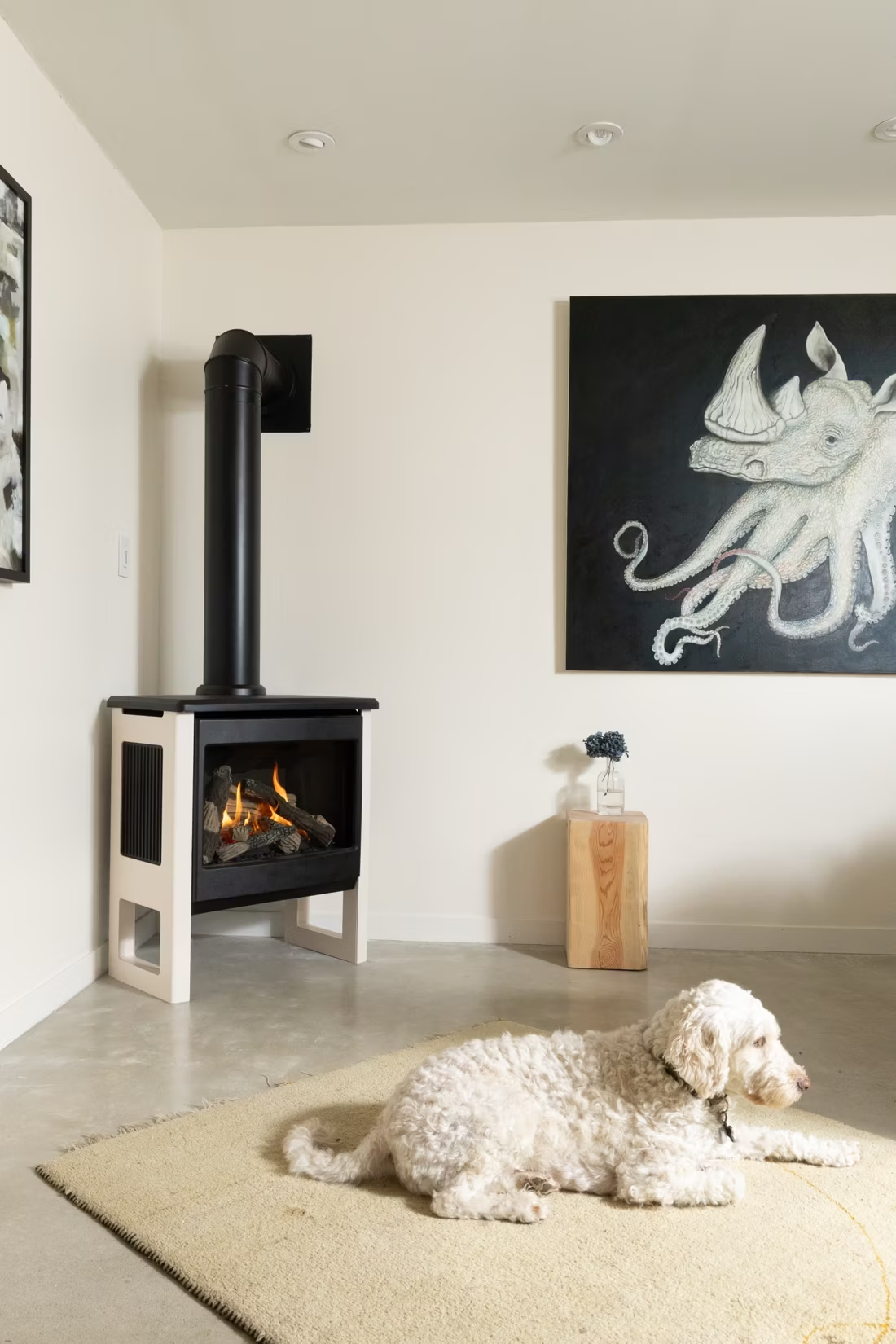
A gas fireplace is a fully framed-in, built-in unit—the right call for new construction or a remodel without an existing fireplace opening. A gas insert is built to slide into an existing masonry fireplace, sealing it up and venting through the existing chimney, which is the more common path in Burien's older homes with an original wood-burning fireplace. A gas stove is a freestanding cabinet-style unit that sits on the floor and vents through a wall or existing chimney, useful in a room with no fireplace at all. Most Burien projects fall into the insert category simply because so much of the housing stock already has a masonry fireplace to work with.
Do I need a permit to install a gas fireplace in Burien?
Yes—the City of Burien's Community Development Department requires both a building permit and a mechanical/gas permit for new gas fireplace installations, and the gas line work itself has to be done or signed off by a licensed gas-fitter. This is one of the practical reasons to work with an established hearth dealer rather than a general handyman: a certified installer pulls the permits, coordinates the gas line and venting inspection, and makes sure the finished install passes without a callback.
Are vent-free gas fireplaces allowed in Washington?
Washington building code limits vent-free (unvented) gas fireplaces more tightly than many states—they're restricted in bedrooms and in some jurisdictions require specific room-volume and ventilation provisions before they're approved at all. For Burien, direct-vent gas fireplaces and inserts are by far the more common and more straightforwardly code-compliant choice: they draw combustion air from outside and exhaust it back outside through a sealed vent pipe, so there's no debate about indoor air quality or square-footage limits. Ask a local retailer to confirm current code specifics before considering a vent-free unit.
How often does a gas fireplace need to be serviced?
Plan on an annual inspection, ideally before the fireplace sees regular use each fall. A qualified technician checks the burner, pilot assembly, gas connections, and venting, and cleans the glass and interior—a much lighter lift than chimney sweeping for a wood-burning unit, but still important, since a fireplace that sits unused for months can develop pilot or ignition issues by the time cold, damp weather arrives. Local gas appliance service providers in the Burien/Southwest King County area typically charge in the $150–$250 range for a standard annual visit.
Gas vs. electric fireplace—which makes more sense in Burien?
Gas gives you real flame, real heat output, and the ability to keep running during a power outage—a genuine advantage given how often Puget Sound windstorms take out power for a few hours at a time. Electric fireplaces, by contrast, plug into a standard outlet, need no venting or gas line at all, and cost far less to install—useful for a condo, an apartment, or a secondary room where running gas line isn't practical. At Seattle City Light's residential rate of roughly 14 cents per kWh, electric units are cheap to operate but produce mostly ambiance and modest supplemental heat rather than a serious heat source. For a primary living space in a single-family Burien home, gas is usually the better long-term fit; for a bedroom, rental unit, or condo, electric is often the more practical answer.
What's the difference between an insert and a zero-clearance fireplace?
An insert is a fireplace that slides into a pre-existing wood-burning fireplace—if you don't have one, there's nothing to insert it into. A zero-clearance fireplace is built into a framed wall, which makes it the answer for remodels and new construction. Simple test: existing masonry fireplace means insert; blank or framed wall means zero-clearance.
Why is a fireplace insert so efficient?
An insert does two things: it seals the chimney completely, so you stop losing air you already paid to heat, and it radiates warmth into the room through the firebox and glass. Most add a heat-exchange fan that pulls cool room air underneath, wraps it around the hot firebox, and pushes it back out warm. Your home is more efficient before you've even lit the first fire.
Does a fireplace add value to my home?
On average, a fireplace adds back to the home about the same amount you spent installing it. Add the monthly savings from heating the rooms you actually use instead of the whole house—often hundreds of dollars a year—and the value case is strong before you even count what a fire does for how your family uses the room.
How much should I budget for a fireplace?
For an average home—covering the fireplace, the vent pipe, and basic installation—a budget between $3,900 and $5,500 gives you a lot of options across wood, gas, and pellet. By the time you add finish work, gas line, and electrical, the average complete installation lands between $5,000 and $12,000 all-in. In a remodel or new build, a good rule is to put about 2.5% of the total project cost toward the fireplace.
Nearby Dealers
Hearth shops serving Burien and the surrounding area.
Rich's Stoves & Spas
Find your gas fireplace in Burien.
Tell us about your home and your existing fireplace or wall space, and we'll match you with a trusted local Burien-area dealer and send over a free Project Guide & Parts List—the exact parts, vent kit, and next steps for your specific installation.
Find Your Fireplace →