
Warm, Clean Heat for Pacific's Rainy Winters.
Instant, low-maintenance warmth for South King County homes along the White River—find the right gas fireplace or insert and get matched with a trusted local dealer.
Every Project Starts From One of These Five Situations
Convenience for a Mild, Marine Climate.
Pacific sits at just 71 feet in elevation along the White River, between Auburn and Sumner in south King County. At climate zone 4C, winters here are mild and wet rather than brutally cold—average winter lows hover around 37°F and the city has a fairly modest overall winter heating load, a fraction of what a place like Fargo, ND or Duluth, MN sees in a comparable season. Nobody in Pacific is heating a home through week-long stretches below zero, but the damp Pacific Northwest chill sinks into older homes fast, and most residents run some form of supplemental heat from October through April.
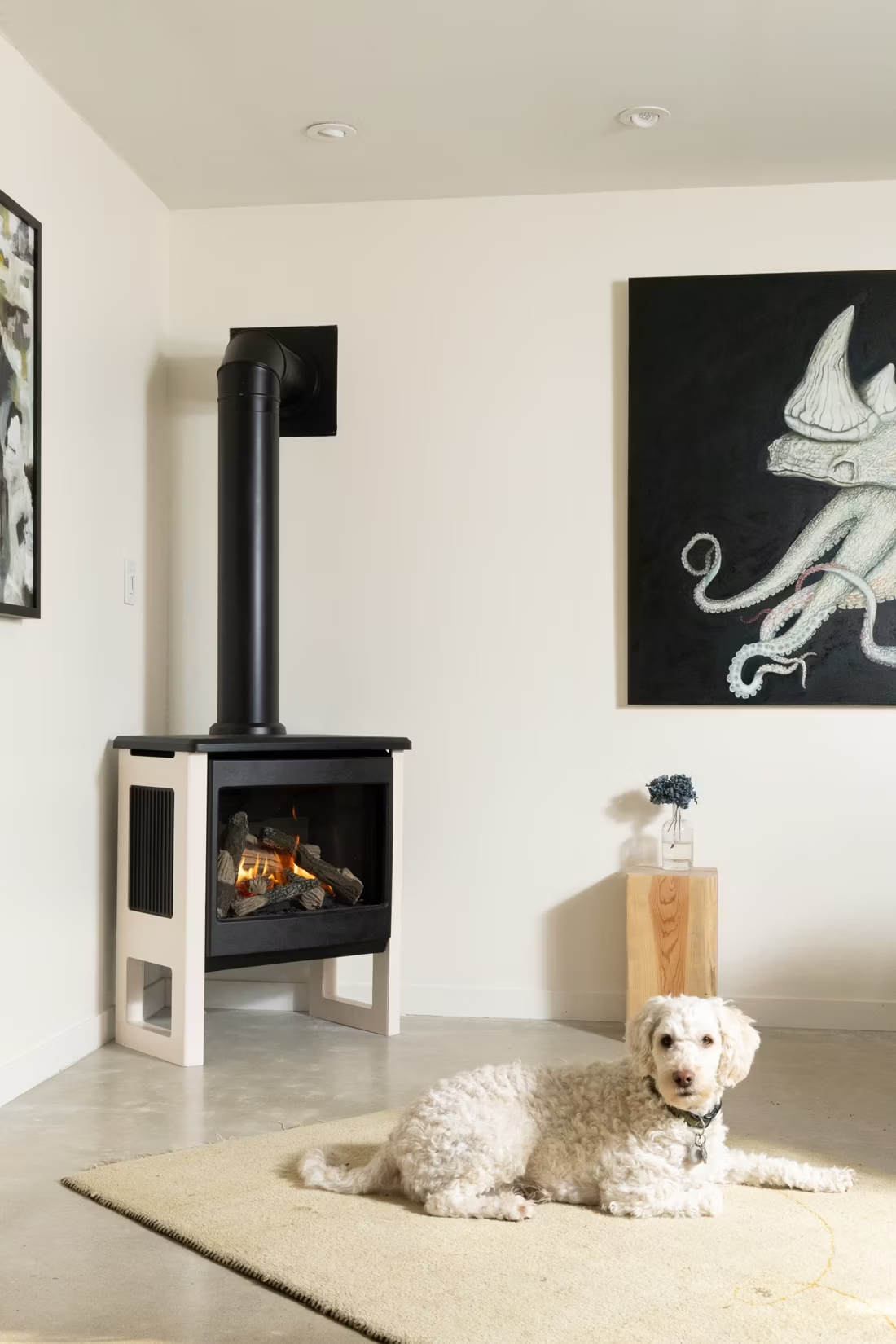
Puget Sound Energy runs natural gas service through much of Pacific alongside its electric lines, which makes a direct-vent gas fireplace an easy add for homes that already have a gas water heater or furnace. A gas unit gives you real, on-demand zone heat in a living room or bonus space without the smoke and ash of a wood stove—a real plus during the late-summer wildfire smoke events that periodically settle over the lowlands here. For homes without existing gas service near the river floodplain, propane remains a straightforward backup fuel option.
Three steps. No salesperson until you're ready.
Tell us about your project
Your zip code, your situation, and the fuel you're leaning toward—or let the answers point you to one.
See what's actually available
The brands dealers within 100 miles genuinely carry—real options, never a catalog mirage.
Get your dealer & Project Guide
A trusted local dealer, plus the free Project Guide & Parts List that names every component of the job.
Frequently Asked Questions
How much does a gas fireplace installation cost in Pacific?
Most gas fireplace and insert installations in the Puget Sound region run somewhere between $3,500 and $10,000, with the spread driven mainly by venting complexity and whether a new gas line has to be run. A direct-vent insert dropped into an existing masonry fireplace with a gas line already nearby sits at the lower end. A new built-in gas fireplace for a remodel or bonus room addition—with framing, a fresh gas line from the meter, and full direct-vent piping—lands toward the higher end. A local hearth dealer will walk your specific space before quoting a firm number.
Can I convert my existing wood-burning fireplace to gas?
Yes, and it's a common project in Pacific's older housing stock near downtown and along the river. A gas insert slides into your existing masonry firebox and vents through a stainless liner run up your current chimney, so you keep the look of your fireplace while gaining real, thermostatically controlled heat and losing the ash and creosote upkeep. Homes that already have a gas water heater or range nearby usually see lower installation costs since the gas line run is shorter.
Do I need natural gas, or should I use propane?
Either can work, but it depends on where in Pacific you're located. Puget Sound Energy serves natural gas along much of the city's core, so if you already have a gas water heater, dryer, or range, adding a fireplace to that line is usually the simplest path. In pockets near the White River floodplain or on the edges of the service area where gas mains haven't been extended, propane with a small tank is the standard workaround—most gas fireplace models can be factory-configured or field-converted for either fuel.
Will my gas fireplace still work if the power goes out?
Most direct-vent gas fireplaces with intermittent pilot ignition (IPI) include a battery backup that keeps the igniter working when PSE power drops during a windstorm—a real consideration in this part of King County, where falling trees can knock out power for a day or more. Valor units take a different approach: their pilot assembly generates its own electricity through a thermocouple, so the fireplace runs with no batteries at all. Either way, ask your installer which ignition system a given unit uses before you buy.
What's the difference between a gas fireplace, gas insert, and gas stove?
A gas fireplace is a fully built-in unit framed into a wall—the right choice for new construction or a remodel without an existing hearth. A gas insert is sized to slide into an existing masonry firebox, which fits a lot of Pacific's older homes with a fireplace that's rarely used. A gas stove is a freestanding, cabinet-style unit that sits on the floor and doesn't require an existing fireplace opening at all. For most homeowners here upgrading a dated wood fireplace, an insert is the straightforward answer.
Do I need a permit to install a gas fireplace in Pacific?
Yes—a building permit and a gas line permit are both required for a new gas fireplace or insert installation, whether through the City of Pacific's building department or King County permitting, depending on your address. The gas line connection itself has to be done by a licensed gas-fitter. Most established hearth dealers coordinate the permit, the gas line, and the final inspection as part of the installation, so you're not left juggling separate trades and paperwork yourself.
Can I install a vent-free gas fireplace in Pacific?
Technically vent-free (unvented) gas fireplaces exist on the market, but Washington's energy code places tight restrictions on them, and most local dealers simply don't stock or recommend them for that reason. Direct-vent gas fireplaces—which pull combustion air from outside and exhaust exhaust gases back outside through a sealed pipe—are the standard here and what nearly every installer in the Puget Sound area will spec. They're safer for indoor air quality and there's no debate about code compliance.
How often does a gas fireplace need to be serviced?
Plan on an annual inspection, ideally before the wet season sets in each fall. A technician checks the burner, pilot assembly, venting, and gas connections, and cleans the glass and interior—a much smaller job than sweeping a wood chimney but just as important for safe operation. Local gas appliance service techs typically charge in the $150 to $250 range for a standard annual check.
Gas or wood—which makes more sense for a home in Pacific?
Wood offers real fire, no dependence on the gas or electric grid, and access to cheap fuel—Douglas fir, red alder, and lodgepole pine are all common locally, and Forest Service cutting permits through the Mt. Baker-Snoqualmie or Olympic National Forest run just $5 to $20 per cord during the May-to-October season. Gas offers instant, no-mess heat with none of the smoke that becomes an issue during regional wildfire smoke events in late summer. Given Pacific's mild 37°F average winter lows, most homeowners here don't need wood as a primary heat source—gas tends to win for everyday convenience, while wood stays popular for ambiance or backup among households near the forested edges of the valley.
Why is a fireplace insert so efficient?
An insert does two things: it seals the chimney completely, so you stop losing air you already paid to heat, and it radiates warmth into the room through the firebox and glass. Most add a heat-exchange fan that pulls cool room air underneath, wraps it around the hot firebox, and pushes it back out warm. Your home is more efficient before you've even lit the first fire.
Can I put a TV above my fireplace?
Yes—with an asterisk. Fireplaces are hot and TVs don't like heat. Either put a mantel between them to deflect rising warmth, or choose a fireplace with heat-management technology that creates a cool zone on the wall above—the wall stays around 125 degrees, barely warm, while the room still gets full heat. If you like clean lines and don't want a mantel, heat management is the answer.
Can I install a fireplace myself?
If you're putting a fire in your house on purpose, it's best to work with an expert. Unless you're genuinely experienced in framing, gas line, vent pipe, and the national code on clearances to combustibles, have a professional do it—and ideally the same company that sells you the fireplace, so warranty, service, and liability all live under one roof.
What is an in-home preview and do I need one?
It's a visit where a hearth professional measures your space, confirms the model you picked actually works in your home, and walks the specs—framing, gas line, venting, finish work—before anything is ordered. Some details you just can't know until you see the house. Never make a down payment without one; it's the single most-skipped step that burns buyers.
Nearby Dealers
Hearth shops serving Pacific and the surrounding area. Every listing shows whether it is a WhyFire partner, a dealer we have verified as authorized for the brands we recommend, or a local business carrying hearth products. No manufacturer pays for placement. How we verify dealers →
Fireside Hearth & Home-Auburn
Rcs Fireplace
Benson, LLC
Dowell Company
Cressy Door & Fireplace
Cascade Fire Solutions
Rich’s Woodstoves & Spas
Chimney And Fireplace Solutions
Rich's For The Home
Rich's Stoves & Spas
Aqua Rec Swimmin Hole And Fireside
Aqua Quip
Good Earth Works
Economy Wiring
Aqua Rec’s Fireplace Shop
Rich’s Woodstoves & Spas
Find your gas fireplace in Pacific.
Tell us about your home and we'll put together a free Project Guide & Parts List—the right gas fireplace or insert, the exact venting parts you'll need, and a trusted local dealer in Pacific to install it.
Find Your Fireplace →