
Instant Heat, No Venting, No Wood Smoke.
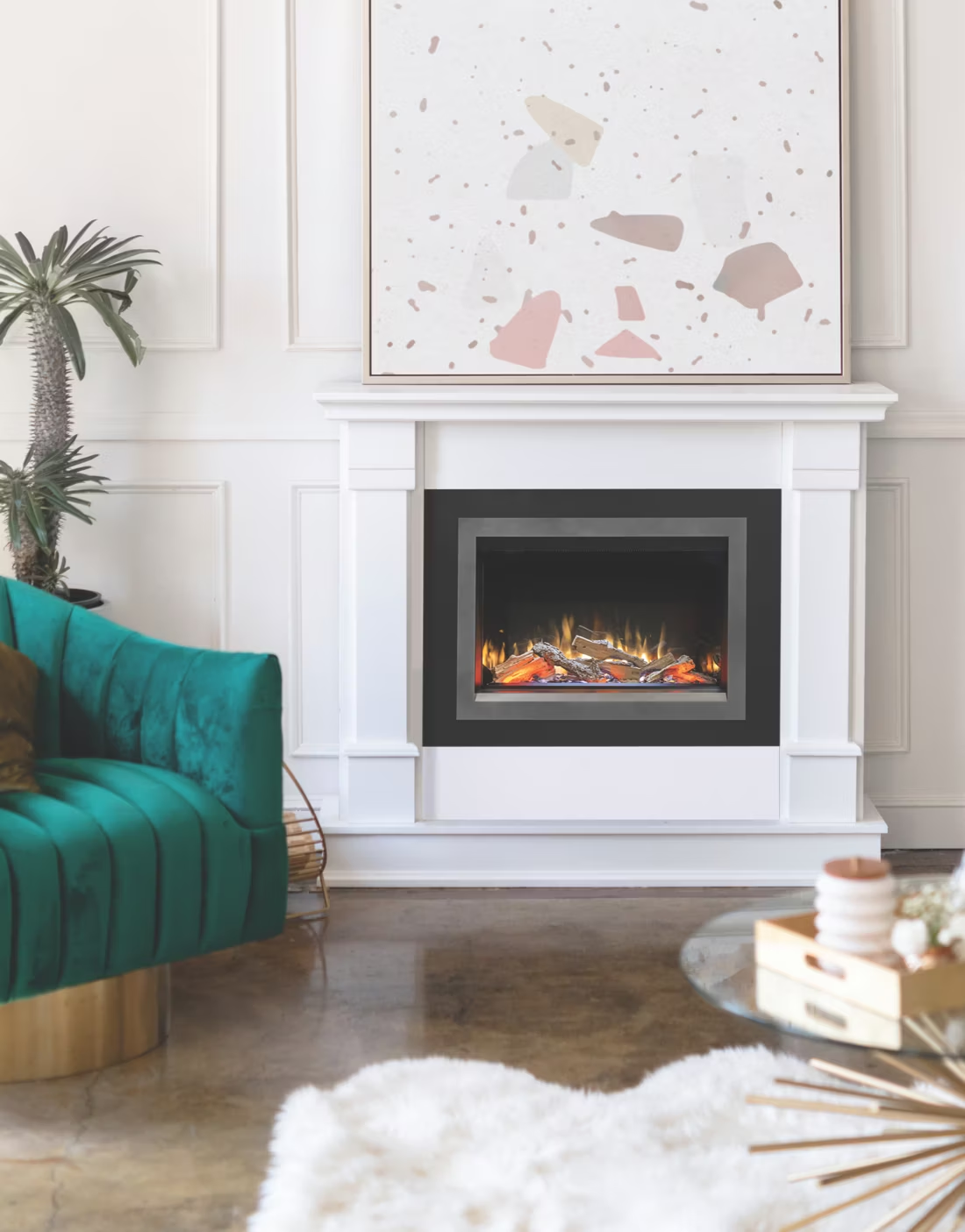
Electric fireplaces and inserts built for Everett's mild Puget Sound winters—plug-in warmth with no chimney, no flue, and no gas line. Find the right unit and connect with a trusted local dealer.
Every Project Starts From One of These Five Situations
Mild winters, modest heat loads, maximum flexibility.
Everett sits at just 8 feet above sea level on Puget Sound, and the marine climate here (zone 4C) is a different animal from the inland Northwest—winter lows average around 35°F and the region has a moderate winter heating season, roughly half the heating load of a place like Duluth, MN sees in a typical winter. That moderate heat load is exactly the situation where electric fireplaces make the most sense: you're rarely fighting single-digit nights, so a 1,500-watt heater built into an electric insert or wall unit can genuinely take the edge off a bedroom, den, or basement without needing a whole-home combustion appliance.
Puget Sound Energy serves electric customers throughout Everett at a residential rate around 14.6 cents per kWh, and most electric fireplaces run on a standard household circuit—no gas line, no masonry, no annual chimney sweep. That also matters in a city with a lot of multi-family housing: downtown Everett's waterfront condos and newer apartment buildings often restrict venting penetrations or gas appliances through HOA rules, and electric units sidestep that entirely. With regional wildfire smoke an occasional summer and fall concern here, some households also simply prefer a heat source that produces zero indoor or outdoor combustion byproducts.
Three steps. No salesperson until you're ready.
Tell us about your project
Your zip code, your situation, and the fuel you're leaning toward—or let the answers point you to one.
See what's actually available
The brands dealers within 100 miles genuinely carry—real options, never a catalog mirage.
Get your dealer & Project Guide
A trusted local dealer, plus the free Project Guide & Parts List that names every component of the job.
Frequently Asked Questions
How much does it cost to install an electric fireplace in Everett?
A basic plug-in electric fireplace insert or freestanding unit typically runs $500 to $1,500 installed, since most just need a standard 120V outlet and a few hours of carpentry to frame or recess the unit. Built-in wall units or larger linear fireplaces set into custom cabinetry run higher, often $1,800 to $4,500, especially if an electrician needs to add a dedicated 20-amp circuit. Because there's no combustion, no flue, and no gas line, electric installs are consistently the least expensive fireplace option available to Everett homeowners—local dealers can usually quote a firm number after seeing photos of the space.
Do I need a permit to install an electric fireplace in Everett?
In most cases, no. A plug-in electric fireplace that uses an existing outlet requires no permit at all—there's no venting, no gas connection, and nothing for the City of Everett Building Department to inspect. If you're having an electrician add a new dedicated circuit or a GFCI-protected outlet for a built-in unit, that electrical work does require a standard electrical permit, which most licensed electricians pull as part of the job. Either way, electric is by far the least permit-intensive fireplace fuel option in Snohomish County.
How much does it cost to run an electric fireplace in Everett?
Using Puget Sound Energy's residential rate of roughly 14.6 cents per kWh, a typical 1,500-watt electric fireplace heater costs about 22 cents per hour of active heating—call it $1 to $2 for a typical evening of use, or $15 to $25 a month if you run it several hours a day through the colder months. If you're just running the flame effect without the heater engaged, most units draw only 30 to 100 watts, which costs pennies per hour. That makes electric one of the cheapest fireplace fuels to operate for the kind of zone heating most Everett homes actually need on top of their existing heat pump or furnace.
What's the difference between an electric fireplace insert, wall-mount, and freestanding stove?
An electric insert is built to slot into an existing masonry or zero-clearance firebox, replacing an old wood or gas unit while reusing the surround and mantel. A wall-mount or linear electric fireplace is designed to be recessed into or hung on a wall as a focal point, common in newer Everett condos and remodels where there's no existing fireplace to work with. A freestanding electric stove looks like a traditional wood stove but plugs in and needs no clearance-to-combustible work beyond keeping it a few inches off the wall. For homes with an existing but underperforming wood-burning fireplace, an insert is usually the simplest upgrade; for new construction or condo units, wall-mount and linear styles are more common.
Will my electric fireplace work during a power outage?
No—electric fireplaces are entirely dependent on grid power, unlike a wood stove burning locally cut Douglas fir or red alder, or a gas fireplace with battery-backed ignition. Puget Sound Energy does see outages in Everett during winter windstorms, so if backup heat during an outage matters to you, electric shouldn't be your only heat source. Many Everett homeowners pair an electric fireplace for everyday convenience and ambiance with a separate wood stove or gas unit as a storm-day backup, particularly in older neighborhoods with mature trees prone to dropping limbs on power lines.
What size electric fireplace do I need for my Everett home?
Most electric fireplace heaters put out around 5,000 to 5,200 BTUs, enough to noticeably warm a room in the 400 to 1,000 square foot range—plenty for a bedroom, den, or open living area addition. Given Everett's moderate heat load (winter lows averaging around 35°F and a moderate winter heating season overall), electric units work well as the primary heat source for a single room or as supplemental heat layered on top of a central heat pump, but they're not designed to replace whole-home heating in a larger house. A local dealer can help match wattage and unit size to your specific room dimensions.
Are electric fireplaces a good fit for condos and apartments in Everett?
Yes, and this is one of the most common use cases locally. Everett has a substantial amount of multi-family housing, including waterfront condo buildings downtown where HOA rules or building codes prohibit new venting penetrations, gas lines, or chimney modifications. Electric fireplaces sidestep all of that—no exterior venting, no gas connection, and no changes to the building envelope—so they're often the only fireplace option that's actually permitted in a rented or HOA-governed unit. Many models are also portable enough to take with you if you move.
Electric vs. wood vs. gas—which is right for my Everett home?
Wood offers the highest heat output and works during power outages, and Snohomish County's Douglas fir and red alder are locally abundant—the Mt. Baker-Snoqualmie National Forest issues cutting permits from May through October at $5 to $20 per cord for those willing to cut their own. Gas delivers instant, consistent heat and can be configured with battery-backup ignition, but requires a gas line and combustion venting. Electric offers the lowest install and running cost, zero combustion byproducts, and no permitting hassle, but it depends entirely on grid power and works best as supplemental heat rather than a primary source in Everett's already-moderate climate. For condo dwellers or anyone prioritizing simplicity and low upfront cost, electric is usually the easiest path.
What safety features should I look for in an electric fireplace?
Look for units with automatic overheat shutoff, cool-touch glass fronts, and a tip-over switch if it's a freestanding model—all standard on most reputable brands sold by local hearth dealers. Because there's no real flame, no embers, and no carbon monoxide risk, electric units are generally considered the safest fireplace option for households with young kids, pets, or renters who can't modify a chimney. They also eliminate the annual chimney fire risk that comes with wood-burning appliances, which matters if the unit will go largely unsupervised in a rental property.
Does an electric fireplace need a vent or chimney?
No—that's its superpower. An electric fireplace needs a wall and an outlet, period. No vent pipe, no gas line, no clearances to design around, which is why it works in bedrooms, offices, apartments, and walls where venting a gas or wood unit would be impractical or impossible. Installation is typically the simplest and least expensive of any fireplace type.
Can I put a TV above my fireplace?
Yes—with an asterisk. Fireplaces are hot and TVs don't like heat. Either put a mantel between them to deflect rising warmth, or choose a fireplace with heat-management technology that creates a cool zone on the wall above—the wall stays around 125 degrees, barely warm, while the room still gets full heat. If you like clean lines and don't want a mantel, heat management is the answer.
Can a fireplace actually lower my heating bill?
Yes—by creating a comfort zone. A furnace heats every square foot of the house just to warm the one room you're in; a gas fireplace on low burns roughly a sixth of the gas a typical furnace does. Set the furnace around 55–60 degrees as a baseline, then heat the rooms your family actually uses. Families who heat this way commonly save $20–$60 a month.
Does a fireplace add value to my home?
On average, a fireplace adds back to the home about the same amount you spent installing it. Add the monthly savings from heating the rooms you actually use instead of the whole house—often hundreds of dollars a year—and the value case is strong before you even count what a fire does for how your family uses the room.
Nearby Dealers
Hearth shops serving Everett and the surrounding area.
Island Gas Piping & Installations, LLC
Electric Service in Everett
An electric fireplace's heater draws about 1,500 watts—pennies per hour at local rates.
Puget Sound Energy Inc
Find your electric fireplace in Everett.
Tell us a bit about your home and we'll match you with the right electric fireplace, insert, or wall unit—plus a free Project Guide & Parts List and a trusted local Everett dealer to install it.
Find Your Fireplace →