
Steady pellet heat for Montgomery County winters.
From Blacksburg to Christiansburg and the New River Valley's rural stretches, Montgomery County sees a long, cold winter heating season and winter lows averaging 22°F. A pellet stove delivers thermostat-controlled warmth without the wood-splitting—find the right unit and connect with a trusted local dealer.
Every Project Starts From One of These Five Situations
Consistent, thermostat-controlled heat for the New River Valley.
Montgomery County sits in Virginia's New River Valley, a Ridge-and-Valley landscape running from Blacksburg (home to Virginia Tech) through Christiansburg and out to smaller communities like Riner, Shawsville, and Elliston. At a Climate Zone 4A classification with a long heating season and winter lows averaging 22°F, the county sees a real heating season—long enough that homeowners want something more automated than tending a firebox through November-to-March, but the region has no air quality nonattainment issues or wood-burning curtailment periods to navigate. That makes the pellet-vs-wood decision here mostly about convenience and control rather than regulation.
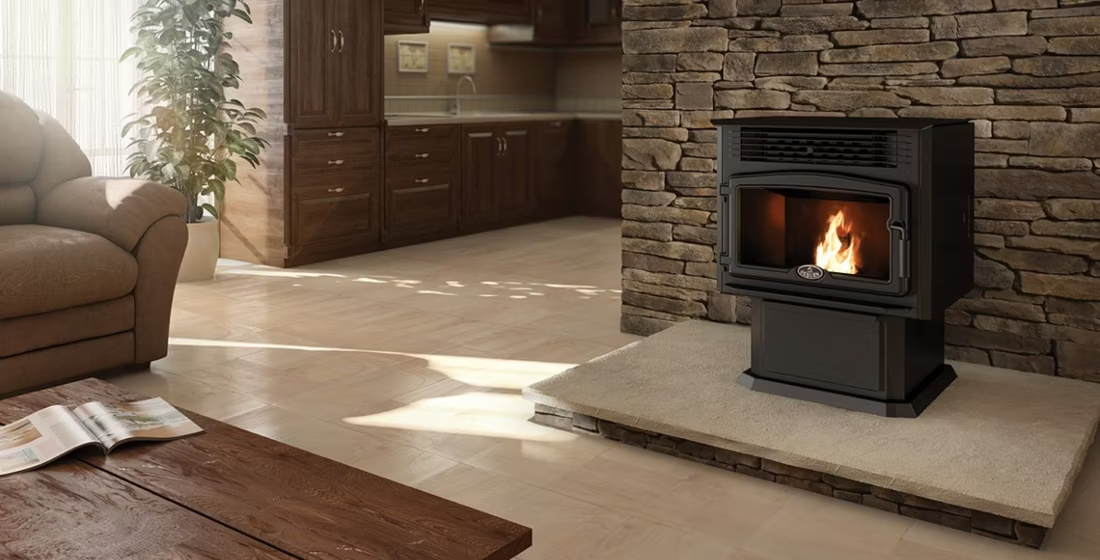
The county is ringed by hardwood forest—oak, hickory, and maple dominate the George Washington & Jefferson National Forest lands that border much of Montgomery County, and that same hardwood base feeds regional pellet production. Homeowners here can typically find bags from Energex, Hamer Pellet Fuel, and Greene Team Pellet Fuel at local hardware and farm supply stores, which keeps pellet costs competitive with self-cut firewood once you factor in labor and storage. A pellet stove or insert gives you a set-and-forget burn, a hopper that runs 24-plus hours on a fill, and venting that's simpler than a masonry chimney—a good fit for both Virginia Tech-area townhomes and larger rural properties out toward Riner.
Three steps. No salesperson until you're ready.
Tell us about your project
Your zip code, your situation, and the fuel you're leaning toward—or let the answers point you to one.
See what's actually available
The brands dealers within 100 miles genuinely carry—real options, never a catalog mirage.
Get your dealer & Project Guide
A trusted local dealer, plus the free Project Guide & Parts List that names every component of the job.
Frequently Asked Questions
How much does a pellet stove installation cost in Montgomery County?
A freestanding pellet stove installation in Montgomery County typically runs $3,000 to $6,000, depending on the unit, whether a new dedicated electrical circuit is needed for the auger and blower, and the length of the vent run through an exterior wall. A pellet insert going into an existing masonry fireplace usually falls in a similar range, since it reuses the existing chimney chase with a smaller-diameter liner rather than requiring new Class A chimney pipe. Homes further out from Blacksburg and Christiansburg—toward Riner or Shawsville—may see a modest travel charge added by installers covering the wider county.
What size pellet stove do I need for my home?
For most Montgomery County homes, a mid-size pellet stove (rated for 1,200–2,000 square feet) covers a main living area or an open-plan floor as supplemental heat. Larger or older farmhouses out past Christiansburg, especially ones without much insulation, often do better with a larger unit or a second zone of heat if the goal is whole-home coverage rather than supplementing a furnace. Because the county has a genuinely long burn season, undersizing shows up quickly as a stove running at full hopper output on the coldest nights without keeping pace—a local dealer can size this correctly during an in-home visit.
Where can I find certified pellet stove installers near me?
Look for installers with NFI (National Fireplace Institute) pellet-specific certification, since pellet appliances have different electrical and venting requirements than wood stoves. Dealers serving Montgomery County generally cover Blacksburg, Christiansburg, and the surrounding New River Valley from a single service area, though homes further from those two towns may involve a small travel fee. Because pellet stoves depend on a dedicated 120V circuit for the auger and combustion blower, it's worth confirming your installer coordinates any needed electrical work rather than leaving that to a separate contractor.
What's the difference between a pellet stove and a pellet insert?
A pellet stove is a freestanding appliance that sits on a hearth pad and vents out through a wall or existing chimney chase—it can go almost anywhere with access to an exterior wall and an outlet. A pellet insert is built to slide into an existing masonry fireplace opening, turning an old wood-burning fireplace into an automated, thermostat-controlled heat source using the existing chimney as the vent chase with a smaller liner run inside it. For Montgomery County homes with an existing masonry fireplace—common in the county's older housing stock around Christiansburg—an insert is usually the more cost-effective route since it reuses infrastructure already in place.
Do I need a permit to install a pellet stove in Montgomery County?
Yes—a building permit is required for a new pellet stove or insert installation through Montgomery County's building permit office, and any new electrical circuit for the appliance may require a separate electrical permit. Most established local dealers handle this paperwork as part of the installation rather than leaving it to the homeowner. Unlike some wood-burning jurisdictions, Montgomery County has no air-quality curtailment periods to work around, so once the permit and inspection are done, there are no seasonal burn restrictions to track.
Will my pellet stove work if the power goes out?
Not without a backup. Pellet stoves rely on electricity to run the auger that feeds fuel and the blower that pushes combustion air and distributes heat, so a power outage shuts the stove down even with a full hopper. For Montgomery County homeowners in more rural stretches of the county—where outages during ice storms can run longer than in Blacksburg or Christiansburg proper—a small battery backup or generator sized for the stove's low wattage draw is worth discussing with your installer. If uninterrupted heat during outages is the top priority, a wood stove or wood insert is worth comparing against pellet before you commit.
How often does a pellet stove need cleaning and maintenance?
Plan on cleaning the burn pot and ash pan every few days to weekly during regular use, a deeper cleaning of the exhaust venting and hopper roughly every one to two tons of pellets burned, and a full professional service once a year—typically before the heating season starts. A Montgomery County home burning pellets as primary heat through the long, cold winter season will need more frequent attention than one running the stove for weekend supplemental heat. Local dealers who sell pellet stoves generally also offer annual service, and it's worth scheduling that visit in late summer before the fall rush.
Where can I buy wood pellets locally in Montgomery County?
Regional brands including Energex, Hamer Pellet Fuel, and Greene Team Pellet Fuel are commonly stocked at hardware and farm supply retailers serving Blacksburg and Christiansburg, and most stove dealers can point you toward the closest reliable source or set up a standing order before the season starts. For a Montgomery County home using a pellet stove as primary heat through a full winter, expect to burn somewhere in the range of 2 to 3 tons; supplemental use in one room typically runs closer to a ton or less. Buying pellets in early fall, before cold weather drives up local demand, tends to get better selection and pricing.
Pellet stove vs. wood stove—which is right for my Montgomery County home?
Wood stoves burn cordwood cut from local hardwoods—oak, hickory, and maple are the dominant species around here, and Forest Service permits through the George Washington & Jefferson National Forest run about $20 per cord during the May-to-October cutting season, making self-supplied wood heat genuinely affordable. Wood also keeps working during a power outage, which matters in the county's more rural stretches. Pellet stoves trade that off for convenience: a hopper you fill once a day or two, consistent thermostat-controlled output, and less physical labor overall, but they need electricity to run and depend on a steady retail pellet supply rather than a cut-your-own option. Homeowners who value hands-off, even heat tend to land on pellet; those with land access and a tolerance for wood handling often still prefer wood.
Why is a fireplace insert so efficient?
An insert does two things: it seals the chimney completely, so you stop losing air you already paid to heat, and it radiates warmth into the room through the firebox and glass. Most add a heat-exchange fan that pulls cool room air underneath, wraps it around the hot firebox, and pushes it back out warm. Your home is more efficient before you've even lit the first fire.
How often does a pellet stove need cleaning?
A clean pellet stove is a happy pellet stove. Plan on cleaning the burn pot about once a week when you're burning regularly—ash and clinkers gum up the air holes just like a pellet barbecue. Most pellet stove problems trace back to skipped cleaning that nobody explained up front. Some designs make it easy with a trapdoor burn pot: pull a lever and the gunk drops into the ash pan.
How much should I budget for a fireplace?
For an average home—covering the fireplace, the vent pipe, and basic installation—a budget between $3,900 and $5,500 gives you a lot of options across wood, gas, and pellet. By the time you add finish work, gas line, and electrical, the average complete installation lands between $5,000 and $12,000 all-in. In a remodel or new build, a good rule is to put about 2.5% of the total project cost toward the fireplace.
Does a fireplace add value to my home?
On average, a fireplace adds back to the home about the same amount you spent installing it. Add the monthly savings from heating the rooms you actually use instead of the whole house—often hundreds of dollars a year—and the value case is strong before you even count what a fire does for how your family uses the room.
Stove and Fireplace Dealers in Montgomery County
Listings include WhyFire partner dealers, dealers we have verified as authorized for the brands we recommend, and established local businesses that carry hearth products. Every listing shows which one it is. The ones marked Preferred run on WhyFire's software, so they can show you real pricing and book your appointment right here. No manufacturer pays for placement. How we verify dealers →
New River Building Supply
Air Tech Home & Business
McGrady Perdue Heating & Cooling
Blue Ridge Heating And Air
Radford Chimney Works
Clark Gas & Oil Company
Skyline Hearth & Fire
Pellet Brands Stocked Around Montgomery County
Manufacturers will point you to the nearest stocking dealer.
Find your pellet stove in Montgomery County.
Tell us a bit about your home and we'll match you with a trusted local dealer and send over a free Project Guide & Parts List—a plan for your pellet project with the exact parts, including the vent kit, and the dealer we recommend for your part of Montgomery County.
Find Your Fireplace →