
Warmth for your Blacksburg or Christiansburg home—no venting required.
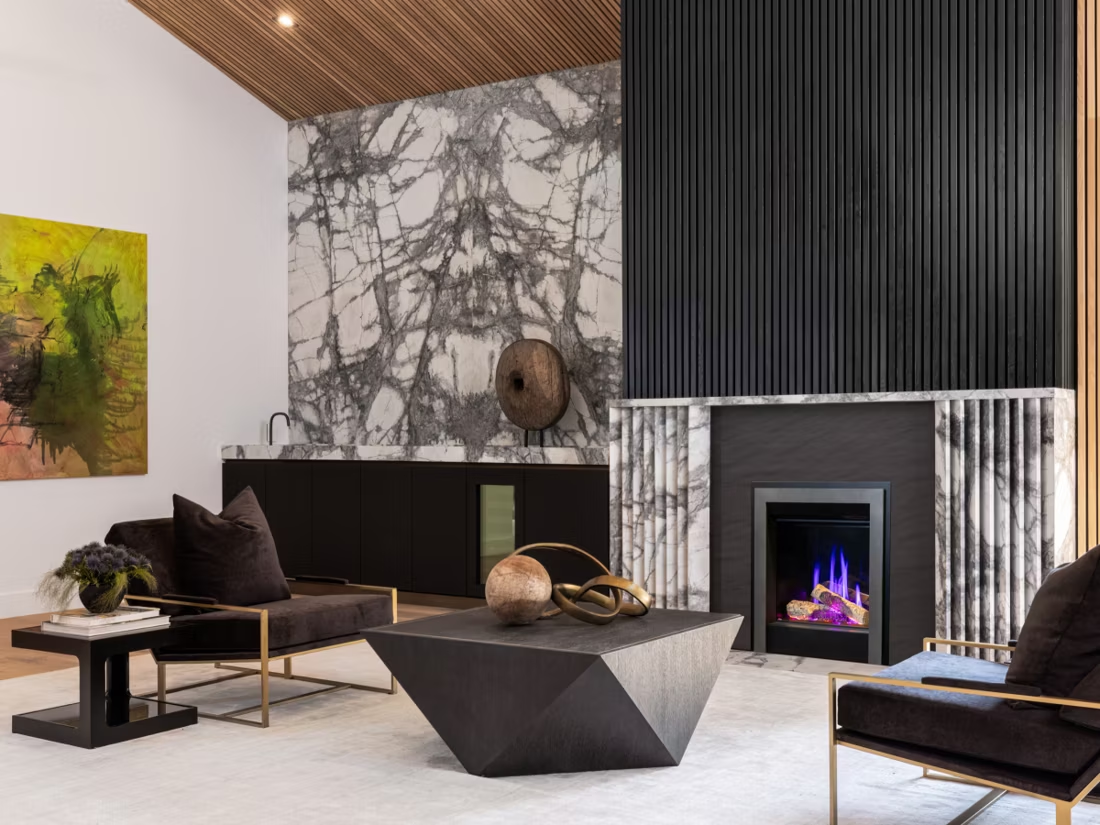
From Virginia Tech-area rentals to farmhouses outside Riner, electric fireplaces add real zone heat and ambiance to Montgomery County homes without a chimney, gas line, or wood supply. Find the right unit and connect with a trusted local dealer.
Every Project Starts From One of These Five Situations
Electric fireplaces fit Montgomery County's mix of old and new homes.
Montgomery County sits in climate zone 4A with average winter lows around 22°F and a winter chill that runs a bit above the national average—cold enough to matter, but not the sustained deep-freeze of the Upper Midwest or Rockies. That moderate profile is exactly where electric fireplaces earn their keep: as zone heat for a home office, finished basement, or main living room that supplements a central heat pump rather than replacing it. Around Virginia Tech in Blacksburg, a large share of housing is rental stock where landlords can't run a gas line or build a chimney—a plug-in or built-in electric unit solves that instantly.
Montgomery County also has plenty of older housing stock in downtown Blacksburg and Christiansburg with existing masonry fireplaces that no longer see regular wood use. An electric insert drops into that opening in an afternoon, with no liner, no venting, and no combustion byproducts to manage—a straightforward upgrade for a house that still wants the look of a fire. Appalachian Power (AEP) serves most of the county's electric accounts, and because these units run on a standard household circuit or a single dedicated 20-amp line, there's far less coordination involved than with a wood or gas project. For homeowners who'd rather not deal with cutting permits through the George Washington & Jefferson National Forest or scheduling gas-line inspections, electric is the low-friction option.
Three steps. No salesperson until you're ready.
Tell us about your project
Your zip code, your situation, and the fuel you're leaning toward—or let the answers point you to one.
See what's actually available
The brands dealers within 100 miles genuinely carry—real options, never a catalog mirage.
Get your dealer & Project Guide
A trusted local dealer, plus the free Project Guide & Parts List that names every component of the job.
Frequently Asked Questions
How much does an electric fireplace installation cost in Montgomery County?
Plug-in electric fireplaces and freestanding stoves that run off an existing outlet typically cost $400 to $900 installed, since there's no new wiring involved beyond mounting the unit. Built-in wall or insert models that require a dedicated 20-amp circuit run higher, often $1,000 to $1,500, especially in older Blacksburg or Christiansburg homes where a licensed electrician has to route new wire through plaster or knob-and-tube-era walls. Custom mantel surrounds add to the total but aren't required for the unit to function.
Do I need a permit to install an electric fireplace in Montgomery County?
A simple plug-in unit generally doesn't require a permit since it's treated like any other appliance on an existing circuit. If your installation calls for a new dedicated circuit—common with larger built-in or wall-mount units—an electrical permit through Montgomery County's building inspections process is typically required, and the work should be done by a licensed electrician. Most local dealers can tell you upfront whether your chosen unit needs new wiring before you buy.
Will an electric fireplace actually heat my room, or is it just for looks?
Most electric fireplaces put out around 1,500 watts (roughly 4,600–5,000 BTU), which is enough to noticeably warm a single room—a home office, bedroom, or den—but not a whole house. For Montgomery County's moderate winters, with average lows around 22°F, that's a realistic amount of supplemental heat to take the load off a central heat pump during shoulder-season cold snaps. On the coldest nights of the year, you'll still want your primary heating system running; think of the electric unit as zone heat and ambiance, not a furnace replacement.
What's the difference between an electric insert, a wall-mount unit, and an electric stove?
An electric insert is built to slide into an existing masonry fireplace opening, which makes it the natural choice for Christiansburg and Blacksburg homes with a fireplace that's gone unused for years. A wall-mount or built-in unit is framed into a wall like a flat-screen TV, popular in newer construction and additions where there's no existing hearth. An electric stove is a freestanding cabinet-style unit that can go almost anywhere with an outlet nearby, which makes it a good fit for apartments, rental units near campus, or rooms where you don't want to modify the wall at all.
What electric fireplace brands are available through local dealers?
Local hearth dealers serving Montgomery County typically carry established electric lines such as Dimplex, Napoleon, and Touchstone, covering everything from budget-friendly plug-in inserts to higher-end built-ins with realistic flame technology and heat management features. Availability varies by dealer, so it's worth confirming which lines a given shop stocks and services locally rather than assuming every brand is carried everywhere in the New River Valley.
I have an old masonry fireplace in my Blacksburg home that I never use—can I convert it to electric?
Yes, and it's one of the more common projects for older housing near downtown Blacksburg and Christiansburg. An electric insert fits directly into the existing firebox opening without needing a chimney liner, new venting, or any structural work—the existing masonry stays exactly as it is, and the flue can simply remain closed off. This preserves the historic look of the fireplace while giving you a working heat source and flame effect with none of the chimney maintenance a wood-burning setup would require.
Will my electric fireplace still work during a power outage?
No—electric fireplaces are entirely dependent on grid power, and unlike a battery-backed gas unit, most models have no fallback when the electricity is out. Ice storms and downed lines do periodically knock out Appalachian Power service in parts of the New River Valley, particularly in more rural stretches of the county outside Blacksburg and Christiansburg. If backup heat during outages is a priority, pair an electric fireplace with a wood stove or generator rather than relying on it as your only heat source.
What does it cost to run an electric fireplace day to day?
At Appalachian Power's typical residential rate, running a standard 1,500-watt electric fireplace on high costs somewhere around 15 to 20 cents an hour, or roughly $1.50 to $2.00 for an evening of use. Most units let you run the flame effect without heat, which draws only a few watts and costs pennies—a common setting for homeowners who want the ambiance without the added electric bill during Montgomery County's milder fall and spring evenings.
Electric vs. wood—which makes more sense for my Montgomery County home?
Wood has deep roots here—oak, hickory, and maple are all common locally, and cutting permits through the George Washington & Jefferson National Forest run about $20 per cord during the May-to-October season, making self-supplied wood heat genuinely affordable for rural homeowners with a truck and a chainsaw. But wood requires a chimney, storage space, and regular tending, which doesn't work for condos, apartments near Virginia Tech, or homeowners who just want supplemental warmth without the labor. Electric wins on simplicity and zero maintenance; wood wins on real heat output and functioning during power outages. Many Montgomery County households end up using both—wood as a primary or backup heat source, electric for quick, no-fuss warmth in a home office or bedroom.
Can I put a TV above my fireplace?
Yes—with an asterisk. Fireplaces are hot and TVs don't like heat. Either put a mantel between them to deflect rising warmth, or choose a fireplace with heat-management technology that creates a cool zone on the wall above—the wall stays around 125 degrees, barely warm, while the room still gets full heat. If you like clean lines and don't want a mantel, heat management is the answer.
Do electric fireplaces actually produce heat?
Yes—most put out around 4,800–5,000 BTUs from a standard outlet, which comfortably warms a bedroom, office, or den as a comfort-zone heater. What they won't do is carry a whole house the way wood, gas, or pellet can. Think of electric as ambiance-first with honest supplemental heat: flames on with no heat in July, flames plus warmth in January.
What is an in-home preview and do I need one?
It's a visit where a hearth professional measures your space, confirms the model you picked actually works in your home, and walks the specs—framing, gas line, venting, finish work—before anything is ordered. Some details you just can't know until you see the house. Never make a down payment without one; it's the single most-skipped step that burns buyers.
Can I install a fireplace myself?
If you're putting a fire in your house on purpose, it's best to work with an expert. Unless you're genuinely experienced in framing, gas line, vent pipe, and the national code on clearances to combustibles, have a professional do it—and ideally the same company that sells you the fireplace, so warranty, service, and liability all live under one roof.
Stove and Fireplace Dealers in Montgomery County
Listings include WhyFire partner dealers, dealers we have verified as authorized for the brands we recommend, and established local businesses that carry hearth products. Every listing shows which one it is. The ones marked Preferred run on WhyFire's software, so they can show you real pricing and book your appointment right here. No manufacturer pays for placement. How we verify dealers →
New River Building Supply
Air Tech Home & Business
McGrady Perdue Heating & Cooling
Blue Ridge Heating And Air
Radford Chimney Works
Clark Gas & Oil Company
Skyline Hearth & Fire
Find your electric fireplace in Montgomery County.
Tell us a bit about your home and we'll match you with the right electric fireplace, insert, or wall unit—plus a free Project Guide & Parts List covering the wiring requirements and your recommended local dealer.
Find Your Fireplace →