
Find the Right Fireplace for Your New River Valley Home.
Wood, gas, pellet, and electric fireplace resources for every city and rural community in Montgomery County—from Blacksburg and Christiansburg out to Riner and Elliston. Find the right unit and connect with a trusted local hearth retailer.
Every Project Starts From One of These Five Situations
Four-season heating in Virginia's New River Valley.
Montgomery County sits in the foothills of the Blue Ridge and Alleghany ranges in southwestern Virginia, with the New River cutting through the middle of it. Climate zone 4A puts it in mixed-humid territory—winters are real but nowhere near as brutal as places like Burlington, VT, where the heating season runs far longer and colder. Here, the county's winter heating load is moderate, with winter lows near 22°F, so the season is long enough to matter but mild enough that most homes rely on a primary heat source supplemented by a fireplace or stove rather than the other way around. Oak, hickory, and maple dominate the local hardwood mix, and firewood permits through the George Washington & Jefferson National Forest are a common way locals stock a woodpile for under $50 a cord in cutting fees.
What you'll find on this hub: hearth retailers, service technicians, and fuel suppliers serving every community in the county—from Blacksburg, home to Virginia Tech and a large renter population that leans toward gas and electric units, to Christiansburg along the Route 460 corridor, and out to Riner, Shawsville, Elliston, and McCoy along the New River. Pick your fuel below to drill into specifics—local dealers, installation costs, recommended units, and the resources that match your project. Whether you're heating a farmhouse near Riner or a townhouse in downtown Blacksburg, this is the starting point.
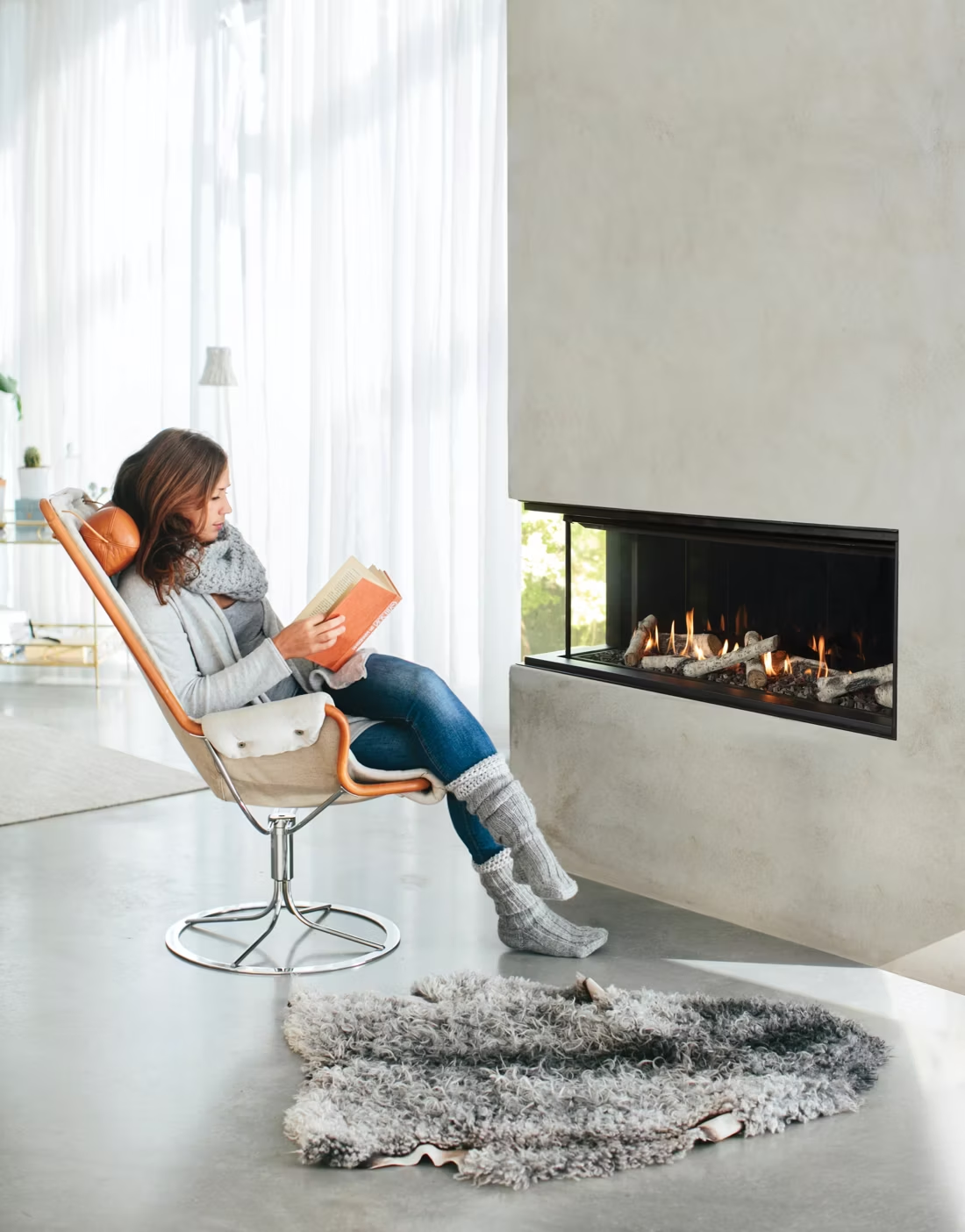
Four fuels. One honest answer for Montgomery County.
Three steps. No salesperson until you're ready.
Tell us about your project
Your zip code, your situation, and the fuel you're leaning toward—or let the answers point you to one.
See what's actually available
The brands dealers within 100 miles genuinely carry—real options, never a catalog mirage.
Get your dealer & Project Guide
A trusted local dealer, plus the free Project Guide & Parts List that names every component of the job.
Frequently Asked Questions
Which fuel works best in Montgomery County?
It depends on the home and the household. Wood remains a strong choice in the more rural parts of the county—oak, hickory, and maple are all locally abundant, George Washington & Jefferson National Forest cutting permits keep fuel costs down, and a modern EPA-certified stove or insert can carry a home through the coldest stretches without relying on the grid. Gas is popular in Blacksburg and Christiansburg, where natural gas service reaches many neighborhoods and propane fills in elsewhere—it's the low-maintenance option for busy households and student rentals near Virginia Tech. Pellet is a solid middle ground, with regional brands like Energex, Hamer Pellet Fuel, and Greene Team Pellet Fuel keeping supply local and steady. Electric works well as a supplemental unit in bedrooms, basements, or apartments, though with a moderate winter heating load it's rarely anyone's sole heat source. Most homes here end up with a primary wood, gas, or pellet unit and an electric unit somewhere secondary.
Do I need a permit to install a fireplace in Montgomery County?
In most cases, yes. New wood stoves, wood inserts, gas fireplaces, gas inserts, gas stoves, and pellet stoves typically require a building permit, and gas installations need a separate gas line permit handled by a licensed gas-fitter. If you're within Blacksburg or Christiansburg town limits, permits usually go through the town's own building office rather than the county; in unincorporated parts of Montgomery County, they route through the county building department. Electric fireplaces generally skip the permit process unless you're doing a built-in installation that involves new wiring or a dedicated circuit. Most local hearth retailers handle this paperwork as part of the installation, so it's rarely something homeowners have to navigate solo.
Are there air quality restrictions on wood burning in Montgomery County?
No—unlike counties that sit in valleys or basins prone to winter inversions, Montgomery County doesn't have a wood-smoke nonattainment designation or seasonal burn advisories. There's no local equivalent of the curtailment-day restrictions you'd find in parts of the West. That said, new wood stove installations still need to meet current EPA emissions standards, and a well-seasoned load of local oak or hickory (dried at least 6-12 months) will always burn cleaner and hotter than green wood, regardless of any regulation.
Can one local hearth retailer handle all four fuel types?
Many of the larger retailers along the Blacksburg-Christiansburg corridor carry three or four fuel types, which is convenient if you want to compare wood, gas, pellet, and electric side by side before deciding. Smaller shops and rural suppliers tend to specialize—some focus almost entirely on wood and pellet stoves, while others lean toward gas fireplace installs for newer construction. If you're not yet sure which fuel fits your home, a multi-fuel dealer with working showroom displays is generally the easiest starting point, since you can see the differences in person rather than guessing from photos.
How does service work in rural areas of Montgomery County?
Most chimney sweeps and gas techs are based near Blacksburg or Christiansburg and travel out to Riner, Shawsville, Elliston, and McCoy for service calls. Expect a modest travel fee for the farther-flung addresses, and know that scheduling gets easier in late summer and early fall—booking your annual sweep or gas inspection in September or October, before the first cold snap, beats trying to get someone out during a January cold spell when every technician in the New River Valley is backed up.
What's the typical cost range for fireplace installation across all fuel types in Montgomery County?
Ranges vary by fuel. Wood stove or insert installation: roughly $4,000-$8,500 for a typical retrofit into an existing masonry chimney, more if new venting or a full liner is needed. Gas fireplace, insert, or stove: about $4,000-$10,000 depending on whether you're tapping existing gas service or running new line and venting. Pellet stove or insert: generally $4,000-$7,000 installed. Electric fireplace: $200-$3,000 for the unit itself, plus $300-$1,000 in labor unless it's a simple plug-and-play wall or insert model. For details tied to a specific fuel, see the county + fuel pages above.
What is an in-home preview and do I need one?
It's a visit where a hearth professional measures your space, confirms the model you picked actually works in your home, and walks the specs—framing, gas line, venting, finish work—before anything is ordered. Some details you just can't know until you see the house. Never make a down payment without one; it's the single most-skipped step that burns buyers.
How much should I budget for a fireplace?
For an average home—covering the fireplace, the vent pipe, and basic installation—a budget between $3,900 and $5,500 gives you a lot of options across wood, gas, and pellet. By the time you add finish work, gas line, and electrical, the average complete installation lands between $5,000 and $12,000 all-in. In a remodel or new build, a good rule is to put about 2.5% of the total project cost toward the fireplace.
What are the biggest mistakes people make buying a fireplace?
Five come up constantly: budgeting for the unit but not the full job (vent, gas line, electrical, finish work); drowning in options instead of starting from style and fuel; buying without an in-home preview; handing installation to a handyman instead of a pro; and giving up out of sheer indecision. Every one is avoidable with a clear plan—step one, step two, step three.
Does a fireplace add value to my home?
On average, a fireplace adds back to the home about the same amount you spent installing it. Add the monthly savings from heating the rooms you actually use instead of the whole house—often hundreds of dollars a year—and the value case is strong before you even count what a fire does for how your family uses the room.
Hearth Dealers in Montgomery County
Find your fireplace in Montgomery County.
Tell us about your home and we'll match you with a trusted local dealer and send over a free Project Guide & Parts List—the exact parts, including the vent kit, and the dealer we'd recommend for your project.
Find Your Fireplace →