
Pellet Heat Is Uncommon in Christiansburg—Here's How to Get It Right.
Christiansburg's moderate New River Valley winters and well-established gas and electric grid mean pellet stoves are a genuine niche here. For the homeowner who still wants one, we'll match you with a dealer who actually stocks and installs them correctly.
Every Project Starts From One of These Five Situations
Christiansburg leans on gas and electric, not pellets.
Christiansburg sits at 2,061 feet in Montgomery County's New River Valley, part of Climate Zone 4A with a moderate winter heating season and an average winter low near 23°F. That's a real winter, but a moderate one compared to genuinely cold-climate markets like Duluth, MN or Burlington, VT—and it hasn't produced the kind of entrenched solid-fuel culture you see in colder, more rural pockets of Appalachia. Natural gas service and reliable grid electric from Appalachian Power Co and Craig-Botetourt Electric Cooperative cover most of the town's growing subdivisions, many built up alongside nearby Blacksburg and Virginia Tech, and most new construction here is piped or wired for gas and electric heat rather than framed for a solid-fuel appliance.
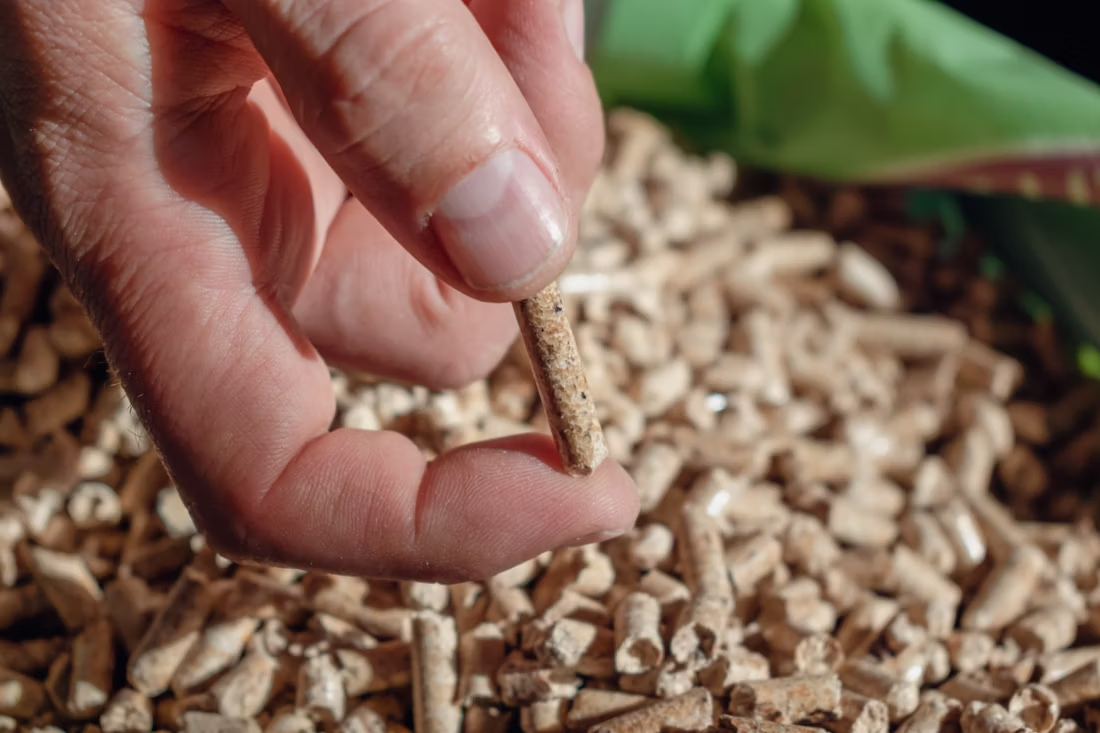
That's why pellet stoves show up here in smaller numbers than in the mountains further west or north—but they haven't disappeared. A handful of Christiansburg and outlying Montgomery County homeowners still choose a pellet unit for hopper-fed convenience, as backup heat during winter storms that can knock out power lines in the New River Valley, or simply because they don't want to process and stack oak, hickory, or maple firewood. Regional pellet brands like Energex, Hamer Pellet Fuel, and Greene Team Pellet Fuel are available through hearth dealers serving the broader Blacksburg-Roanoke corridor, even if you won't find pallets of them at every hardware store in town. Because the market is thin, finding an installer who genuinely knows pellet venting and hopper setups takes more legwork than finding a gas fireplace dealer—which is exactly where matching with the right local pro matters most.
Three steps. No salesperson until you're ready.
Tell us about your project
Your zip code, your situation, and the fuel you're leaning toward—or let the answers point you to one.
See what's actually available
The brands dealers within 100 miles genuinely carry—real options, never a catalog mirage.
Get your dealer & Project Guide
A trusted local dealer, plus the free Project Guide & Parts List that names every component of the job.
Frequently Asked Questions
Are pellet stoves actually common in Christiansburg?
Not really, and we won't pretend otherwise. Pellet is flagged as a niche fuel choice for this area—most Christiansburg homes run on natural gas or electric heat, and the town's newer subdivisions near Blacksburg were largely built with those systems in mind rather than solid-fuel appliances. That said, a small number of homeowners, especially on larger rural lots in Montgomery County, still install pellet stoves for backup heat during outages or as a lower-maintenance alternative to a wood stove. If that's you, a local dealer with real pellet experience is worth seeking out specifically, since not every hearth shop in the New River Valley stocks them.
How much does a pellet stove installation cost in Christiansburg?
Because pellet installs are uncommon locally, there isn't a standardized local price the way there is for gas fireplace conversions here. Expect the same general cost drivers as anywhere: the stove itself, whether you need new venting through an exterior wall, and any hearth pad or clearance work. Given the thin local dealer network, plan on a dealer serving the broader Blacksburg-Roanoke corridor providing your quote after an in-home look at your space, rather than a stock price you'll find advertised locally.
Where can I buy pellets locally in Christiansburg?
You won't find pallets of pellet fuel stacked at every hardware store the way you would in a market where pellet stoves are standard. Regional brands like Energex, Hamer Pellet Fuel, and Greene Team Pellet Fuel are available through hearth dealers and farm supply retailers serving the wider New River Valley and Roanoke area. Because demand is lower here, it's worth buying your season's supply early in fall rather than assuming you can restock mid-winter on short notice.
Will my pellet stove work during a power outage?
This is the question worth asking before you buy, because it's the one place pellet loses to wood in Christiansburg's context. Pellet stoves need electricity to run the auger and combustion blower, so a stove alone won't function if Appalachian Power or Craig-Botetourt Electric Cooperative lines go down in an ice storm. A small battery backup or inverter generator solves this, and most local installers can recommend a compatible setup. If reliable heat during multi-day outages is your top priority, a wood stove using local oak or hickory is worth weighing against pellet before you commit.
Pellet vs. gas—which is right for my Christiansburg home?
Gas is the standard, well-supported choice here, with established natural gas infrastructure and dealers throughout Christiansburg and Blacksburg who install and service gas fireplaces and inserts routinely. Pellet offers a self-feeding solid-fuel option with a real flame and lower fuel cost per BTU, but it depends on electricity to run and on a thinner local supply chain for fuel and parts. For most Christiansburg homeowners, gas will be the simpler, better-supported path; pellet makes sense mainly for those who specifically want a solid-fuel appliance without the labor of tending cordwood, and who've already found a dealer who can properly support one.
Do I need a permit to install a pellet stove in Christiansburg?
Yes—a building permit is required for a new solid-fuel appliance installation, handled through Montgomery County or the Town of Christiansburg's building department depending on your property's location. The permit process covers hearth pad clearances, venting through the wall or roof, and inspection of the finished install. Because pellet stoves are less common here, it's worth confirming with your installer that they've pulled this specific type of permit before, since the inspector may see fewer pellet installs than gas or HVAC permits in a given year.
What size pellet stove do I need for a Christiansburg home?
Christiansburg's Zone 4A climate and moderate winter heating season call for less raw heating capacity than a harsher cold-climate market—you're not sizing for the kind of sustained sub-zero stretches you'd plan around in Burlington, VT or Bismarck, ND. Most single-family homes here do fine with a small to mid-size pellet stove (rated for 1,000–1,800 sq ft) used as supplemental or zone heat rather than a whole-house primary system, since gas or electric heat is already doing the bulk of the work. A local dealer can size it properly based on your home's insulation and layout during an in-home visit.
Pellet vs. wood—which is right for my Christiansburg home?
Both are niche choices in Christiansburg, but they suit different homeowners. Wood stoves burn cordwood—oak, hickory, and maple are all common species in Montgomery County, and cutting permits through the George Washington & Jefferson National Forest run about $20 per cord during the May-to-October season for those willing to process their own fuel. Wood also keeps working with zero electricity, a real plus during outages. Pellet stoves trade that self-sufficiency for convenience: load the hopper, set it, and let the auger do the rest, with less mess and more consistent heat, at the cost of needing power to run. If you already have a wood-cutting habit or want outage-proof heat, wood likely wins here; if convenience matters more than off-grid resilience, pellet is the better fit.
Where can I find a qualified pellet stove installer near Christiansburg?
This is the practical challenge with pellet in this market—the dealer network is thinner than it is for gas or electric fireplace work. Rather than assuming the nearest big-box hearth retailer stocks and services pellet equipment, it's worth confirming a dealer's specific pellet installation experience, including venting through an exterior wall and hopper setup, before booking. Dealers serving the wider Blacksburg-Roanoke corridor are more likely to carry brands like Energex, Hamer Pellet Fuel, or Greene Team Pellet Fuel and to have installed multiple units. We match Christiansburg homeowners with trusted dealers who genuinely handle pellet work, rather than leaving you to guess.
How often does a pellet stove need cleaning?
A clean pellet stove is a happy pellet stove. Plan on cleaning the burn pot about once a week when you're burning regularly—ash and clinkers gum up the air holes just like a pellet barbecue. Most pellet stove problems trace back to skipped cleaning that nobody explained up front. Some designs make it easy with a trapdoor burn pot: pull a lever and the gunk drops into the ash pan.
Can a pellet stove heat a whole house?
It genuinely can. I burned a pellet stove as my only heat source for years after a furnace died, and it kept the entire house warm. Pellets feed automatically from a hopper, so you get wood-heat economics with thermostat-style control. Two honest caveats: it needs weekly cleaning during the season, and most models need electricity to run—ask about battery backup if outages are a concern.
Does a fireplace add value to my home?
On average, a fireplace adds back to the home about the same amount you spent installing it. Add the monthly savings from heating the rooms you actually use instead of the whole house—often hundreds of dollars a year—and the value case is strong before you even count what a fire does for how your family uses the room.
Can a fireplace actually lower my heating bill?
Yes—by creating a comfort zone. A furnace heats every square foot of the house just to warm the one room you're in; a gas fireplace on low burns roughly a sixth of the gas a typical furnace does. Set the furnace around 55–60 degrees as a baseline, then heat the rooms your family actually uses. Families who heat this way commonly save $20–$60 a month.
Nearby Dealers
Hearth shops serving Christiansburg and the surrounding area.
Pellet Brands Stocked Around Christiansburg
Manufacturers will point you to the nearest stocking dealer.
Find your pellet stove in Christiansburg.
Tell us about your home and we'll match you with a local dealer who genuinely knows pellet installations in the New River Valley—plus a free Project Guide & Parts List with the exact venting and equipment your project needs.
Find Your Fireplace →