
Steady, thermostat-set heat for Bristol's Appalachian winters.
With winter lows averaging 24°F and a moderate winter heating season, Bristol doesn't need extreme cold-weather gear—it needs consistent, low-maintenance heat. A pellet stove or insert delivers that without the splitting, stacking, and hauling that comes with cordwood. We'll match you with a local dealer who can size and install one correctly.
Every Project Starts From One of These Five Situations
Set-it-and-forget-it heat for the Blue Ridge foothills.
Bristol sits in the southern Appalachian foothills along the Virginia-Tennessee state line, in a climate that's cold enough to matter—a moderate winter heating season with lows averaging 24°F—but far milder than the northern-tier winters of places like Burlington, Vermont or Duluth, Minnesota. That's the sweet spot for pellet heat: cold enough that homeowners want real supplemental or primary warmth in the living room, but not so brutal that they need the 20-hour overnight burns a catalytic wood stove is built for. A pellet stove holds a steady, thermostat-controlled temperature for a full day or more on a single hopper load, which suits the shoulder-season swings common in this part of the region.
The hardwood forests surrounding Bristol—thick with oak, hickory, and maple—have supplied firewood to the area for generations, and plenty of households still cut their own cordwood through permits at the Nantahala-Pisgah National Forests office (roughly $20 per cord, cutting season runs May through October). Pellet heat has grown alongside that tradition rather than replacing it: it's the lower-mess, lower-labor option for homeowners who want real heat without stacking a woodpile. Southeastern hardwood pellet brands like Energex, Hamer Pellet Fuel, and Greene Team Pellet Fuel are commonly stocked at regional hearth shops and farm supply stores, and with no air quality non-attainment issues or winter burn bans in the Bristol area, there's nothing regulatory pushing homeowners toward pellet—it's simply the more convenient choice for a lot of households.
Three steps. No salesperson until you're ready.
Tell us about your project
Your zip code, your situation, and the fuel you're leaning toward—or let the answers point you to one.
See what's actually available
The brands dealers within 100 miles genuinely carry—real options, never a catalog mirage.
Get your dealer & Project Guide
A trusted local dealer, plus the free Project Guide & Parts List that names every component of the job.
Frequently Asked Questions
How much does a pellet stove installation cost in Bristol?
A freestanding pellet stove installation in the Bristol area typically runs $3,000 to $6,500, depending on the unit, whether it vents through an existing masonry chimney or needs new wall venting, and whether a dedicated electrical outlet needs to be added nearby (pellet stoves require power to run the auger and blower). A pellet insert going into an existing fireplace usually falls in a similar range, since most of the cost is the appliance and the liner work rather than the vent path itself. A local dealer will give you a firm number after seeing your fireplace or install location in person.
What size pellet stove do I need for my home?
With Bristol's moderate winter heating needs, most well-insulated homes in the 1,500-2,200 square foot range do fine with a mid-size pellet stove rated in the 40,000-50,000 BTU range as primary or near-primary heat. Older farmhouses and homes with less insulation, or larger open floor plans, often need to size up. If you're only looking for supplemental heat in a den or living room rather than whole-home heating, a smaller unit is usually the better and more efficient choice—oversizing a pellet stove means it cycles on and off more than it should, which wastes fuel and adds wear. A local dealer will size this based on your square footage and insulation during an in-home visit rather than a phone estimate.
Where can I buy pellets locally in Bristol?
Regional Southeastern brands like Energex, Hamer Pellet Fuel, and Greene Team Pellet Fuel are the ones most commonly stocked by hearth shops and farm supply stores serving the Bristol area, since they're milled from hardwoods similar to what grows locally—oak, hickory, and maple. Pellets are typically sold by the 40-pound bag or by the ton (a ton is usually 50 bags), and buying in bulk ahead of the season is the standard way to lock in a lower per-bag price and guarantee supply before cold weather picks up demand. Your local dealer can usually point you toward whichever brand burns cleanest in the specific stove model you buy, since ash content varies by brand.
What's the difference between a pellet stove and a pellet insert?
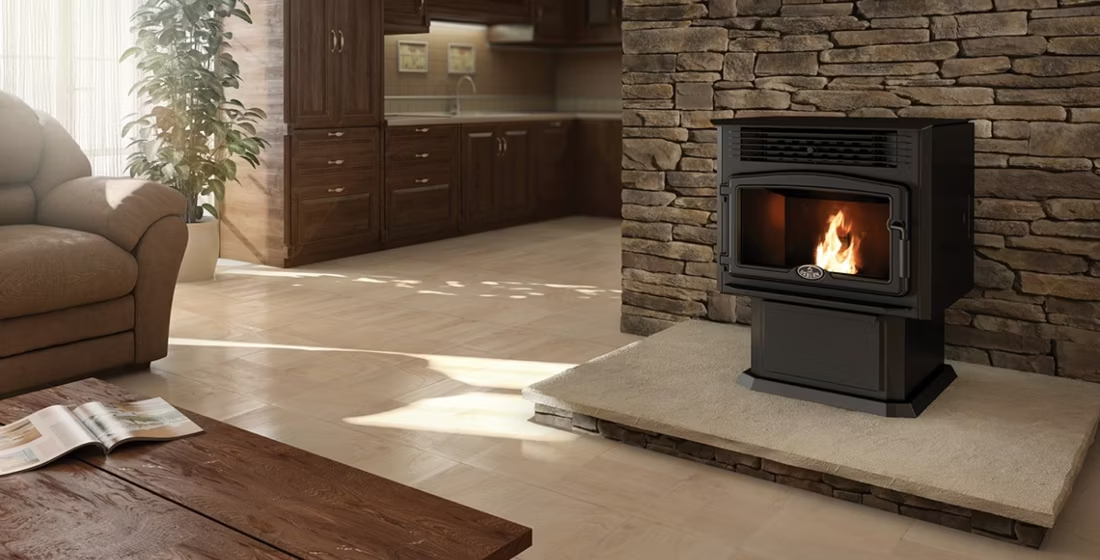
A pellet stove is a freestanding appliance that sits on its own hearth pad and vents through a wall or existing chimney—it can go almost anywhere in a room with the right clearances. A pellet insert is built to slide into an existing masonry fireplace opening, using a vent liner run up the existing chimney, and it's the more common choice for Bristol homes that already have a wood-burning fireplace they want to convert to something more efficient and lower-maintenance. If you don't have an existing fireplace, a freestanding stove is generally the simpler and less expensive install.
Do I need a permit to install a pellet stove in Bristol?
Most pellet stove and insert installations require a building permit, and in most cases the electrical work for the dedicated outlet needs its own permit as well. Depending on whether your address falls inside city limits or in the surrounding Washington County area, the permitting office differs—your installer will know which jurisdiction applies to your address and typically pulls the permit as part of the installation, so this isn't something you need to navigate on your own.
Will my pellet stove work during a power outage?
Not without a backup power source. Pellet stoves rely on an electric auger to feed fuel and a blower to circulate heat, so they shut down when the power does—unlike a wood stove, which burns with no electrical input at all. If winter storm outages are a real concern for your property, ask your local dealer about a battery backup unit or a small generator sized to run the stove's electronics; either is a reasonable add-on for a home that leans on pellet heat as a primary source rather than backup.
How often does a pellet stove need to be cleaned and serviced?
Pellet stoves need more frequent attention than people expect, even though they don't require the annual chimney sweep a wood stove does. The ash pot and burn pot should be cleaned every few days to weekly depending on use, the glass wiped down regularly, and the venting and hopper should get a full inspection and cleaning at least once a year—typically before the season starts. Homes running a pellet stove as primary heat through a full Bristol winter should plan on a mid-season check as well, since ash and clinker buildup happens faster with heavier use.
How much does a ton of pellets cost, and how many tons will I need?
Hardwood pellets from regional brands like Energex and Hamer typically run in the $250-$320 per ton range in the Southeast, though pricing shifts with demand each season. A home using a pellet stove as primary heat through a Bristol winter typically burns 2 to 3 tons of pellets given the area's moderate winter climate; homes using it for supplemental heat in one room often use closer to 1 ton. Buying early in the fall, before cold weather drives up demand, is the most reliable way to get the price and the brand you want.
Pellet stove vs. wood stove—which is right for my home?
Wood stoves burn cordwood cut from local hardwoods like oak, hickory, and maple—including self-cut wood from a Nantahala-Pisgah National Forest permit at roughly $20 a cord—and they keep working with no electricity, which matters during storm-related outages. Pellet stoves trade that off for real convenience: load the hopper, set a thermostat, and let the stove regulate itself without splitting or stacking wood, though they do need power to run. For Bristol homes without the space, time, or interest in a woodpile, pellet is usually the better fit. For homes that already have access to cheap or self-cut hardwood and want heat that survives a power outage, wood still has a strong case. A local dealer can walk through both options based on your specific setup.
What's the difference between an insert and a zero-clearance fireplace?
An insert is a fireplace that slides into a pre-existing wood-burning fireplace—if you don't have one, there's nothing to insert it into. A zero-clearance fireplace is built into a framed wall, which makes it the answer for remodels and new construction. Simple test: existing masonry fireplace means insert; blank or framed wall means zero-clearance.
Why is a fireplace insert so efficient?
An insert does two things: it seals the chimney completely, so you stop losing air you already paid to heat, and it radiates warmth into the room through the firebox and glass. Most add a heat-exchange fan that pulls cool room air underneath, wraps it around the hot firebox, and pushes it back out warm. Your home is more efficient before you've even lit the first fire.
Does a fireplace add value to my home?
On average, a fireplace adds back to the home about the same amount you spent installing it. Add the monthly savings from heating the rooms you actually use instead of the whole house—often hundreds of dollars a year—and the value case is strong before you even count what a fire does for how your family uses the room.
Can a fireplace actually lower my heating bill?
Yes—by creating a comfort zone. A furnace heats every square foot of the house just to warm the one room you're in; a gas fireplace on low burns roughly a sixth of the gas a typical furnace does. Set the furnace around 55–60 degrees as a baseline, then heat the rooms your family actually uses. Families who heat this way commonly save $20–$60 a month.
Stove and Fireplace Dealers in Bristol County
Listings include WhyFire partner dealers, dealers we have verified as authorized for the brands we recommend, and established local businesses that carry hearth products. Every listing shows which one it is. The ones marked Preferred run on WhyFire's software, so they can show you real pricing and book your appointment right here. No manufacturer pays for placement. How we verify dealers →
Holston Hardware Company
Abingdon Gas
Berry Home Center- Abingdon
Marsh Lp Gas
Alfresco Lifestyles
Admiral Propane LLC
Marsh Lp Gas
Blossman Gas And Appliance
Hammonds HVAC & Gas Services
Hammond's Heating And Air
Builders First Source- Gray
Pellet Brands Stocked Around Bristol County
Manufacturers will point you to the nearest stocking dealer.
Find your pellet stove in Bristol, Virginia.
Tell us a bit about your home and heating goals, and we'll match you with a trusted local Bristol-area dealer and send over a free Project Guide & Parts List—the exact parts, vent kit included, and the dealer we recommend for your pellet stove or insert project.
Find Your Fireplace →