
Warmth without the woodpile, right here in Bristol.
No chimney, no venting, no cutting permits—just plug-in or hardwired heat and ambiance for homes along State Street and throughout the city. Find the right unit and connect with a trusted local dealer.
Every Project Starts From One of These Five Situations
Simple heat for a region built on wood.
Bristol is a small independent city straddling the Virginia-Tennessee line in the Appalachian foothills, with about 17,000 residents and winters that average a low of 24°F with a moderate winter heating load—noticeably milder than places like Burlington, VT or Duluth, MN, but still cold enough to need real supplemental heat several months a year. The surrounding hardwood forests of oak, hickory, and maple, along with nearby cutting permits through Nantahala-Pisgah National Forests at $20 per cord (May through October), have shaped a regional heating culture built around wood stoves and inserts. Electric fireplaces fill a different role here—not as the primary heat source in most homes, but as a fast, code-simple way to add warmth and ambiance to a room without touching a chimney.
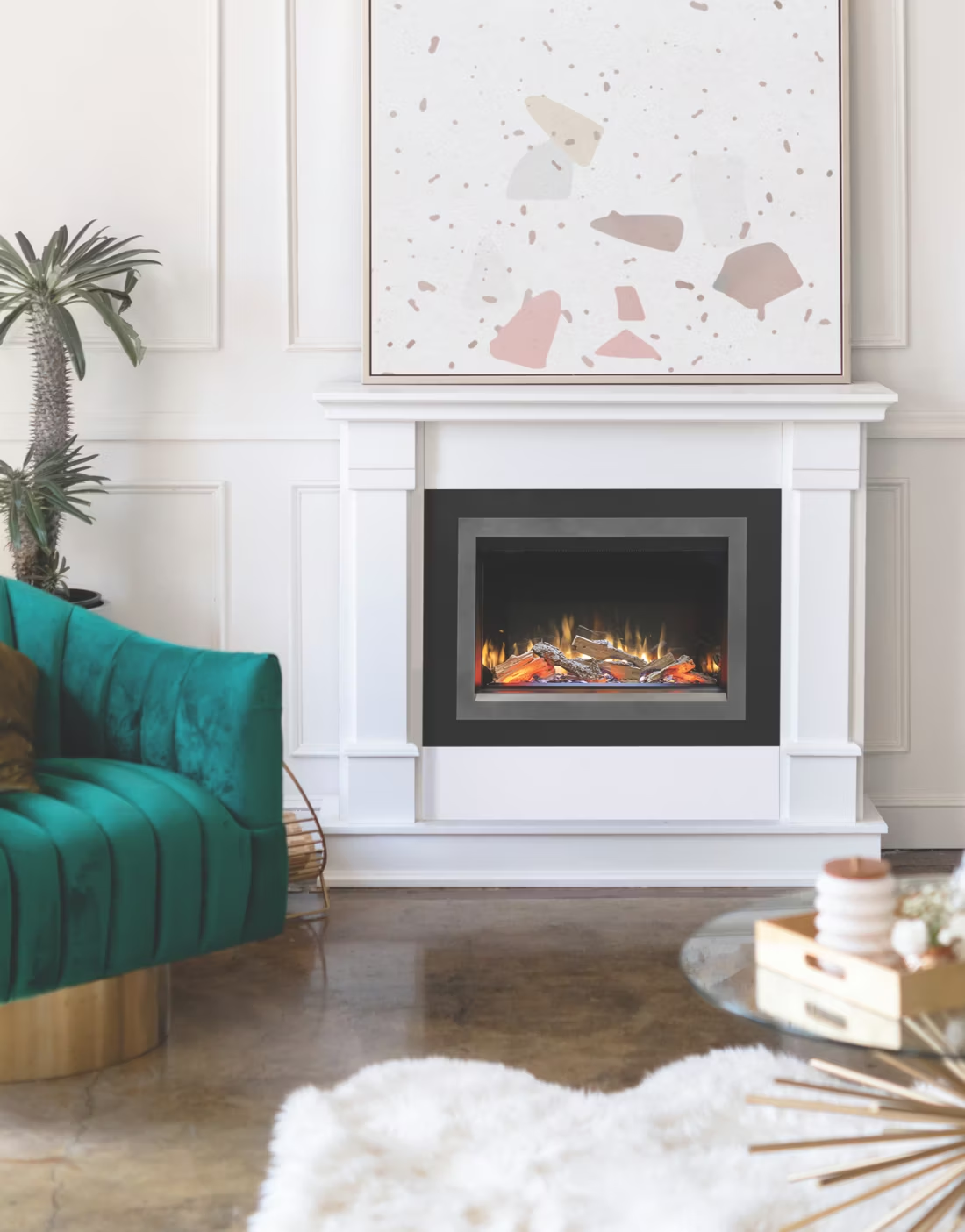
Bristol's housing stock includes a good number of older homes near downtown with existing masonry fireplaces that were long ago retired or never fitted with efficient inserts, plus newer construction and rentals where running gas line or building a wood-burning hearth isn't practical. An electric insert or wall-mounted unit solves both cases: it drops into an existing fireplace opening or mounts on a wall, runs on standard household power supplied by Bristol Virginia Utilities, and needs no venting, no chimney liner, and typically no building permit for a plug-in model. The honest tradeoff is that electric units are supplemental heat—they warm a room, not a house, and they go dark in a power outage just like everything else on the grid, which matters in an area that does see occasional ice-storm outages.
Three steps. No salesperson until you're ready.
Tell us about your project
Your zip code, your situation, and the fuel you're leaning toward—or let the answers point you to one.
See what's actually available
The brands dealers within 100 miles genuinely carry—real options, never a catalog mirage.
Get your dealer & Project Guide
A trusted local dealer, plus the free Project Guide & Parts List that names every component of the job.
Frequently Asked Questions
How much does an electric fireplace installation cost in Bristol?
A plug-in electric insert or freestanding electric stove in Bristol typically runs $400 to $900 installed, since most units just need an existing 120-volt outlet and a bit of trim work to fit an opening. Wall-mounted units and built-in electric fireplaces that require a dedicated 240-volt circuit and an electrician run higher, generally $1,000 to $2,000 depending on how far the new circuit has to travel from the panel. Homes near downtown with older electrical panels sometimes need a panel evaluation before a larger unit goes in, which can add to the cost. A local dealer will confirm the exact number after seeing your fireplace opening or wall and your home's electrical setup.
Do I need a permit to install an electric fireplace in Bristol?
Most plug-in electric inserts and freestanding units don't require a permit since no new wiring, gas line, or venting is involved. If you're adding a wall-mounted or built-in unit that requires a new 240-volt circuit, the electrical work itself needs to be pulled by a licensed electrician and typically requires an electrical permit through the city. This is a much lighter process than the building and gas permits required for wood or gas installs in Bristol—most electric jobs are done in a single visit.
What size electric fireplace do I need for my room?
Electric fireplaces are rated in BTUs for supplemental heat, and most standard units put out around 4,600 to 5,000 BTU—enough to comfortably warm a room up to 400 square feet, which covers most living rooms and bedrooms in Bristol's older homes and newer builds alike. Larger open-concept spaces may need a higher-output unit or a second fireplace for even heat distribution. Because electric units don't need to be sized against elevation or draft the way a wood stove does, sizing mostly comes down to the room itself and whether you want the fireplace as ambiance-only or as real supplemental warmth on the coldest days.
What's the difference between an electric insert, electric stove, and wall-mounted electric fireplace?
An electric insert is built to slide into an existing masonry or zero-clearance fireplace opening, which makes it the natural choice for Bristol homes with an old, unused wood fireplace they want back in service without chimney work. An electric stove is a freestanding cabinet-style unit that sits anywhere in a room and looks like a traditional stove. A wall-mounted or built-in electric fireplace hangs on or is framed into a wall and works well in newer construction or rooms without an existing fireplace at all. All three run on standard household power and produce the same basic heat output—the choice comes down to what fits your space.
Electric vs. wood—which is right for my Bristol home?
Wood remains the backbone of home heating culture in this part of Appalachia, with oak, hickory, and maple readily available and Forest Service cutting permits through Nantahala-Pisgah running just $20 per cord during the May-to-October season. A wood stove or insert can serve as real primary heat and keeps working when the power goes out. Electric fireplaces can't compete on either front—they're supplemental heat only and go dark in an outage—but they win on convenience: no wood handling, no ash, no chimney maintenance, and installation that takes a day instead of a permit-and-venting project. For a den, bedroom, or a downtown apartment where a wood setup isn't practical, electric is often the better fit; for a primary heat source in a rural or outage-prone part of the city, wood still has the edge.
Will my electric fireplace work during a power outage?
No—electric fireplaces run entirely on grid power and will not operate during an outage unless you have a home battery or generator backing up that circuit. This is worth planning around in Bristol, where ice storms occasionally knock out power to parts of the city and surrounding Washington County for a day or more. If backup heat during outages is a priority, most local dealers recommend pairing an electric fireplace for everyday convenience with a wood or propane appliance elsewhere in the home for true emergency heat.
How much does it cost to run an electric fireplace?
Most electric fireplace heating elements draw around 1,500 watts on high, and Bristol Virginia Utilities residential electric rates put the cost of running one at roughly $0.15 to $0.25 per hour of active heating. Left on ambiance-only mode (flame effect without the heater running), the draw drops to a fraction of that, often just a few watts. For a room used a few hours a night through the winter, that typically adds somewhere between $15 and $30 a month to the electric bill—far less than running central heat harder to cover the same space.
Can I put an electric insert into my existing fireplace without chimney work?
Yes, and it's one of the most common electric fireplace projects in Bristol. Many of the city's older homes near downtown have a masonry fireplace that was closed off or never fitted with a modern liner. An electric insert slides into that existing opening, plugs into a nearby outlet (or gets hardwired if you want a cleaner look), and requires no chimney liner, no sweep, and no venting whatsoever—you can even leave the damper closed. It's a straightforward way to bring an old fireplace back to life without any of the code work a wood or gas conversion would require.
Electric vs. pellet stove—which makes more sense for my home?
Pellet stoves, using regional brands like Energex, Hamer Pellet Fuel, or Greene Team, burn a real fuel and put out genuine heat output comparable to a wood stove, but they still need electricity to run the auger and combustion blower—so like an electric fireplace, they stop working in a power outage unless you add a battery backup. Pellet stoves also need venting, a hopper to fill, and periodic ash cleanup, none of which an electric fireplace requires. If you want meaningful heat output and don't mind the fuel handling, pellet is the stronger heating appliance. If you want simple, low-maintenance ambiance or light supplemental warmth with none of the venting or fuel logistics, electric is the easier path.
Can I put a TV above my fireplace?
Yes—with an asterisk. Fireplaces are hot and TVs don't like heat. Either put a mantel between them to deflect rising warmth, or choose a fireplace with heat-management technology that creates a cool zone on the wall above—the wall stays around 125 degrees, barely warm, while the room still gets full heat. If you like clean lines and don't want a mantel, heat management is the answer.
Do electric fireplaces actually produce heat?
Yes—most put out around 4,800–5,000 BTUs from a standard outlet, which comfortably warms a bedroom, office, or den as a comfort-zone heater. What they won't do is carry a whole house the way wood, gas, or pellet can. Think of electric as ambiance-first with honest supplemental heat: flames on with no heat in July, flames plus warmth in January.
How much should I budget for a fireplace?
For an average home—covering the fireplace, the vent pipe, and basic installation—a budget between $3,900 and $5,500 gives you a lot of options across wood, gas, and pellet. By the time you add finish work, gas line, and electrical, the average complete installation lands between $5,000 and $12,000 all-in. In a remodel or new build, a good rule is to put about 2.5% of the total project cost toward the fireplace.
Can I install a fireplace myself?
If you're putting a fire in your house on purpose, it's best to work with an expert. Unless you're genuinely experienced in framing, gas line, vent pipe, and the national code on clearances to combustibles, have a professional do it—and ideally the same company that sells you the fireplace, so warranty, service, and liability all live under one roof.
Stove and Fireplace Dealers in Bristol County
Listings include WhyFire partner dealers, dealers we have verified as authorized for the brands we recommend, and established local businesses that carry hearth products. Every listing shows which one it is. The ones marked Preferred run on WhyFire's software, so they can show you real pricing and book your appointment right here. No manufacturer pays for placement. How we verify dealers →
Holston Hardware Company
Abingdon Gas
Berry Home Center- Abingdon
Marsh Lp Gas
Alfresco Lifestyles
Admiral Propane LLC
Marsh Lp Gas
Blossman Gas And Appliance
Hammonds HVAC & Gas Services
Hammond's Heating And Air
Builders First Source- Gray
Find your electric fireplace in Bristol.
Tell us a bit about your home and we'll match you with the right electric insert, stove, or wall-mounted fireplace—plus a free Project Guide & Parts List covering the exact unit, mounting or wiring requirements, and a trusted local dealer to install it.
Find Your Fireplace →