
Instant heat for Bristol County winters, without the guesswork.
From homes near State Street to the rural stretches toward the Tennessee line, a gas fireplace or insert delivers heat at the flip of a switch. We match you with a trusted local dealer who can size, permit, and install it right.
Every Project Starts From One of These Five Situations
Reliable warmth in the foothills, without tending a fire.
Bristol County sits in the Appalachian foothills of far southwestern Virginia, split from its twin city across the Tennessee line by State Street. Winters here are real but moderate by mountain standards—the county sees a moderate winter heating load with winter lows settling around 24°F, meaning furnaces and supplemental heat run steadily from November into March but rarely see the sustained single-digit stretches you'd get farther north in places like Duluth, MN or Burlington, VT. That's exactly the kind of climate where a gas fireplace earns its keep: enough cold to want dependable heat in the living room every evening, not so extreme that you need a wood stove running around the clock.
Inside the city of Bristol, natural gas service is available through BVU (Bristol Virginia Utilities), and homes already piped for a gas furnace or water heater are usually the easiest and least expensive to convert. Once you get out into the rural county—toward the Holston River valley or up into the ridges—propane is the standard fuel, delivered and stored in a tank on the property. Either way, the appeal is the same: no ash, no cutting or stacking wood, and heat that starts the moment you flip a switch or press a remote. With no local air-quality non-attainment issues or wood-burning curtailment periods to navigate, gas permitting in Bristol County is generally straightforward compared to wood-burning installs.
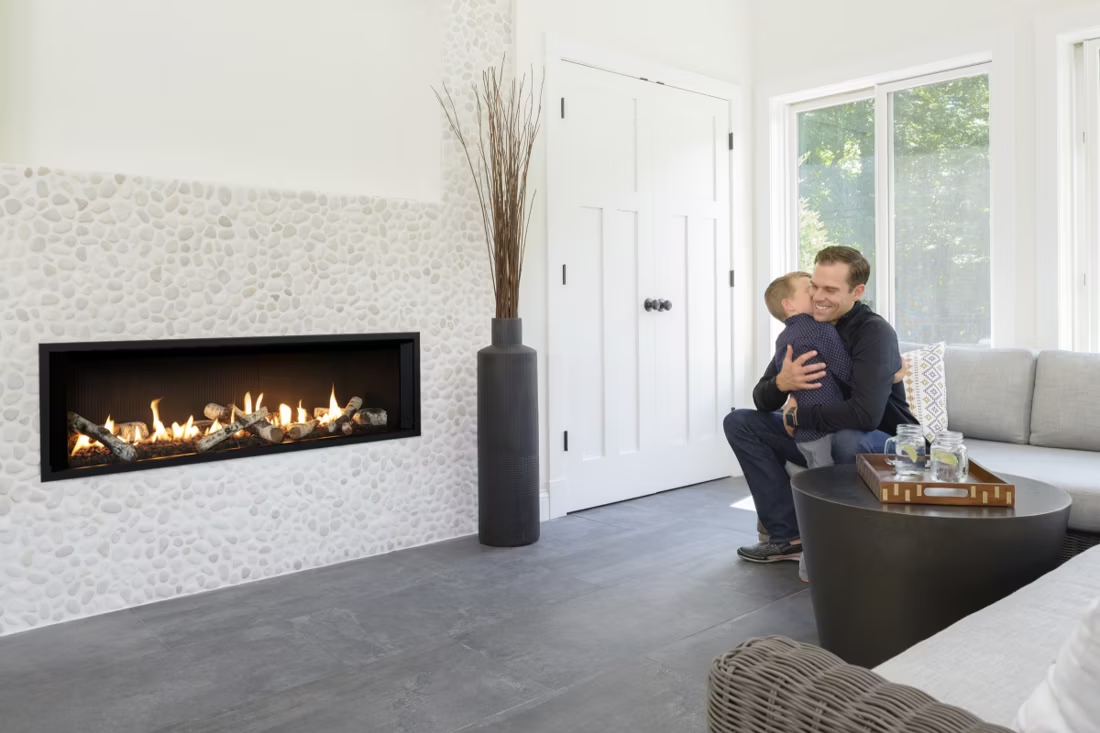
Three steps. No salesperson until you're ready.
Tell us about your project
Your zip code, your situation, and the fuel you're leaning toward—or let the answers point you to one.
See what's actually available
The brands dealers within 100 miles genuinely carry—real options, never a catalog mirage.
Get your dealer & Project Guide
A trusted local dealer, plus the free Project Guide & Parts List that names every component of the job.
Frequently Asked Questions
How much does a gas fireplace installation cost in Bristol County?
Most gas fireplace and insert installations in Bristol County run between roughly $3,800 and $9,500, depending on the unit, whether you're converting an existing masonry fireplace or building out gas service to a new location, and whether you're on natural gas through BVU or need a propane tank set. A direct-vent insert into an existing chimney with gas already run to the house sits at the lower end; new construction or a fresh gas line and propane tank installation push toward the higher end. A local dealer will give you a firm number after seeing the space.
Can I convert my existing wood fireplace to gas?
Yes, and it's a common project in the older brick homes around Bristol. A gas insert slides into your existing masonry firebox and uses a stainless liner run up your current chimney for venting, so you keep the look of the fireplace but lose the wood handling and ash cleanup. If the home already has natural gas or propane service nearby, the conversion is usually on the more affordable end of the local cost range; if a new gas line has to be run from the meter or a propane tank has to be installed, budget for the higher end.
Should I use natural gas or propane for my fireplace?
It depends on where in Bristol County you're located. Inside city limits and close-in neighborhoods, natural gas through BVU is typically available, and if your home already has a gas furnace or range, adding a fireplace on the same line is the simplest path. Out in the rural parts of the county, propane is the standard option, supplied by a regional propane company with a tank on the property. Most gas fireplace models can be set up for either fuel—your installer just configures the correct orifice and regulator for the gas you have.
Will my gas fireplace still work if the power goes out?
Most modern gas fireplaces will, as long as they use a standing pilot or an intermittent pilot ignition (IPI) system with battery backup—the small AA batteries inside the unit take over automatically when power drops, so the remote and igniter keep working. Valor fireplaces go a step further: their pilot assembly generates its own electricity through the thermocouple, so there's no battery to remember at all. For Bristol County homes where winter storms occasionally knock out power along the ridgelines, that's a real advantage worth asking your local dealer about.
What's the difference between a gas fireplace, insert, and stove?
A gas fireplace is a fully built-in unit framed into a wall, typically chosen for new construction or a remodel. A gas insert is sized to drop into an existing masonry firebox, using your current chimney as the vent path and converting an old, drafty fireplace into an efficient sealed unit. A gas stove is a freestanding cabinet-style unit that sits on the floor, similar in footprint to a wood stove but running on gas. For the many older homes around Bristol with an existing brick fireplace, an insert is usually the straightforward upgrade; homes without one often go with a built-in fireplace or a freestanding stove instead.
Do I need a permit to install a gas fireplace in Bristol County?
Yes—a building permit and a gas line permit are both typically required for a new gas fireplace or insert installation, and the gas line work itself has to be done by a licensed gas-fitter. Most established local dealers handle the permitting and inspection scheduling as part of the installation, so you're not stuck coordinating separate trades and paperwork yourself.
Are vent-free gas fireplaces allowed in Virginia?
Virginia permits vent-free (unvented) gas fireplaces under the state building and mechanical codes, but they come with strict room-size and ventilation requirements and aren't ideal for tightly sealed or small rooms. Direct-vent gas fireplaces—which draw combustion air from outside and exhaust it back outside through a sealed pipe—are the more common and more universally recommended choice around Bristol County, since they don't put any combustion byproducts into the living space. Ask your local dealer to walk through both options for your specific room.
How often does a gas fireplace need to be serviced?
Plan on an annual inspection, ideally before the heating season ramps up in the fall. A technician checks the burner, pilot assembly, venting, and gas connections, and cleans the glass and interior—a much smaller job than a wood chimney sweep, but still important for safe, efficient operation. Local gas appliance service providers typically charge in the range of $150 to $250 for this annual visit.
Gas vs. wood—which makes more sense for a Bristol County home?
Wood is the traditional choice in this part of southwest Virginia, where oak, hickory, and maple are the common local species and Forest Service cutting permits through the Nantahala-Pisgah National Forests run about $20 a cord during the May-through-October season. It's real ambiance, lower fuel cost if you're cutting your own, and it keeps working with no electricity during an outage. Gas trades that self-sufficiency for convenience—instant on-off heat, no wood to split and stack, and a cleaner look with no soot. With Bristol County's moderate winter heating load and mild-24°F average winter lows, plenty of homes here use gas as the everyday heat source in the main living space and keep wood or a stove elsewhere for backup or atmosphere.
What's the difference between an insert and a zero-clearance fireplace?
An insert is a fireplace that slides into a pre-existing wood-burning fireplace—if you don't have one, there's nothing to insert it into. A zero-clearance fireplace is built into a framed wall, which makes it the answer for remodels and new construction. Simple test: existing masonry fireplace means insert; blank or framed wall means zero-clearance.
Is my gas fireplace wasting gas?
If it was installed more than 15 years ago, probably. Older gas fireplaces keep a standing pilot light burning all the time, and that little flame can cost a couple hundred dollars a year. Newer models use pilot-on-demand ignition—the pilot lights only when you use the fireplace and goes out when you turn it off.
Does a fireplace add value to my home?
On average, a fireplace adds back to the home about the same amount you spent installing it. Add the monthly savings from heating the rooms you actually use instead of the whole house—often hundreds of dollars a year—and the value case is strong before you even count what a fire does for how your family uses the room.
Can I install a fireplace myself?
If you're putting a fire in your house on purpose, it's best to work with an expert. Unless you're genuinely experienced in framing, gas line, vent pipe, and the national code on clearances to combustibles, have a professional do it—and ideally the same company that sells you the fireplace, so warranty, service, and liability all live under one roof.
Stove and Fireplace Dealers in Bristol County
Listings include WhyFire partner dealers, dealers we have verified as authorized for the brands we recommend, and established local businesses that carry hearth products. Every listing shows which one it is. The ones marked Preferred run on WhyFire's software, so they can show you real pricing and book your appointment right here. No manufacturer pays for placement. How we verify dealers →
Holston Hardware Company
Abingdon Gas
Berry Home Center- Abingdon
Marsh Lp Gas
Alfresco Lifestyles
Admiral Propane LLC
Marsh Lp Gas
Blossman Gas And Appliance
Hammonds HVAC & Gas Services
Hammond's Heating And Air
Builders First Source- Gray
Find your gas fireplace in Bristol County.
Tell us about your home and we'll match you with a trusted local dealer and send over a free Project Guide & Parts List—the exact parts, vent kit, and installer recommendation for your gas fireplace project in Bristol County.
Find Your Fireplace →