
Find the right hearth for Bristol's mountain winters.
Wood, gas, pellet, and electric fireplace resources for Bristol, Virginia and the surrounding Highlands communities straddling the VA/TN state line. Find the right unit and connect with a trusted local hearth retailer.
Every Project Starts From One of These Five Situations
Appalachian heat traditions in Bristol, Virginia.
Bristol is an independent city tucked into the Appalachian foothills, split down State Street from its twin, Bristol, Tennessee. With a winter low average near 24°F, the climate here runs noticeably milder than places like Madison, WI or Bozeman, MT—the heating season is real but shorter, typically running from late October into March. What the region does have is hardwood: oak, hickory, and maple are the wood species most Bristol-area homeowners burn, split from their own land or sourced through nearby timber operations. Many local wood burners also hold firewood-cutting permits through the Nantahala-Pisgah National Forests, the closest national forest land to the region, even though the boundary technically sits across the state line.
There are no air-quality nonattainment or inversion concerns flagged for Bristol, which means wood burning here isn't subject to the curtailment days you'd see in a smoke-prone valley—one less thing to plan around. What you'll find on this hub: hearth retailers, service technicians, and fuel suppliers covering both sides of the Bristol, VA/TN line, since most local dealers don't stop serving customers at the state border. Pick your fuel below to see local dealers, typical installation costs, and the resources that fit a home in the Highlands.
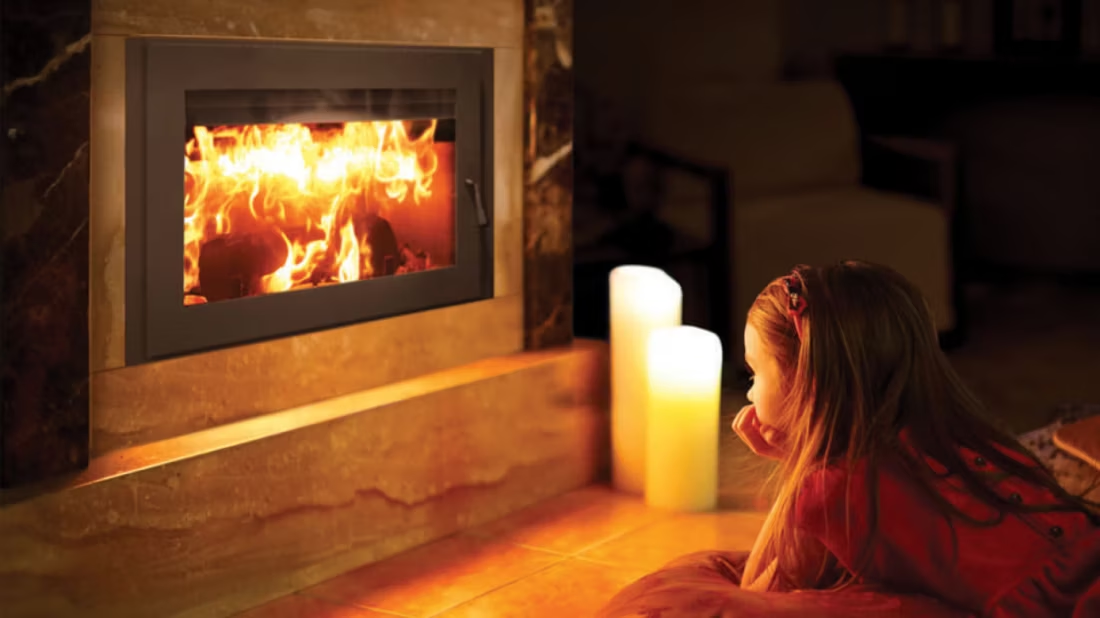
Four fuels. One honest answer for Bristol County.
Three steps. No salesperson until you're ready.
Tell us about your project
Your zip code, your situation, and the fuel you're leaning toward—or let the answers point you to one.
See what's actually available
The brands dealers within 100 miles genuinely carry—real options, never a catalog mirage.
Get your dealer & Project Guide
A trusted local dealer, plus the free Project Guide & Parts List that names every component of the job.
Frequently Asked Questions
Which fuel works best for a home in Bristol, VA?
It depends on your home and how you use it. Wood is a natural fit here—oak, hickory, and maple burn long and hot, and plenty of Bristol-area homeowners still cut their own firewood on Nantahala-Pisgah National Forest permits or buy it locally. Gas is the low-maintenance option; where natural gas service isn't run, propane fireplaces and inserts are common in the surrounding hills. Pellet stoves are a solid middle ground, and regional brands like Energex, Hamer Pellet Fuel, and Greene Team Pellet Fuel keep fuel reasonably easy to source without a long drive. Electric fireplaces work well as supplemental heat in bedrooms or additions, but with a moderate heating season and winter lows around 24°F, most Bristol homes still lean on wood, gas, or pellet as the primary heat source, with electric filling in the milder shoulder-season days.
Do I need a permit to install a fireplace in Bristol, Virginia?
In most cases, yes. New wood stoves, wood inserts, gas fireplaces, gas inserts, and pellet stoves typically require a building permit through the city's codes and building inspections office, and any new gas line work requires a licensed gas-fitter and a separate gas permit. Wood-burning appliances generally need to meet current EPA emissions standards to be permitted for new installation, even though Bristol has no local air-quality nonattainment restrictions on wood smoke. If you're cutting your own firewood on national forest land, that's a separate matter—permits for that go through the Nantahala-Pisgah National Forests office, not the city. Most local hearth retailers handle the building permit paperwork as part of a full installation.
Are there wood-burning restrictions in Bristol, VA?
No—Bristol has no flagged air-quality nonattainment issues or winter inversion problems, so there are no mandatory or voluntary burn-curtailment days tied to local air quality, unlike some mountain valleys further west. That said, new wood stove and insert installations still need to meet current EPA emissions certification to be permitted, which is a national standard rather than a local restriction. Practically, this means Bristol homeowners have more flexibility on when and how often they burn than residents of smoke-prone basins do.
Can one local hearth retailer in Bristol handle all four fuel types?
Many hearth retailers in the Bristol, VA/TN area carry at least three of the four fuel types—wood, gas, and pellet are the common core, with electric fireplaces often available as a smaller display line. Because the market here is compact—Bristol's population is around 17,000—most dealers cross the state line to serve customers on both sides of State Street rather than specializing narrowly. If you're deciding between wood, gas, and pellet for a home in the Highlands, a multi-fuel dealer can usually show you working units of each and talk through what fits your chimney, gas access, and firewood situation.
How does hearth service work across the Bristol, VA/TN border?
Most technicians serving Bristol don't treat State Street as a boundary—a chimney sweep or gas tech based on the Tennessee side will typically service Virginia addresses and vice versa, and the same goes for outlying Highlands communities. Expect a modest travel fee for calls further out into rural areas surrounding the twin cities. Scheduling a chimney sweep or pellet stove cleaning in September or October, ahead of the heating season that typically starts running through the colder months into March, tends to be easier than trying to book a mid-winter emergency call.
What's the typical cost range for fireplace installation in Bristol across fuel types?
Ranges vary by fuel and by how much venting or gas line work is involved. Wood stove or insert installation: roughly $3,800–$8,000 for a typical install, more if new chimney chase construction is needed. Gas fireplace, insert, or stove: roughly $4,000–$10,000, with propane conversions often on the higher end if a new line or tank setup is required. Pellet stove or insert: roughly $4,000–$7,000 for a standard install. Electric fireplace: $200–$3,000 for the unit itself, plus $400–$1,000 in labor for anything beyond a simple plug-in placement. See the fuel-specific pages above for cost detail tied to local Bristol-area retailer pricing.
Wood, gas, pellet, or electric—how do I choose?
Match the fuel to your life, not the other way around. Wood: lowest fuel cost and total power-outage independence, but you're hauling and stacking. Gas: press a button, set a thermostat, no maintenance to speak of. Pellet: wood economics with automatic feeding, in exchange for weekly cleaning and a need for electricity. Electric: plugs in anywhere with honest supplemental heat. Nobody regrets the fuel that fits how they actually live.
Can a fireplace actually lower my heating bill?
Yes—by creating a comfort zone. A furnace heats every square foot of the house just to warm the one room you're in; a gas fireplace on low burns roughly a sixth of the gas a typical furnace does. Set the furnace around 55–60 degrees as a baseline, then heat the rooms your family actually uses. Families who heat this way commonly save $20–$60 a month.
What is an in-home preview and do I need one?
It's a visit where a hearth professional measures your space, confirms the model you picked actually works in your home, and walks the specs—framing, gas line, venting, finish work—before anything is ordered. Some details you just can't know until you see the house. Never make a down payment without one; it's the single most-skipped step that burns buyers.
What are the biggest mistakes people make buying a fireplace?
Five come up constantly: budgeting for the unit but not the full job (vent, gas line, electrical, finish work); drowning in options instead of starting from style and fuel; buying without an in-home preview; handing installation to a handyman instead of a pro; and giving up out of sheer indecision. Every one is avoidable with a clear plan—step one, step two, step three.
Find your fireplace match in Bristol, VA.
Tell us about your home and we'll match you with a trusted local dealer serving the Bristol, VA/TN area, plus a free Project Guide & Parts List—the parts, vent kit, and recommended dealer for your specific project.
Find Your Fireplace →