
The fireplace fuel your inversion days can't shut down.
From Salt Lake City to Sandy, West Jordan, and Draper, electric fireplaces run clean through the valley's worst winter inversion stretches—no smoke, no curtailment restrictions, no permit headaches for most models. Find the right unit and connect with a trusted local dealer.
Every Project Starts From One of These Five Situations
No combustion, no inversion restrictions.
Salt Lake County sits in a valley at roughly 4,300 feet, boxed in by the Wasatch Range to the east and the Oquirrhs to the west—the same geography that traps cold air every winter and turns the Salt Lake Valley into one of the country's worst PM2.5 inversion zones. When the Utah Division of Air Quality calls a mandatory no-burn action, most solid-fuel appliances in Salt Lake City, West Valley City, Murray, Sandy, and the rest of the valley have to go cold. With a winter low average of 28°F and a heating season on par with winters comparable to Fargo, ND, this is a real-but-moderate heating climate—closer to Fargo, ND in overall winter heating need than to the deep-cold Rockies, so the region doesn't need a furnace-replacing appliance, but it does need heat that keeps working on the days combustion appliances legally can't.
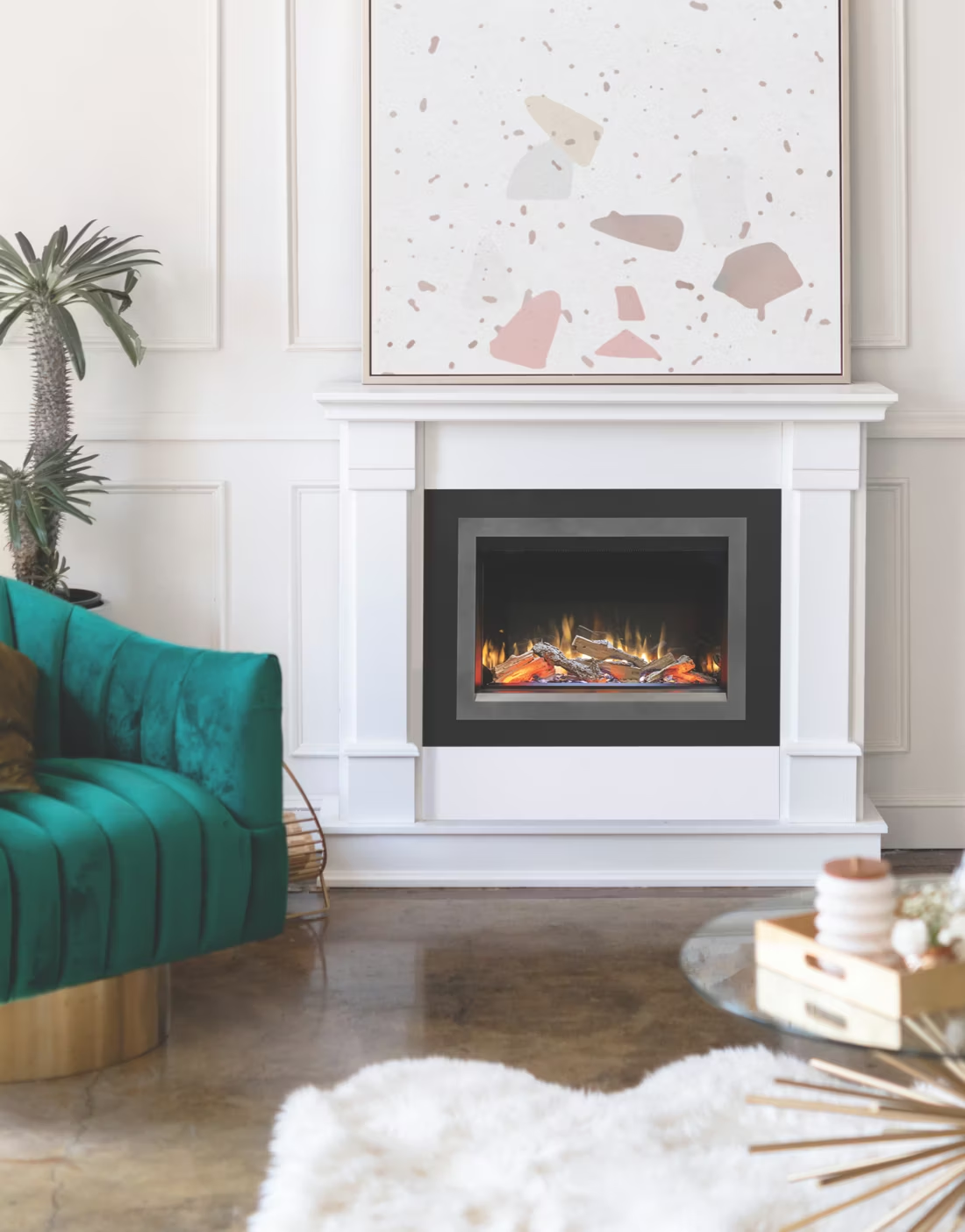
That's the case for electric here. There's no chimney, no flue, no particulate output, and no exposure to curtailment periods—an electric fireplace runs the same on a red inversion day as it does in July. It's also the practical choice for the county's dense stock of condos, townhomes, and high-rises near downtown Salt Lake City and Sugar House, where venting a wood or gas unit through shared walls isn't an option. Rocky Mountain Power serves electric accounts across the valley, and most homes already have the panel capacity a built-in unit needs—a licensed electrician just adds the circuit.
Three steps. No salesperson until you're ready.
Tell us about your project
Your zip code, your situation, and the fuel you're leaning toward—or let the answers point you to one.
See what's actually available
The brands dealers within 100 miles genuinely carry—real options, never a catalog mirage.
Get your dealer & Project Guide
A trusted local dealer, plus the free Project Guide & Parts List that names every component of the job.
Frequently Asked Questions
How much does an electric fireplace installation cost in Salt Lake County?
Most electric fireplace projects in Salt Lake County fall between $400 and $2,500. A plug-in insert or mantel unit that runs on a standard 120V outlet is on the low end—no permit, no electrician, just plug it in. A built-in wall unit or a linear electric fireplace set into a remodeled wall runs higher once you factor in a dedicated 120V or 240V circuit, framing, and finish work around the unit. Homes in older Salt Lake City or Millcreek bungalows sometimes need panel capacity checked before a new circuit goes in, which local electricians typically fold into the quote.
Do I need a permit to install an electric fireplace in Salt Lake County?
A plug-in electric fireplace that uses an existing outlet doesn't require a permit anywhere in the county—it's treated like any other appliance. A hardwired built-in unit that needs a new dedicated circuit does typically require an electrical permit through your city's building department, whether that's Salt Lake City, West Jordan, Sandy, or one of the smaller municipalities in the valley. Most licensed electricians and hearth dealers pull that permit as part of the install, so it's rarely something homeowners have to manage themselves.
Will an electric fireplace actually heat my room, or is it just for looks?
Most electric fireplaces are built around a 1,500-watt heater that can genuinely warm a single room—typically 400 to 1,000 square feet depending on insulation and ceiling height. Given the county's winter low average around 28°F and a heating season that's real but not brutal, electric units work well as zone heat for a living room, basement, or bedroom, supplementing whatever runs the rest of the house. They're not sized to replace a furnace in a larger Sandy or Draper home, but for a den, a finished basement in Millcreek, or a condo living room downtown, they can carry the room on their own on milder nights.
Electric vs. gas fireplace—which is right for my Salt Lake County home?
Gas fireplaces are common and well-supported across the valley, with natural gas service reaching most of Salt Lake City, West Valley City, Sandy, and the surrounding suburbs—they deliver more heat output and a more traditional flame. Electric fireplaces trade some heat output for zero emissions, no venting requirement, and immunity from inversion-season no-burn actions. For a primary heat source in a larger home, gas usually wins on output. For condos, rentals, finished basements, rooms without gas access, or anyone who wants a fireplace that stays legal and operable on the worst air-quality days of January, electric is the more practical pick.
Does an electric fireplace get restricted during winter inversion no-burn days?
No—that's the main reason electric has gained ground in Salt Lake County over the past decade. The Utah Division of Air Quality's mandatory and voluntary action days target wood-burning and, in some cases, solid-fuel devices during PM2.5 season, roughly November through February. Electric fireplaces produce no combustion byproducts, so they're not subject to those restrictions at all. If you're in a Salt Lake City or Cottonwood Heights home that occasionally gets flagged during a red air day, an electric unit keeps working exactly as it did the day before.
Where can I find a local dealer for an electric fireplace in Salt Lake County?
Several hearth and fireplace retailers across the valley—serving Salt Lake City, Murray, Sandy, and West Jordan—carry electric fireplace lines and can walk a homeowner through the difference between a simple plug-in insert and a hardwired linear unit. A local dealer will also know which models pair well with an existing masonry fireplace opening if you're converting rather than starting from scratch, and can coordinate with a licensed electrician when a new circuit is needed. That coordination is where a trusted local pro earns their fee over a big-box purchase—nobody shows up mid-install realizing the panel doesn't have room.
Can I put an electric insert into my existing wood fireplace?
Yes, and it's a common project in Salt Lake County's older housing stock—Sugar House bungalows, Millcreek ramblers, and Holladay homes with a masonry fireplace that rarely gets used. An electric insert slides into the existing firebox opening, plugs into an outlet or gets wired to a new circuit, and gives you flame-effect ambiance and zone heat without cutting a new vent or touching the chimney. It's one of the lowest-cost, lowest-disruption ways to bring a dead fireplace back into use, and it sidesteps any inversion-season burn restrictions entirely.
How much does it cost to run an electric fireplace with Rocky Mountain Power?
A typical 1,500-watt electric fireplace running at full heat costs roughly 15 to 25 cents an hour at current Rocky Mountain Power residential rates, depending on your rate schedule and time of use. Most owners run the flame effect without heat for ambiance on milder days, which draws only a few watts, and switch on the heater only when they want the room warmed. Compared to running a furnace to heat an entire house for the sake of one occupied room, zone heating with an electric fireplace in a Draper or South Jordan home office or basement can meaningfully lower a winter electric bill.
Why isn't wood or pellet heat common in Salt Lake County?
Wood and pellet stoves aren't gone from the county, but they're a much smaller part of the picture here than in most cold-climate areas—largely because of the inversion problem. Winter no-burn mandatory actions target solid-fuel combustion specifically, and pellet stoves get swept into some of those same curtailment periods, which makes both fuels a poor fit for full-time valley heating. Homeowners with mountain cabins above the inversion layer, or property outside the Salt Lake Valley itself, still cut pinyon, juniper, and aspen under permits from the Uinta-Wasatch-Cache National Forest for $5 to $20 per cord between May and October—but inside the valley, electric and gas have become the practical everyday choices.
Can I put a TV above my fireplace?
Yes—with an asterisk. Fireplaces are hot and TVs don't like heat. Either put a mantel between them to deflect rising warmth, or choose a fireplace with heat-management technology that creates a cool zone on the wall above—the wall stays around 125 degrees, barely warm, while the room still gets full heat. If you like clean lines and don't want a mantel, heat management is the answer.
Does an electric fireplace need a vent or chimney?
No—that's its superpower. An electric fireplace needs a wall and an outlet, period. No vent pipe, no gas line, no clearances to design around, which is why it works in bedrooms, offices, apartments, and walls where venting a gas or wood unit would be impractical or impossible. Installation is typically the simplest and least expensive of any fireplace type.
Can a fireplace actually lower my heating bill?
Yes—by creating a comfort zone. A furnace heats every square foot of the house just to warm the one room you're in; a gas fireplace on low burns roughly a sixth of the gas a typical furnace does. Set the furnace around 55–60 degrees as a baseline, then heat the rooms your family actually uses. Families who heat this way commonly save $20–$60 a month.
What is an in-home preview and do I need one?
It's a visit where a hearth professional measures your space, confirms the model you picked actually works in your home, and walks the specs—framing, gas line, venting, finish work—before anything is ordered. Some details you just can't know until you see the house. Never make a down payment without one; it's the single most-skipped step that burns buyers.
Stove and Fireplace Dealers in Salt Lake County
Listings include WhyFire partner dealers, dealers we have verified as authorized for the brands we recommend, and established local businesses that carry hearth products. Every listing shows which one it is. The ones marked Preferred run on WhyFire's software, so they can show you real pricing and book your appointment right here. No manufacturer pays for placement. How we verify dealers →
Degrees Above Fireplaces
Ignite Fireplace
Bills Comfort Systems
Standard Plumbing
Wasatch Fireplace & Stove
(Sugar House) Alpine Fireplaces (In Breezeway Next To Theatres)
Comfort Solutions
Croft Fireplaces (Bountiful)
Modscapes Modern Living
First Class Fireplace
Heritage Homes & Fireplaces
Modscapes Outdoor Living
Find your electric fireplace in Salt Lake County.
Tell us about your home and we'll put together a free Project Guide & Parts List—the right electric fireplace or insert for your space, the parts list including any wiring or venting needs, and a match with a trusted local dealer near Salt Lake City, Sandy, or wherever you are in the valley.
Find Your Fireplace →