
Electric Warmth Without the Smoke in Cottonwood Heights.
Zone heat and real ambiance for Salt Lake Valley homes, with none of the venting, permitting, or inversion-season burn restrictions that come with solid fuel.
Every Project Starts From One of These Five Situations
Clean heat that never touches the inversion.
Cottonwood Heights sits at the mouth of Big and Little Cottonwood Canyons at roughly 4,800 feet, in the bowl of the Salt Lake Valley that traps cold air—and smoke—every winter. When a temperature inversion settles in, the Utah Division of Air Quality calls mandatory and voluntary no-burn days across Salt Lake County, and on red days, solid-fuel fireplaces and wood stoves are off-limits entirely. Combine that with the tight residential lots typical of this suburb, and it's no surprise wood-burning fireplaces are rare here—even though the Uinta-Wasatch-Cache National Forest a few miles up-canyon still issues cutting permits for $5 to $20 a cord each May through October.
Electric fireplaces sidestep the whole problem. PacifiCorp serves essentially every home in Cottonwood Heights at a residential rate around 12.5 cents per kWh, so a typical 1,500-watt insert or wall unit costs well under 20 cents an hour to run—on a green day, a yellow day, or a red day, it makes no difference. No chimney, no gas line, no emissions to report to UDAQ. For the condos and townhomes clustered near the canyon mouths that serve Solitude, Brighton, and Alta traffic, electric is often the only realistic fireplace option, since many of those units were never plumbed for gas or built with a masonry chimney.
Three steps. No salesperson until you're ready.
Tell us about your project
Your zip code, your situation, and the fuel you're leaning toward—or let the answers point you to one.
See what's actually available
The brands dealers within 100 miles genuinely carry—real options, never a catalog mirage.
Get your dealer & Project Guide
A trusted local dealer, plus the free Project Guide & Parts List that names every component of the job.
Frequently Asked Questions
How much does an electric fireplace installation cost in Cottonwood Heights?
Plug-in electric inserts and freestanding stoves run $150 to $600 and need nothing more than a standard outlet—no permit, no electrician. Built-in wall units and mantel packages cost more to install, typically $1,200 to $2,500, because Cottonwood Heights' electrical code calls for a dedicated 20-amp circuit on units drawing more than 1,500 watts, which means running new wire and pulling an electrical permit. A local dealer can tell you within a few minutes which category your project falls into based on the unit and your home's existing wiring.
Does the winter inversion actually affect what fireplace I can install?
It affects what you can burn, not what you can install, but the two are related. Salt Lake County—including Cottonwood Heights—is subject to Utah Division of Air Quality mandatory action days each winter, usually clustered between November and February, when solid-fuel fireplaces and wood stoves are legally prohibited from burning on red days. Gas fireplaces are exempt from those restrictions. Electric fireplaces never come up at all, since there's no combustion and nothing for UDAQ to regulate. That's a big part of why electric has become a practical default for homeowners here who want a fireplace without checking the air quality forecast first.
Can I convert my existing fireplace to electric?
Yes—an electric insert is built to slide into an existing masonry or built-in firebox opening, using the same footprint you already have. No liner, no venting, no gas line. Most inserts just need a nearby outlet or a short electrical run behind the surround, and installation is usually a half-day job. This is a common project for older Cottonwood Heights homes built with a wood-burning fireplace that residents no longer want to deal with during inversion season, or that they've simply stopped using because of the burn restrictions.
What does it actually cost to run an electric fireplace here?
At PacifiCorp's residential rate of about 12.5 cents per kWh, a standard 1,500-watt electric fireplace on its heater setting costs roughly 19 cents an hour to run. Left on for four hours a night, that's under a dollar a day. Most units also let you run the flame effect with the heater off, which draws only 30 to 50 watts—essentially free ambiance. That low cost of operation is one reason electric is a popular secondary heat source in living rooms and basements even in homes that already have a furnace or a gas fireplace elsewhere.
Do I need a permit to install an electric fireplace in Cottonwood Heights?
A plug-in unit that runs off an existing outlet needs no permit at all. A hardwired built-in—a linear wall unit, a mantel package with a dedicated circuit, or anything drawing more than 1,500 watts—requires an electrical permit through the Cottonwood Heights building department, since it involves new wiring on a dedicated circuit. Local dealers who handle built-in installs typically pull that permit as part of the job, so you're not coordinating it yourself.
Can an electric fireplace actually heat my house?
Not as a primary heat source. Cottonwood Heights sees an average winter low around 23°F and a long, demanding heating season, which is enough cold-weather need that a home still needs a furnace or heat pump doing the real work. Electric fireplaces are supplemental heaters, most putting out around 4,600 to 5,200 BTU from a 1,500-watt unit—enough to noticeably warm a single room like a living room, bedroom, or finished basement, but not the whole house on a January night.
What brands of electric fireplaces are worth considering?
Dimplex and Napoleon are the most widely available lines through hearth dealers in the Salt Lake Valley and both make realistic flame technology that holds up well over years of daily use. Touchstone and SimpliFire are common choices for linear wall-mount units in modern remodels. For insert conversions into an existing masonry opening, look for units sized specifically to your firebox dimensions rather than a generic universal-fit model—a local dealer will measure your opening before recommending anything.
Electric vs. gas—which fits my Cottonwood Heights home better?
Gas fireplaces put out real, sustained heat—enough to serve as zone heating for a main living area—and they're exempt from UDAQ's inversion-season burn restrictions, so they remain a solid option here. Electric fireplaces cost far less to install, need no gas line or venting, and never trigger any air quality restriction at all, but they're supplemental only. For homes already on natural gas with a line nearby, gas is often worth the extra install cost for the heat output. For condos, basements, bedrooms, or any room without gas access, electric is usually the simpler and cheaper answer.
Is electric a good fit for condos and townhomes near the canyons?
Yes—it's often the best fit. A lot of the condos and townhomes near the Big and Little Cottonwood Canyon mouths were built without gas lines or masonry chimneys, which rules out both gas and wood options without significant retrofit work. An electric insert or wall-mount unit needs only an outlet or a short dedicated-circuit run, works within HOA rules that often restrict venting or exterior modifications, and adds real ambiance and supplemental warmth after a day on the slopes without any of the permitting headaches of a vented appliance.
Can I put a TV above my fireplace?
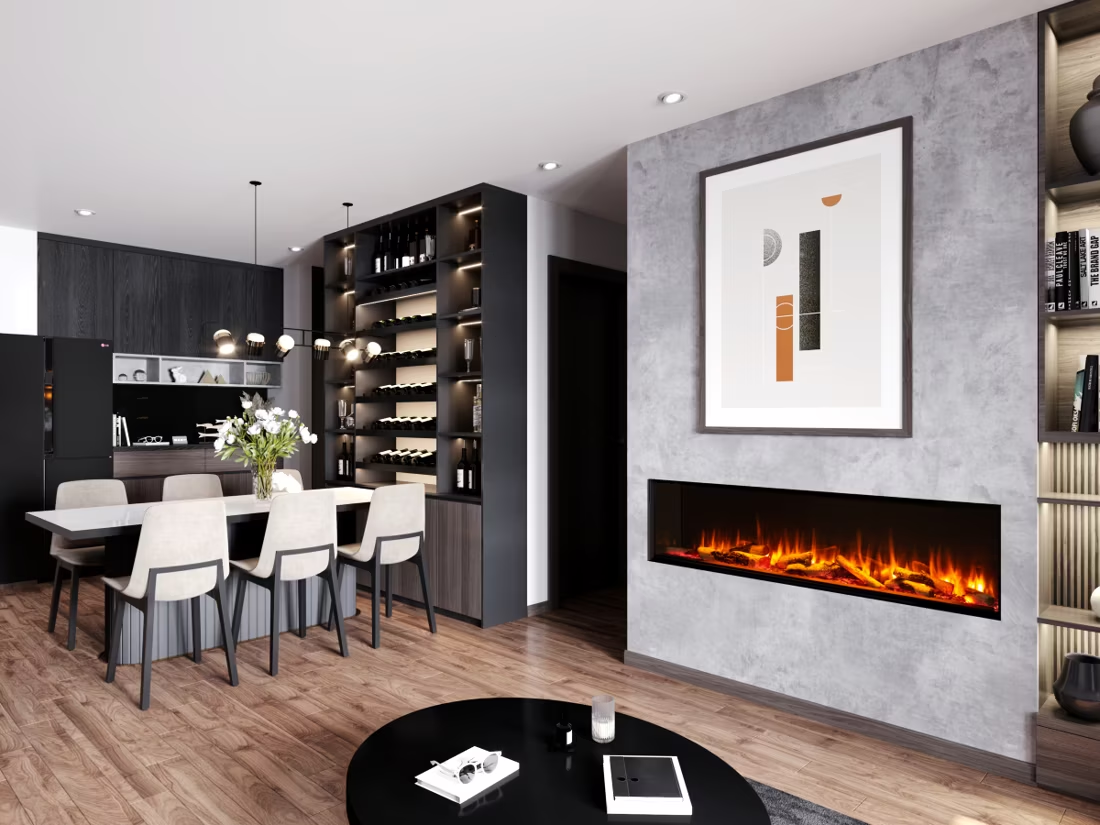
Yes—with an asterisk. Fireplaces are hot and TVs don't like heat. Either put a mantel between them to deflect rising warmth, or choose a fireplace with heat-management technology that creates a cool zone on the wall above—the wall stays around 125 degrees, barely warm, while the room still gets full heat. If you like clean lines and don't want a mantel, heat management is the answer.
Do electric fireplaces actually produce heat?
Yes—most put out around 4,800–5,000 BTUs from a standard outlet, which comfortably warms a bedroom, office, or den as a comfort-zone heater. What they won't do is carry a whole house the way wood, gas, or pellet can. Think of electric as ambiance-first with honest supplemental heat: flames on with no heat in July, flames plus warmth in January.
How much should I budget for a fireplace?
For an average home—covering the fireplace, the vent pipe, and basic installation—a budget between $3,900 and $5,500 gives you a lot of options across wood, gas, and pellet. By the time you add finish work, gas line, and electrical, the average complete installation lands between $5,000 and $12,000 all-in. In a remodel or new build, a good rule is to put about 2.5% of the total project cost toward the fireplace.
Does a fireplace add value to my home?
On average, a fireplace adds back to the home about the same amount you spent installing it. Add the monthly savings from heating the rooms you actually use instead of the whole house—often hundreds of dollars a year—and the value case is strong before you even count what a fire does for how your family uses the room.
Nearby Dealers
Hearth shops serving Cottonwood Heights and the surrounding area. Every listing shows whether it is a WhyFire partner, a dealer we have verified as authorized for the brands we recommend, or a local business carrying hearth products. No manufacturer pays for placement. How we verify dealers →
Ignite Fireplace
Standard Plumbing
Bills Comfort Systems
Degrees Above Fireplaces
(Sugar House) Alpine Fireplaces (In Breezeway Next To Theatres)
Wasatch Fireplace & Stove
Comfort Solutions
Modscapes Modern Living
First Class Fireplace
Croft Fireplaces (Bountiful)
Modscapes Outdoor Living
Uintah Fireplace And Design
All Hours Plumbing, Drain Cleaning, Heating & Cooling
Delta Stone Products, Inc.
Electric Service in Cottonwood Heights
An electric fireplace's heater draws about 1,500 watts—pennies per hour at local rates.
Get matched for your electric fireplace in Cottonwood Heights.
Tell us about your home and we'll put together a free Project Guide & Parts List for your electric fireplace project—the right unit, the wiring it needs, and a trusted local dealer to install it.
Find Your Fireplace →